




2 Michelin Keys · World's 50 Best #39 · Mr & Mrs Smith Seal of Approval
Portrait Milano occupies a converted 16th-century seminary on Corso Venezia, within the Golden Quadrangle, carrying Michelin 2 Keys recognition and a 2025 World's 50 Best Hotels ranking of #99. The Lungarno Collection's first Milan property brings 73 rooms designed by Michele Bönan, Italy's inaugural Beefbar, and a biohacking-focused spa beneath original vaulted ceilings. Rates from $1,383 per night position it at the upper tier of Milanese luxury hospitality.

Pearl is the En Primeur Club membership app, where members save venues, book tables and use the concierge.
Inside the Golden Quadrangle: How Portrait Milano Fits Milan's Luxury Hotel Tier
Milan's luxury hotel market has narrowed considerably at the leading. A cluster of properties in and around the Quadrilatero della Moda compete for the same guest: fashion-week regulars, design-industry visitors, and high-net-worth leisure travellers who treat the address as seriously as they treat the room. Portrait Milano, the Lungarno Collection's first property in the city, entered that competition with a 2025 World's 50 Best Hotels ranking of #99 and Michelin's 2 Keys distinction, credentials that place it in a peer group that includes the Bvlgari Hotel Milan, the Mandarin Oriental Milan, and the Armani Hotel. The address, Corso Venezia 11, sits at the northeastern edge of the Golden Quadrangle, making it a genuinely walkable base for the concentrated stretch of flagship boutiques along Via Montenapoleone and Via della Spiga.
The Approach: What You See Before You Check In
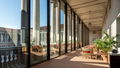
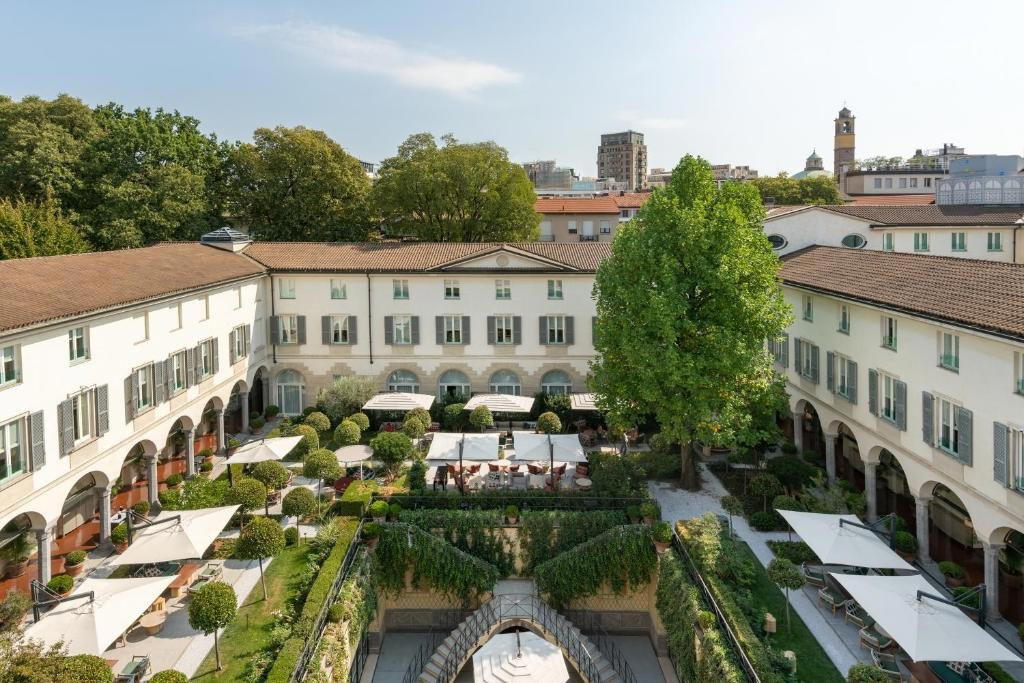
The building reveals almost nothing from the street. An 18th-century gate on Corso Venezia is the only signal that something significant lies behind the façade, a deliberate restraint that puts Portrait Milano in a recognisable European category of hotels that occupy historic palazzi and convents without advertising the fact. Pass through the entrance and the scale opens: a 2,800 square metre ground-floor piazza connects Corso Venezia 11 with Via Sant'Andrea 10, framed by a 17th-century colonnade. This is not a lobby in the conventional sense. It functions as a semi-public urban passage, where hotel guests and neighbourhood regulars share space across restaurants, bars, and boutiques. That model, the hotel as urban address rather than sealed sanctuary, is increasingly common in cities where the leading historic real estate requires an institutional footprint to justify its preservation. Portrait Milano's piazza executes that model with genuine architectural scale.
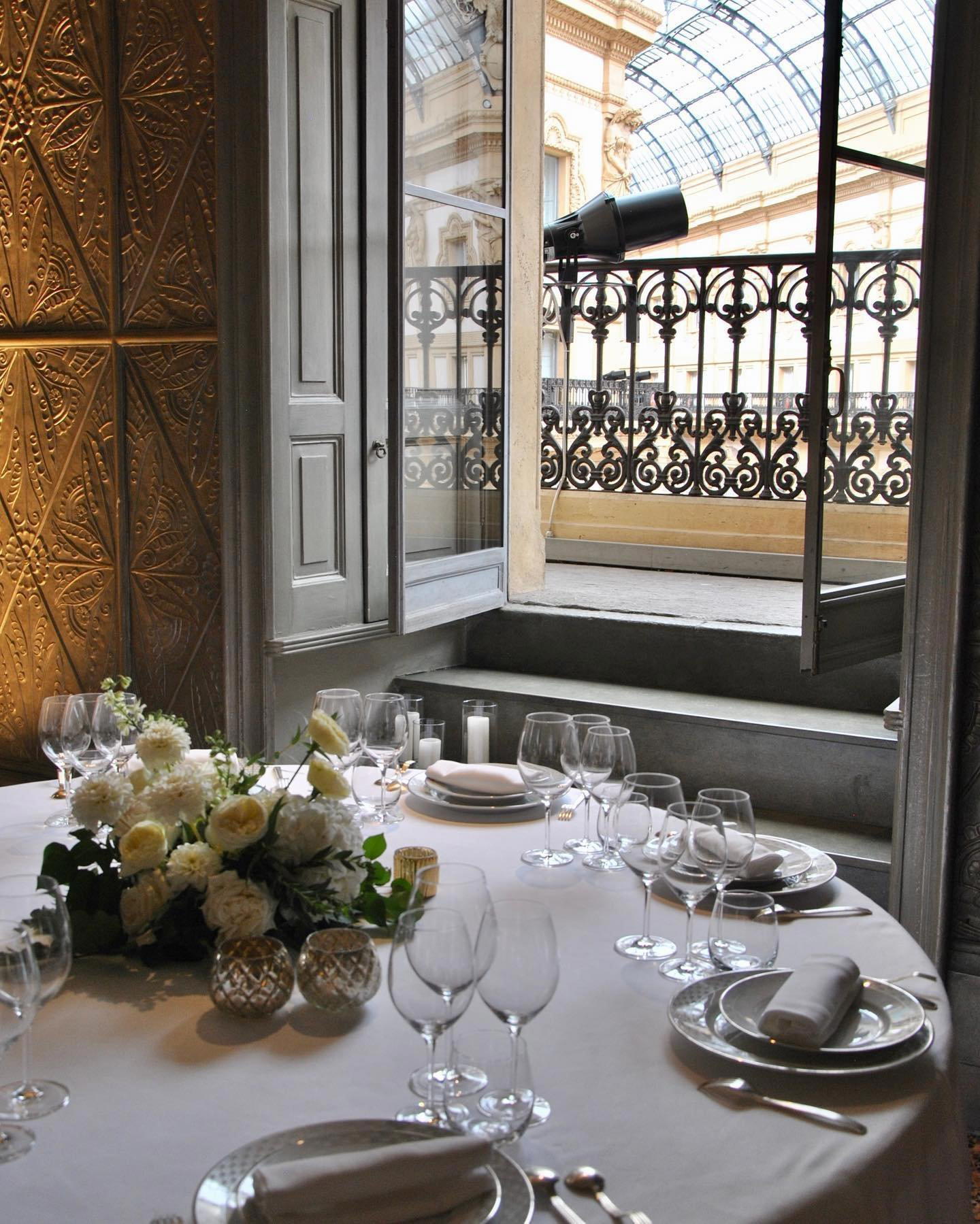
The 73 rooms and suites occupy the first floor, designed by Michele Bönan, the Ferragamo family's consistent collaborator across the Lungarno Collection. The aesthetic holds Baroque structural elements alongside a mid-century modernist influence, coffered ceilings reading against furniture that belongs to a different century. Some rooms offer private patios; others look out over the garden. Carrara marble bathrooms are standard in this price tier for Milan, but the proportions here benefit from the building's original footprint. Rates begin at approximately $1,383 per night, placing the property at the upper end of the Milanese luxury segment alongside properties like the Hotel Principe di Savoia and the Grand Hotel et de Milan.
Daytime at the Piazza: The 10_11 Bar and Its Garden Logic
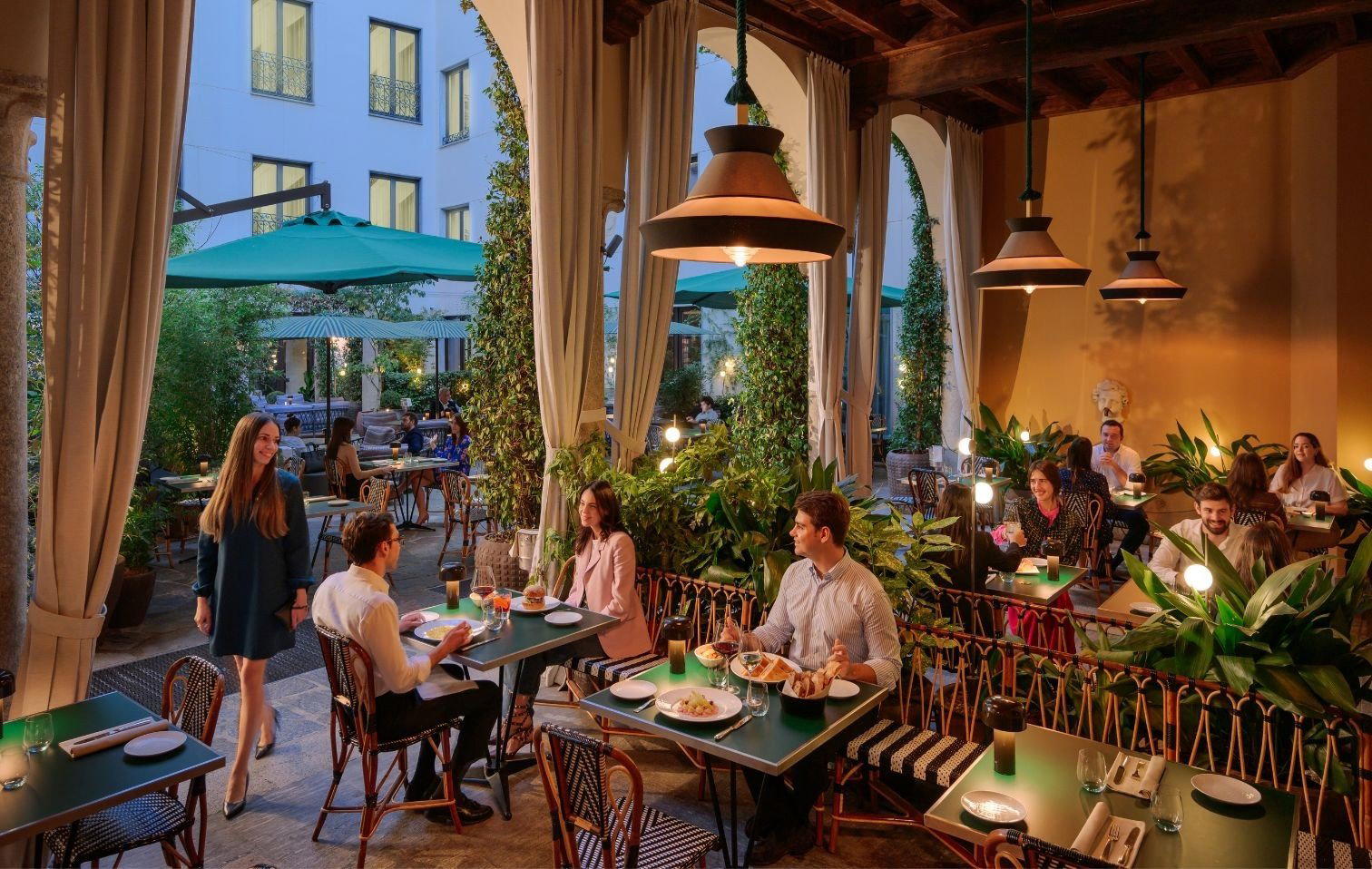
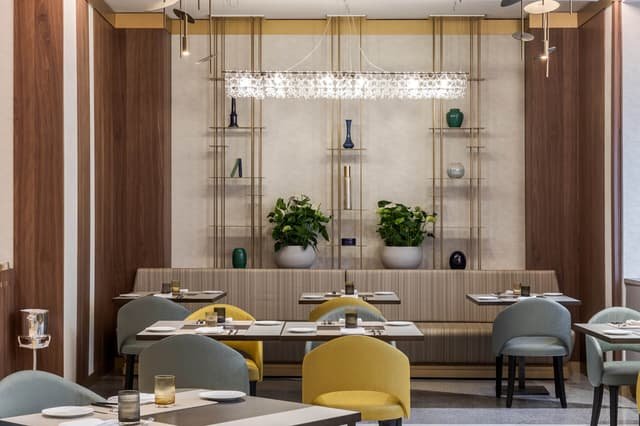
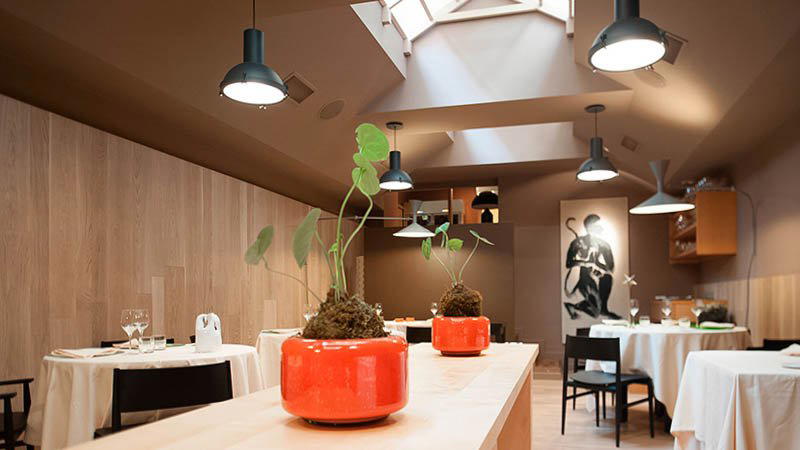
Lunch-versus-dinner question at Portrait Milano is really a question of which of the property's two distinct food and beverage registers suits you. During daylight hours, the primary draw is 10_11, the all-day dining venue that runs from breakfast through aperitivo and into dinner. Its garden lounge is the more casual of the two main spaces, the kind of setting where the pace of a Milanese working lunch feels natural, and where the late-afternoon aperitivo slot carries its own social logic. In a city that takes the aperitivo hour seriously as a transitional ritual rather than a preamble, having a garden setting within a 17th-century colonnade is a material advantage. The daytime atmosphere at the piazza level also benefits from its position as a public thoroughfare: the energy comes from foot traffic as much as from hotel occupancy, which keeps the space from feeling insular during the hours when luxury hotels can go quiet.
For visitors exploring Milan's broader food scene, our full Milan restaurants guide maps the city's dining options by neighbourhood and price tier, providing context for how Portrait Milano's on-site offerings sit within the wider picture. Properties like Vico Milano and 10 Corso Como Café offer different daytime propositions in nearby postcodes, useful for guests who want to move between properties during a longer stay.
Evening: Beefbar and the Rumore American Bar
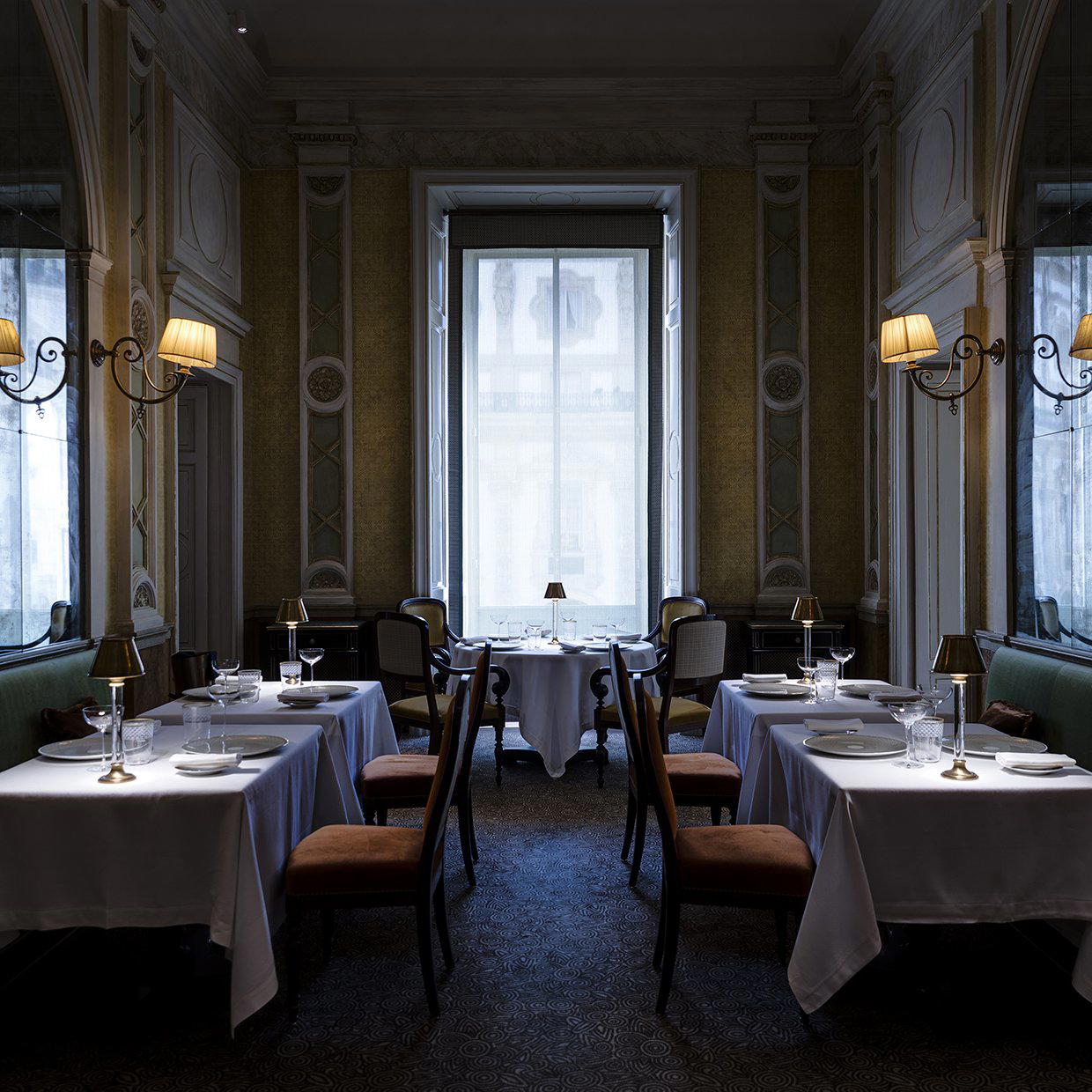
After dark, the register shifts. Portrait Milano houses Italy's first Beefbar, the Monaco-originated steakhouse group that has built a specific identity around premium cuts and a particular kind of confident, unsentimental dining room atmosphere. Beefbar operates across multiple European cities, and its presence here is notable for what it signals about Portrait Milano's positioning: rather than commissioning a restaurant concept designed exclusively for the hotel, the Lungarno Collection brought in an operator with its own international identity and clientele. That decision places Portrait Milano closer to the model used by urban luxury hotels in London and Paris, where the restaurant operates as a destination independent of the room count, rather than as an amenity for guests. The Rumore American Bar completes the evening programme, functioning as the cocktail counterpart to the restaurant's food focus.
The split between a casual all-day operation and a higher-intensity evening restaurant under the same roof is a format that requires careful management of atmosphere and pricing, two programmes that can undermine each other if the physical separation isn't clear. The piazza's layout, with multiple distinct spaces across the colonnade, addresses that structurally.
The Spa: Anti-Aging as Category, Not Amenity
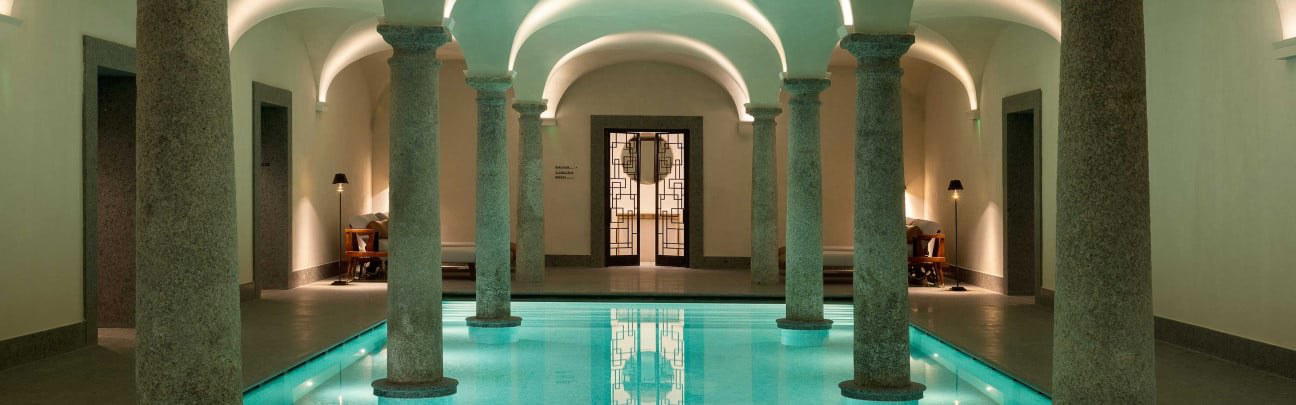
The Longevity Spa occupies a category of its own within the Italian hotel spa market. The facility is positioned as Europe's most advanced biohacking and anti-aging concept, a claim that places it in a growing international segment where spa programming moves beyond massage and thermal circuits into longevity science. The wet area, which includes an indoor heated pool beneath the original vaulted cellar ceilings, gives the facility a visual distinctiveness that most urban hotel spas cannot replicate. A 24-hour gym, steam room, sauna, and dedicated treatment rooms complete the programme. For guests where wellness infrastructure drives hotel selection, this positions Portrait Milano differently from peers that treat the spa as a secondary feature.
The Lungarno Collection in Context
Portrait Milano is the third urban property in the Lungarno Collection's Portrait line, following the Rome and Florence iterations. For guests building an Italian itinerary around the collection, the brand offers a consistent design sensibility across cities while each property is shaped by its specific building and location. The Ferragamo family's involvement gives the collection a fashion-industry provenance that reads differently from international chain luxury, closer in spirit to properties like Four Seasons Hotel Firenze in Florence or Passalacqua in Moltrasio, where the owning identity shapes the experience as much as the operational standard.
Across Italy more broadly, the category of design-led luxury properties with strong local ownership credentials is well-populated. Aman Venice, Castello di Reschio in Lisciano Niccone, Borgo Santandrea on the Amalfi Coast, Il San Pietro di Positano, and JK Place Capri each occupy regional niches with comparable positioning signals. Portrait Milano's urban format, however, serves a different use case: the city-stay guest who needs proximity to the fashion and design industry rather than the atmosphere of a rural retreat or coastal escape. For rural alternatives with comparable credentials, Rosewood Castiglion Del Bosco in Montalcino, Borgo Egnazia in Savelletri di Fasano, and Corte della Maestà in Civita di Bagnoregio offer contrast. Casa Maria Luigia in Modena and Il Pellicano in Porto Ercole round out the range of Italian properties at a comparable tier. For those extending beyond Italy, Bulgari Hotel Roma in Rome offers a useful comparison point on the luxury fashion-house hotel format. Aman New York, The Fifth Avenue Hotel, and Amangiri in Canyon Point provide international benchmarks in the same rate tier.
Planning a Stay
Portrait Milano's Leading Hotels of the World membership (2025) means it can be booked through that network's reservation channels as well as directly. For fashion week periods in February and September, lead times of several months are standard across the Golden Quadrangle tier, the 73-room inventory fills quickly when the industry convenes. For design week in April, comparable pressure applies. Outside those windows, the property operates within the general rhythms of Milanese hotel demand, which peaks in spring and autumn and quiets through August. The 3Rooms 10 Corso Como offers a lower-key alternative for visitors whose schedule falls outside the main fashion calendar and who prioritise design-district access over full hotel infrastructure.
Similar Picks
Comparable venues nearby, for context on price, style, and recognition.
| Venue | Cuisine | Price | Awards | Notes |
|---|---|---|---|---|
| Portrait MilanoThis venue (the venue you are viewing) | luxury historic seminary conversion | Not listed | 2 Michelin Keys · World's 50 Best #39 | Not listed |
| Grand Hotel et de Milan | Historic luxury palace hotel in Milan's fashion district | Not listed | 2 Michelin Keys · Leading Hotels of World Member | Brera |
| Mandarin Oriental Milan | Contemporary Italian design in historic 18th-century buildings with feng shui influences | Not listed | 2 Michelin Keys · La Liste Top Hotels | Brera |
| Bvlgari Hotel Milan | Renovated 18th-century Milanese palazzo with contemporary luxury design | Not listed | 2 Michelin Keys · La Liste Top Hotels | Brera |
| Hotel Principe di Savoia, Dorchester Collection | Beaux Arts luxury heritage hotel with Milanese elegance | $300–500 | 1 Michelin Key · La Liste Top Hotels | Stazione Centrale - Ponte Seveso |
| Palazzo Parigi Hotel & Grand Spa Milano | Meticulously designed private palace with dazzling marble floors and light-filled spaces by architect Paola Giambelli. | Not listed | 1 Michelin Key · La Liste Top Hotels | Brera |
Recognition history
Dated appearances from independent guides and award organizations, with the underlying list record or original source where available.
Michelin 2 Keys
Michelin
World's 50 Best Hotels #39 · No. 39
World's 50 Best · 2026 World’s 50 Best Hotels 1-50
Forbes 4-Star
Forbes
Mr & Mrs Smith Seal of Approval
Mr & Mrs Smith
Virtuoso Luxury Hotel Partner
Virtuoso
Full recognition history (9 entries)
Leading Hotels of World Member
Leading Hotels of World
Michelin 2 Keys
Michelin
World's 50 Best Hotels 51-100 #99
World's 50 Best
Michelin 2 Keys
Michelin
Continue exploring
More in Milan
Hotels in Milan
All hotels in Milan →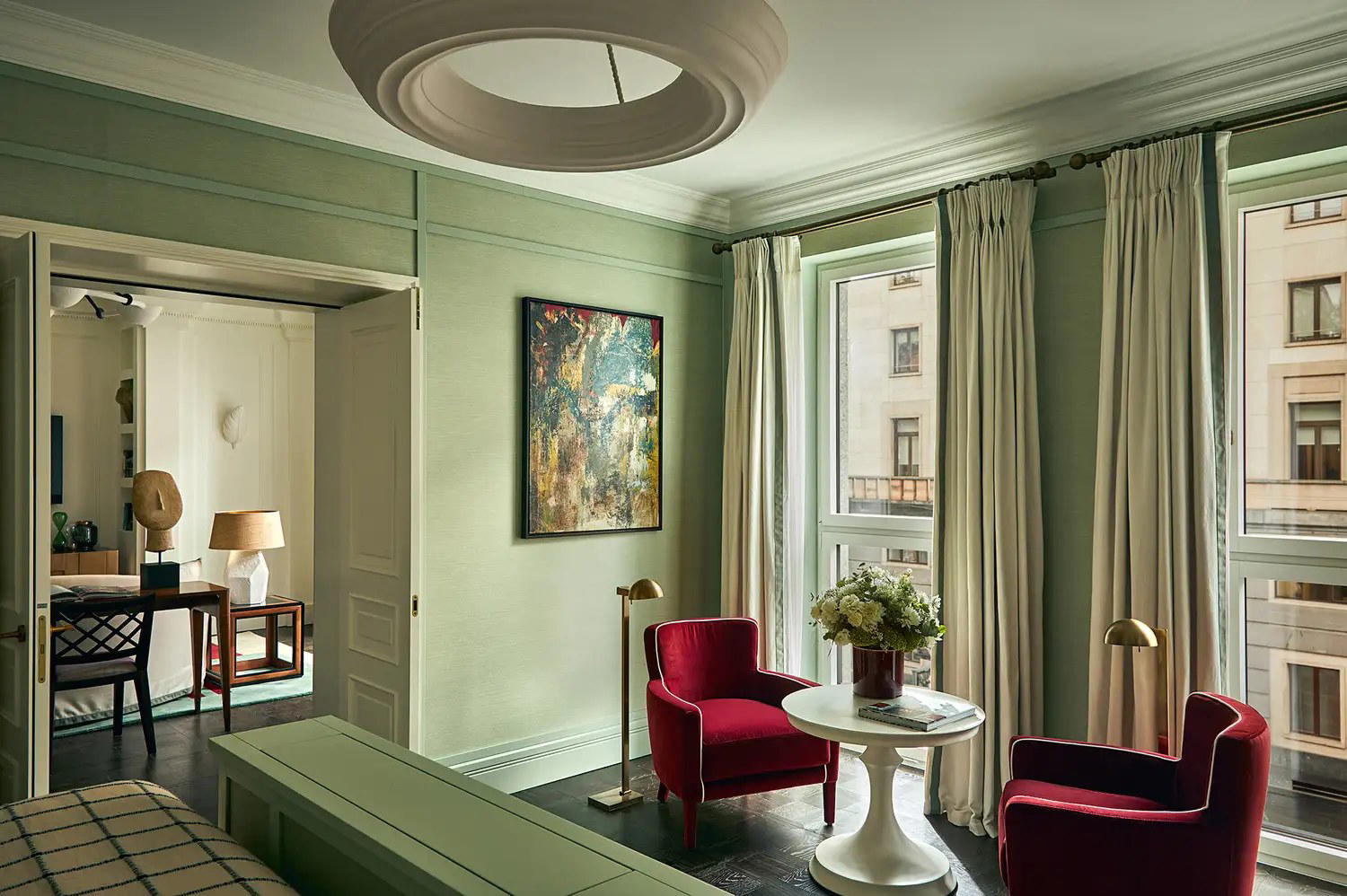
Bars in Milan
All bars in Milan →
Restaurants in Milan
All restaurants in Milan →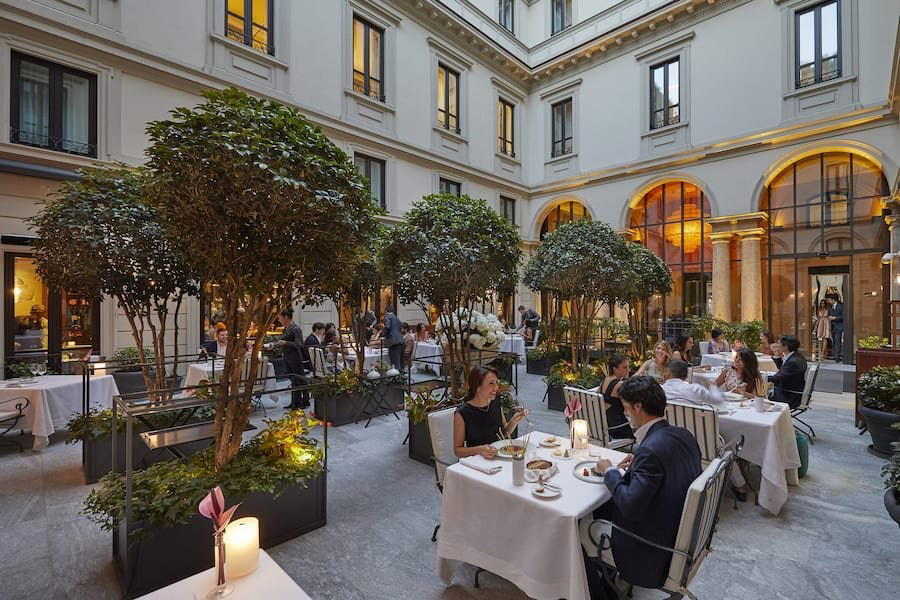
Details
- Elegant
- Sophisticated
- Modern
- Intimate
- Romantic Getaway
- Business Trip
- Anniversary
- Historic Building
- Wi Fi
- Pool
- Spa
- Fitness Center
- Room Service
- Concierge
- Restaurant
- Sauna
- Garden
- Wheelchair Accessible
- Step Free Entrance
- Elevator
- Accessible Restroom
Sophisticated and serene with timeless elegance, featuring midcentury modern furniture, geometric art, soundproofed rooms, and a peaceful atrium restaurant overlooking a garden.