




Hotel Lungarno is a hotel on Borgo San Iacopo in Florence.
Pearl is the En Primeur Club membership app — saves, bookings, and concierge access live there. Same editors, same standards.
- Address
- Borgo San Iacopo, 14, 50125 Firenze FI
- Phone
- +39 055 3961
- Website
- lungarnocollection.com
- Directions
- Get directions
 Saves & bookings on Pearl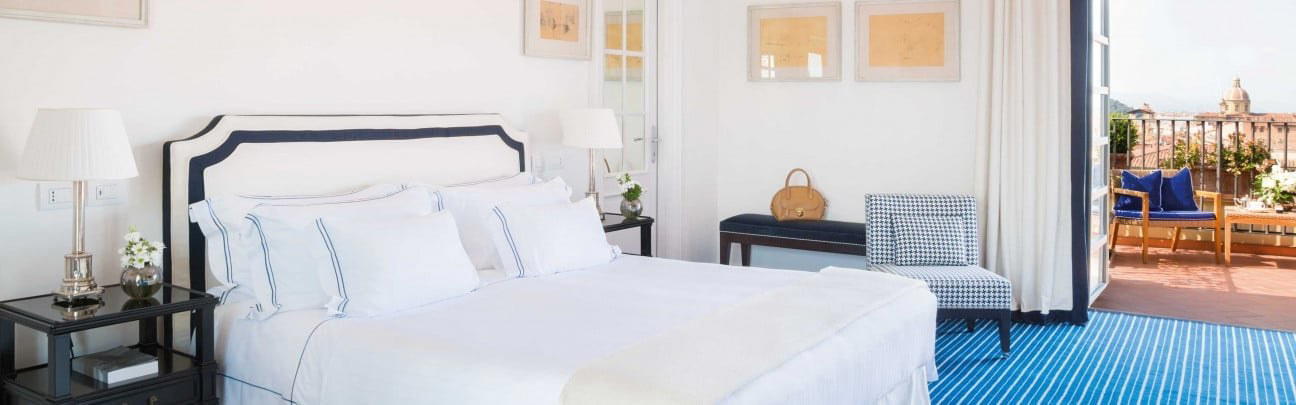
Where the Arno Does the Decorating
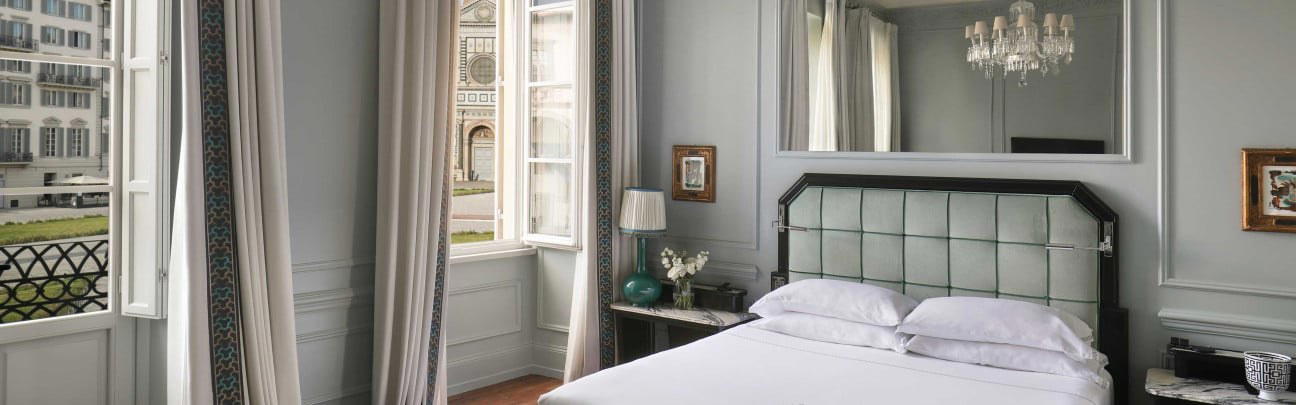
Approach Hotel Lungarno from Borgo San Iacopo on a clear morning and the logic of the address becomes immediately apparent. The Arno fills the windows before you've unpacked, and the Ponte Vecchio sits close enough that the goldsmiths' shops are legible from a river-facing room. This is the Oltrarno, Florence's south bank, traditionally the craftsmen's quarter, and the hotel sits at the point where that neighbourhood character sharpens into something more concentrated. The building itself is a centuries-old mansion, refurbished in full in 2017, and the renovation leaned into the particularity of that history rather than smoothing it away.
Florentine boutique hotels in this price tier have converged on a familiar formula: period architecture, contemporary art insertions, and a restaurant that carries at least one major award. Hotel Lungarno follows that pattern but with a provenance that gives it distinct weight. As the first property opened by the Ferragamo family under the Lungarno Collection, a portfolio that now spans Florence and Rome, it functions as the reference point against which the others are measured. The family's transition into hospitality drew early scepticism, as it tends to when fashion houses move into hotels, but the Lungarno Collection has since accumulated enough critical recognition to settle that question. The hotel's Michelin 1 Key recognition places it in a defined tier of Florence's luxury accommodation, alongside properties like the Four Seasons Hotel Firenze and Palazzo Portinari Salviati.
Michele Bönan and the Grammar of the Rooms
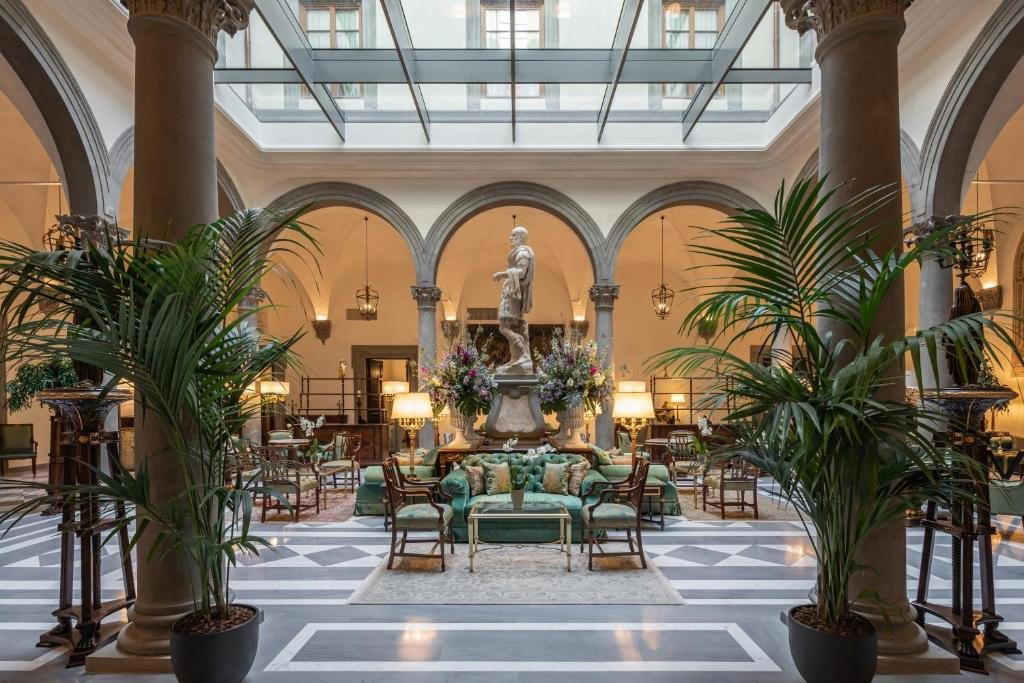
The interior logic of Hotel Lungarno is legible from the lobby: navy blue anchors almost every surface, nautical references recur without tipping into pastiche, and the proportions feel deliberately intimate rather than grand. This is Bönan's signature, a Florentine architect whose hotel interiors have set a recognisable language across the Lungarno Collection. The style sits closer to a private residence than to an international luxury hotel, which is partly a function of the building's age and partly a deliberate choice about scale. At 73 rooms, the property operates at the size where staff-to-guest ratios can remain personal without requiring a separate staffing architecture to manage them.
The art collection changes that calculus further. Works by Picasso and Jean Cocteau hang in the lounge, part of a 20th-century collection that reads as curatorial rather than decorative. In hotels at this price point, rooms from approximately $496 per night, the presence of a substantive art collection is increasingly a differentiator rather than a standard feature. Properties like Villa Cora and Ad Astra each make their own architectural and design arguments, but few can match the density of verifiable art historical weight that hotel concentrates into its public spaces.
The Return Visit Logic
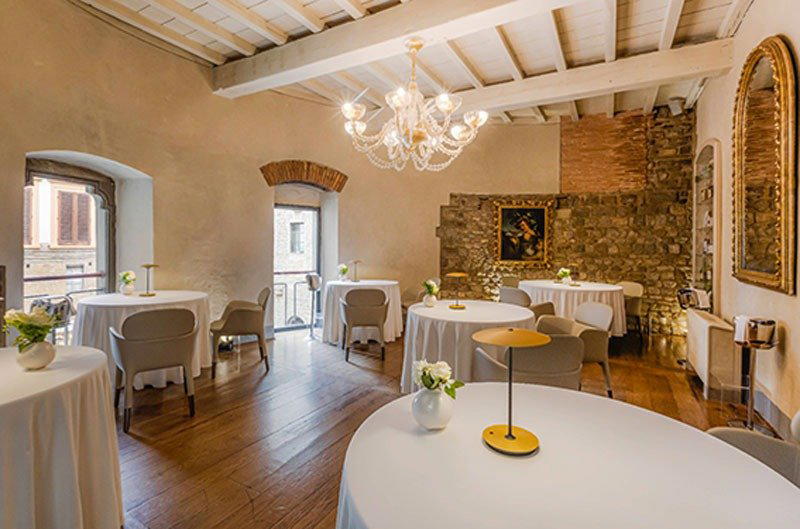
Guests who return to the hotel, and the, tend to organise their stay around two fixed points: a river-facing room and a dinner reservation at Borgo San Jacopo. The restaurant, which holds a Michelin star, opens directly onto the Arno, with Ponte Vecchio framed in the windows. In Florence's dining scene, where Michelin-starred addresses are spread across neighbourhoods with varying degrees of tourist traffic, Borgo San Jacopo occupies a specific niche: it is simultaneously one of the city's most formally recognised kitchens and among the more scenographically positioned. The combination is not accidental. The Lungarno Collection's approach to food and beverage has consistently treated the restaurant as load-bearing rather than incidental.
For regulars, the unwritten menu at the hotel tends to be experiential rather than gastronomic. The Oltrarno location means proximity to the Boboli Gardens, the Pitti Palace, and the workshop-heavy streets of Via Maggio and Via dei Serragli, areas of Florence where the Renaissance-tourism circuit thins out and the city becomes more navigable. Guests returning for a third or fourth stay tend to know this, and the hotel's position on the south bank becomes its own kind of advantage: central by distance, but positioned against the grain of the main tourist flow. This is not an accident of geography, it is one of the more considered aspects of where the Ferragamo family chose to plant their first property.
Florence's Boutique Hotel Tier: Where Lungarno Sits
The city's luxury accommodation market has developed distinct sub-categories over the past decade. At one end, large-footprint international operators, the Four Seasons Hotel Firenze with its 15th-century convent and 11-hectare garden, offer a version of Florence that operates almost as a self-contained environment. At the other, design-led boutiques with 20 to 50 rooms make location and interior specificity their primary argument. The hotel occupies a middle position: 63 rooms is boutique by international standards but substantial for this part of the Oltrarno, and the Michelin Key recognition places it in a tier that the smaller, newer entrants are still working toward.
Comparison with properties like Brunelleschi Hotel, Hotel Calimala, or Riva Lofts Florence clarifies the positioning. Each operates a distinct editorial identity, historic tower conversion, contemporary design statement, repurposed industrial space, and the hotel's Arno-facing address with a starred restaurant attaches it to a different competitive set. Within Italy more broadly, the Lungarno Collection sits alongside properties like Aman Venice, Castello di Reschio, and Borgo Santandrea in the category of family-or-founder-led luxury with a clear design intelligence. The comparison with Rosewood Castiglion Del Bosco in Montalcino or Il Pellicano in Porto Ercole also holds: Italian properties where the setting does specific work that international-brand equivalents cannot replicate from the ground up.
Planning a Stay: What to Know
The hotel sits at Borgo San Iacopo, 14, in the Oltrarno district, a short walk across any of the central bridges from the Duomo and Uffizi side of the city. The 2017 refurbishment means the physical condition of the property is relatively recent by the standards of Florence's historic hotel stock.
City Peers
Comparable venues nearby, for context on price, style, and recognition.
| Venue | Cuisine | Price | Notes |
|---|---|---|---|
| Hotel LungarnoThis venue — the venue you are viewing | Intimate luxury boutique on the River Arno with art collection and Michelin dining. | $$$$ | Not listed |
| The St. Regis Florence | Luxurious historic palazzo blending Renaissance grandeur with modern opulence. | $$$$ | San Frediano |
| THE PLACE Firenze | Luxury boutique townhouse hotel designed as a sophisticated private residence with curated Italian character and contemporary refinement. | $$$$ | Santo Spirito |
| Hotel Calimala | Luxury boutique hotel occupying two adjacent historic Florentine buildings with contemporary renovations by designer Alex Meitlis, featuring authentic materials like pietra serena and Tuscan marble. | $$$ | Santo Spirito |
| Grand Hotel Minerva | Historic palazzo converted to upscale boutique hotel with contemporary amenities and classical Italian design elements. | $$$ | Santo Spirito |
| Collegio alla Querce | Timeless urban retreat blending Renaissance villa with Tuscan country estate charm. | $$$$ | San Gervasio |
Recognition history
Dated appearances from independent guides and award organizations, with the underlying list record or original source where available.
Forbes 4-Star
Forbes
La Liste Top Hotels
La Liste
Mr & Mrs Smith Smith Seal of Approval
Mr & Mrs Smith
Virtuoso Luxury Hotel Partner
Virtuoso
Michelin 1 Key
Michelin
Small Luxury Hotels of the World Member
Small Luxury Hotels of the World
Michelin 1 Key
Michelin
Continue exploring
More in Florence
Hotels in Florence
Browse all →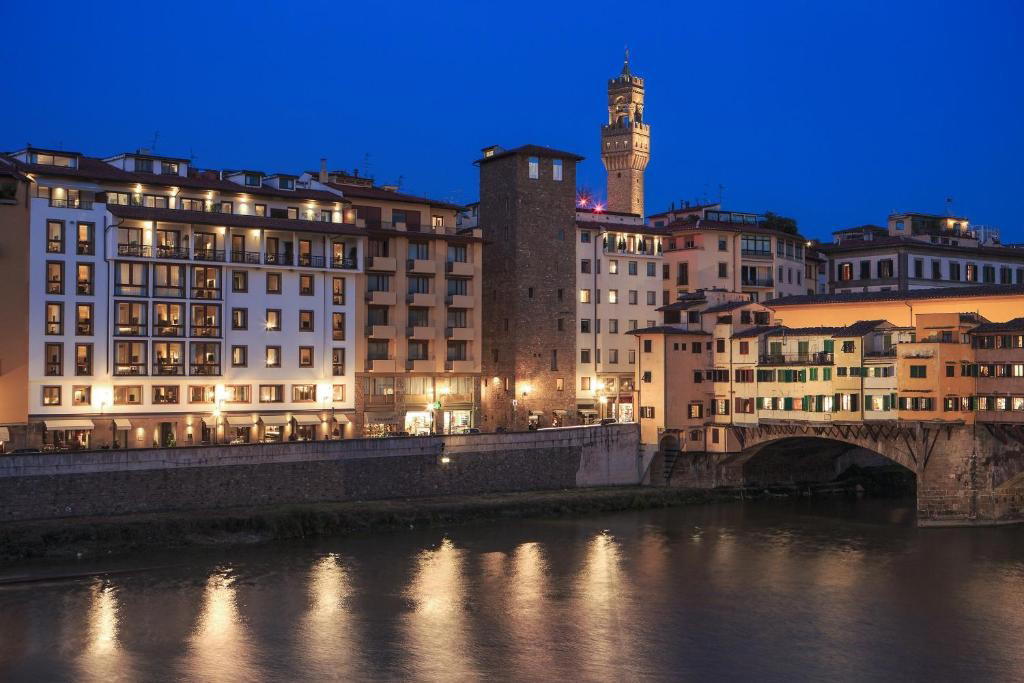
Bars in Florence
Browse all →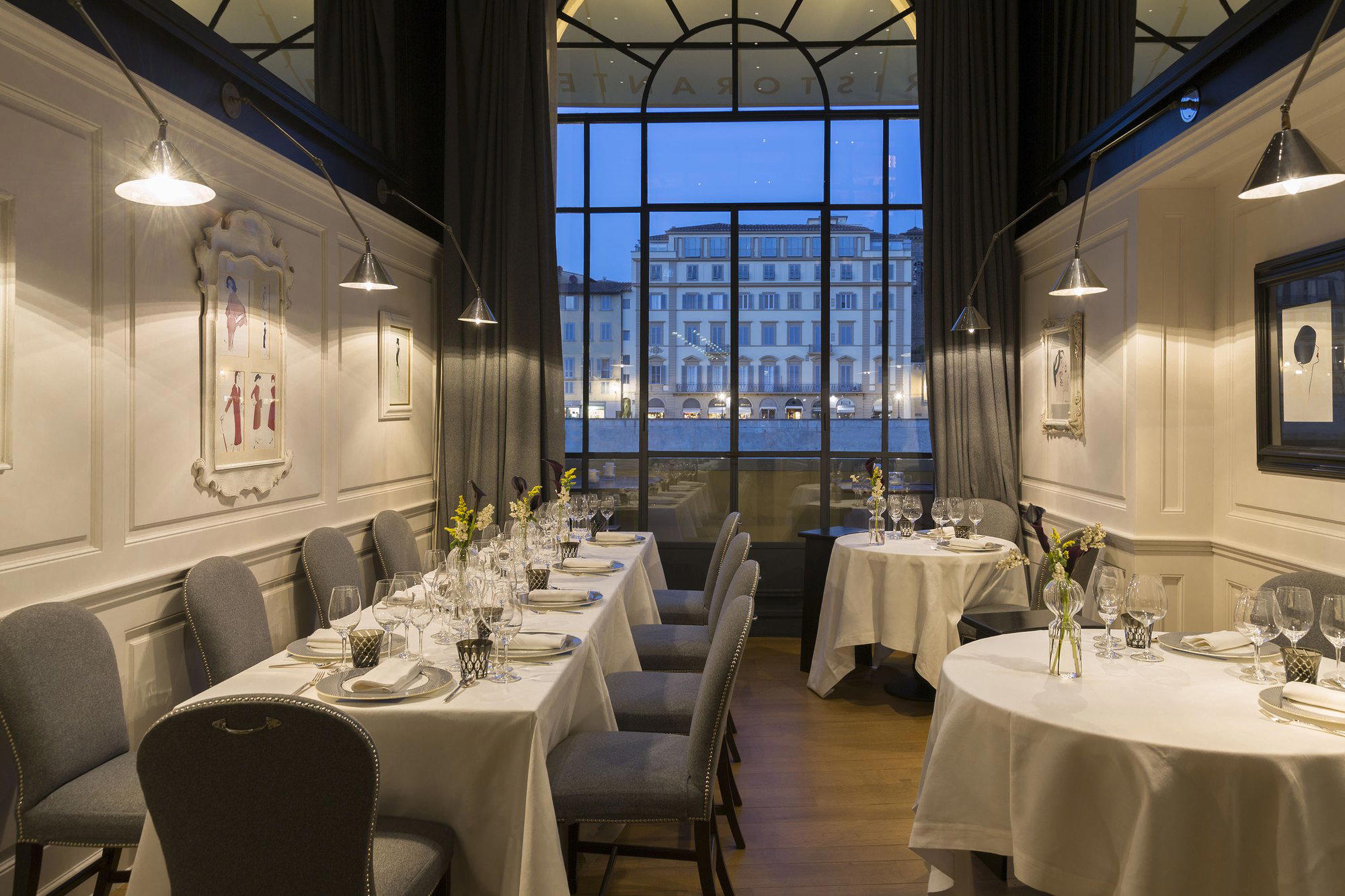
Restaurants in Florence
Browse all →
At a Glance
- Elegant
- Sophisticated
- Romantic
- Intimate
- Classic
- Romantic Getaway
- Honeymoon
- Family Vacation
- Anniversary
- Waterfront
- Historic Building
- Terrace
- Panoramic View
- Wi Fi
- Spa
- Fitness Center
- Room Service
- Concierge
- Restaurant
- Bar
- Waterfront
- Street Scene
- Wi Fi
- Spa
- Fitness Center
- Room Service
- Concierge
- Restaurant
- Bar
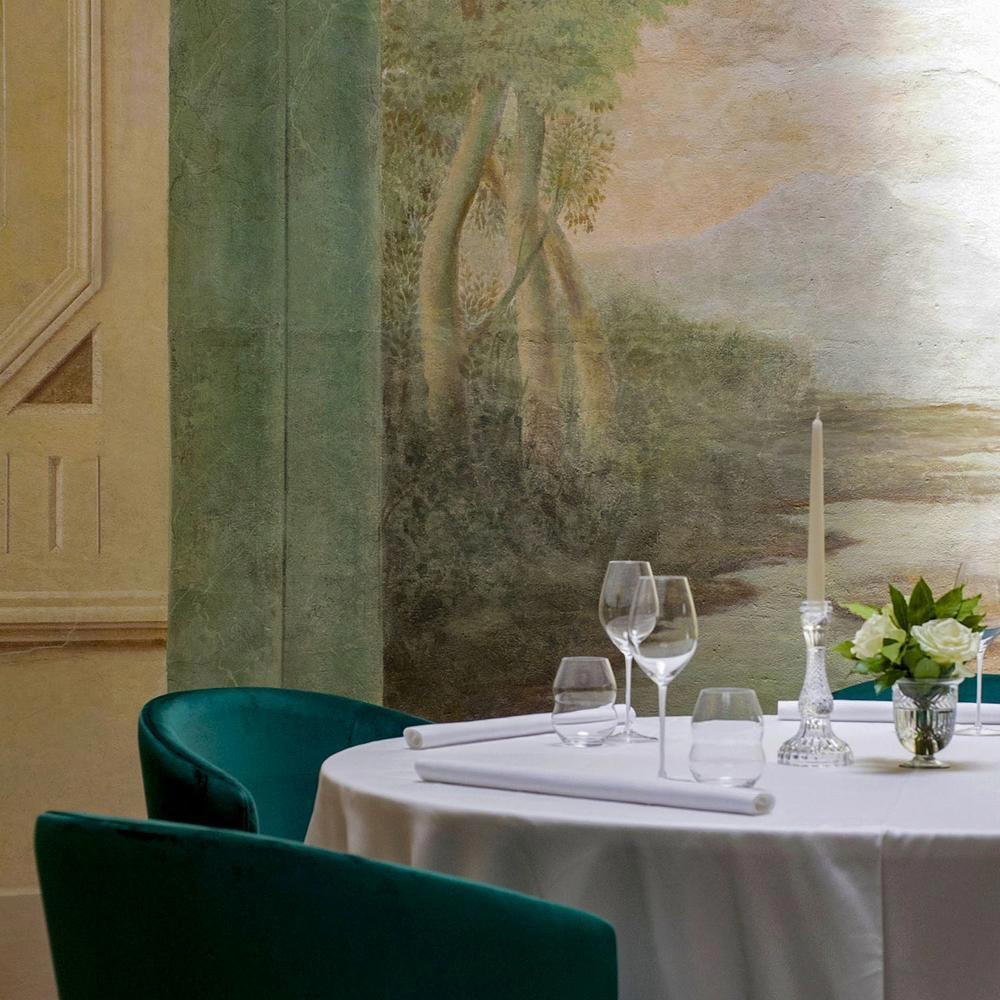
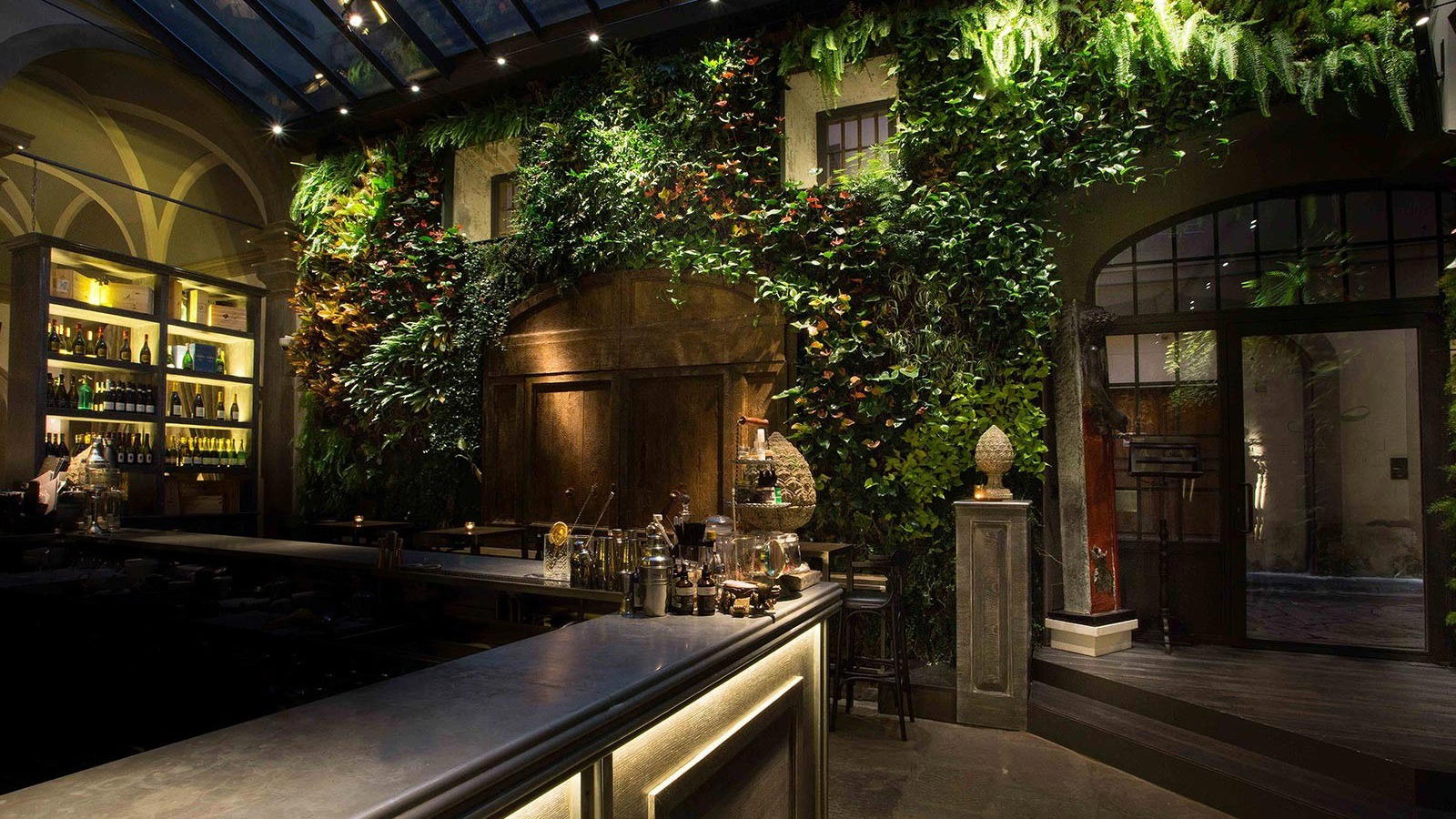
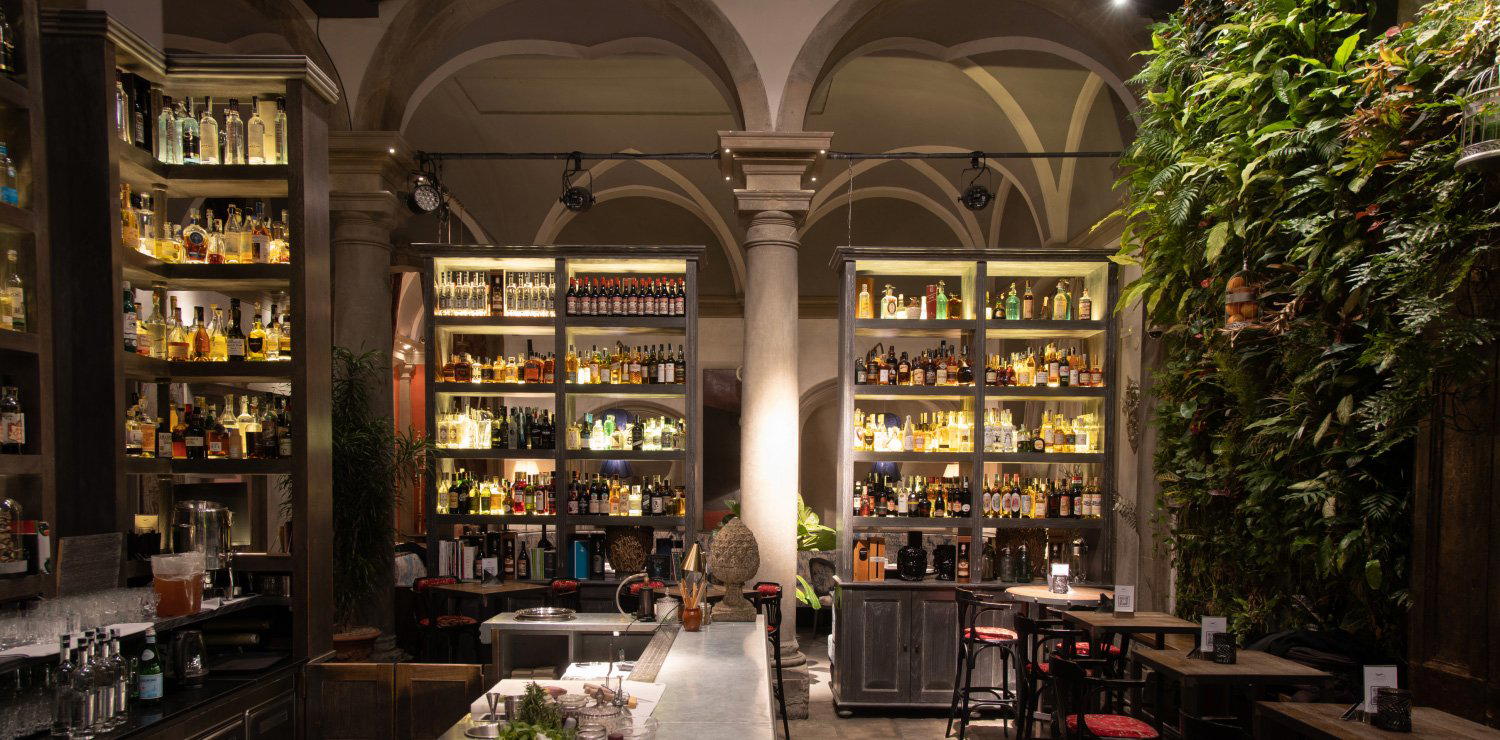
Elegant and stylish with nautical themes on the ground floor, classic furnishings, antiques, old paintings, and an open fireplace in the lounge bar.