

Michelin Plate · Tabelog 100 #85
Our verdict
A Michelin Plate-recognised yakitori counter in Motoazabu, Yakitori Hinata pairs charcoal-grilled Tamba-Sasayama chicken with an unusually serious wine list. Salt-dusted breast and balsamic-brushed liver sit alongside chicken-liver pâté as an opener, making a compelling case for yakitori beyond the smoky izakaya register. The name itself carries meaning: a ray of sunshine on Kurayamizaka, or 'darkness hill.'

Pearl is the En Primeur Club membership app, where members save venues, book tables and use the concierge.
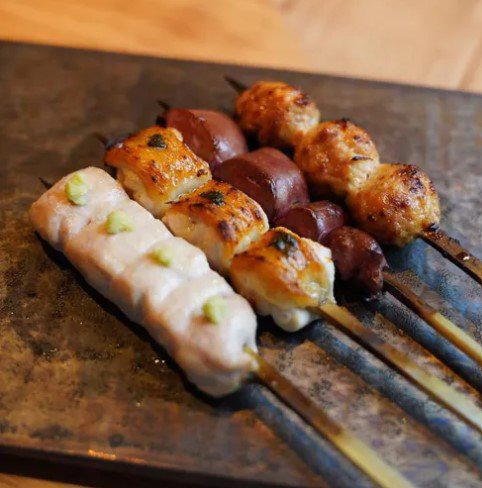
The menu
What to order
- Matsukaze jidori chicken skewers
- Whole-chicken yakitori
- Seasonal vegetable skewers
Smoke, Skewer, and the Counter as Stage
Yakitori in Tokyo operates across a wide spectrum. At one end sit the standing-room kushiyaki bars beneath Yurakucho's train tracks, where salary workers drink cold Sapporo and eat generic thigh skewers for under ¥1,000. At the other end, a smaller cohort of specialist counters has pushed the format into premium territory, sourcing single-breed birds from named farming regions, applying the same disciplined heat control you find at leading kappo kitchens, and building wine programs that would not embarrass a bistro in the 6th arrondissement. Yakitori Hinata, in the quiet residential pocket of Motoazabu, belongs firmly to that second group.
The choice of Motoazabu as a location already signals something about the register. This is not a neighbourhood of tourist foot traffic or office-crowd density. It is the kind of address that requires intention, you come here because you planned to, not because you wandered past. That geographic remove shapes the dining atmosphere in a way that few Minato-ku spots can replicate: the room absorbs guests who have made a deliberate decision, and that tends to concentrate the energy at the counter.
The Tamba-Sasayama Bird and Why Provenance Matters Here
The foundation of the menu is the chicken of the Tamba-Sasayama region, a locally raised breed that the owner-chef has built the entire concept around. In Japanese yakitori culture, breed and provenance have followed the same trajectory as wagyu beef: increasing specificity, named farms, and a consumer willingness to pay for traceability. Tamba-Sasayama, in Hyogo Prefecture, has a long agricultural history, and its poultry carries a reputation for firmer texture and more pronounced flavour than commodity birds, characteristics that matter enormously when the cooking method strips away every form of camouflage and delivers the ingredient directly to the palate.
At the grill, the counter format places the preparation in full view. This is the core theatrical logic of yakitori at this level: the chef becomes a visible technician, adjusting skewer position, rotating angles, controlling proximity to the charcoal binchotan with small precise movements. There is nothing hidden. Every decision about heat and timing is legible to an attentive guest. The discipline required to cook chicken to the precise texture that makes each cut worth eating, the liver pulled just before its centre loses its silkiness, the breast held long enough to develop a clean salt crust without drying, is exactly the kind of skill that becomes a form of theatre when it happens in front of you. See also Yakitori Omino and Asagaya BIRD LAND for other Tokyo counters operating at this tier of intention.
The Wine Angle: A Structural Departure
What separates Hinata from most yakitori specialists is the wine program. Pairing wine with grilled chicken skewers is neither obvious nor common in Tokyo, and the fact that the format works here says something about how the menu has been designed around that compatibility. Two preparations are particularly noted for their wine affinity: the seared chicken breast finished with salt from Guérande, the hand-harvested fleur de sel from Brittany's Atlantic coast, and the chicken liver skewer brushed with balsamic sauce. Both carry enough acid, fat, and structural flavour to hold conversation with wine in a way that simple tare-glazed kushiyaki does not.
The chicken-liver pâté that opens the meal reinforces this framing. Pâté as a yakitori appetiser is an unexpected move, and a deliberate one: it orients the guest towards a French-influenced sensibility before a skewer has been placed on the grill. The broader Tokyo dining scene has seen cross-tradition integration accelerate in recent years, with counters in the ¥¥¥ tier drawing on French technique to enrich Japanese formats. For more examples of this approach across the city's restaurant spectrum, see Aria di Takubo and 124. KAGURAZAKA.
Hinata has held a Michelin Plate in both 2024 and 2025, a designation that signals quality and consistency without carrying the full star-tier scoring weight. In the yakitori category, Michelin recognition at any level is meaningful: the format historically received less Michelin attention than kaiseki, sushi, or French cuisine, and the growing number of specialist yakitori counters appearing in the guide reflects both an editorial recalibration and a genuine rise in category ambition.
Within Tokyo's wider dining map, Hinata occupies a different competitive tier from the ¥¥¥¥ restaurants that dominate EP Club's starred selections. Venues like Aramaki operate in a higher price bracket and a different format register. Hinata's ¥¥¥ pricing positions it as an accessible entry into serious counter dining, particularly for guests who want the drama of live preparation and provenance-driven sourcing without the full commitment of an omakase evening at the top of the market.
The yakitori format is also thriving beyond Tokyo. Ichimatsu in Osaka and Torisaki in Kyoto represent the format's reach across the Kansai region, each operating with its own sourcing logic and grill discipline. For broader Japan dining context, EP Club covers HAJIME in Osaka, Gion Sasaki in Kyoto, akordu in Nara, Goh in Fukuoka, 1000 in Yokohama, and 6 in Okinawa.
The Name and Its Weight
The restaurant's name carries more meaning than most. Hinata translates roughly as a sunny place or a ray of sunshine, and the couple behind the counter chose it in reference to specific areas and relatives who carry personal significance to them. Set on Kurayamizaka, a street whose name translates as 'darkness hill,' the contrast is deliberate: sunshine on a dark slope. That kind of specificity in naming, where the concept connects to place, memory, and meaning rather than generic branding, tends to show up in restaurants where the personal stake in the work is high. It does not substitute for cooking quality, but it is rarely coincidental.
Know Before You Go
- Address: 201 3 Chome-12-4 Motoazabu, Minato City, Tokyo 106-0046
- Cuisine: Yakitori, with French-influenced wine pairings
- Price range: ¥¥¥
- Awards: Michelin Plate 2024, Michelin Plate 2025
- Getting there: Motoazabu is served by Hiroo Station (Hibiya Line) and Azabu-Juban Station (Namboku/Oedo lines); the restaurant sits in a residential area that rewards arriving by taxi or on foot from either station
- Planning note: Booking details are not publicly listed at time of writing; confirm availability through direct contact or a concierge familiar with the Minato-ku dining scene
Frequently asked questions
What do people recommend at Yakitori Hinata?
Two preparations that draw the most comment in the context of the wine program are the seared chicken breast finished with Guérande salt and the chicken liver skewer brushed with balsamic sauce. Both are designed with wine pairing in mind, which is unusual at this format level. The chicken-liver pâté served as an appetiser also appears frequently in reviews as a memorable opener. The underlying ingredient throughout is Tamba-Sasayama chicken, a regionally sourced breed whose firmer texture and pronounced flavour define the kitchen's approach. For more on how Tokyo's yakitori counters approach sourcing and preparation, see our full Tokyo restaurants guide.
Is Yakitori Hinata reservation-only?
At the ¥¥¥ price point in a low-footfall Motoazabu side street, with Michelin Plate recognition for two consecutive years, counters of this type in Tokyo almost universally operate on a reservation basis. Walk-ins are rarely practical at specialist yakitori counters where the chef manages output to skewer count and sourcing is tied to daily bird quantity. Booking in advance is the assumed protocol. If reservation details are not accessible through standard online channels, a Tokyo-based concierge service or hotel concierge familiar with Minato-ku's dining scene is the most reliable route. See also our full Tokyo hotels guide, Tokyo bars guide, and Tokyo experiences guide for broader trip planning.
Quick Comparison
| Venue | Cuisine | Price | Awards | Notes |
|---|---|---|---|---|
| Yakitori HinataThis venue (the venue you are viewing) | Yakitori | $150–200 | Michelin Plate · Tabelog 100 #85 | Not listed |
| Harutaka | Edo-Style Omakase Sushi | $200–300 | 3 Michelin Stars · World's 50 Best #76 | Sushi |
| RyuGin | Modern Kaiseki | $500+ | 3 Michelin Stars · World's 50 Best #41 | Kaiseki, Japanese |
| L'Effervescence | Modern French with Japanese Influences | $200–300 | 3 Michelin Stars · World's 50 Best #69 | French |
| HOMMAGE | Modern French with Japanese Influences | $150–200 | 2 Michelin Stars · World's 50 Best #78 | Innovtive French, French |
| MAZ | Innovative Peruvian-Japanese Fusion | $150–200 | 2 Michelin Stars · World's 50 Best #28 | Innovative |
Recognition history
Dated appearances from independent guides and award organizations, with the underlying list record or original source where available.
Michelin Plate
Michelin
Tabelog 100 #85 · No. 85
Tabelog · Tabelog 100 - Yakitori - EAST - 2025
Full recognition history (4 entries)
Michelin Plate
Michelin
Michelin Plate
Michelin
Continue exploring
More in Tokyo
Restaurants in Tokyo
All restaurants in Tokyo →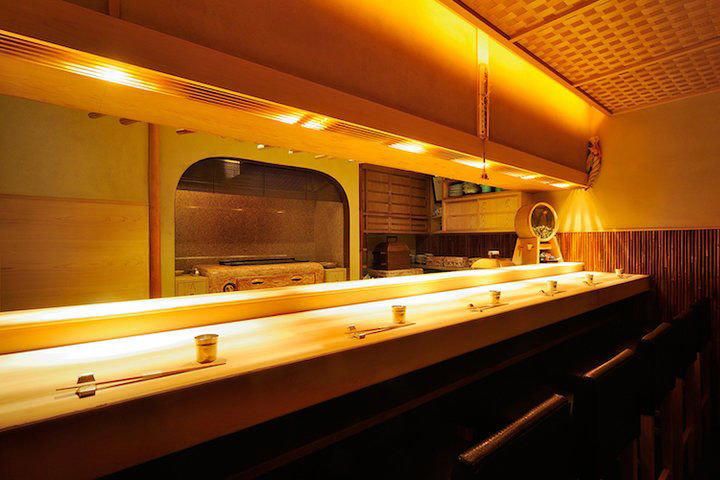

Bars in Tokyo
All bars in Tokyo →



Details
- Intimate
- Cozy
- Sophisticated
- Date Night
- Special Occasion
- Solo
- Chefs Counter
- Standalone
- Sake Program
- Beer Program
- Extensive Wine List
- Local Sourcing
- Set Menu
- Counter Dining
- Wine
- Sake
Current opening hours
- Monday
- 6–10 PM
- Tuesday
- 6–10 PM
- Wednesday
- 6–10 PM
- Thursday
- 6–10 PM
- Friday
- 6–10 PM
- Saturday
- Closed
- Sunday
- Closed
Hours can change for holidays and private events. Hours as of .
Intimate and cozy counter seating with a close view of the grill, creating a quiet, chef-driven atmosphere.