Woo Lae Oak


Michelin Bib Gourmand
Our verdict
One of Seoul's most enduring naengmyeon addresses, Woo Lae Oak in Jung-gu has held a Michelin Bib Gourmand since 2025 and placed twice in Opinionated About Dining's Asia rankings. The kitchen focuses tightly on cold buckwheat noodles in the northern Korean tradition, drawing a loyal local following that returns with the consistency of a weekly habit rather than a special-occasion impulse.

Pearl is the En Primeur Club membership app, where members save venues, book tables and use the concierge.
The menu
What to order
- Pyongyang Naengmyeon (mul naengmyeon)
- Bibim Naengmyeon
- Bulgogi
- Yukhoe (beef tartare)
Cold Noodles, Long Habit: The Regulars at Woo Lae Oak
Jung-gu is one of Seoul's older commercial districts, a neighbourhood where office buildings press up against low-rise storefronts and lunch crowds move with the purposeful rhythm of people who already know exactly where they're going. On Changgyeonggung-ro, that purposefulness tends to converge on Woo Lae Oak. The building doesn't announce itself with the theatrical signage common to newer dining destinations.
What the Regular Knows
In Seoul's naengmyeon tradition, the difference between a house that locals return to weekly and one that tourists visit once often comes down to broth depth and noodle tension. Naengmyeon, the cold buckwheat noodle dish with roots in Pyongyang and Hamhung, divides broadly into two schools: mul naengmyeon, served in a clear, chilled meat broth, and bibim naengmyeon, tossed in spiced sauce. Woo Lae Oak sits within the Pyongyang-style mul naengmyeon tradition, where restraint in the broth is the technical benchmark. A broth that tastes aggressively of anything, too much beef, too much vinegar, too sweet, signals a kitchen that has stopped paying attention to balance.
What keeps regulars at any naengmyeon house isn't novelty; it's the absence of deviation. The appeal of a long-standing naengmyeon counter is precisely that it doesn't surprise. Returning guests aren't hoping to discover something new; they're checking that the standard hasn't slipped. Woo Lae Oak's dual recognition from Opinionated About Dining, ranked #418 in Asia in 2025 and #394 in 2024, alongside its Michelin Bib Gourmand (2025) suggests the kitchen has managed that consistency at a level critics notice. For context, the Bib Gourmand designation marks places Michelin inspectors consider worth seeking out for quality at accessible prices, and the single-won price tier confirms this is not a destination that charges for prestige.
The Naengmyeon Scene in Seoul: Where Woo Lae Oak Sits
Seoul's naengmyeon houses exist on a spectrum from canteen-style high-volume operations to more considered addresses with longer queues and regional pedigree claims. The city has a cluster of well-regarded addresses that serious eaters treat as a comparative set. Jinmi Pyeongyang Naengmyeon and Jungin Myeonok operate in overlapping territory, as does Nampo Myeonok. Bongmilga and Okdol Heyonok round out a peer group that locals navigate with genuine opinions about which bowl belongs to which occasion.
What distinguishes Woo Lae Oak within this set is the combination of external validation and local repeat-visit behavior. Both audiences appear to agree.
For comparison, Seoul's more expensive Korean dining tier, including places like Gaon or Kwon Sook Soo in Gangnam-gu, prices at ₩₩₩₩ and centres on multi-course tasting formats. Woo Lae Oak's single-won pricing puts it in an entirely different register: this is a midday bowl, not an evening event. The regulars are not occasion diners.
The Naengmyeon Tradition Beyond Seoul
The naengmyeon revival in South Korea has been quiet but consistent, and it extends well beyond the capital. In Busan, a parallel scene has developed its own addresses worth tracking: 100.1. Pyeongnaeng, Buda Myeonoak, and Damiok each carry the tradition in the country's second city, while Mori in Busan represents another form of Korean kitchen seriousness in the south. The broader Korean dining world, from temple food at Baegyangsa Temple in Jangseong-gun to the Jeju restaurant scene anchored by places like The Flying Hog in Seogwipo, reflects an increasingly documented interest in regional and traditional Korean cooking across all price tiers.
Naengmyeon sits at the accessible end of that tradition, but it's no less technically demanding for its price. The noodle must be made correctly, buckwheat dough is less forgiving than wheat, and the broth requires time and precision. The leading mul naengmyeon broths are built from beef and dongchimi (radish water kimchi), chilled, and seasoned with enough acidity and subtle sweetness to hold interest despite their visual clarity. Getting that balance repeatable, every service, over years, is the actual discipline on display at a house like Woo Lae Oak.
Planning Your Visit
Woo Lae Oak is located at 62-29 Changgyeonggung-ro, Jung-gu, Seoul, in a central district accessible from multiple subway lines.Budget: single-won pricing places this firmly in the affordable range, consistent with Michelin's Bib Gourmand criteria for quality at accessible cost. Booking: Dress: no dress code applies; the regulars arrive in office attire or casual clothes without distinction. For broader Seoul dining planning, see our full Seoul restaurants guide, and explore further with our Seoul hotels guide, bars guide, wineries guide, and experiences guide.
Frequently asked questions
Is Woo Lae Oak child-friendly?
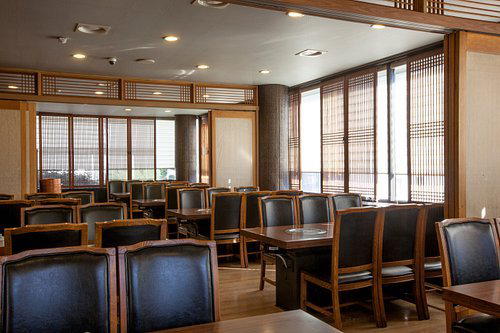
Naengmyeon houses in Seoul generally accommodate families, and Woo Lae Oak's canteen-adjacent format in Jung-gu, straightforward seating, bowl-focused service, suits all ages. The ₩ price range keeps a family meal accessible. No specific children's menu is confirmed in available data, but the format is not restrictive.
How would you describe the vibe at Woo Lae Oak?
Jung-gu sets the tone: a working commercial district where lunch is a fast, purposeful ritual. Woo Lae Oak fits that cadence, it draws regulars on tight schedules and earns a Michelin Bib Gourmand without the ceremony of a tasting-menu room. Expect focused, efficient service around a bowl-centred menu, not a lingering dinner atmosphere.
Is Woo Lae Oak award-winning?
Woo Lae Oak has received recognition including: Opinionated About Dining Top Restaurants in Asia Ranked #418 (2025); Michelin Bib Gourmand (2025); Opinionated About Dining Top Restaurants in Asia Ranked #394 (2024).
What do regulars order at Woo Lae Oak?
The house speciality is naengmyeon, the cold buckwheat noodle dish that defines the venue's entire identity and earned it both a 2025 Michelin Bib Gourmand and back-to-back rankings in Opinionated About Dining's Asia list (#394 in 2024, #418 in 2025). In Seoul's naengmyeon tradition, regulars typically anchor their order to the broth, choosing between mul (clear, chilled beef stock) and bibim (spiced, no broth) versions.
How would you describe the cuisine at Woo Lae Oak?
Cuisine and Recognition
| Venue | Cuisine | Price | Awards | Notes |
|---|---|---|---|---|
| Woo Lae OakThis venue (the venue you are viewing) | Authentic Pyongyang Naengmyeon & Korean BBQ | $30–50 | Michelin Bib Gourmand | Not listed |
| 7th Door | Modern Korean Fermentation Fine Dining | $100–150 | 1 Michelin Star · World's 50 Best #49 | Korean, Contemporary |
| Solbam | Contemporary Neo-Classical Korean | $200–300 | 1 Michelin Star · World's 50 Best #55 | Contemporary |
| Onjium | Modern Korean Royal Court Cuisine | Not listed | 1 Michelin Star · World's 50 Best #14 | Korean |
| L'Amitié | Classic French Fine Dining | $100–150 | 1 Michelin Star · La Liste Top Restaurants | French |
| Zero Complex | Modern French Neo-Bistro | $100–150 | 1 Michelin Star · La Liste Top Restaurants | Korean-French, Innovative |
Recognition history
Dated appearances from independent guides and award organizations, with the underlying list record or original source where available.
Michelin Bib Gourmand
Michelin
Opinionated About Dining Top Restaurants in Asia Recommended
Opinionated About Dining
Full recognition history (5 entries)
Michelin Bib Gourmand
Michelin
Opinionated About Dining Top Restaurants in Asia Ranked #418
Opinionated About Dining
Opinionated About Dining Top Restaurants in Asia Ranked #394
Opinionated About Dining