Nampo Myeonok

Michelin Plate
Our verdict
Nampo Myeonok holds back-to-back Michelin Plate recognition (2024 and 2025) and sits in Jung District's competitive naengmyeon corridor, where the cold noodle tradition runs deep and the price point stays at single-won accessibility. For a dish that rewards context as much as taste, this is a useful entry point into Seoul's serious naengmyeon circuit.

Pearl is the En Primeur Club membership app, where members save venues, book tables and use the concierge.
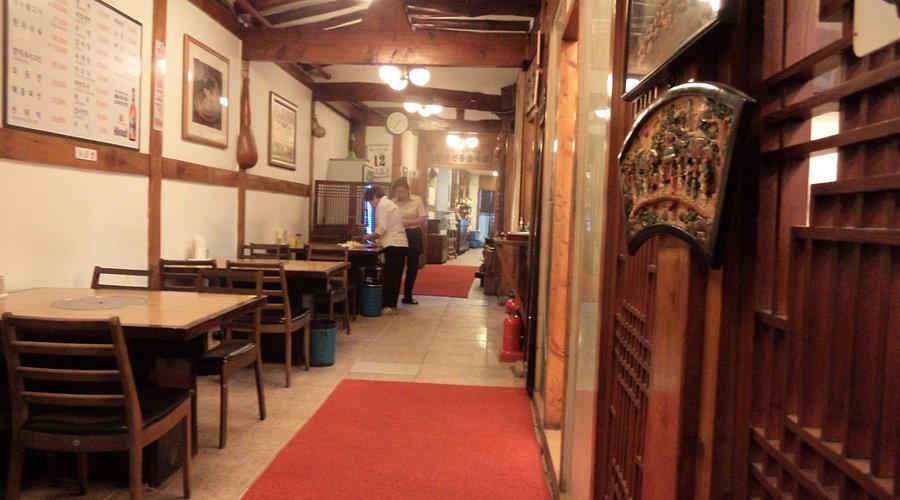
The menu
What to order
- Pyeongyang Naengmyeon
- Galbi Tang
- Bulgogi
The Cold Noodle Corridor: Jung District's Enduring Standard
Approach 24 Eulji-ro 3-gil on a weekday afternoon and you already understand the format before stepping inside. Jung District has carried Seoul's naengmyeon identity for decades, with workday crowds folding into low-lit dining rooms where the transaction is fast, the broth is cold, and the ritual is deeply familiar to anyone who grew up eating this way. Nampo Myeonok sits inside that tradition rather than above it, and that positioning is precisely the point.
The naengmyeon category in Seoul has fractured into distinct tiers over the past decade. At one end sit the heritage establishments drawing decades-long loyalties and occasional international press. At the other, a newer wave of interpretive restaurants has brought premium ingredients and modern plating to a dish that historically resisted embellishment. Nampo Myeonok occupies the middle of that continuum: recognized by Michelin with Plate status in both 2024 and 2025, yet priced at the single-won (₩) tier that keeps it rooted in the everyday register of the cuisine.
What the Meal Looks Like: Sequencing Through Naengmyeon
Naengmyeon is not a multi-course architecture by Western convention, but the meal has its own internal logic and sequence that rewards attention. The structure tends to open with banchan, small accompaniments that calibrate the palate before the cold arrives. The pivot moment, and the point around which everything else organizes, is the arrival of the noodle bowl itself.
Pyongyang-style naengmyeon, the dominant tradition in this category, presents buckwheat noodles in an ice-cold dongchimi or beef broth with a clean mineral quality that reads almost austere on first encounter. The toppings (typically sliced brisket, half an egg, cucumber, and a sliver of pear or Asian radish) are arranged with precision, not abundance. Vinegar and mustard come on the side, and the seasoning of the bowl is, by convention, left to the diner. This transfer of control is one of the things that separates naengmyeon culture from other noodle traditions, where the kitchen typically delivers the dish fully composed.
The closing movement in many naengmyeon meals is a cup of warm dongchimi water, the radish-fermented liquid used in the broth itself, which arrives as a digestive anchor. It is a detail that signals culinary depth without any performance: the same ingredient that chilled you now warms you on the way out. Venues like Jinmi Pyeongyang Naengmyeon and Jungin Myeonok share this arc, with slight variations in broth salinity and noodle texture that function as the distinguishing editorial between establishments.
Seoul's recognized naengmyeon houses form a relatively small, competitive tier. Michelin Plate recognition, which Nampo Myeonok has sustained across two consecutive guides, signals consistent kitchen execution and a clearly defined product rather than a one-year anomaly.
The broader Seoul dining scene runs toward the premium end: restaurants like Gaon, Kwon Sook Soo, and Bongmilga each operate in the upper price tiers with tasting formats and elaborate presentation. Nampo Myeonok's value is that it offers Michelin-recognized execution at a price point that places naengmyeon in its historically appropriate context: an everyday dish done with care, not a luxury performance of one.
For those tracing the dish across cities, the naengmyeon tradition extends south into Busan, where 100.1. Pyeongnaeng, Buda Myeonoak, and Damiok carry regional interpretations that differ in broth clarity and noodle composition. The comparison is instructive: Seoul's houses tend toward a more mineral, restrained broth, while Busan operators often skew slightly richer.
Jung District Context and Getting There
Jung District anchors the historic commercial and culinary core of central Seoul. The Eulji-ro corridor, where Nampo Myeonok operates, has long functioned as a working-class dining stretch, with older establishments coexisting alongside the hardware vendors and print shops that defined the area's industrial identity before the recent creative-class influx. The address at Eulji-ro 3-gil places the restaurant within walking distance of Euljiro 3-ga station on Lines 2 and 3, making it accessible from most central Seoul neighborhoods without the taxi overhead that more peripheral dining destinations require.
The price tier (₩) means a meal here registers as an affordable lunch or early dinner rather than a considered evening booking.
Planning Comparison: Nampo Myeonok vs. Peer Naengmyeon Houses
| Venue | Price Tier | Michelin Recognition | Location |
|---|---|---|---|
| Nampo Myeonok | ₩ | Plate 2024, 2025 | Jung-gu, central Seoul |
| Pildong Myeonok | ₩ | See EP Club listing | Seoul |
| Jungin Myeonok | ₩ | See EP Club listing | Seoul |
| Jinmi Pyeongyang Naengmyeon | ₩ | See EP Club listing | Seoul |
Further Seoul Dining Context
Naengmyeon is one thread in a much larger Seoul food fabric. For Korean fine dining at the opposite end of the formality spectrum, Gaon and Kwon Sook Soo in Gangnam represent the tasting-menu tier. For temple food as a distinct culinary tradition, Baegyangsa Temple in Jangseong-gun offers a different axis of Korean culinary heritage entirely. And for those pairing a Seoul visit with a side trip to Jeju, The Flying Hog in Seogwipo represents the island's casual dining register. The full Seoul context, including hotels, bars, and experiences, is covered across our full Seoul restaurants guide, our full Seoul hotels guide, our full Seoul bars guide, our full Seoul wineries guide, and our full Seoul experiences guide.
Beyond Seoul, Mori in Busan and the Busan naengmyeon houses above fill out a multi-city Korean itinerary for anyone tracing the dish's regional variations.
Frequently asked questions
Has Nampo Myeonok won any awards?
Nampo Myeonok has received recognition including: Michelin Plate (2025); Michelin Plate (2024).
What's the must-try dish at Nampo Myeonok?
Nampo Myeonok holds two consecutive Michelin Plate recognitions specifically for its naengmyeon, so that is the dish to order. The restaurant operates as a focused naengmyeon house in Seoul's Jung District, meaning the menu is built around that single specialty rather than a broad selection.
How much does it cost to eat at Nampo Myeonok?
Pricing at Nampo Myeonok is listed as ₩.
Where exactly is Nampo Myeonok?
Nampo Myeonok is located at 24 Eulji-ro 3-gil, Jung District, Seoul, South Korea, Seoul.
Is Nampo Myeonok reservation-only?
Given the ₩ price range and the walk-in culture common to Seoul's established naengmyeon houses, arriving early or off-peak is the practical approach until booking policy can be verified directly.
A Quick Peer Check
| Venue | Cuisine | Price | Awards | Notes |
|---|---|---|---|---|
| Nampo MyeonokThis venue (the venue you are viewing) | Traditional Korean Naengmyeon | $10–20 | Michelin Plate | Not listed |
| 7th Door | Modern Korean Fermentation Fine Dining | $100–150 | 1 Michelin Star · World's 50 Best #49 | Korean, Contemporary |
| Solbam | Contemporary Neo-Classical Korean | $200–300 | 1 Michelin Star · World's 50 Best #55 | Contemporary |
| Onjium | Modern Korean Royal Court Cuisine | Not listed | 1 Michelin Star · World's 50 Best #14 | Korean |
| L'Amitié | Classic French Fine Dining | $100–150 | 1 Michelin Star · La Liste Top Restaurants | French |
| Zero Complex | Modern French Neo-Bistro | $100–150 | 1 Michelin Star · La Liste Top Restaurants | Korean-French, Innovative |
Recognition history
Dated appearances from independent guides and award organizations, with the underlying list record or original source where available.
Michelin Plate
Michelin
Full recognition history (3 entries)
Michelin Plate
Michelin
Michelin Plate
Michelin
Continue exploring
More in Seoul
Restaurants in Seoul
All restaurants in Seoul →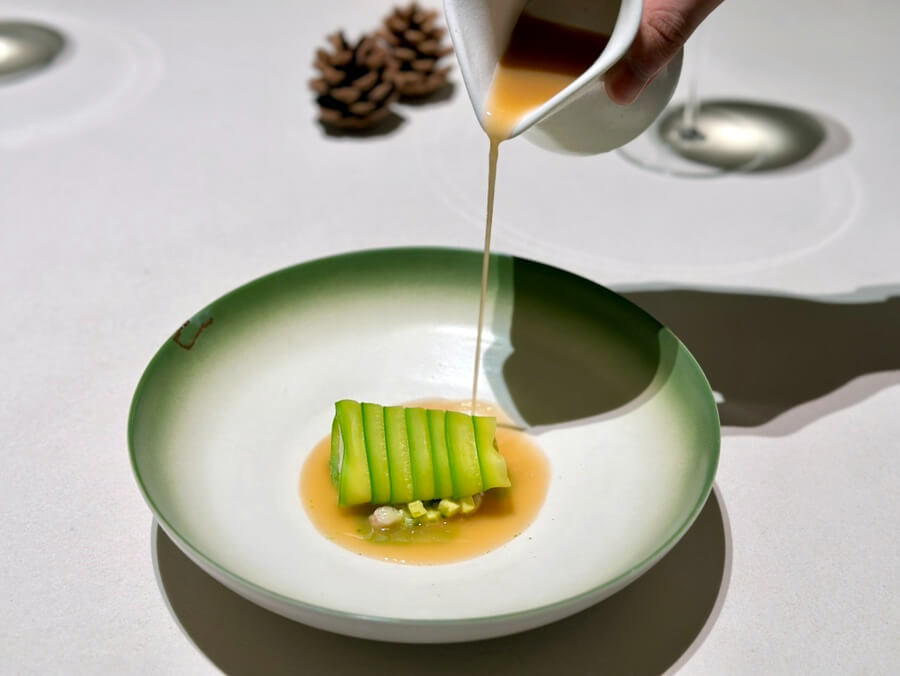
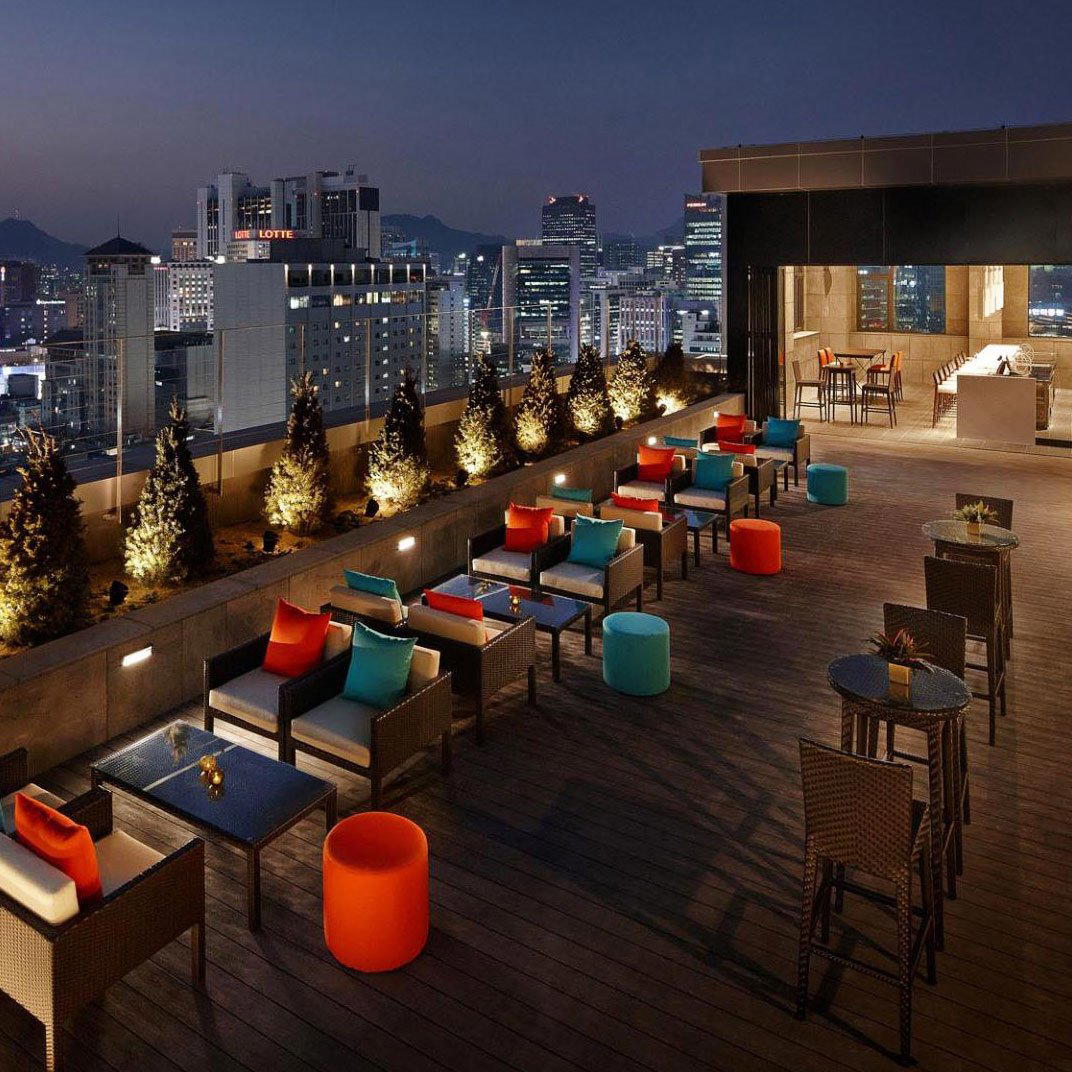
Bars in Seoul
All bars in Seoul →
Details
- Classic
- Cozy
- Casual Hangout
- Family
- Historic Building
- A La Carte
Current opening hours
- Monday
- 11:30 AM–10 PM
- Tuesday
- 11:30 AM–10 PM
- Wednesday
- 11:30 AM–10 PM
- Thursday
- 11:30 AM–10 PM
- Friday
- 11:30 AM–10 PM
- Saturday
- 11:30 AM–9 PM
- Sunday
- 11:30 AM–9 PM
Hours can change for holidays and private events. Hours as of .
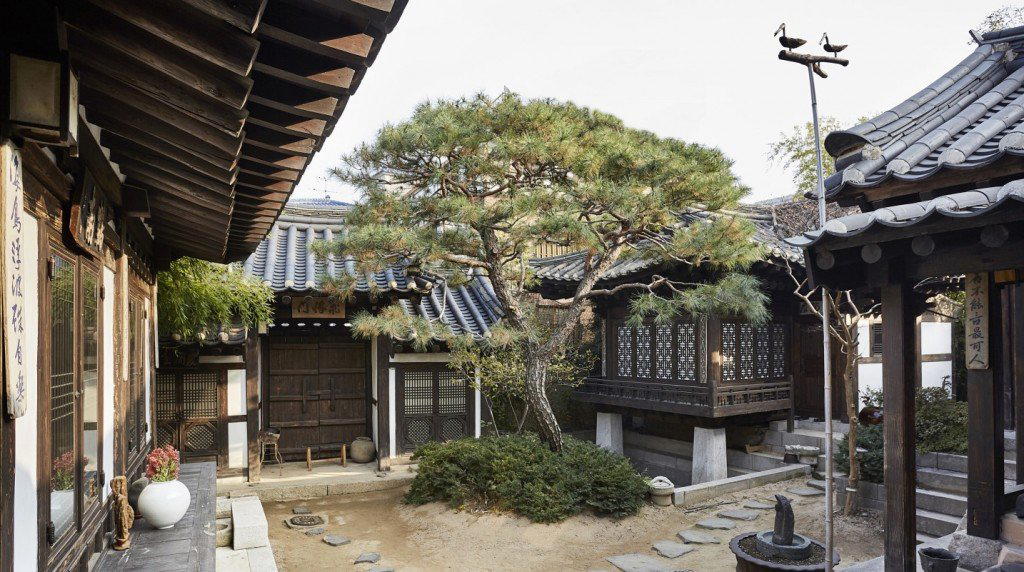
Beautiful modern interior blending traditional Korean house decor with concrete-embedded dongchimi pots; offers both chair and floor seating in a bustling atmosphere.