Michelin Plate
Our verdict
A couple-run washoku counter in Shinjuku's Iwatocho neighbourhood, Washoku Ebihara draws on chakaiseki tradition to produce seasonal Japanese cooking that holds two consecutive Michelin Plates (2024–2025). The owner-chef's background in tea ceremony cuisine shapes a menu where pickled vegetables and garnishes carry as much weight as the main courses, and his wife's front-of-house presence sets the room's unhurried register.

Pearl is the En Primeur Club membership app — saves, bookings, and concierge access live there. Same editors, same standards.
- Address
- Japan, 〒162-0832 Tokyo, Shinjuku City, Iwatocho, 19 田中ビル 1F
- Phone
- +81 3-6327-6289
- Hours
- Mon ClosedTue–Fri 6–10:30 PMSat 6–10 PMSun 6–10:30 PM
- Website
- wasyoku-ebihara.jp
- Directions
- Get directions
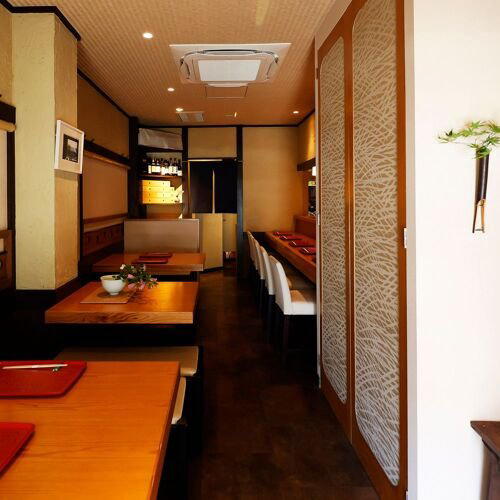
The Shopfront Says It All
On a quiet block in Shinjuku City's Iwatocho district, a small washoku counter announces its intentions in the lettering above the door: Enjoy the season. In a city where restaurant positioning often runs to elaborate concepts and imported technique, that phrase reads less like a motto and more like a disciplinary constraint. The kitchen is bound to what the calendar provides, and the room is run by two people whose respective roles — one cooking, one hosting — create a dynamic that larger restaurants spend considerable energy trying to manufacture.
Tokyo's washoku tier spans an enormous range, from three-Michelin-starred kaiseki institutions like Kagurazaka Ishikawa and Azabu Kadowaki down through neighbourhood dining rooms where rigour and informality coexist without contradiction. Washoku Ebihara occupies the latter space deliberately. Two consecutive Michelin Plates, awarded in 2024 and 2025, mark it as a kitchen that inspectors regard as cooking with care and consistency, not yet in the starred bracket, but operating with a seriousness that the Plate designation is specifically designed to recognise.
Chakaiseki Lineage and What It Changes
Japanese dining traditions carry distinct technical inheritances, and the owner-chef's background in chakaiseki, the cuisine developed to accompany the tea ceremony, with deep roots in Kyoto, is not incidental to what appears on the plate. Chakaiseki operates under stricter seasonal and aesthetic constraints than most Japanese cooking formats. Flavours tend toward the restrained end of the spectrum; the relationship between nourishment and taste is treated as inseparable rather than competing priorities; and garnishes and pickled preparations are understood as structurally meaningful rather than decorative.
That lineage places Washoku Ebihara in a different conversation from the flashier end of Tokyo's washoku scene. Where some kaiseki counters signal ambition through imported ingredients or elaborate plating, the chakaiseki tradition trains a chef to find complexity in subtlety. The Michelin Plate commentary specifically notes that seasonings are both delicious and nutritious, and that garnishes and pickled vegetables are inventive, observations that would sound unremarkable applied to many kitchens, but that carry weight when positioned against a culinary tradition that treats pickled preparations as a vehicle for demonstrating what the Michelin inspectors phrase as finding true flavour in the subtler notes.
For context on how other Japanese kitchens work within and against tradition, the kaiseki programmes at Gion Sasaki in Kyoto and Isshisoden Nakamura in Kyoto represent the more formal end of that spectrum, while Kashiwaya Osaka Senriyama in Osaka offers another point of comparison for how Kyoto-rooted cooking translates outside its originating city.
The Team Dynamic as Format
The editorial shorthand for a couple-run restaurant often defaults to warmth as a selling point, but the operational reality is more specific. In a small washoku setting, the division between kitchen and front-of-house is not merely logistical, it defines the entire register of an evening. The chef controls pace and flavour; the host controls atmosphere, the speed of conversation, and the degree to which guests feel oriented or disoriented by the meal's progression.
Michelin's own language here is pointed: the proprietress is described as having a cheerful disposition, which in the context of Japanese restaurant criticism is a considered observation rather than a throwaway compliment. Japanese front-of-house culture at the more formal end of washoku can read as ceremonially correct rather than personally warm. A host who carries genuine ease alongside professional composure is relatively rare, and it changes the experience structurally, guests who might otherwise sit at careful attention through a tasting sequence can instead relax into the meal's seasonal logic.
That combination, a kitchen guided by chakaiseki restraint and a dining room guided by genuine hospitality, is part of why smaller couple-run formats continue to attract serious attention in Tokyo even as the city's restaurant market becomes increasingly dominated by high-investment multi-seat operations. The intimacy is not incidental. It is the format.
Shinjuku Iwatocho: Context for the Address
Iwatocho sits within Shinjuku City but operates at some distance, physically and atmospherically, from the commercial density of Shinjuku Station's immediate surrounds. The neighbourhood has a residential and low-rise character that makes it a credible setting for a chef-run counter that draws on Kyoto culinary tradition. Tokyo's serious washoku dining is distributed across neighbourhoods like this: Kagurazaka, Azabu-Juban, Yanaka, and pockets of Shinjuku ward where old-city character has not yet been overwritten.
For visitors building a Tokyo itinerary around Japanese cooking at different price points and formats, Iwatocho is not an obvious first stop, but it rewards the effort of orientation. The surrounding area of Kagurazaka, just to the north, has long been associated with French and Japanese cooking of serious ambition, Kagurazaka Ishikawa being the clearest example, and the proximity means that visitors staying in the central Shinjuku area can construct an evening around this part of the city without significant travel. See our full Tokyo restaurants guide for broader neighbourhood mapping, and our full Tokyo hotels guide for accommodation positioned near central Shinjuku.
Where This Sits in Tokyo's Washoku Picture
Tokyo's Michelin-recognised Japanese dining runs from ten-seat counter omakase operations billing at ¥¥¥¥ per head down through neighbourhood washoku rooms at ¥¥¥ that produce cooking of genuine distinction without the ceremony or overhead of the starred tier. Washoku Ebihara prices at ¥¥¥, considerably below the ¥¥¥¥ level of starred kaiseki institutions, and below the pricing of comparison venues like Myojaku or Ginza Fukuju.
That price positioning, combined with Michelin Plate recognition across two consecutive years, places it in a category that Tokyo food visitors sometimes underweight relative to the starred operations. The Plate designation does not indicate proximity to a star; it indicates that inspectors found the cooking worthy of specific recommendation, a meaningfully different signal from a restaurant that simply wasn't assessed. For visitors whose Tokyo restaurant budgets extend to one or two starred kaiseki bookings, Washoku Ebihara represents a different kind of commitment: a smaller, more personal room where the cooking's seasonal logic can be followed closely and the price-to-quality ratio sits well above what the ¥¥¥ category typically delivers.
Other Japan comparisons worth noting for those building a wider itinerary: HAJIME in Osaka, Goh in Fukuoka, and Jingumae Higuchi in Tokyo each represent distinct approaches to Japanese cooking at the higher-investment end. akordu in Nara, 1000 in Yokohama, and 6 in Okinawa extend the frame further for travellers moving beyond Tokyo. For bars and experiences in the city, our full Tokyo bars guide and our full Tokyo experiences guide cover the broader picture, with our full Tokyo wineries guide for those interested in Japanese wine alongside the meal.
Know Before You Go
- Cuisine: Washoku, with chakaiseki influence
- Price range: ¥¥¥
- Recognition: Michelin Plate 2024 and 2025
- Address: 田中ビル 1F, 19 Iwatocho, Shinjuku City, Tokyo 〒162-0832
- Booking: Contact; plan ahead and allow time to arrange
- Format: Couple-run; owner-chef and proprietress
What Should I Eat at Washoku Ebihara?
The kitchen does not publish a fixed menu, and specific dish details are not available for this listing. What the Michelin record makes clear is that the cooking is structured around seasonal produce, with garnishes and pickled preparations treated as primary expressions of flavour rather than accompaniments. The chakaiseki background means that lighter, more restrained courses are likely to carry more complexity than they initially appear to. Diners who approach the meal with attention to the subtler elements, the pickled side dishes, the garnish work, the seasoning balance, will find more in the meal than those who scan for a headline centrepiece dish. The Michelin note that true flavour is found in the subtler notes is the most useful guide a first-time visitor can carry in.
Frequently asked questions
What style of cooking does Washoku Ebihara do?
What's the address for Washoku Ebihara?
Washoku Ebihara is located at Japan, 〒162-0832 Tokyo, Shinjuku City, Iwatocho, 19 田中ビル 1F, Tokyo.
What's Washoku Ebihara known for in terms of accolades?
Washoku Ebihara has received recognition including: The shopfront lettering sums up this couple’s approach: ‘Enjoy the season’. The proof is in the earnest cooking of the owner-chef and the cheerful disposition of the welcoming proprietress, his wife. Taking a page from his experience as a c….
What should I eat at Washoku Ebihara?
The kitchen does not publish a fixed menu, and it changes with the season — the shopfront lettering, 'Enjoy the Season', is an accurate description of the kitchen's actual output. The Michelin record specifically highlights inventive garnishes and pickled vegetables as markers of the chef's chakaiseki training, where flavour is built through subtler, supporting elements rather than dominant centrepieces. Dishes are shaped by both taste and nutritional intention, a direct inheritance from the tea ceremony cuisine tradition the owner-chef worked within before opening this counter in Iwatocho.
What price level is Washoku Ebihara?
Pricing at Washoku Ebihara is listed as ¥¥¥.
Just the Basics
A quick snapshot of similar venues for side-by-side context.
| Venue | Cuisine | Price | Awards | Notes |
|---|---|---|---|---|
| Washoku EbiharaThis venue — the venue you are viewing | Traditional Japanese Kaiseki | $100–150 | Michelin Plate | Not listed |
| Harutaka | Edo-Style Omakase Sushi | $200–300 | 3 Michelin Stars · World's 50 Best #76 | Sushi |
| RyuGin | Modern Kaiseki | $500+ | 3 Michelin Stars · World's 50 Best #41 | Kaiseki, Japanese |
| L'Effervescence | Modern French with Japanese Influences | $200–300 | 3 Michelin Stars · World's 50 Best #69 | French |
| HOMMAGE | Modern French with Japanese Influences | $150–200 | 2 Michelin Stars · World's 50 Best #78 | Innovtive French, French |
| MAZ | Innovative Peruvian-Japanese Fusion | $150–200 | 2 Michelin Stars · World's 50 Best #28 | Innovative |
Recognition history
Dated appearances from independent guides and award organizations, with the underlying list record or original source where available.
Michelin Plate
Michelin
Full recognition history (3 entries)
Michelin Plate
Michelin
Michelin Plate
Michelin