
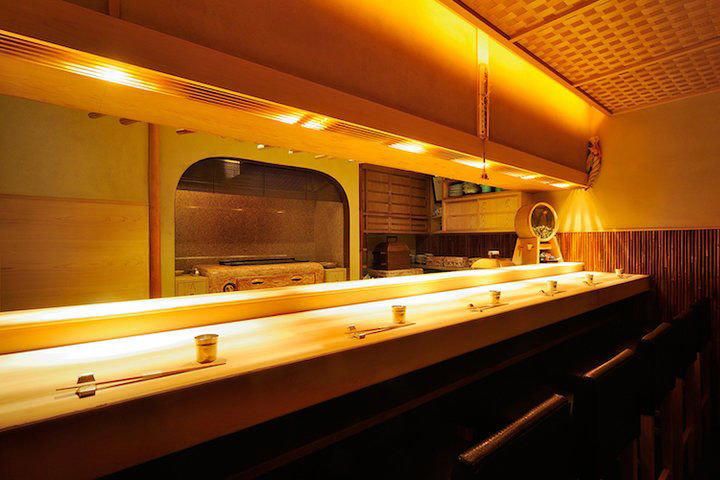
Traditional Japanese omakase at Hijirizaka Wakei pairs a chef's counter and open kitchen with quiet, formal service for extended dinner service in Mita, Tokyo.
Pearl is the En Primeur Club membership app — saves, bookings, and concierge access live there. Same editors, same standards.
- Address
- 3-4-2 Mita, Minato-ku, Tokyo, 108-0073, Japan
- Phone
- +81 3-6812-8111
- Website
- wakei.tokyo
- Directions
- Get directions
 Saves & bookings on Pearl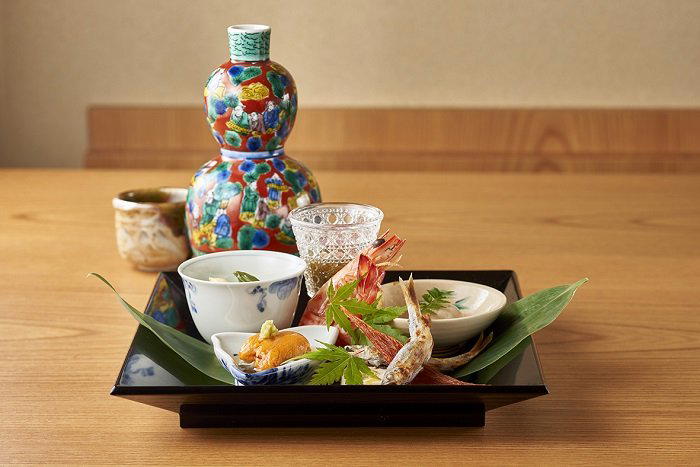
The Ritual Before the Food Arrives
Hijirizaka Wakei is a Tokyo restaurant serving Traditional Japanese Omakase at the ¥¥¥¥ price tier. The arrival sequence, the progression from standing to seated, the calibration of lighting and sound, the angle at which a server presents lacquerware, these are not incidental. They are the grammar of the kaiseki tradition, and at Hijirizaka Wakei in Mita, Minato-ku, they are delivered through the lens of wakei seijaku: harmony, respect, purity, and tranquillity. This four-character philosophy, associated with the Japanese tea ceremony, shapes the atmosphere here as explicitly as the cooking does.
Tokyo's ¥¥¥¥ Japanese dining category is well-populated. Restaurants like Azabu Kadowaki, Kagurazaka Ishikawa, and Ginza Fukuju each operate in this price bracket with distinct identities, Kadowaki's contemporary Japanese sensibility, Ishikawa's long-running kaiseki rigour. Hijirizaka Wakei sits in the same tier by price but differentiates on philosophy: the owner-chef's stated principle that cuisine is made by people to be eaten by people positions the experience as fundamentally relational rather than technical. The Michelin Plate recognition in 2024 and 2025 signals consistent kitchen quality.
How the Meal Is Structured
Classical Japanese kaiseki follows a known arc: the succession of small, precisely portioned dishes moves from lighter to richer, from raw to cooked, with seasonal produce anchoring each stage. What distinguishes the restaurant approach is the declared tension between inheritance and invention. The kitchen aims to preserve techniques and flavours handed down through generations while introducing what it describes as "repeated innovations" in pursuit of new taste sensations. This is not fusion in the contemporary sense, it is closer to the way a traditional lacquerware craftsperson might develop a new surface treatment while keeping the underlying form classical.
Two dishes from the current repertoire illustrate the method clearly. Decoratively arranged sashimi incorporates conger eel grilled over straw, a technique that imparts smoke and texture without obscuring the eel's natural character, and dressed with caviar, a pairing that draws on the same salinity logic as classical Japanese seasoning without mimicking it. Tuna sashimi is served alongside a starchy nori seaweed sauce, a preparation that replaces the usual soy-and-wasabi register with something more viscous and seaweed-forward. Both dishes show a kitchen working deliberately at the edge of received form, testing where classical foundations can absorb new material.
Compared to the more aggressively experimental posture of Tokyo's two-star innovative Japanese houses, this is a conservative kind of creativity. The changes are measured, the references clear. Guests who value continuity in a kaiseki setting, who want to feel the weight of tradition even as it shifts, will find the balance here more comfortable than at addresses where the tradition is treated as a starting point to leave behind quickly.
Reading the Room
The address is in Mita, a district in Minato-ku that sits south of Azabu and east of Shirokanedai. It is quieter than the Roppongi or Ginza concentrations of premium Japanese dining, and the neighbourhood character reinforces the wakei seijaku framing: less scene, more occasion.
The progression of courses is calibrated to give each dish sufficient space, both on the plate and in the conversation. The guest's role in this kind of meal is participatory: attention, not passivity, is expected. Myojaku and Jingumae Higuchi operate in a comparable register, where the service cadence is part of the dining contract.
A Note on Timing
As of this writing, the restaurant reopened in Mita on October 1, 2025 after relocating and changing its name from Azabu Wakei. The relocation is worth noting for two reasons. First, the Mita address listed here is the operating address once the restaurant reopens. Second, relocations at this level of Japanese dining typically bring physical refinements, new tableware, redesigned service flow, sometimes a recalibrated menu, that make the post-reopening period a reasonable time to visit for those who want to experience the kitchen at a fresh point.
Those planning a wider Japan itinerary will find relevant comparisons at Gion Sasaki in Kyoto, Isshisoden Nakamura in Kyoto, HAJIME in Osaka, and Kashiwaya Osaka Senriyama. Further afield, akordu in Nara, Goh in Fukuoka, 1000 in Yokohama, and 6 in Okinawa each represent distinct regional expressions of the same premium Japanese dining tradition.
Planning Your Visit
Status: Currently open in Mita after its October 1, 2025 relocation; reopening expected autumn 2025, confirm current address and availability before booking. Address (pre-relocation): 3-4-2 Mita, Minato-ku, Tokyo 108-0073. Budget: ¥¥¥¥ price tier, consistent with Tokyo's upper bracket of Japanese fine dining. Reservations: Essential at this category; booking well in advance is standard practice for ¥¥¥¥ kaiseki in Tokyo. Dress: Smart; the wakei seijaku atmosphere implies considered attire without formal prescription.
The Minimal Set
Comparable venues nearby, for context on price, style, and recognition.
| Venue | Cuisine | Price | Notes |
|---|---|---|---|
| Hijirizaka WakeiThis venue — the venue you are viewing | Minato, Traditional Japanese Omakase | $$$$ | Not listed |
| Shirokane Shin | Not listed | $$$$ | Minato, Modern Japanese Omakase with A La Carte |
| Kappo Yuichi | Suginami, Seasonal Vegetable Kappo | $$$$ | Not listed |
| Washoku Ebihara | Shinjuku, Traditional Japanese Kaiseki | $$$$ | Not listed |
| Makitori Shinkobe | Minato, Wood-Fired Yakitori Omakase | $$$$ | Not listed |
| Iyuki | Chūō, Kyoto-style Kaiseki | $$$$ | Not listed |
Recognition history
Dated appearances from independent guides and award organizations, with the underlying list record or original source where available.
Michelin Plate
Michelin
Michelin Plate
Michelin
Michelin Plate
Michelin












At a Glance
- Elegant
- Quiet
- Intimate
- Sophisticated
- Special Occasion
- Date Night
- Chefs Counter
- Open Kitchen
- Standalone
- Sake Program
- Local Sourcing
Softly lit with carefully chosen tableware and a room calibrated to soothe; service is graciously choreographed to nurture intimacy rather than performance.