Wagyu Teppanyaki OUSAKA serves wagyu teppanyaki at Hotel Plaza Osaka, with skyline views, a sake program, and a dinner format that runs at a leisurely pace.
Pearl is the En Primeur Club membership app — saves, bookings, and concierge access live there. Same editors, same standards.
- Address
- Japan, 〒532-0025 Osaka, Yodogawa Ward, Shinkitano, 1 Chome−9−15 ホテルプラザオーサカ 19F
- Phone
- +81663031043
- Website
- plazaosaka.com
- Directions
- Get directions
 Saves & bookings on Pearl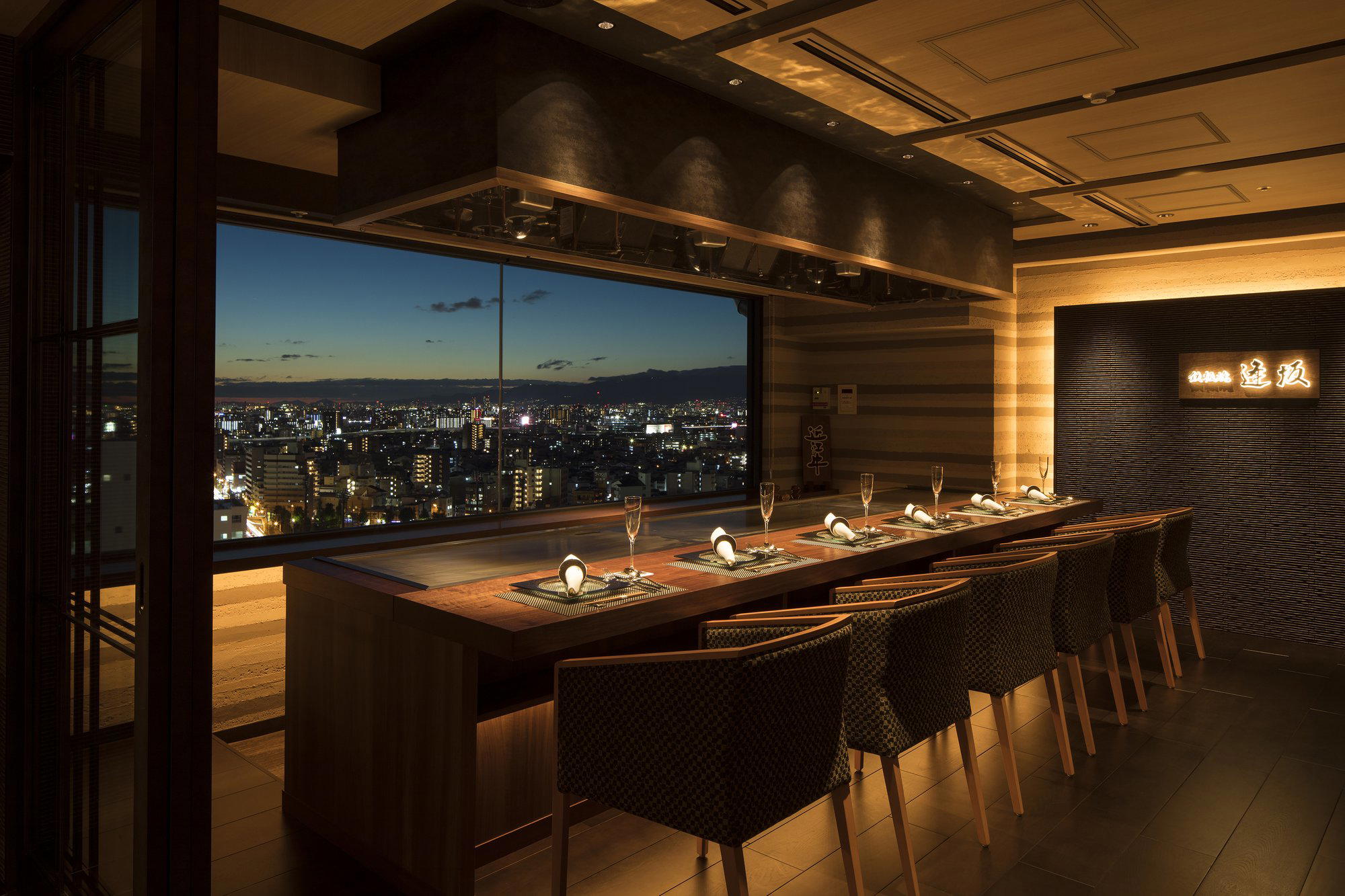
Teppanyaki in Osaka's Yodogawa Quarter
Osaka's teppanyaki scene splits along familiar lines: the tourist-facing showrooms near Dotonbori where theatrics outpace the beef, and the quieter neighbourhood addresses in areas like Yodogawa Ward where the clientele is local, the room is less performative, and the returning regulars have long ago decided which cut they prefer. Wagyu Teppanyaki OUSAKA occupies the second category. Located on the upper floors of a building in Shinkitano, a residential and commercial pocket north of the city centre, a short walk from Shinkitano Station, it is not a room that tourists stumble across. The address is specific enough that first-time visitors tend to arrive because someone who knows the room told them to go.
That referral pattern matters in understanding what kind of place this is. In Osaka, a city with one of Japan's densest concentrations of serious eating at every price tier, the restaurants that develop loyal local followings in non-tourist wards typically do so through consistency rather than spectacle. The teppan counter format rewards this: unlike omakase kaiseki, where seasonal rotation is a structural obligation, a teppanyaki kitchen built around wagyu can settle into a rhythm its regulars trust. The grill, the beef, and the sequence become familiar, and familiarity, for the right clientele, is the point.
What the Regular Understands That the First-Timer Does Not
In teppanyaki at this tier, the geometry of the counter matters as much as the menu. Proximity to the iron plate, the angle at which fat renders under a chef's spatula, the smell of high-grade beef as it hits a surface near 300 degrees Celsius: these are not incidental details but the conditions under which the meal is experienced. A regular at a counter like this knows exactly which seats carry the leading sight lines and which moments in the sequence, the initial sear, the rest, the slice, are worth watching closely versus the pauses meant for conversation and drink.
Wagyu as a category has a specific geography in Japan's premium beef market. Kobe may hold the international name recognition, but serious domestic eaters draw equally on Matsusaka, Omi, and Kagoshima origins. A teppanyaki house in Osaka with returning regulars will typically have a consistent beef sourcing position, a preferred origin or grade that repeat visitors come to expect. Without confirmed specifics from this venue, the broader pattern holds: at this address tier, wagyu selection is not incidental. It is the reason the room exists and the reason regulars return at the frequency they do.
The floor, described in the address as the 22nd floor of a building in Shinkitano, places the dining room in an refined position relative to the neighbourhood below. In Japanese teppanyaki, high-floor rooms have a distinct character: the city recedes behind glass, the counter becomes the only horizon, and the meal gains a degree of remove from the street-level noise that defines Osaka's more frenetic dining corridors. Regulars at rooms like this often cite the controlled atmosphere as a factor alongside the food, the sense that the evening moves at the kitchen's pace rather than the street's.
Osaka's Teppanyaki Tier and Where This Address Sits
Within Osaka's broader dining spectrum, teppanyaki occupies a specific cultural register: more celebratory than ramen or kushiage, less formal than kaiseki, and structurally built around a shared cooking surface that makes the chef visible and the process communal. The city's serious teppanyaki addresses sit in a comparable set defined by beef quality, service precision, and the ratio of theatre to substance. The venues that attract repeat local trade rather than occasion-only bookings tend to calibrate that ratio toward substance. For comparison, Osaka's recognised fine-dining operations, including HAJIME in Osaka, operate at entirely different price and format registers, but the underlying principle holds across categories: the rooms with committed regulars are the ones that have resolved the tension between performance and product in favour of the latter.
The Yodogawa location also matters as a signal. Premium dining in Osaka has historically concentrated in Kitashinchi, Namba, and the area around Shinsaibashi. A teppanyaki address in Yodogawa Ward, away from those corridors, draws a clientele that has made a deliberate choice to travel toward it. That is a different kind of loyalty than proximity-based repeat visits, and it tends to produce a room with a more settled, consistent atmosphere than a central-district address cycling through tourists and first-timers.
For those building an Osaka itinerary around serious eating across multiple formats, the city's range extends well beyond teppanyaki. Ajihei Sonezaki, Ajikitcho Bunbuan, Aka to Shiro, Az, and Calendrier represent the breadth of formats available in the city. Further afield, Gion Sasaki in Kyoto, akordu in Nara, and Goh in Fukuoka extend the regional picture. Japan's premium dining extends to counter specialists in other cities as well, from Harutaka in Tokyo to regional addresses like 一本杉川島 in Nanao, 夕庵佐々木 in Sapporo, 湖籟荘庵 in Takashima, 庭羽屋 in Nishikawa Machi, and Birdland in Sakai. For those contextualising Japan's premium hospitality against international benchmarks, Le Bernardin in New York City and Atomix in New York City represent the kind of sustained critical recognition that serious teppanyaki houses in Japan aspire to in their own format category. Our full Osaka Shi restaurants guide maps the city's dining more completely.
Planning Your Visit
Wagyu Teppanyaki OUSAKA is located on the upper floors of a building at 1-chome 9-15 Shinkitano, Yodogawa Ward, Osaka. Shinkitano Station on the Osaka Metro Midosuji Line places the address within walking distance. The Yodogawa location means it sits outside the main tourist corridors, so approach it as a deliberate destination rather than a neighbourhood walk-in.
Price and Recognition
Comparable venues nearby, for context on price, style, and recognition.
| Venue | Cuisine | Price | Notes |
|---|---|---|---|
| Wagyu Teppanyaki OUSAKAThis venue — the venue you are viewing | Yodogawa, Wagyu Teppanyaki | $$$ | Not listed |
| Teppanyaki THE VILLAGE OSAKA | Fukushima, Teppanyaki | $$$ | Not listed |
| Sushi Kazuma | Kita, Traditional Japanese Omakase | $$$ | Not listed |
| Fujikawa | Not listed | $$$ | Kita, Traditional Japanese Kaiseki with Tempura |
| Unagi Nishihara | Not listed | $$$ | Chūō, Kanto-Style Unagi (Eel) |
| Teppan Toyoshimake | Chūō, Teppanyaki Steakhouse | $$$ | Not listed |
Continue exploring
More in Osaka
Restaurants in Osaka
Browse all →




Bars in Osaka
Browse all →




Hotels in Osaka
Browse all →




Wineries in Osaka
Browse all →
At a Glance
- Sophisticated
- Elegant
- Scenic
- Date Night
- Special Occasion
- Business Dinner
- Chefs Counter
- Open Kitchen
- Private Dining
- Panoramic View
- Sake Program
- Skyline
Current opening hours
- Monday
- 5–11 PM
- Tuesday
- 5–11 PM
- Wednesday
- 5–11 PM
- Thursday
- 5–11 PM
- Friday
- 5–11 PM
- Saturday
- 5–11 PM
- Sunday
- 5–11 PM
Hours can change for holidays and private events. Last verified .
Sophisticated atmosphere enhanced by brilliant night views of Osaka and Kobe, cozy private rooms, and counter seating.