
Among Osaka's Michelin-starred kaiseki restaurants, Ajikitcho Bumbuan occupies a particular position: a third-generation kitchen committed to preserving the flavour logic of an earlier era rather than chasing contemporary novelty. Holding one Michelin star (2024) and priced at ¥¥¥, it sits in the same tier as Kashiwaya Osaka Senriyama while pursuing a quieter, more preservation-minded path through classic Japanese cuisine.
Pearl is the En Primeur Club membership app — saves, bookings, and concierge access live there. Same editors, same standards.
- Address
- Japan, 〒541-0053 Osaka, Chuo Ward, Honmachi, 3 Chome−5−6 4Osaka Metro 本町ビル B1F
- Phone
- +81 50-3628-1055
- Website
- bunbu-an.jp
- Directions
- Get directions
 Saves & bookings on Pearl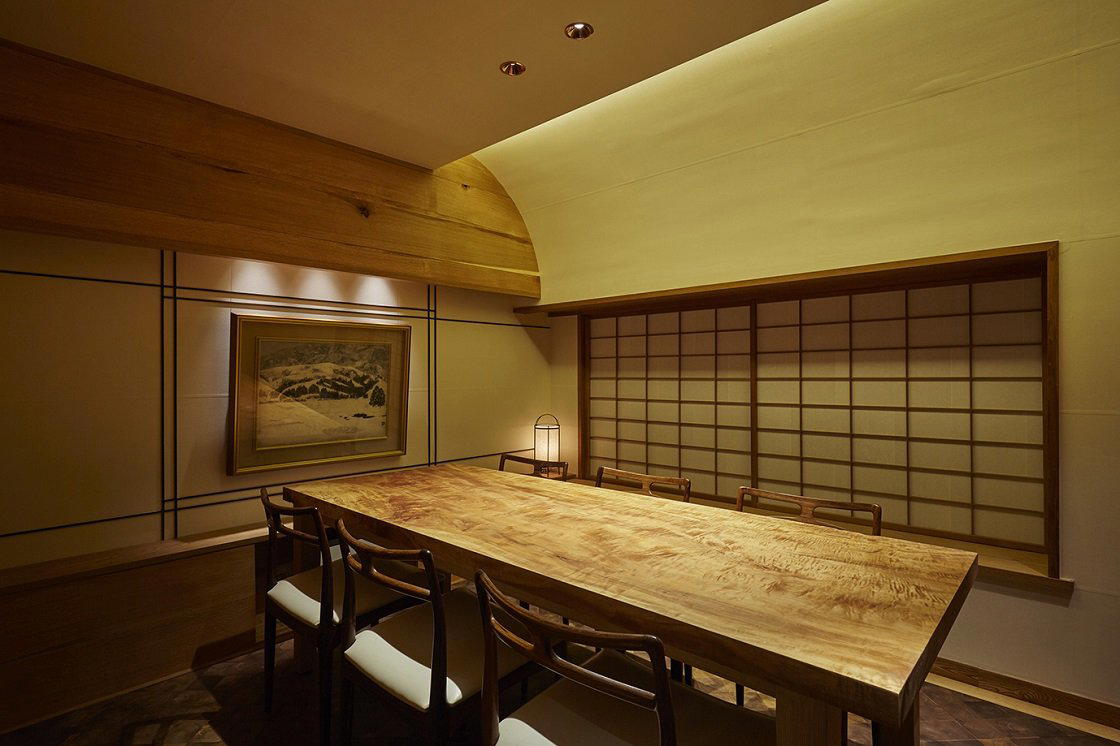
Where Osaka's Appetite for the New Meets Its Respect for the Old
Osaka's restaurant culture has always leaned forward. The city that coined kuidaore, eat until you drop, has produced a dining scene that absorbs trends faster than most, cycling through Korean barbecue booms, omakase expansions, and neo-izakaya waves without losing its appetite for more. Against that backdrop, the kaiseki houses clustered in the Chuo Ward business district occupy a different register entirely. Tucked into the basement level of a Honmachi office building, Ajikitcho Bumbuan operates on the assumption that what took three generations to build does not need to be reinvented for the current season. Ajikitcho Bumbuan is a Michelin one-star restaurant in Osaka's Honmachi district, serving Traditional Japanese Kaiseki at about $100 per person.
The physical approach sets the tone before you reach the dining room. Honmachi is a district of financial offices and metro connections rather than tourist infrastructure, which means the crowd at street level is overwhelmingly local and purposeful. Descending to basement level, the noise and pace of the ward above recede. The architecture of kaiseki restaurants in this price tier tends toward deliberate quietude, materials that absorb rather than reflect, spaces that slow the guest down rather than stimulate them. What you encounter here is characteristic of that tradition: a room that functions as a frame rather than a statement.
Dashi, the Foundation That Everything Else Answers To
In Japanese haute cuisine, the primacy of dashi is not a preference, it is a structural fact. Before a chef can demonstrate skill with knife work or seasonal produce, dashi defines the flavour ceiling of everything on the table. The quality of kombu, the grade of katsuobushi, the temperature discipline of the extraction: these decisions shape the dish before it is conceived. At Ajikitcho Bumbuan, the kitchen's relationship to dashi reflects the broader positioning of a house committed to a flavour inheritance rather than a personal reinvention.
The simmered vegetable assortment that the restaurant is associated with illustrates this clearly. The dish belongs to a category of Japanese cooking where technique is invisible at the table. What the diner receives looks simple, seasonal vegetables, calibrated seasoning, but the work behind it is extensive. Knife cuts determine how the vegetables absorb liquid and heat. The ratio and timing of dashi addition determines whether the vegetables read as rooted or refined. It is the kind of cooking that is most difficult to evaluate on a single visit and most revealing over time, as the seasonal produce rotates and the kitchen's consistency either holds or reveals its limits.
This approach places Ajikitcho Bumbuan in a specific lineage within Japanese cuisine: the tradition that treats restraint and faithfulness to material as the primary demonstrations of mastery. It is a different programme from the Michelin three-star kaiseki houses that Osaka also produces. Kashiwaya Osaka Senriyama, which holds three stars and shares the ¥¥¥ price tier, operates with a higher ceiling of ambition. The one-star position of the restaurant is not a deficiency in that comparison, it reflects a different contract with the guest, one more focused on continuity than spectacle.
The Third Generation and What It Means to Guard a Flavour
Three-generation restaurants in Japan represent something specific within the country's food culture. The succession of a kitchen across that span requires not just technical transmission but a decision to subordinate personal culinary ambition to institutional continuity. Many Japanese dining traditions celebrate this kind of fidelity, and the kaiseki world is no exception. The third-generation chef at the restaurant operates within this framework, maintaining flavour profiles inherited from the restaurant's founding rather than inserting a new direction.
The restaurant's name encodes this philosophy directly. A portmanteau of the founding couple's names and the phrase bumbu-ryodo, accomplished in both literary and military arts, the name signals a commitment to completeness of practice: cooking and service as twin disciplines requiring equal attention. That framing positions the restaurant as a school of thought as much as a dining destination. The phrase itself is drawn from classical Japanese culture and carries weight that a casual observer of the menu alone would not perceive.
Chef Hiroyuki Hiramatsu commands the kitchen within that inherited framework, which places him in a different category from chef-founders building a personal voice. The relevant comparison is not to Gion Sasaki in Kyoto or Harutaka in Tokyo, where individual chef identity is inseparable from the restaurant's proposition, but to houses where the kitchen is the guardian of a longer continuity. The Michelin recognition, one star in 2024, validates the execution without crowning it as a destination in the way three-star recognition would.
Where Ajikitcho Bumbuan Sits in Osaka's Kaiseki Tier
The ¥¥¥ pricing tier in Osaka contains a range of kaiseki and traditional Japanese houses with meaningfully different ambitions. At the summit of that tier and the Michelin table, Kashiwaya Osaka Senriyama and Taian both hold three stars and represent kaiseki at full elaboration. The restaurant's single-star status at the same price point suggests a narrower, more focused offer, deeper commitment to a specific tradition rather than broader demonstration of technical range.
The contrast with the innovative French-influenced houses that also populate Osaka's upper dining tier is sharper still. Hajime operates at ¥¥¥¥ with three Michelin stars and a programme defined by invention. La Cime and Fujiya 1935 work at similar price levels with two-star recognition and menus that foreground the chef's own culinary intelligence. The restaurant does not compete in that register. Its comparable set is the group of single-star traditional Japanese houses where the cooking is measured against the standards of a specific regional tradition rather than against the possibilities of contemporary technique.
For context within the broader Kansai region, restaurants like Oimatsu Hisano, Miyamoto, and Tenjimbashi Aoki occupy related positions within Osaka's Japanese dining scene, each with their own relationship to tradition and modernity. Yugen provides a further point of contrast, demonstrating how kaiseki sensibility can absorb contemporary influence without abandoning its structural logic. The restaurant represents the end of that spectrum where contemporary influence has the least hold.
Visitors building a deeper picture of Japan's traditional dining culture across regions will find useful counterpoints in akordu in Nara, which brings a different cultural inheritance to the Kansai region, and in Tokyo houses like Myojaku and Azabu Kadowaki, both of which demonstrate how the capital's kaiseki scene handles the same tension between preservation and evolution. Further afield, Goh in Fukuoka, 1000 in Yokohama, and 6 in Okinawa each approach Japanese culinary identity from a distinct regional vantage point.
Planning a Visit
The restaurant is located at 3 Chome-5-6 Honmachi, Chuo Ward, Osaka, on the basement level of the Osaka Metro Honmachi Building. Honmachi Station sits directly above, served by the Midosuji and Yotsubashi lines, making the restaurant accessible from most central Osaka points without surface transit. The ¥¥¥ price tier places it in a range consistent with other Michelin-recognised kaiseki houses in the city. Booking practices for this category of restaurant in Osaka typically favour advance reservations, particularly for dinner; given the, the restaurant maintains consistent engagement from both local and visiting guests.
Compact Comparison
Comparable venues nearby, for context on price, style, and recognition.
| Venue | Cuisine | Price | Notes |
|---|---|---|---|
| Ajikitcho BumbuanThis venue — the venue you are viewing | Chūō, Traditional Japanese Kaiseki | $$$$ | Not listed |
| Yoshiko | Kita, Fugu Fine Dining | $$$$ | Not listed |
| Sushidokoro Amano | Tennōji, Edomae Sushi Omakase | $$$$ | Not listed |
| Fushimimachi Kakoiyama | Chūō, Traditional Japanese Kaiseki | $$$$ | Not listed |
| Nishino | Nishi, Traditional Japanese Kaiseki | $$$$ | Not listed |
| Sushi Murakami Jiro | Not listed | $$$$ | Kita, Michelin 1-Star Omakase Sushi |
Recognition history
Dated appearances from independent guides and award organizations, with the underlying list record or original source where available.
Michelin 1 Star
Michelin
Michelin 1 Star
Michelin
Continue exploring
More in Osaka
Restaurants in Osaka
Browse all →




Bars in Osaka
Browse all →

Hotels in Osaka
Browse all →




Wineries in Osaka
Browse all →
At a Glance
- Elegant
- Classic
- Intimate
- Sophisticated
- Date Night
- Business Dinner
- Special Occasion
- Group Dining
- Private Dining
- Sake Program
Current opening hours
- Monday
- Closed
- Tuesday
- 11:30 AM–3 PM, 5:30–9:30 PM
- Wednesday
- 11:30 AM–3 PM, 5:30–9:30 PM
- Thursday
- 5:30–9:30 PM
- Friday
- 11:30 AM–3 PM, 5:30–9:30 PM
- Saturday
- 11:30 AM–3 PM, 5:30–9:30 PM
- Sunday
- 11:30 AM–3 PM, 5:30–9:30 PM
Hours can change for holidays and private events. Last verified .
Serene and refined with stone-lined dining hall, tatami private rooms, soft traditional lighting, and a quiet, relaxing atmosphere.