Fujikawa sits in Osaka's Kita Ward, within the Tenma neighbourhood that has shaped the city's eating culture for generations. The address places it among a dense concentration of counter-format and kappo-style dining that defines how Osaka approaches the relationship between cook and guest. For travellers already familiar with the city's more publicised dining corridors, Tenma offers a different register entirely.
Pearl is the En Primeur Club membership app — saves, bookings, and concierge access live there. Same editors, same standards.
- Address
- Japan, 〒530-0043 Osaka, Kita Ward, Tenma, 2 Chome−2−21 ヒロビル 1F
- Phone
- +81663604799
- Website
- te-fujikawa.com
- Directions
- Get directions
 Saves & bookings on Pearl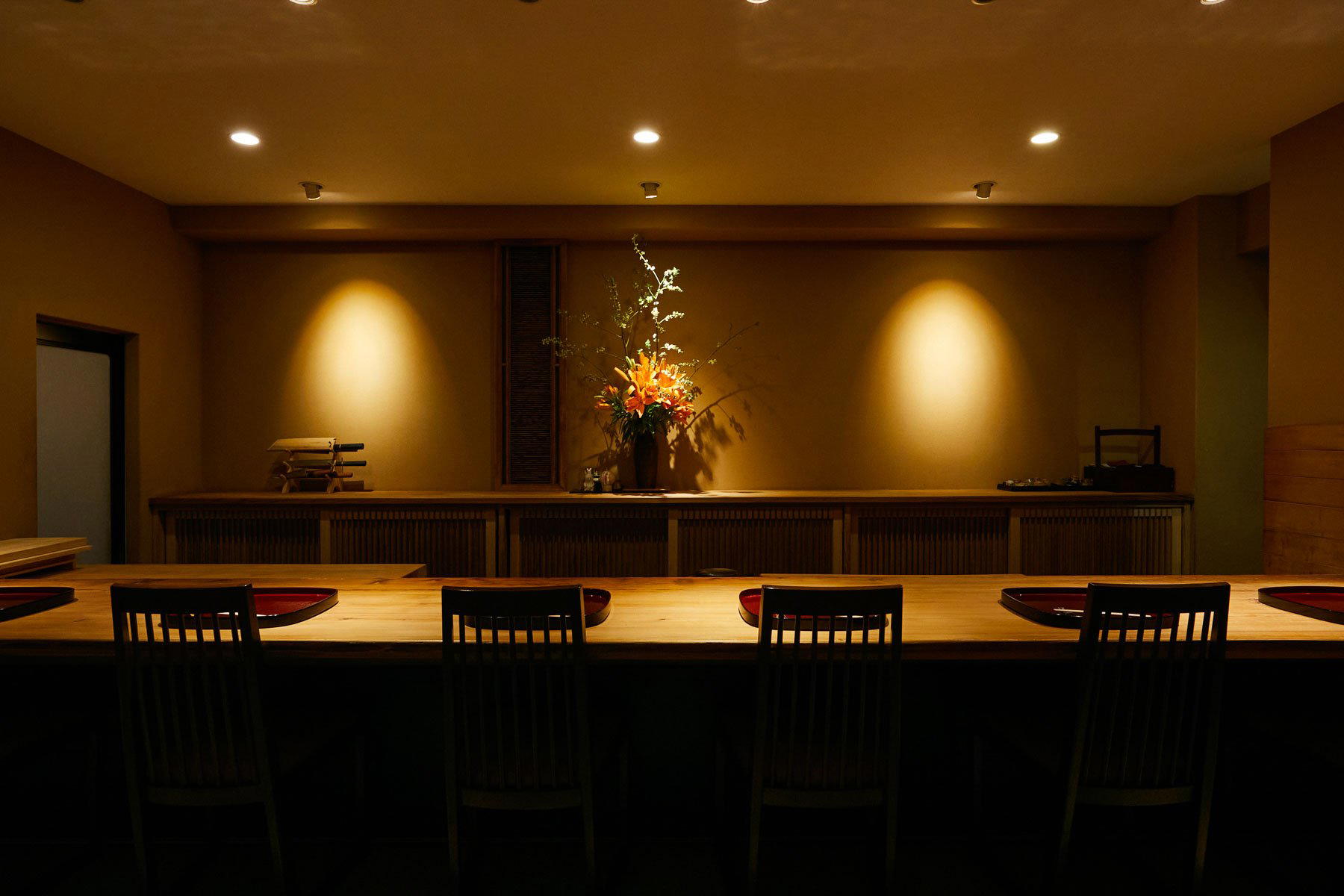
Tenma and the Culture of the Counter
Osaka's relationship with food is not simply a matter of appetite. It is a civic value, embedded in the city's self-understanding in ways that have no direct parallel in Tokyo or Kyoto. The expression kuidaore, roughly, "eat until you drop", is not a tourist slogan invented after the fact; it is a shorthand for a genuine municipal attitude that prizes the quality of what is on the plate above almost everything else. That orientation has shaped neighbourhoods across the city, but it is most concentrated in Tenma, the district in Kita Ward where Fujikawa operates.
Tenma's identity as a dining neighbourhood predates the modern restaurant economy by centuries. The area grew up around Osaka Tenmangu shrine, one of Japan's most significant Tenjin-worship sites, and the market culture that formed around religious foot traffic eventually became one of the city's great everyday food corridors. Today, the Tenjinbashisuji shotengai, one of Japan's longest covered shopping streets, runs through the area, and the side streets that branch off it contain a concentration of small, operator-run restaurants that reflects an older model of Japanese hospitality: the owner is present, the menu is short, and the emphasis is on repetition rather than novelty. Fujikawa, located at 2-2-21 Tenma in a ground-floor space, is a restaurant in Osaka serving traditional Japanese kaiseki with tempura.
What the Tenma Format Signals
Counter dining in Japan operates on a logic that differs fundamentally from the Western restaurant model. The counter is not a bar waiting area or a casual alternative to table seating; it is the primary format, the one that demands the from both the cook and the guest. In kappo tradition, which developed in Osaka rather than Tokyo, the cook works directly in front of seated guests, and the meal unfolds as a sequence calibrated to ingredient availability and the pace of the room. The cook's skill is visible, not hidden in a back kitchen, and that visibility creates a different kind of accountability.
Restaurants in the Tenma area tend to occupy this tradition, whether they are running a strict kappo format or adapting it into something more casual. The neighbourhood's eating culture rewards consistency over spectacle. A restaurant that has maintained its approach across a decade or more carries more local credibility than one that generates media attention through novelty. This is a useful frame for understanding why Tenma has retained its reputation even as Namba and Shinsaibashi have attracted more international visitors. For comparison, the more publicised end of Osaka's dining spectrum, including venues like HAJIME in Osaka, operates in an entirely different register, where international recognition and formal tasting formats are the primary currency. Tenma works at a different scale and with different priorities.
Osaka in the Context of Japan's Dining Regions
Understanding Fujikawa requires some sense of where Osaka sits within Japan's broader culinary geography. The city's food culture occupies a middle position between Kyoto's kaiseki formality and Tokyo's range. Kyoto kaiseki, exemplified by restaurants like Gion Sasaki in Kyoto, imposes a strict seasonal and ceremonial structure. Tokyo's density means it contains everything from street-level ramen to counter omakase formats comparable to Harutaka in Tokyo. Osaka sits between these poles, with a culinary identity rooted in market proximity, direct producer relationships, and a preference for cooking that foregrounds flavour over presentation.
That preference is not anti-aesthetic; Osaka cooking can be visually precise. But the organising principle is taste, and the city's leading neighbourhood restaurants tend to be evaluated on whether the food delivers on that criterion rather than on the elegance of the setting. This is a meaningful distinction when choosing where to eat in the city. The traveller seeking a technically refined, multi-course kaiseki progression might look to venues like Ajikitcho Bunbuan. Those after the more direct, ingredient-forward cooking that defines Osaka's neighbourhood character will find it in areas like Tenma. Other addresses worth considering in the same neighbourhood tier include Ajihei Sonezaki and Aka to Shiro, both of which operate within a similar framework of counter-forward hospitality.
How Tenma Fits Into a Wider Kansai Itinerary
Kita Ward is Osaka's commercial and transport centre, with Osaka Station and Umeda a short walk west of Tenma. That positioning makes the neighbourhood accessible from almost any point in the Kansai region. Travellers combining Osaka with Nara can reach the city easily, and those who have eaten at venues like akordu in Nara will find Tenma's eating culture a useful contrast, less European in influence, more rooted in the direct Japanese tradition of market-to-counter cooking.
The broader Kansai circuit for serious diners typically includes Kyoto and sometimes Kobe, with Osaka providing the density of options that neither city matches at the neighbourhood level. Beyond Kansai, the comparison set for this style of cooking extends to Goh in Fukuoka, where a similar emphasis on local produce and counter intimacy applies in a different regional context. For those extending itineraries further, Abon in Ashiya represents the Kobe-adjacent end of Kansai fine dining, operating in a quieter residential register.
Planning a Visit
Fujikawa's address in Tenma, at 2-2-21 Tenma in Kita Ward, is reachable from Tenmabashi Station on the Tanimachi and Keihan lines, or from Osaka Tenmangu Station on the JR Tozai line. Both options place the restaurant within a short walk. For those travelling from further afield, from Fukuoka, Akita, or Oita, where addresses like affetto akita in Akita and Aji Arai in Oita operate in markedly different regional food cultures, Osaka's Shinkansen connectivity makes Kita Ward an easy first-night destination.
Bookings are essential, and the restaurant is open daily from 12 to 2 PM and 6 to 9 PM. This is standard practice across the neighbourhood-restaurant tier in Osaka and, indeed, across Japan's smaller operator-run addresses from Ajidocoro in Yubari District to Akakichi in Imabari. Seasonal timing matters too: Osaka's spring and autumn bring the produce cycles that underpin the leading counter cooking in the region, and visiting during these periods typically means the menu has much to work with.
Comparable Options
Comparable venues nearby, for context on price, style, and recognition.
| Venue | Cuisine | Price | Notes |
|---|---|---|---|
| FujikawaThis venue — the venue you are viewing | Traditional Japanese Kaiseki with Tempura | $$$ | Not listed |
| Utsutsuyo | Seasonal Japanese Izakaya with Sake Pairings | $$$ | Chūō |
| 旬膳季らく | 浪速割烹 Japanese Kaiseki | $$$ | Chūō |
| Masaru | Traditional Sushi | $$$ | Naniwa |
| Wagyu Teppanyaki OUSAKA | Wagyu Teppanyaki | $$$ | Yodogawa |
| Ajihei Sonezaki | Live Fugu & Crab Kaiseki | $$$ | Kita |
Continue exploring
More in Osaka
Restaurants in Osaka
Browse all →




Bars in Osaka
Browse all →




Hotels in Osaka
Browse all →




Wineries in Osaka
Browse all →
At a Glance
- Elegant
- Intimate
- Quiet
- Sophisticated
- Special Occasion
- Date Night
- Chefs Counter
- Open Kitchen
- Sake Program
Current opening hours
- Monday
- 12–2 PM, 6–9 PM
- Tuesday
- 12–2 PM, 6–9 PM
- Wednesday
- 12–2 PM, 6–9 PM
- Thursday
- 12–2 PM, 6–9 PM
- Friday
- 12–2 PM, 6–9 PM
- Saturday
- 12–2 PM, 6–9 PM
- Sunday
- 12–2 PM, 6–9 PM
Hours can change for holidays and private events. Last verified .
Tranquil Japanese atmosphere with elegant Yoshino cedar counter, peaceful riverside location, and traditional tatami flooring creating an intimate and sophisticated dining experience.