
Tabelog 100 #36
Our verdict
In Osaka's Chuo Ward, unagi specialists hold a distinct place in the city's broader washoku tradition, and Unagi Nishihara at 4-12 Kitashinmachi represents that focused discipline. A single-subject restaurant operating in a city where breadth is often prized over depth, it positions itself for diners who seek the specific craft of freshwater eel preparation rather than a multi-cuisine survey.

Pearl is the En Primeur Club membership app, where members save venues, book tables and use the concierge.
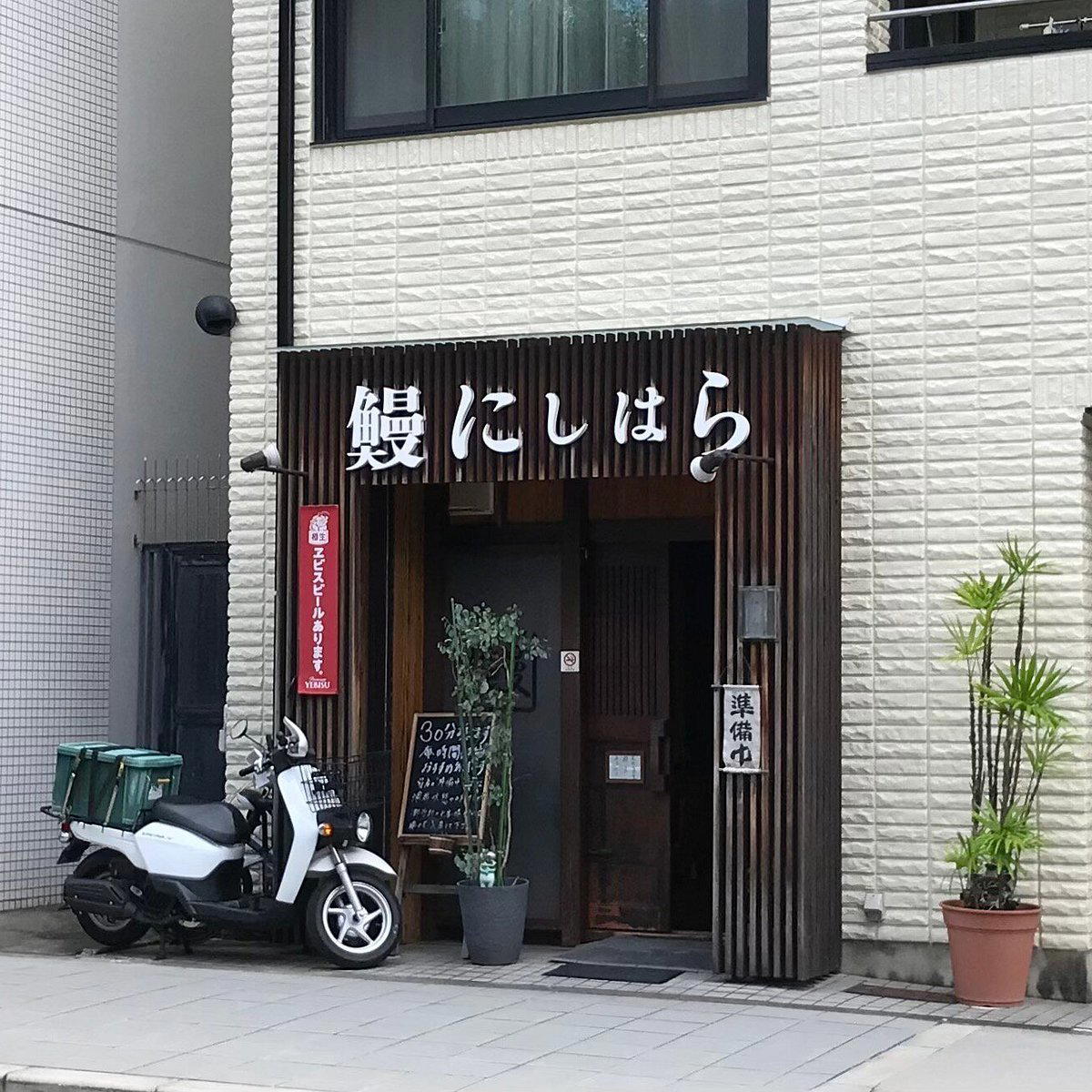
Freshwater Eel and the Art of Singular Focus in Osaka
Walking into an unagi specialist in Osaka carries a different weight than entering one of the city's kappo counters or kaiseki rooms. The air is thicker, carrying the particular sweetness of tare glaze reduced over charcoal, and the register of the meal is set before you sit. At Unagi Nishihara, located at 4-12 Kitashinmachi in Chuo Ward, that atmosphere of single-subject seriousness is the frame for everything that follows. Chuo Ward sits at Osaka's administrative and culinary centre, close enough to the Osaka Business Park corridor to draw weekday lunch trade, yet far enough from Dotonbori's tourist density to maintain a quieter, more residential cadence in the evenings.
Japan's unagi specialist tradition is one of the more demanding restaurant categories to sustain. Unlike sushi or ramen, where regional variation and accessible price points generate high foot traffic, a dedicated eel restaurant asks diners to commit to a single protein and trust the kitchen's handling of it entirely. That commitment cuts both ways: the kitchen has no fallback, and the diner has no hedge. It is a format that rewards craft and punishes complacency, which is why the category's best-regarded addresses tend to operate for decades rather than years.
Unagi in the Osaka Context
Osaka's relationship with unagi sits within the broader Kansai tradition of preparing eel in the Osaka-style (kansai-style), which differs from the more widely exported Kanto approach used in Tokyo. Where the Kanto method involves steaming the eel before grilling, producing a softer, more yielding texture, the Kansai approach goes directly to the grill without steaming, resulting in a firmer skin and more pronounced char. The distinction matters because it changes the entire sensory logic of the dish: the Kansai version is about texture contrast and smoke, while the Kanto version emphasises tenderness and the absorption of sauce. For a restaurant operating in Osaka's Chuo Ward, that regional identity is not incidental; it is part of the product's meaning.
Specialist unagi restaurants in the Kansai region occupy a specific tier in Japan's dining hierarchy. They are rarely the flashpoint for international food media attention, which tends to cluster around multi-star kaiseki or avant-garde counter formats. Instead, they function as deeply local institutions, measuring their reputation across generations of neighbourhood regulars rather than annual award cycles. That relative obscurity in international coverage does not diminish their standing within Japan; it simply reflects a different kind of ambition. Restaurants like Ajikitcho Bunbuan and Ajihei Sonezaki operate within Osaka's washoku tradition at a different register, drawing Michelin attention for their kaiseki breadth, while unagi specialists like Nishihara occupy a complementary tier defined by depth rather than range.
Planning a Visit: What the Booking Experience Looks Like
Visiting a specialist unagi restaurant in Japan's major cities requires a specific planning approach. These are not venues that typically maintain English-language booking infrastructure, and many operate with limited seat counts that fill through local regulars and word-of-mouth rather than international reservation platforms. The practical implication is that a hotel concierge with established local relationships, or a Japanese-speaking contact who can call ahead, is the most reliable route to securing a reservation.
Timing matters as much as booking method. Unagi in Japan carries a strong seasonal dimension: the traditional peak demand falls around Doyo no Ushi no Hi, the midsummer day associated with eating eel for stamina, typically in late July or early August. In the weeks surrounding that date, unagi specialists across the country operate at maximum capacity and often sell through their daily supply before evening service. Planning a visit outside that window, particularly in the autumn months when the eel has built up fat reserves ahead of winter, aligns with what many specialists consider the ingredient's peak quality period, even if it draws less cultural fanfare.
The Chuo Ward address at Kitashinmachi is accessible from multiple Osaka subway lines, with Osaka Business Park and Kyobashi stations both within walking range. The area is quieter than the Namba or Shinsaibashi districts where tourist-facing restaurants cluster, which means lunchtime visits tend to be less pressured than in higher-footfall parts of the city. For visitors building a broader Osaka itinerary, this part of Chuo Ward pairs well with the areas immediately north toward the Osaka Castle grounds.
Where Unagi Nishihara Sits in a Wider Kansai Itinerary
Diners constructing a multi-city Kansai trip often treat Osaka as the entry point for more casual, high-craft eating before moving to the more formal register of Kyoto or Nara. Within Osaka itself, the range is considerable: HAJIME in Osaka operates at the far end of the contemporary French-Japanese spectrum, while Aka to Shiro and Az represent different approaches to the city's progressive dining tier. A visit to an unagi specialist sits outside that competitive set entirely; it is not competing with omakase counters or tasting menus but rather offering something those formats cannot replicate: a century-deep tradition compressed into a single, precisely executed dish.
For those extending beyond Osaka, Gion Sasaki in Kyoto provides a reference point for high-level Kansai washoku, while akordu in Nara represents a contrasting contemporary approach to regional Japanese produce. Further afield, the single-subject discipline visible at a place like Unagi Nishihara has parallels in the focused counter formats found at Harutaka in Tokyo or the produce-centred precision of Goh in Fukuoka. The commitment to one thing, executed at the highest level the kitchen can manage, connects these places across format and geography. For the full picture of what Osaka's dining scene offers across categories and price points, the EP Club Osaka Shi restaurants guide provides a broader map. Among other Osaka options worth considering alongside Nishihara are Calendrier for its distinct approach to the city's French-inflected counter dining.
International comparisons are imperfect but occasionally useful for framing what a specialist format demands of both kitchen and diner. The single-protein commitment at a place like Unagi Nishihara has a structural kinship with the seafood discipline at Le Bernardin in New York City or the tightly scoped communal format at Lazy Bear in San Francisco, even if the traditions and price points differ entirely. What they share is a refusal to hedge.
Practical Notes
Unagi Nishihara is located at 4-12 Kitashinmachi, Chuo Ward, Osaka. No website or phone number is available through public channels, which makes advance reservation through a Japanese-speaking intermediary or hotel concierge the most dependable approach. Visitors travelling elsewhere in Japan may also find it useful to check entries for Abon in Ashiya, affetto akita in Akita, Aji Arai in Oita, Ajidocoro in Yubari District, and Akakichi in Imabari for regional reference points across Japan's specialist dining categories.
Frequently asked questions
Where exactly is Unagi Nishihara?
Unagi Nishihara is located at 4-12 Kitashinmachi, Chuo Ward, Osaka, 540-0023, Japan, Osaka Shi.
How does Unagi Nishihara's Kansai preparation differ from Tokyo-style unagi restaurants?
Kansai-style unagi, as served at specialists like Unagi Nishihara in Osaka's Chuo Ward, skips the steaming step that defines Tokyo preparations. The eel is split from the belly, skewered, and grilled directly over charcoal, yielding a crisper exterior and a more pronounced char. Tokyo-style eel is steamed before its final grilling pass, producing a softer, more yielding texture. The difference is fundamental enough that diners accustomed to one style often need a meal or two to recalibrate expectations when switching between cities.
What should I order at Unagi Nishihara?
Unagi Nishihara is a specialist restaurant, meaning the menu centres on freshwater eel prepared in the Kansai tradition, grilled without steaming first, producing a firmer, crispier skin than Tokyo-style preparations. At venues of this type in Osaka's Chuo Ward, the core order is typically the unadon or unaju: eel over rice, lacquered in tare and served in a box or bowl. Follow the house recommendation rather than ordering à la carte; the kitchen's focus is narrow by design.
What's the best way to book Unagi Nishihara?
No public website or phone number is available for Unagi Nishihara, which means walk-in or third-party assistance are the most reliable routes. In Osaka, specialist unagi counters of this type often operate on a first-come basis for lunch service, so arriving at opening is the most practical strategy. Hotel concierges in central Osaka with Japanese-language capability can sometimes secure reservations at smaller Chuo Ward specialists where direct contact exists but isn't published.
Comparable Venues
Comparable venues nearby, for context on price, style, and recognition.
| Venue | Cuisine | Price | Awards | Notes |
|---|---|---|---|---|
| Unagi NishiharaThis venue (the venue you are viewing) | Kanto-Style Unagi (Eel) | $30–50 | Tabelog 100 #36 | Not listed |
| なにわ料理 さと有 | Naniwa Ryori (Osaka-style Japanese Cuisine) | Not listed | Michelin Plate | Kita |
| Teppanyaki THE VILLAGE OSAKA | Teppanyaki | $100–150 | Not listed | Fukushima |
| Mugen | Michelin-Recognized Chuka Soba | Not listed | Not listed | Fukushima |
| 十皿 | Traditional Japanese Kaiseki | Not listed | Tabelog 100 #58 | Kita |
| Wagyu Japanese BBQ Yakiniku & Hamburger Ramen Dotonbori Restaurant Namba-Beef | Halal Wagyu Yakiniku & Ramen | $20–30 | Not listed | Chūō |
Recognition history
Dated appearances from independent guides and award organizations, with the underlying list record or original source where available.
Tabelog 100 #36 · No. 36
Tabelog · Tabelog 100 - Unagi - 2024
Continue exploring
More in Osaka
Restaurants in Osaka
All restaurants in Osaka →




Bars in Osaka
All bars in Osaka →



Hotels in Osaka
All hotels in Osaka →




Wineries in Osaka
Browse all →
Details
- Intimate
- Classic
- Solo
- Casual Hangout
- Sake Program
- Local Sourcing
- A La Carte
- Sake
Current opening hours
- Monday
- Closed
- Tuesday
- Closed
- Wednesday
- 11 AM–1:30 PM, 5–8:30 PM
- Thursday
- 11 AM–1:30 PM, 5–8:30 PM
- Friday
- 11 AM–1:30 PM, 5–8:30 PM
- Saturday
- 11 AM–1:30 PM, 5–8:30 PM
- Sunday
- 11 AM–1:30 PM, 5–8:30 PM
Hours can change for holidays and private events. Last verified .
Intimate counter and table seating in a small traditional eel shop.