Sushi Kazuma occupies the third floor of a Sonezakishinchi building in Osaka's Kita Ward, positioning it within one of the city's most concentrated pockets of serious Japanese dining. The counter format and Sonezakishinchi address place it in a comparable set that regulars return to on rotation rather than occasion, treating the meal as a standing appointment rather than a special-event splurge.
Pearl is the En Primeur Club membership app — saves, bookings, and concierge access live there. Same editors, same standards.
- Address
- Japan, 〒530-0002 Osaka, Kita Ward, Sonezakishinchi, 1 Chome−9−9 谷安ロワビル 3階
- Phone
- +818047086752
- Website
- sushi-kazuma.jp
- Directions
- Get directions
 Saves & bookings on Pearl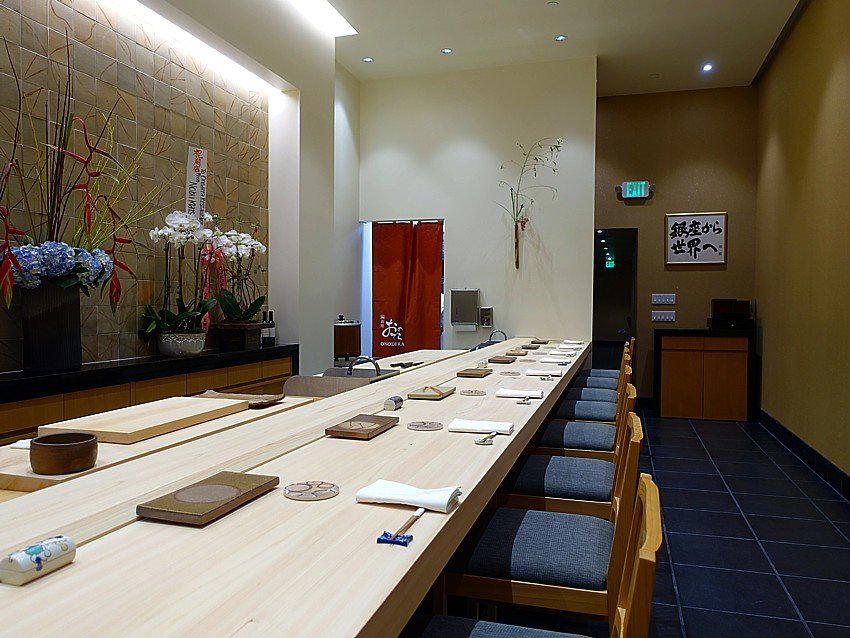
A Counter in Sonezakishinchi
Sonezakishinchi, the entertainment and dining district threaded through Osaka's Kita Ward, operates on a different rhythm from the tourist-facing corridors around Dotonbori. The streets here are narrower, the signage more subdued, and the dining rooms tend toward formats built for people who already know where they are going. Sushi Kazuma is a Traditional Japanese Omakase restaurant in Osaka’s Kita Ward, priced at about $120 per person. It sits on the third floor of a building at 1-9-9 Sonezakishinchi, which is typical of how the better counters in this district arrange themselves: refined and deliberately removed from street-level foot traffic. Arriving here for the first time, you take a lift or a stairwell, and there is a brief moment of transition between the city outside and whatever has been set in motion behind the door above. That physical remove is not incidental.
What Regulars Know
The anatomy of a sushi counter's loyal clientele tells you more about what the kitchen is actually doing than almost any other signal. In Osaka, the regulars at serious counters rarely announce themselves in reviews; they are more likely to be found on a Tuesday than a Saturday, occupying the same seats at the same hour, having arrived through personal recommendation rather than a search engine. Sushi Kazuma's Sonezakishinchi address places it within a neighbourhood where this pattern repeats across multiple formats, from kappo to yakitori to sushi. The question of what draws people back, repeatedly and quietly, is almost always answered by consistency of technique and the steady calibration of rice, temperature, and fish quality across many visits.
Osaka sushi has historically operated under different assumptions than Tokyo omakase. The city's fish market orientation, historically anchored by proximity to the Seto Inland Sea and Osaka Bay, means that local counters have long had access to a regional catch profile that Tokyo counters source at a remove. That geographical advantage shapes what regulars expect at a serious Osaka counter: fish that reflects where it actually comes from, prepared with a degree of restraint that lets the sourcing speak clearly. In that context, a third-floor counter in Sonezakishinchi is not hiding, it is self-selecting for the kind of guest who has already done the reading.
Osaka Sushi in Its Competitive Context
Sushi in Osaka sits in a different competitive tier than equivalent counters in Tokyo or Kyoto. The city has produced a handful of counters that have attracted Michelin attention, but the majority of serious sushi in Kita Ward serves a local professional clientele that treats the counter as a regular rather than celebratory destination. That segment of the market is more demanding than the occasion-dining tier: regulars are harder to impress over time, less forgiving of drift, and more likely to simply stop coming if the standard slips. The Sonezakishinchi cluster of counters, of which Sushi Kazuma is one, competes primarily in that middle register.
For context on how Osaka's broader fine dining scene is structured, HAJIME in Osaka represents the city's highest-profile Western fine dining expression, while the kappo tradition is well represented by counters like Ajikitcho Bunbuan and Ajihei Sonezaki, the latter sharing the same Sonezakishinchi postcode as the restaurant. French-influenced formats like Calendrier and Aka to Shiro complete a picture of Kita Ward dining that is broader and more technically serious than its international reputation often suggests.
Across the Kansai region, comparisons extend to Kyoto's kaiseki tradition at Gion Sasaki in Kyoto and to the range of specialized Japanese counter formats documented in cities from Harutaka in Tokyo to Goh in Fukuoka. The restaurant fits into a national pattern of counter dining that prioritizes repeat visits over first impressions.
The Unwritten Menu
At counters like this one, the menu that regulars actually eat is rarely the one printed or recited at the start of the meal. It is built up across visits: the awareness of which fish runs better at which time of year, the understanding of how the itamae reads the room and adjusts the pace, the small customizations that accumulate once a guest is recognized. This is the practical value of the regulars' perspective at any serious sushi counter. The first visit is an audition, both ways. The second visit is where the actual relationship begins.
Osaka's winter months bring different sourcing rhythms than summer. Fugu season, crab from the Sea of Japan, and the fatty yellowtail of colder water months shift what a serious counter prioritizes between November and March. A regular returning to the restaurant across seasons is, in effect, eating at a different counter each time, calibrated to what is actually available and at its leading. That seasonal calibration is the unwritten menu that keeps the loyal clientele on their rotation.
Planning a Visit
The restaurant is located at 1-9-9 Sonezakishinchi, Kita Ward, Osaka, on the third floor of the Taniya Rokubiru building. Sonezakishinchi is a short walk from Higashiumeda Station and within the broader Umeda district, making access from central Osaka direct. The counter format typical of this type of establishment means capacity is limited, and Sonezakishinchi counters in this category generally reward advance contact. Direct approach on arrival or through hotel concierge services in Osaka is the practical path for first-time visitors.
Further reference points for serious Japanese counter dining in the wider region include akordu in Nara, Az in Osaka, and, for those travelling further, 一本杉 川島酒造 in Nanao and 湖南荘 in Takashima. International comparisons that illuminate how the counter format has translated beyond Japan include Le Bernardin in New York City and Atomix in New York City, both of which operate with similar assumptions about the relationship between a committed kitchen and a returning clientele. For additional regional context, 余市仙台坊 in Sapporo, 出羽屋 in Nishikawa Machi, and Birdland in Sakai provide useful benchmarks for the range of Japanese counter traditions outside the major metropolitan centres.
Side-by-Side Snapshot
Comparable venues nearby, for context on price, style, and recognition.
| Venue | Cuisine | Price | Notes |
|---|---|---|---|
| Sushi KazumaThis venue — the venue you are viewing | Traditional Japanese Omakase | $$$ | Not listed |
| Wagyu Japanese BBQ Yakiniku & Hamburger Ramen Dotonbori Restaurant Namba-Beef | Halal Wagyu Yakiniku & Ramen | $$$ | Chūō |
| 割鮮 入たに | Naniwa Kappo | $$$ | Kita |
| 食堂うちの | Modern Japanese Omakase | $$$ | Kita |
| Daibon | Modern Seafood Kushikatsu | $$$ | Kita |
| Utsutsuyo | Seasonal Japanese Izakaya with Sake Pairings | $$$ | Chūō |
Continue exploring
More in Osaka
Restaurants in Osaka
Browse all →




Bars in Osaka
Browse all →




Hotels in Osaka
Browse all →



Wineries in Osaka
Browse all →
At a Glance
- Intimate
- Elegant
- Special Occasion
- Date Night
- Chefs Counter
- Sake Program
- Sustainable Seafood
Current opening hours
- Monday
- Closed
- Tuesday
- 5 PM–2 AM
- Wednesday
- 5 PM–2 AM
- Thursday
- 5 PM–2 AM
- Friday
- 5 PM–2 AM
- Saturday
- 5 PM–12 AM
- Sunday
- Closed
Hours can change for holidays and private events. Last verified .
Warm and inviting with a relaxing, intimate counter seating atmosphere.