

Tabelog 100 #7
Our verdict
Umi occupies a discreet ground-floor counter in Minami-Aoyama, earning consecutive Opinionated About Dining top-250 rankings in both 2024 and 2025 alongside a Tabelog Bronze Award. Chef Koichi Taira runs a tightly scheduled service across two sittings per evening, placing Umi firmly within Tokyo's mid-to-upper omakase tier where sourcing discipline and seasonal restraint carry the argument.

Pearl is the En Primeur Club membership app, where members save venues, book tables and use the concierge.
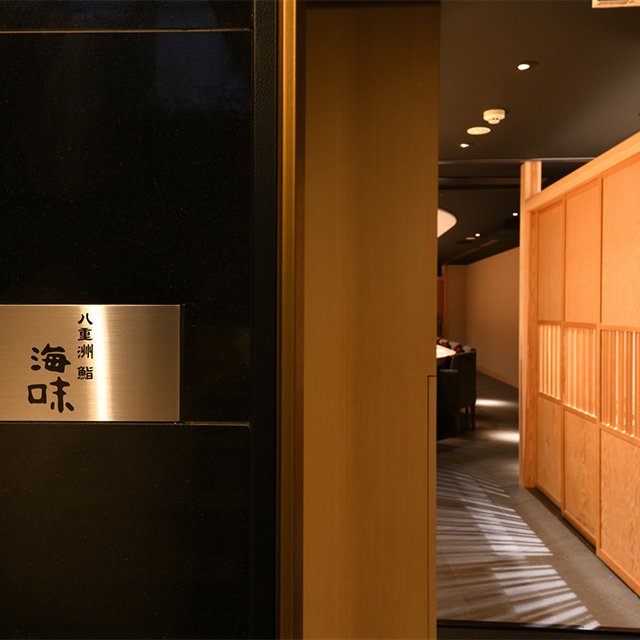
A Counter That Earns Its Rankings Through Restraint
Tokyo's omakase circuit has stratified sharply over the past decade. At the apex sit the fifteen-to-twenty-seat Ginza flagships, three-Michelin-star counters like Sushi Kanesaka and Sukiyabashi Jiro Roppongiten, priced and publicised accordingly. Below them, a denser, quieter tier operates on a different logic: smaller rooms, tighter schedules, and reputations built through the aggregated judgment of serious repeat diners rather than international press cycles. Umi, on the ground floor of the Minami-Aoyama 328 Sanban Building in Minato City, belongs to that second tier.
The Minami-Aoyama address itself signals something. This is not the tourist-mapped dining corridor of Ginza or Shinjuku. The neighbourhood's restaurant culture skews residential and purposeful: locals who know what they are eating, visitors who have done the research. Counters here tend to run leaner operations, which in the context of sushi carries implications that extend well beyond atmosphere into sourcing, waste, and the daily discipline of working with perishable fish at serious volume.
Sourcing as a Daily Practice, Not a Marketing Position
The sustainability conversation in premium Japanese dining rarely uses that vocabulary. The ethos predates the terminology. Edomae tradition, the foundational logic behind Tokyo sushi, developed as a direct response to the constraints of fresh seafood availability in Edo-period Japan. Curing, aging, marinating, and seasoning were techniques born of necessity: using every part of what the catch provided, preserving what could not be served immediately, and building a cuisine around the intelligence of restraint rather than abundance.
That tradition now intersects with a more contemporary pressure. Tokyo's top-tier sushi counters are acutely aware that the species they depend on, bluefin tuna, certain shellfish, specific seasonal fish, face documented supply pressures from global overfishing and shifting ocean conditions. The counters that have navigated this most credibly are those that have deepened relationships with specific suppliers, adjusted their menus to reflect what is actually available rather than what customers expect to find, and built their reputations around a seasonal calendar that treats scarcity as information rather than inconvenience.
At a counter operating on Umi's schedule, two sittings per evening, running Monday through Sunday with a lunchtime service, the relationship with the market is structural, not incidental. The morning purchase determines the evening menu. There is no freezer buffer between the Tsukiji or Toyosu market and the guest. That constraint, replicated across Tokyo's smaller omakase operations, is one of the more meaningful mechanisms through which responsible sourcing gets embedded into daily practice: when the tuna is not right, you work with what is, and the meal changes accordingly. Compared with larger hotel restaurants where menus are fixed weeks in advance, this format carries an inherent responsiveness that aligns closely with what sustainability-conscious diners are increasingly seeking, even if no signboard advertises it.
Chef Koichi Taira's role in this context is primarily one of curation and judgment, the daily decision of what to accept and what to pass on, which supplier's fish has been handled correctly, which seasonal ingredient is genuinely at its moment. That curatorial authority is what drives the Tabelog score and the OAD ranking more than any single showpiece dish.
The OAD Japan list in 2025 ranks over two hundred venues before reaching Umi at #232, which places it inside a very competitive field. The counters immediately around it in the rankings, and those above it, such as Harutaka, share certain structural characteristics: small formats, chef-led service, no walk-in availability, and reputations that depend on the repeat visitor rather than the first-timer. Edomae Sushi Hanabusa and Hiroo Ishizaka occupy comparable positioning within Tokyo's mid-upper tier, where the argument is carried by craft and sourcing rather than by the weight of Michelin star marketing.
This is the cohort where the sustainability argument matters most in practical terms. Without the buffer of a major brand or a hotel group behind them, these counters succeed or fail based on the actual quality of what arrives at the pass. The incentive to maintain rigorous supplier relationships is not reputational theatre, it is the operational prerequisite for staying at a 3.89 Tabelog score across the number of covers that the two-sitting format demands.
By comparison, the Michelin-star houses, including those like Sushi Kanesaka with full-star recognition, operate in a different ecosystem. Their sourcing is equally serious but often more visible: documented supplier partnerships, press-documented relationships with specific fishing communities, and the kind of editorial attention that turns a sourcing story into a brand asset. At Umi's tier, the same discipline operates with less documentation and less fanfare. The OAD and Tabelog rankings are the record.
The Two-Sitting Format and What It Demands
The evening schedule at Umi, two discrete service windows, 17:00-19:00 and 20:00-22:00, is the format used by a significant proportion of Tokyo's serious omakase counters. It is not arbitrary. A single long evening service with staggered seating creates the kind of ambient pressure on kitchen pace that compromises the temperature precision sushi demands. Two sittings with a defined interval allows the kitchen to reset, the rice to be freshly prepared for each service, and the pacing of each meal to hold its shape from first piece to last.
For the environmentally-minded diner, that format also has implications. The tight sequencing of covers means that daily purchase quantities are calibrated against confirmed covers, not estimated demand. Food waste at a counter running this model is structurally lower than at an à la carte operation where cover count fluctuates unpredictably and mis-en-place must account for demand peaks. This is not a claim that Umi makes; it is an observation about the economics of the format that applies across Tokyo's omakase tier.
The lunchtime service (12:00-14:00) extends the same logic into a format increasingly rare in this price bracket. Lunch at a serious sushi counter typically draws a different guest: the local who builds their working week around it, the visitor who understands that morning fish is morning fish. The fact that Umi offers both services seven days a week places it in a more demanding operational category than many peer counters, which close one or two days and run lunch only intermittently.
Tokyo's Sushi Scene: Context for the International Visitor
For readers arriving from outside Japan, the rankings infrastructure that positions Umi deserves a brief orientation. Tabelog is Japan's dominant restaurant evaluation platform, crowd-sourced but heavily weighted toward repeat visitors and domain specialists. A score above 3.80 in sushi, a category with the highest density of serious practitioners in the world, represents a meaningful threshold. OAD's Japan list is compiled by a similar peer-review methodology and is taken seriously within the international food press as an alternative to Michelin for Japanese cuisine specifically. Appearing on both lists, with a rising OAD trajectory across three consecutive years, is a credible signal of sustained quality rather than a single strong season.
That context matters for comparison. The sushi format exported to cities like Hong Kong and Singapore, represented at the high end by venues like Sushi Shikon in Hong Kong and Shoukouwa in Singapore, transplants the omakase structure but operates in a different sourcing ecosystem. Fish arrives by air freight. Seasonal rhythms are partially preserved and partially approximated. The Tokyo counter, by contrast, sits inside the sourcing infrastructure: Toyosu market, the daily auction, the direct supplier relationships built over years. That geographic proximity is the structural advantage that a Minami-Aoyama counter holds over any export version of the format, however technically accomplished.
Visitors exploring Tokyo's broader dining scene can find context across the city's different cuisine categories in our full Tokyo restaurants guide, as well as dedicated coverage of hotels, bars, wineries, and experiences across the city. For those building a broader Japan itinerary, the country's serious restaurant culture extends well beyond Tokyo: HAJIME in Osaka, Gion Sasaki in Kyoto, akordu in Nara, Goh in Fukuoka, 1000 in Yokohama, and 6 in Okinawa each represent the same standard of sustained, ranking-validated quality in different regional contexts.
Know Before You Go
- Address: MinamiAoyama 328 Sanban Building 1F, Minato City, Tokyo
- Phone (Tabelog): 050-5872-1963
- Hours: Monday–Sunday, 12:00–14:00 and 17:00–19:00 / 20:00–22:00
- Awards: Opinionated About Dining Leading Restaurants in Japan #232 (2025), #206 (2024), Highly Recommended (2023); Tabelog Bronze Award 2025 (score: 3.89)
- Ratings:
- Booking: Reservation required; use Tabelog booking link or contact directly via phone
- Format: Omakase counter, two evening sittings
- Chef: Koichi Taira
Frequently asked questions
What are the opening hours for Umi?
Hours at Umi: Hours: Monday 12–2 pm, 5–10 pm Tuesday 12–2 pm, 5–10 pm Wednesday 12–2 pm, 5–10 pm Thursday 12–2 pm, 5–10 pm Friday 12–2 pm, 5–10 pm Saturday 12–2 pm, 5–10 pm Sunday 12–2 pm, 5–10 pm.
Where do I go for Umi?
Umi is located at 1328 18th St, San Francisco, CA 94107, Tokyo.
Does Umi have a Michelin star or similar recognition?
Umi has received recognition including: Opinionated About Dining Top Restaurants in Japan Ranked #232 (2025); Tabelog Bronze Award 2025 Score: 3.89 Cuisine: Sushi / Tokyo Phone: 050-5872-1963 Hours: Mon, Thu, Day after public holiday 17:00 - 19:00 20:00 - 22:00 Address: MinamiAoy….
What's the signature dish at Umi?
Umi operates as a daily-determined omakase counter, so no fixed signature dish exists in the conventional sense. Chef Koichi Taira shapes each sitting around what is available and seasonally appropriate, which is standard practice across Tokyo's serious edomae counters. The OAD ranking at #232 in Japan for 2025, alongside a Tabelog Bronze Award, reflects consistent execution across the full sequence rather than any single standout plate.
Who's behind the kitchen at Umi?
The chef associated with Umi is Koichi Taira.
Comparison Snapshot
| Venue | Cuisine | Price | Awards | Notes |
|---|---|---|---|---|
| UmiThis venue (the venue you are viewing) | Edomae-style Omakase Sushi | $150–200 | Tabelog 100 #7 | Not listed |
| Harutaka | Edo-Style Omakase Sushi | $200–300 | 3 Michelin Stars · World's 50 Best #76 | Sushi |
| RyuGin | Modern Kaiseki | $500+ | 3 Michelin Stars · World's 50 Best #41 | Kaiseki, Japanese |
| L'Effervescence | Modern French with Japanese Influences | $200–300 | 3 Michelin Stars · World's 50 Best #69 | French |
| HOMMAGE | Modern French with Japanese Influences | $150–200 | 2 Michelin Stars · World's 50 Best #78 | Innovtive French, French |
| MAZ | Innovative Peruvian-Japanese Fusion | $150–200 | 2 Michelin Stars · World's 50 Best #28 | Innovative |
Recognition history
Dated appearances from independent guides and award organizations, with the underlying list record or original source where available.
Opinionated About Dining Top Restaurants in Japan Recommended
Opinionated About Dining
Tabelog 100 #7 · No. 7
Tabelog · Tabelog 100 - Sushi - TOKYO - 2025
Full recognition history (6 entries)
Opinionated About Dining Top Restaurants in Japan Ranked #232
Opinionated About Dining
Tabelog Bronze
Tabelog
Opinionated About Dining Top Restaurants in Japan Ranked #206
Opinionated About Dining
Opinionated About Dining Top Restaurants in Japan Highly Recommended
Opinionated About Dining
Continue exploring
More in Tokyo
Restaurants in Tokyo
All restaurants in Tokyo →



Bars in Tokyo
All bars in Tokyo →





Details
- Lively
- Intimate
- Elegant
- Date Night
- Special Occasion
- Chefs Counter
- Sake Program
- Omakase
- Counter Dining
Current opening hours
- Monday
- Closed
- Tuesday
- 11:30 AM–2 PM, 5:30–9:30 PM
- Wednesday
- 11:30 AM–2 PM, 5:30–9:30 PM
- Thursday
- 11:30 AM–2 PM, 5:30–9:30 PM
- Friday
- 11:30 AM–2 PM, 5:30–10 PM
- Saturday
- 5–10 PM
- Sunday
- 5–9 PM
Hours can change for holidays and private events. Last verified .
Relaxed, warm, and energetic atmosphere with friendly shouting chef and staff, contrasting hushed sushi temples.