Our verdict
Torafugutei is one of Tokyo's most recognised names in fugu cuisine, a dining tradition governed by strict licensing requirements and centuries of cultural weight. The restaurant operates within a culinary category where preparation technique and ingredient sourcing carry legal and reputational consequence in equal measure. For those tracing Japan's more ceremonial end of the table, it represents a specific and serious point of entry.

Pearl is the En Primeur Club membership app, where members save venues, book tables and use the concierge.
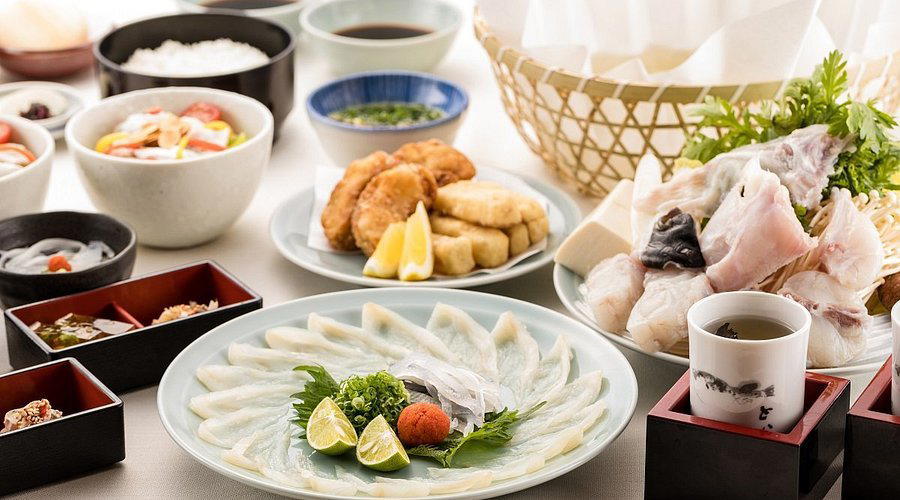
The menu
What to order
- Fresh Tora-fugu Sashimi (Tessa)
- Fresh Tora-fugu Stew (Tecchiri)
- Charcoal-grilled Tora-fugu
- Deep-fried Pufferfish
Fugu in Tokyo: A Cuisine Built on Consequence
Of all the dining traditions that Japan has formalised into near-ritual, fugu preparation sits at the most demanding end of the regulatory spectrum. Chefs who handle blowfish must hold a prefectural licence earned through years of training and examination, a requirement that has no direct equivalent in Western culinary credentialling. The result is a cuisine where the kitchen's authority is not inferred from awards or reputation alone, but underwritten by law. Torafugutei operates within this framework, serving torafugu (tiger puffer fish) through a format that has accumulated significant popular recognition across Japan over several decades.
The cultural weight behind fugu extends well beyond the famous toxicity of the fish. Historically, the preparation of fugu was banned outright in Japan for stretches of the Edo and Meiji periods, at various points, samurai were prohibited from eating it entirely. The eventual lifting of those bans, combined with the development of a professional licensing system, transformed fugu from a street-level risk into a codified luxury. By the twentieth century, dedicated fugu restaurants had become a distinct and respected category of Japanese dining, concentrated in Osaka and Tokyo, with specific seasonal windows shaping when and how the fish was served. Torafugutei belongs to that lineage.
What Sets Fugu Dining Apart from Other Japanese Restaurant Categories
Visitors accustomed to Tokyo's omakase counters, places like Harutaka for sushi or RyuGin for kaiseki, will find fugu restaurants operate on a different set of premises. Where sushi omakase centres on the chef's daily sourcing decisions and kaiseki is shaped by a seasonal progression of small courses, fugu dining is organised almost entirely around a single ingredient. The thinly sliced sashimi preparation known as tessa, the hot pot called tecchiri, the fried version known as karaage, and the hirezake sake warmed with charred fugu fins represent the canonical forms in which the fish appears. A fugu restaurant's quality is measured by the sourcing of the fish (Shimonoseki in Yamaguchi Prefecture has historically been the dominant hub), the precision of the sashimi knife work, and the depth of the stock used for hot pot.
This narrowness of focus is a feature, not a limitation. Tokyo's higher-end dining tier has developed considerable range in its French-influenced formats, L'Effervescence, Sézanne, and Crony each represent different positions within that French-Japanese conversation. Fugu restaurants occupy a completely separate axis: they are not fusion, not chef-driven in the modernist sense, and not organised around a tasting menu that builds a narrative across many ingredients. They are ingredient-specialists operating within a tradition that predates most of the formats now associated with fine dining globally.
Torafugutei's Position in the Fugu Category
Torafugutei has grown into one of the more widely known fugu restaurant groups in Japan, with a presence in multiple cities that gives it a different market position from the single-location specialist. This scale carries trade-offs familiar from other culinary categories: accessibility and consistency across branches versus the tight control and idiosyncrasy of a single-room operation. For visitors to Tokyo whose primary interest is an introduction to fugu as a dining tradition rather than a search for the most rarified single-chef expression, that accessibility functions as an advantage. The restaurant's recognisability within Japan itself is a form of contextual trust signal, the kind built over years of operating in a category where the ingredient demands technical seriousness by default.
Fugu's Japanese dining scene extends well beyond Tokyo. Osaka, where HAJIME represents the city's cutting edge of modern Japanese cuisine, has historically been considered the cultural capital of fugu eating. Kyoto's traditional dining establishments, including places like Gion Sasaki, incorporate seasonal fish of different kinds into kaiseki, though fugu carries its own separate institutional weight. Even in smaller cities, Nara, Fukuoka, and regional destinations like Nanao, Sapporo, and Takashima, Japan's ingredient-focused dining traditions maintain their own integrity. Within that geography, Tokyo's fugu restaurants serve a different function: they bring the tradition to the country's largest international gateway city, making it accessible to visitors who would not otherwise encounter it. Our full Tokyo restaurants guide maps that broader context in detail.
Seasonality and Timing
Fugu has a defined season in Japan, running broadly from autumn through early spring, with peak eating typically cited between October and March. Outside those months, the fish is available year-round but is considered inferior in flavour, the cold-water months produce firmer, more flavourful specimens, and the tradition of fugu as a winter dish is embedded deeply enough in Japanese culture that it shapes how diners approach it. This is a meaningful planning consideration: a Tokyo itinerary in July will find Torafugutei open but the ingredient at something less than its seasonal peak. Parallel considerations apply to other specialist Japanese formats: regional restaurants like Nishikawa Machi and Birdland in Sakai each have their own seasonal rhythms worth factoring into travel planning.
How Torafugutei Fits into a Tokyo Dining Itinerary
For visitors building a serious Tokyo dining week, Torafugutei answers a question that French-Japanese fine dining and omakase counters do not: what does Japan's most culturally specific ingredient tradition look like at the table. It is a different register from the chef-driven intellectualism of places like Bistro Ange in Toyohashi or the global technical ambition of Le Bernardin in New York or Atomix. Fugu dining is Japan explaining something about itself through an ingredient that required centuries of institutional management before it could arrive at a restaurant table.
Bookings for Torafugutei are best confirmed directly through the restaurant ahead of any Tokyo trip, particularly for group reservations or visits during the peak autumn-winter season.
Frequently asked questions
How does Torafugutei compare to eating fugu in Osaka or Fukuoka?
Osaka holds the stronger historical claim as the cultural centre of fugu eating, with Dotonbori's concentration of fugu restaurants reflecting a civic identity tied to the ingredient going back centuries. Fukuoka, close to the Shimonoseki port that handles the bulk of Japan's fugu catch, gives diners proximity to the source. Torafugutei in Tokyo operates within a city that has the regulatory infrastructure and licensing density to support serious fugu dining, even if it lacks the regional mythology of those two cities.
What's the must-try dish at Torafugutei?
Tessa is the reference dish at any serious fugu restaurant in Japan: transparently thin sashimi sliced from the puffer fish and arranged in a circular pattern on the plate, a presentation that has become the visual signature of the cuisine. Fugu nabe (hot pot) is the second essential order, particularly during the October-to-March peak season when the fish is at its densest. Ordering both in a single sitting gives a clear read on the kitchen's command of texture across two very different preparations.
Is Torafugutei reservation-only?
Fugu restaurants at this level of recognition in Tokyo operate on advance reservations, and Torafugutei is no exception, particularly between October and March when demand for the seasonal ingredient is at its highest. Walk-in availability outside peak season may exist at some locations, but booking ahead is the reliable approach. Contact the specific Tokyo branch directly to confirm current availability and reservation procedure.
What is Torafugutei known for?
Torafugutei is associated primarily with torafugu (tiger puffer fish) cuisine, a tightly regulated ingredient category in Japan where chefs must hold a prefectural licence to prepare and serve the fish. The group has grown into one of the more widely recognised fugu restaurant chains in the country, operating across multiple Japanese cities including Tokyo. That scale distinguishes it from the single-location fugu specialists that define the top end of Osaka's fugu scene.
Do they accommodate allergies at Torafugutei?
Fugu cuisine is structured around a single primary ingredient, which narrows the menu format considerably compared with multi-course tasting menus built across many proteins and vegetables. That focus means common allergen variables such as shellfish or certain proteins are less likely to be present, but the accompanying preparations, broths, sauces, and side dishes, can introduce allergens. Anyone with specific dietary requirements should check the venue's official channels before booking, as menu variation within the fugu format is limited.
Is Torafugutei worth the price?
Fugu dining in Tokyo sits at a premium price tier relative to most Japanese restaurant categories, reflecting the licensing costs, the sourcing of certified torafugu, and the skill required to prepare a fish where improper handling carries legal and physical consequences. Torafugutei's multi-city presence means it operates at a more accessible price point than the most exclusive single-location fugu specialists, making it a practical entry point into the category for first-time fugu diners. Whether that positioning represents value depends on how much weight you place on the ingredient itself versus the intimacy of a smaller specialist operation.
Standing Among Peers
| Venue | Cuisine | Price | Awards | Notes |
|---|---|---|---|---|
| TorafuguteiThis venue (the venue you are viewing) | Premium Tiger Pufferfish (Fugu) Specialist | $50–100 | Not listed | Not listed |
| Harutaka | Edo-Style Omakase Sushi | $200–300 | 3 Michelin Stars · World's 50 Best #76 | Sushi |
| L'Effervescence | Modern French with Japanese Influences | $200–300 | 3 Michelin Stars · World's 50 Best #69 | French |
| RyuGin | Modern Kaiseki | $500+ | 3 Michelin Stars · World's 50 Best #41 | Kaiseki, Japanese |
| Crony | Modern French with Japanese Influences | $150–200 | 2 Michelin Stars · World's 50 Best #34 | Innovative, French |
| Florilège | Modern French-Japanese Plant-Based Fine Dining | $50–100 | 2 Michelin Stars · World's 50 Best #31 | French |
Continue exploring
More in Tokyo
Restaurants in Tokyo
All restaurants in Tokyo →


Bars in Tokyo
All bars in Tokyo →




Details
- Classic
- Elegant
- Sophisticated
- Business Dinner
- Group Dining
- Special Occasion
- Celebration
- Open Kitchen
- Private Dining
- Sake Program
- Local Sourcing
- Sustainable Seafood
- A La Carte
- Set Menu
- Sake
- Shochu
- Wine
- Pescatarian Friendly
Relaxing and uniquely Japanese atmosphere with traditional dining experience focused on the artistry of pufferfish preparation.