Our verdict
Tim Ho Wan in Tokyo brings the original Hong Kong dim sum format that earned a Michelin star to Hibiya's Chanter Annexe, where queues form early for baked BBQ pork buns and rice noodle rolls at prices that sit well below the ¥¥¥¥ tier dominating Tokyo's fine-dining conversation. For visitors comparing value across the city's restaurant spectrum, it occupies a distinct position: recognisably serious technique at an accessible price point.

Pearl is the En Primeur Club membership app, where members save venues, book tables and use the concierge.
The menu
What to order
- Baked Char Siu Bao
- Har Gao
- Siu Mai
- Pan-Fried Turnip Cake
- Rice Wrapped in Lotus Leaf
Dim Sum at Street Level: The Format That Upended Fine-Dining Logic
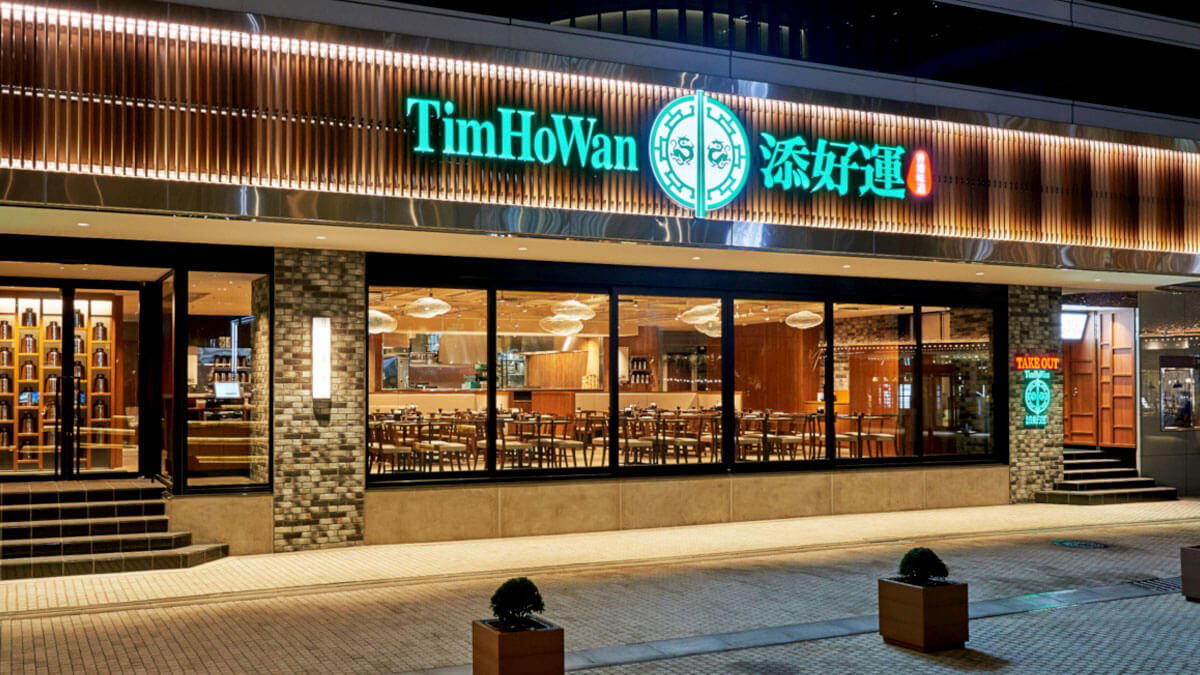
The morning queue outside a ground-floor shopfront in Hibiya's Chanter Annexe tells you something specific about how Tokyo's dining culture absorbs foreign formats. Tim Ho Wan (添好運) arrived in Japan as a proven quantity: the original Hong Kong location became the reference case for what critics shorthand as "the cheapest Michelin-starred restaurant in the world," a designation that travelled faster than the food itself. What it introduced to Tokyo was a proposition the city's food scene rarely packages together, Cantonese dim sum technique executed at a register that doesn't require the booking strategies demanded by a kaiseki counter or an omakase room.
That contrast is worth sitting with. Tokyo's most-discussed restaurants in 2024 cluster at the ¥¥¥¥ tier: counters like Harutaka for sushi, L'Effervescence and Sézanne for French, RyuGin for kaiseki at its most technically ambitious. Tim Ho Wan operates in a different register entirely, not as a lesser version of that conversation, but as a parallel one, where the credential is a Michelin pedigree attached to a price point accessible enough that most diners can walk in without a corporate expense account behind them.
The Cantonese Technique in a Japanese Setting
Dim sum is a format shaped by specific craft traditions: the laminating of pastry for har gow skins to achieve translucency while holding moisture, the fermentation timelines behind char siu, the steaming tolerances that separate a properly set lo mai gai from a gummy one. These are techniques developed in Cantonese teahouse culture, refined over generations in Hong Kong's yum cha institutions, and largely absent from Japan's indigenous culinary canon. Tokyo has Chinese restaurants across every price point, but Cantonese dim sum at a technically credentialed level represents a narrower segment.
This is where the editorial angle of imported method meeting local context becomes concrete. Japan's restaurant culture prizes precision above almost everything else, and that precision-orientation creates a particular kind of environment for foreign techniques to land in. Kitchens operating here face ingredient sourcing decisions that differ substantially from Hong Kong: pork quality and cut specifications vary, glutinous rice sources differ, and the spring onion varieties available to a Tokyo kitchen are not identical to those in Kowloon. The Tim Ho Wan format, transplanted to Hibiya, is therefore not a direct copy of its source, it is a system of technique applied to a different ingredient supply chain, which is the ordinary condition of any serious restaurant operating across borders. Comparable dynamics shape venues like akordu in Nara, where European wine-country traditions are applied through Japanese product availability, or Bistro Ange in Toyohashi, where French bistro form adapts to regional Japanese supply.
The Hibiya Location: Neighbourhood and Access
The Chanter Annexe address in Yūrakuchō (有楽町1-2-2) places Tim Ho Wan in one of central Tokyo's most transit-saturated pockets. Yūrakuchō station is steps away; Hibiya and Ginza stations add further access points. This centrality matters for a venue operating without a reservation system, proximity to major rail interchanges means queue composition is genuinely mixed, drawing office workers from the surrounding business district alongside visitors triangulating a day across central Tokyo.
Hibiya has developed as a dining district since the Hibiya and Tokyo Midtown Hibiya complexes opened, drawing a wider variety of formats into a neighbourhood previously dominated by corporate dining. Tim Ho Wan sits in that context as a value-to-quality ratio case study, the kind of address that earns word-of-mouth currency because the bill doesn't match the expectation that the Michelin brand name usually sets.
For visitors building a broader Japan itinerary, the geographic logic of treating Tokyo as a base for day trips or short excursions opens access to a different stratum of Japan's restaurant culture: HAJIME in Osaka, Gion Sasaki in Kyoto, and Goh in Fukuoka each represent the kaiseki and course-format tradition at its most considered. Tim Ho Wan answers a different question: what does a credentialed, accessible lunch look like in central Tokyo on a day between longer commitments.
How It Sits in the Broader Tokyo Dining Map
Tokyo's restaurant ecosystem is unusually stratified. At one end, omakase and kaiseki rooms function on allocation logic, months-out booking windows, per-person minimums that run to tens of thousands of yen, dress codes. At the other, ramen shops and standing sushi bars compress quality into formats with zero friction. Dim sum at the Tim Ho Wan model occupies a specific middle band: table service with a structured menu, but no reservation burden, no formal dress expectation, and per-dish pricing that allows selective ordering rather than a fixed course commitment.
That structural position makes it legible alongside different peer sets depending on what question the reader is asking. Against other foreign-cuisine transplants in Tokyo, it sits at the credentialed end. Against Tokyo's kaiseki tier, venues like Crony at its innovative French register, it operates in an entirely different economic category. The Michelin origin story gives it a trust signal that most casual dining formats don't carry, while the price point keeps it accessible to a far wider audience than that signal would normally imply.
For a fuller map of where Tim Ho Wan fits against Tokyo's broader restaurant range, our full Tokyo restaurants guide covers the spectrum from omakase counters through to neighbourhood specialists. Further afield, restaurants like 一本杉川嶋 in Nanao, 北のたまゆら in Sapporo, 湖里庵 in Takashima, 庄羽屋 in Nishikawa Machi, and Birdland in Sakai illustrate how Japan's serious dining culture distributes well beyond the capital. For New York-based readers calibrating international comparisons, Le Bernardin and Atomix represent the American counterpart of what happens when high-technique formats anchor in a major city at a fixed, high price point, the inverse of the Tim Ho Wan model.
Planning Your Visit
Tim Ho Wan's Hibiya location sits at 有楽町1-2-2, 日比谷シャンテ 別館 1F, in Chiyoda, Tokyo. The venue does not publish a reservation line in publicly available data, which is consistent with the brand's walk-in operating model in other cities. Arriving early, before the lunch peak or shortly after opening, is the standard approach for managing wait times at this address. Yūrakuchō station provides the most direct access.
Quick Reference
Tim Ho Wan (添好運), 有楽町1-2-2, 日比谷シャンテ 別館 1F, Chiyoda, Tokyo 100-0006. Walk-in format; no advance reservation system confirmed. Nearest station: Yūrakuchō.
Frequently asked questions
What is the signature dish at Tim Ho Wan (添好運)?
Tim Ho Wan is most closely associated with its baked BBQ pork buns (baked char siu bao), which distinguish the restaurant from the steamed-bun formats more commonly found at Cantonese dim sum venues. The baked version, with a slightly sweet, crisp outer layer over a savoury filling, became the dish most cited in coverage of the original Hong Kong location's Michelin recognition. Other core items in the dim sum format include steamed rice noodle rolls and har gow, which together give a reasonable cross-section of the kitchen's pastry and steaming technique.
Do I need a reservation for Tim Ho Wan (添好運) in Tokyo?
Based on the brand's established operating model across its international locations, Tim Ho Wan functions as a walk-in venue rather than a reservation-driven one, a deliberate structural choice that keeps the format accessible and aligns with its value positioning in cities like Hong Kong and Singapore. At the Hibiya address in Tokyo, this means queues form during peak meal periods, particularly weekend lunches. Arriving when the venue opens, or during mid-afternoon between lunch and dinner service, typically reduces wait times. For the most current information on the Tokyo location's specific policy, the Hibiya Chante complex is the most reliable contact point.
How does Tim Ho Wan in Tokyo compare to a traditional Hong Kong yum cha experience?
The Hong Kong yum cha format, as practised in large Kowloon and Hong Kong Island teahouses, centres on trolley service, multi-generational family groups at large round tables, and a menu that can run to dozens of items across multiple cooking methods. Tim Ho Wan's format is tighter: a focused menu built around a smaller selection of signature items, with counter or table seating suited to pairs or small groups rather than banquet-scale parties. The Tokyo location carries that same focused format, which makes it a more efficient experience than a traditional yum cha hall but a narrower one, the credential is in the execution of fewer things done precisely, not in the breadth of a full teahouse spread.
At a Glance
Comparable options at a glance, pulled from our tracked venues.
| Venue | Cuisine | Price | Awards | Notes |
|---|---|---|---|---|
| Tim Ho Wan (添好運)This venue (the venue you are viewing) | Authentic Cantonese Dim Sum | $20–30 | Not listed | Not listed |
| Harutaka | Edo-Style Omakase Sushi | $200–300 | 3 Michelin Stars · World's 50 Best #76 | Sushi |
| L'Effervescence | Modern French with Japanese Influences | $200–300 | 3 Michelin Stars · World's 50 Best #69 | French |
| RyuGin | Modern Kaiseki | $500+ | 3 Michelin Stars · World's 50 Best #41 | Kaiseki, Japanese |
| Crony | Modern French with Japanese Influences | $150–200 | 2 Michelin Stars · World's 50 Best #34 | Innovative, French |
| Florilège | Modern French-Japanese Plant-Based Fine Dining | $50–100 | 2 Michelin Stars · World's 50 Best #31 | French |
Continue exploring
More in Tokyo
Restaurants in Tokyo
All restaurants in Tokyo →

Bars in Tokyo
All bars in Tokyo →

Details
- Casual
- Lively
- Well Known
- Casual Hangout
- Group Dining
- Family
- Open Kitchen
- A La Carte
- Family Style
- Oolong Tea
- Vegetarian Friendly
Casual, bustling dim sum hall with authentic Hong Kong atmosphere; expect crowds and a lively dining environment.