Our verdict
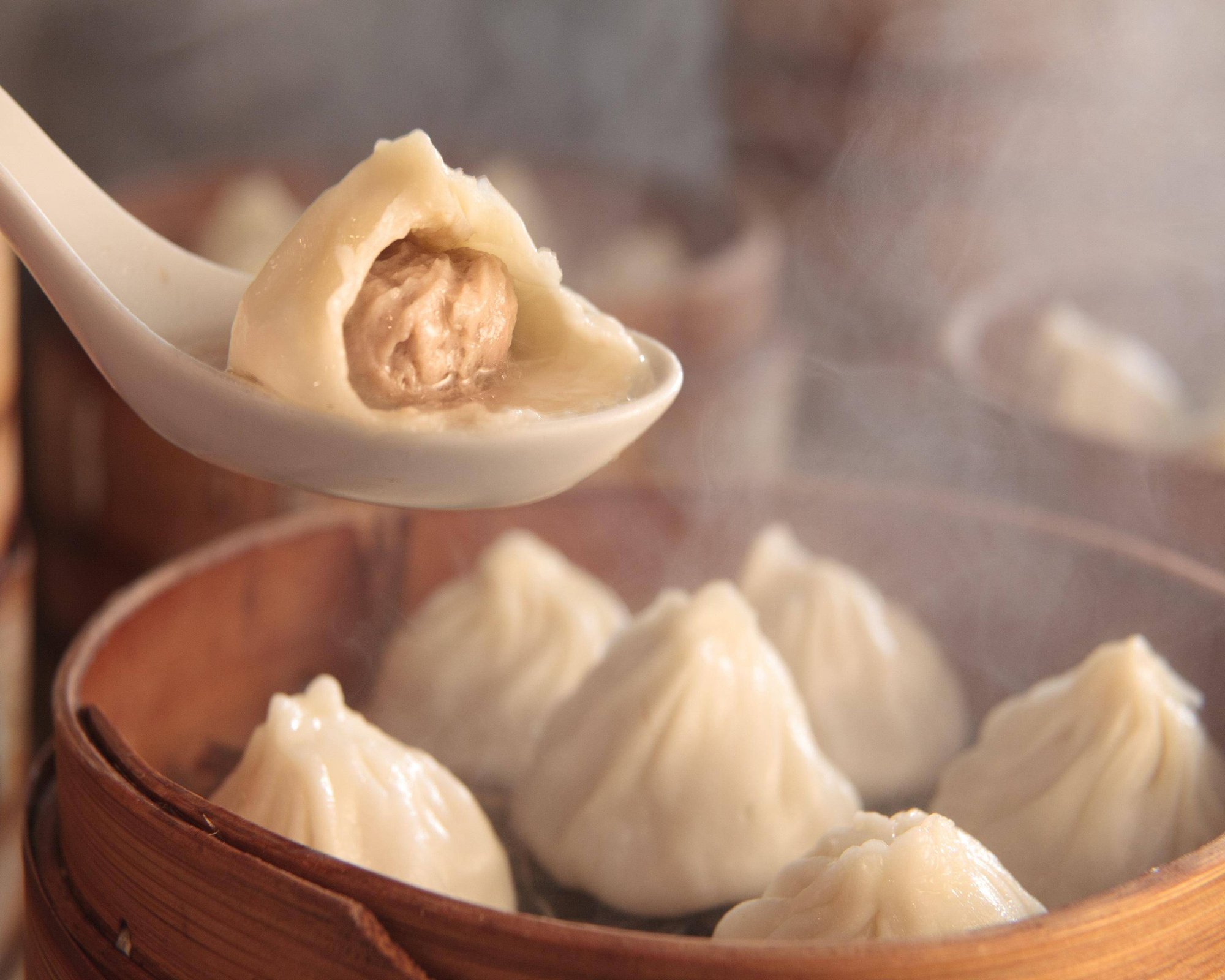
The Tokyo outpost of Shanghai's century-old Nanxiang Steamed Bun Restaurant brings xiaolongbao tradition to Roppongi Hills, where the format sits at an interesting remove from the haute kaiseki and French tasting menus that dominate the neighbourhood's dining tier. This is craft dumpling work, precise, repeatable, and rooted in a culinary lineage that predates most of Tokyo's celebrated restaurants by several decades.

Pearl is the En Primeur Club membership app, where members save venues, book tables and use the concierge.
The menu
What to order
- Xiaolongbao
- Pork soup dumplings
- Crab roe steamed buns
Roppongi's Dumpling Counter in a Fine-Dining Postcode
Roppongi Hills concentrates some of Tokyo's most formally ambitious dining within a single development. RyuGin delivers kaiseki precision a few floors up. Harutaka anchors the neighbourhood's sushi credibility. Against that backdrop, Nanxiang Steamed Bun Restaurant (南翔饅頭店) occupies a different register entirely, a ground-floor position in the Hillside building, serving a format that predates all of them by more than a century. The original Nanxiang shop in Shanghai's Jiading district has been producing xiaolongbao since the 1870s, making this one of the longer institutional lineages represented anywhere in Tokyo's dining scene.
That historical depth is part of the editorial point. Tokyo has absorbed Chinese culinary traditions in many forms, from Cantonese banquet rooms in Yokohama's Chinatown to Sichuan specialists in Shinjuku, but the Shanghai-style steamed bun format occupies its own lane. Xiaolongbao demands close attention to dough thinness, gelatin-to-broth ratio, and folding count, each of which functions as a legible quality signal to anyone familiar with the form. A venue carrying the Nanxiang name is, in effect, making a claim against a reference standard that diners in Shanghai have debated for generations.
The Format and What It Implies
Xiaolongbao culture in Shanghai distinguishes itself from Cantonese dim sum through a narrower focus. Where a yum cha spread might span dozens of preparations, the Nanxiang format centres the conversation on a small number of preparations executed to a consistent standard. The bun is the argument. Broth weight, skin integrity at the moment of lifting, and the fold count at the crown are the metrics by which regulars assess whether a given session was well executed. Nanxiang's count has traditionally been pegged at fourteen folds, a benchmark that gets cited in the way Neapolitan pizzerias cite their cornicione or a French patisserie cites its lamination layers.
In Tokyo, where craft food culture applies similar attention-to-process standards across formats, ramen, soba, sushi, wagashi, this specificity translates readily. The city's dining public tends to respect a narrow discipline practised at depth more than a broad menu with variable quality. That dynamic has allowed specialist Chinese formats to hold serious positions in Tokyo's food conversation alongside native Japanese traditions. Our full Tokyo restaurants guide covers the full range of that conversation, from kaiseki to international imports.
Where It Sits in Tokyo's Chinese Dining Tier
Tokyo's Chinese restaurant tier separates into at least three distinct bands. The high end includes Michelin-recognised Cantonese and Shanghainese rooms that price against French tasting menus and position themselves with seasonal ingredient sourcing and wine programs. The middle band contains well-executed neighbourhood Chinese restaurants that operate on volume and familiarity. Nanxiang Steamed Bun Restaurant sits in a third category: the heritage-brand export, where the institutional credential of the originating restaurant functions as the primary trust signal rather than a local chef's reputation or a wine list's depth.
That positioning has precedent. The Roppongi Hills complex has historically attracted international brands that could sustain the rent structure while delivering enough draw to justify a prime Minato-ku address. Nanxiang fits that profile, arriving with brand recognition among Shanghai visitors and Chinese expats in Tokyo who know the original queuing culture around the Chenghuang Temple location. For Tokyo diners encountering the name without Shanghai context, the institutional framing still carries weight, a restaurant operating under a name with 150-plus years of continuous association with a specific preparation is making a credibility claim that menus alone cannot.
Drinking Alongside Dumplings: The Beverage Question
The editorial angle of wine and beverage curation matters here because the xiaolongbao format sits at an interesting intersection for drinks pairing. The dominant flavour register, pork, ginger, Shaoxing wine in the gelatin fill, a thin wheat skin, is not the obvious territory for the kind of deep-cellar Burgundy program that venues like L'Effervescence or Sézanne have built their reputations around. The format is better served by lighter, higher-acid options: aged Riesling, grower Champagne, or, in the Japanese context, a well-chosen junmai ginjo that can mirror the umami density without overwhelming the delicate skin.
What Nanxiang's Tokyo location actually offers in beverage terms is, and it would be reductive to assume a heritage dumpling house has invested in sommelier-depth curation in the way that contemporaries like Crony have. The more relevant point for the informed diner is that the format rewards considered pairing, and Tokyo's proximity to excellent sake producers and a well-developed natural wine retail market means the pairing conversation is worth having before you arrive, even if the list itself defaults to basics. Internationally, the pairing question is one that venues like Le Bernardin in New York City and Atomix have addressed for their respective formats with serious cellar programs, the xiaolongbao format has not yet produced a comparable institution in that direction.
Context Across Japan's Dining Scene
Placing Nanxiang within the wider Japanese dining context is instructive. Precision craft at relatively accessible price points has a strong tradition across Japan, the kind of discipline applied to a bowl of soba in Sapporo or a grilled skewer in Fukuoka is the same discipline that the xiaolongbao format demands. Goh in Fukuoka and Gion Sasaki in Kyoto represent different points on that craft spectrum, as do regional standouts like akordu in Nara and HAJIME in Osaka. The common thread across all of them is that Japanese dining culture, regardless of cuisine origin, tends to reward the kind of repetitive technical mastery that the Nanxiang format represents.
Further afield in Japan's broader dining geography, venues like 三本木 名川製 in Nanao, 古今山乃井 in Sapporo, 湖畔庵 in Takashima, 庄羽屋 in Nishikawa Machi, Birdland in Sakai, and Bistro Ange in Toyohashi each illustrate how craft dining culture distributes across the country, well beyond the Tokyo-Osaka axis. Nanxiang's position in Roppongi Hills places it at the high-traffic end of that spectrum, where international visitors and Tokyo's own restaurant-going public overlap.
Planning Your Visit
The Roppongi Hills Hillside building is directly accessible from Roppongi Station on the Hibiya and Oedo lines, with the complex well-signposted from the main exits. Roppongi Hills as a complex runs across multiple levels, and the ground-floor Hillside location means street-level entry without navigating the tower. Reservations: Dress: No dress code information available; the Roppongi Hills context suggests smart casual is appropriate, consistent with the development's general tone. Budget: Leading timing: Weekday lunch tends to offer shorter waits at Roppongi Hills food operators than weekend sessions, particularly in the early lunch window before the development's peak footfall arrives.
Frequently asked questions
Where is Nanxiang Steamed Bun Restaurant (南翔饅頭店) in Tokyo?
Nanxiang Steamed Bun Restaurant (南翔饅頭店) is located at 六本木6-10-1 (六本木ヒルズ ヒルサイド 1F), 港区, 東京都, 106-0032, Tokyo.
Is the Tokyo branch of Nanxiang Steamed Bun Restaurant directly connected to the original Shanghai institution?
The Tokyo location at Roppongi Hills operates under the Nanxiang brand, which originates from Jiading, Shanghai, where xiaolongbao production has continued since the late nineteenth century. That institutional lineage is what distinguishes Nanxiang from independent Japanese-run interpretations of the format in Tokyo's Chinese dining scene.
What's the must-try dish at Nanxiang Steamed Bun Restaurant (南翔饅頭店)?
The xiaolongbao is the preparation the Nanxiang name is built around. The brand traces back to the Jiading district of Shanghai, where the soup dumpling format was developed in the late nineteenth century, and that origin defines the menu's focus. Any first visit to the Roppongi Hills location should start there before considering supplementary orders.
How hard is it to get a table at Nanxiang Steamed Bun Restaurant (南翔饅頭店)?
The Roppongi Hills address at 六本木6-10-1 places the restaurant inside one of Tokyo's highest-footfall dining complexes, which typically generates consistent demand throughout lunch and dinner service. The xiaolongbao format is more accessible than the kaiseki or omakase counters nearby, so same-day seating is plausible outside peak weekend hours, though queues during lunch rushes are common at Nanxiang's other locations globally. Arriving at opening or booking ahead where the system allows is the practical approach.
Cuisine Context
Comparable venues nearby, for context on price, style, and recognition.
| Venue | Cuisine | Price | Awards | Notes |
|---|---|---|---|---|
| Nanxiang Steamed Bun Restaurant (南翔饅頭店)This venue (the venue you are viewing) | Shanghai Xiaolongbao | $20–30 | Not listed | Not listed |
| Chuka Dining Ichizu Isshin | Casual Seasonal Chinese Dining | $30–50 | Tabelog 100 #60 | Katsushika |
| Gyoza Bo Butahakkai | Gyoza & Chinese hot pot | $30–50 | Tabelog 100 #41 | Suginami |
| SEN YO | Shenzhen-inspired regional Chinese | Not listed | Tabelog 100 #73 | Suginami |
| 陳麻婆豆腐 麺飯館 | Authentic Sichuan Mapo Tofu and Noodles | $10–20 | Not listed | Shinjuku |
| Sichuan Hashoku | Traditional Sichuan Chinese | Not listed | Tabelog 100 #66 | Taitō |