Our verdict
Hainanese chicken rice occupies a specific and contested place in Singapore's food culture, and Wee Nam Kee has been making its version since 1987, when founder Wee Toon Ouut established the brand. The Tokyo outpost brings that tradition to Ginza, on the seventh floor of EXITMELSA on Ginza 5-chome, serving the dish that defines the menu: poached or roasted chicken over fragrant rice cooked in chicken stock with pandan, accompanied by house-made chili and ginger sauces. The format is casual and accessible. The restaurant seats around 70 across indoor and terrace sections, and Tabelog places the average spend at ¥1,000–¥1,999 per person, which positions it as an affordable lunch or early dinner stop in a neighbourhood where most comparable sit-down options run considerably higher. The menu extends beyond chicken rice to other Singaporean dishes and Chinese and Indian-influenced items, but the chicken rice remains the reason most diners come. For Tokyo diners, the appeal is largely contextual. Singaporean food has a limited footprint in the city, and Hainanese chicken rice specifically is difficult to find prepared with any fidelity to the original. Wee Nam Kee's brand has also been commissioned by the Singapore government for overseas events, which speaks to its standing as a representative of the cuisine rather than a loose approximation of it. The Ginza location makes it unusually convenient for central Tokyo, sitting above one of the area's busier shopping complexes on a floor that draws foot traffic from multiple directions.
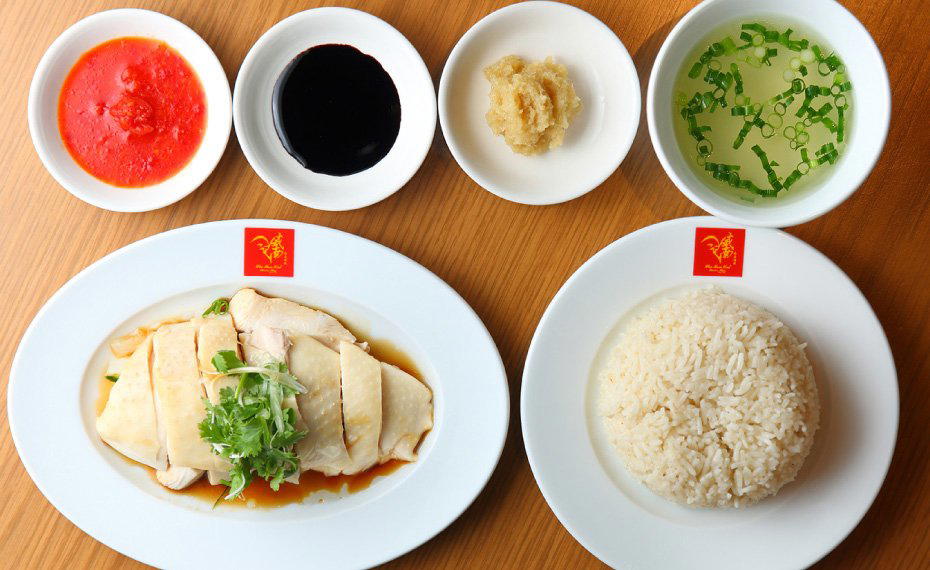
The menu
What to order
- Hainanese Chicken Rice
Hainanese chicken rice occupies a specific and contested place in Singapore's food culture, and Wee Nam Kee has been making its version since 1987, when founder Wee Toon Ouut established the brand. The Tokyo outpost brings that tradition to Ginza, on the seventh floor of EXITMELSA on Ginza 5-chome, serving the dish that defines the menu: poached or roasted chicken over fragrant rice cooked in chicken stock with pandan, accompanied by house-made chili and ginger sauces.
The format is casual and accessible. The restaurant seats around 70 across indoor and terrace sections, and Tabelog places the average spend at ¥1,000–¥1,999 per person, which positions it as an affordable lunch or early dinner stop in a neighbourhood where most comparable sit-down options run considerably higher. The menu extends beyond chicken rice to other Singaporean dishes and Chinese and Indian-influenced items, but the chicken rice remains the reason most diners come.
For Tokyo diners, the appeal is largely contextual. Singaporean food has a limited footprint in the city, and Hainanese chicken rice specifically is difficult to find prepared with any fidelity to the original. Wee Nam Kee's brand has also been commissioned by the Singapore government for overseas events, which speaks to its standing as a representative of the cuisine rather than a loose approximation of it. The Ginza location makes it unusually convenient for central Tokyo, sitting above one of the area's busier shopping complexes on a floor that draws foot traffic from multiple directions.
In Context
Comparable venues nearby, for context on price, style, and recognition.
| Venue | Cuisine | Price | Awards | Notes |
|---|---|---|---|---|
| Wee Nam Kee Chicken Rice (威南記 海南鶏飯)This venue (the venue you are viewing) | Singaporean Hainanese Chicken Rice | Not listed | Not listed | Not listed |
| MUDAN JIANG | Chinese Izakaya | $30–50 | Tabelog 100 #49 | Chūō, Chinese Izakaya |
| Fushue | Chinese restaurant | Not listed | Tabelog 100 #55 | Chūō, Chinese restaurant |
| Tezukuri Gyoza no Mise Yoshiharu | Handmade Gyoza & Chinese Small Plates | $30–50 | Tabelog 100 #20 | Chofu, Handmade Gyoza & Chinese Small Plates |
| Kin Fuku Hong Kong Bishoku | Hong Kong / Cantonese Chinese | $50–100 | Tabelog 100 #35 | Chiyoda, Hong Kong / Cantonese Chinese |
| chuukaryouri tokutake | Modern Chinese & Ramen | $30–50 | Tabelog 100 #33 | Sumida, Modern Chinese & Ramen |
Continue exploring
More in Tokyo
Restaurants in Tokyo
All restaurants in Tokyo →
Bars in Tokyo
All bars in Tokyo →


Details
- Classic
- Casual Hangout
- Sake Program
- A La Carte
Current opening hours
- Monday
- 11:30 AM–2 PM, 5:30–9 PM
- Tuesday
- 11:30 AM–2 PM, 5:30–9 PM
- Wednesday
- 11:30 AM–2 PM, 5:30–9 PM
- Thursday
- 11:30 AM–2 PM, 5:30–9 PM
- Friday
- 11:30 AM–2 PM, 5:30–9 PM
- Saturday
- 11 AM–2:30 PM, 5:30–8 PM
- Sunday
- 11 AM–2:30 PM, 5:30–8 PM
Hours can change for holidays and private events. Last verified .
Casual family-friendly atmosphere focused on traditional Singaporean comfort food.