
Tokyo’s Chinese dining scene is increasingly measured by rooms as much as menus: counter intimacy, small dining rooms, and neighborhood addresses now carry serious critical weight. chuukaryouri tokutake in Kamezawa, Sumida, brings that scale into focus with 22 seats, Chinese and ramen categories, and selection for Tabelog Chinese TOKYO 100 in 2026.
Pearl is the En Primeur Club membership app — saves, bookings, and concierge access live there. Same editors, same standards.
- Address
- 東京都墨田区亀沢3-3-9 ダイアパレス錦糸町第2 1F
- Phone
- +81363813557
- Website
- tabelog.com
 Saves & bookings on Pearl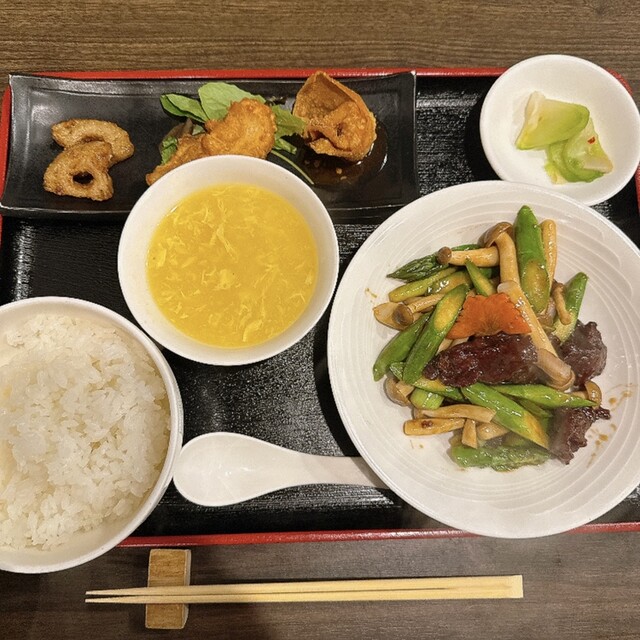
Approaching Kamezawa from Kinshicho, Tokyo’s texture shifts: broad commercial streets give way to a quieter Sumida grid of low-rise buildings, practical storefronts, and a dining rhythm less theatrical than Ginza or Roppongi. Here, a compact Chinese room reads differently. The experience is built not on spectacle but on proportion, proximity, pacing, table spacing, and food positioned between everyday comfort and award-listed ambition.
Tokyo’s Chinese category has become one of the city’s more interesting middle tiers. At one end are formal hotel dining rooms and high-budget tastings; at the other, neighborhood counters where noodles, stir-fries, and regional Chinese techniques move through a Japanese urban lens. chuukaryouri tokutake sits closer to the latter, but its 2026 selection for Tabelog Chinese TOKYO 100 places it in a more scrutinized group than a casual local address usually occupies. Pricing reinforces that: dinner is JPY 6,000 to JPY 7,999, while lunch is JPY 1,000 to JPY 1,999, signaling a restaurant with two speeds rather than one fixed-format identity.
A 22-seat room where scale does the editorial work
Small Tokyo restaurants often succeed by reducing distraction. With 22 table seats, this room belongs to the city’s compact neighborhood-dining tradition, not the hushed counter format associated with sushi or kappo. That matters: a table-led Chinese restaurant must balance conversation, shared plates, timing, and comfort. The physical container is not background; it determines how the meal behaves.
The listed facilities suggest accessibility and ease rather than ceremony: non-smoking, wheelchair accessible, with sofa seating and a private-use option. Those details place it in a practical Tokyo category many travelers underread. Serious food is not always behind coded entrances or ritualized counters. Sometimes it is in a ground-floor Sumida dining room with a legible design brief: comfortable enough for families, structured enough for dates, compact enough to keep service contained.
The area sharpens that read. Kinshicho and Kamezawa sit outside the usual luxury-dining circuit, but not on the culinary periphery. Eastern Tokyo has long supported restaurants that serve residents first and destination diners second. Nearby comparison addresses such as shake tree burger&bar, Hokusai Sabo, Midoricho Ikoma, Jun Teuchi Sanuki Udon Goro, and sugahara show the neighborhood’s range: burgers, sweets, udon, Italian, and small-format local dining share the same walking ecosystem. Against that mix, Chinese cooking with ramen as a secondary category feels less niche than part of Sumida’s everyday dining grammar.
Chinese cooking, ramen adjacency, and Tokyo's flexible category lines
Chinese-and-ramen pairing is not incidental in Tokyo. Ramen’s modern Japanese identity grew through Chinese noodle influences before becoming fiercely codified. Restaurants carrying both labels occupy a porous zone: neither ramen specialist nor simply broad Chinese dining room. For readers used to rigid Western classifications, this is one of Tokyo’s useful lessons. Categories here are often operational rather than philosophical; they show how a restaurant is used at lunch, how it stretches at dinner, and how price changes by time of day.
Tabelog Chinese TOKYO 100 selection in 2026 is the key trust signal. It does not make the restaurant a luxury temple, nor should it be read as a Michelin-style star system. It does place the address on a curated citywide Chinese list in a dense, competitive diner-evaluation market. For a restaurant opened on 23 April 2024, that recognition gives the room a current edge: it belongs to the recent wave, not an old-guard institution resting on habit.
Design is part of that edge. Tokyo diners move easily between formats: a lunch bowl in a room that accepts cash only at midday, a dinner reservation another night, a family table where children are welcome, a private-use meal for a small group. The same address can behave differently across the day. That versatility is not glamorous, but it is central to how the city eats. The better question is not whether a restaurant performs luxury, but whether scale, pricing, and recognition align. Here, they do: compact seating, moderate dinner pricing, neighborhood location, and a 2026 Chinese-category selection form a coherent case.
How to place it within a Tokyo itinerary
For a visitor planning Tokyo meals, this restaurant makes sense when the itinerary needs relief from hotel dining rooms and high-ceremony counters. It belongs with neighborhood-focused eating rather than occasion-only dining. The address is in Sumida’s Kamezawa area, with Kinshicho, Kikukawa, and Ryogoku as practical anchors, making it easier to pair with an east-side day than to force a late cross-city detour.
The itinerary logic is simple: file it with small Tokyo restaurants where format matters as much as fame. For broader planning, Our full Tokyo restaurants guide gives the citywide restaurant frame, while Our full Tokyo hotels guide, Our full Tokyo bars guide, Our full Tokyo wineries guide, and Our full Tokyo experiences guide place the meal around sleep, drinking, wine, and cultural time. Other restaurant pages worth cross-checking for contrast include 鮪と炭火焼き うお炭 秋葉原店, 12/10 Shinjuku ten, 124. KAGURAZAKA (Yakitori), 2D Cafe, and 3 Chome no Curry Ya San. Outside Tokyo, useful Japan comparisons range from -Grilled beef Sukiyaki- KAMAKURA TANUKIAN 鎌倉 たぬき庵 in Kamakura and.cafe in Osaka to.know in Kumamoto, (Shoku) Vietnam in Kawasaki, [Curry Senmon Ten] Maruyama Kyoju. in Sapporo, and [ki:] in Kyoto; overseas readers can triangulate Japanese casual formats through Jōdo Saké Bar in Los Angeles and Onigiri Time in Pasadena.
The editorial call is clear: choose chuukaryouri tokutake for a measured look at contemporary Tokyo Chinese dining outside the central luxury corridor. The room is small, the recognition current, the category lines flexible, and the Sumida setting gives the meal a local frame polished destination districts cannot easily reproduce.
Comparison Snapshot
Comparable venues at the same tier.
| Venue | Cuisine | Price | Awards | Notes |
|---|---|---|---|---|
| chuukaryouri tokutakeThis venue — the venue you are viewing | Modern Chinese & Ramen | $$ | , | |
| SEN YO | Shenzhen-inspired regional Chinese | $$ | , | Suginami |
| Santa Hanten | Chinese Fine Dining | $$$ | , | Minato |
| Okei (おけ以) | Traditional Chinese Gyoza | $$ | , | Iidabashi |
| Chinese Raika Shikunshiso | Seasonal Nouvelle Chinese with Shanghai crab and shark fin specialties | $$$ | , | Chiyoda |
| Ren Shan | Creative Chinese countryside cuisine | $$ | , | Minato |






At a Glance
- Modern
- Cozy
- Relaxed
- Hidden Gem
- Family
- Date Night
- Casual Hangout
- Group Dining
- After Work
- Standalone
Small, stylish and relaxed dining room with spacious, comfortable seating including sofa-style seats, suited both to families and casual dates rather than formal dining.