
Relais Chateaux Award
Our verdict
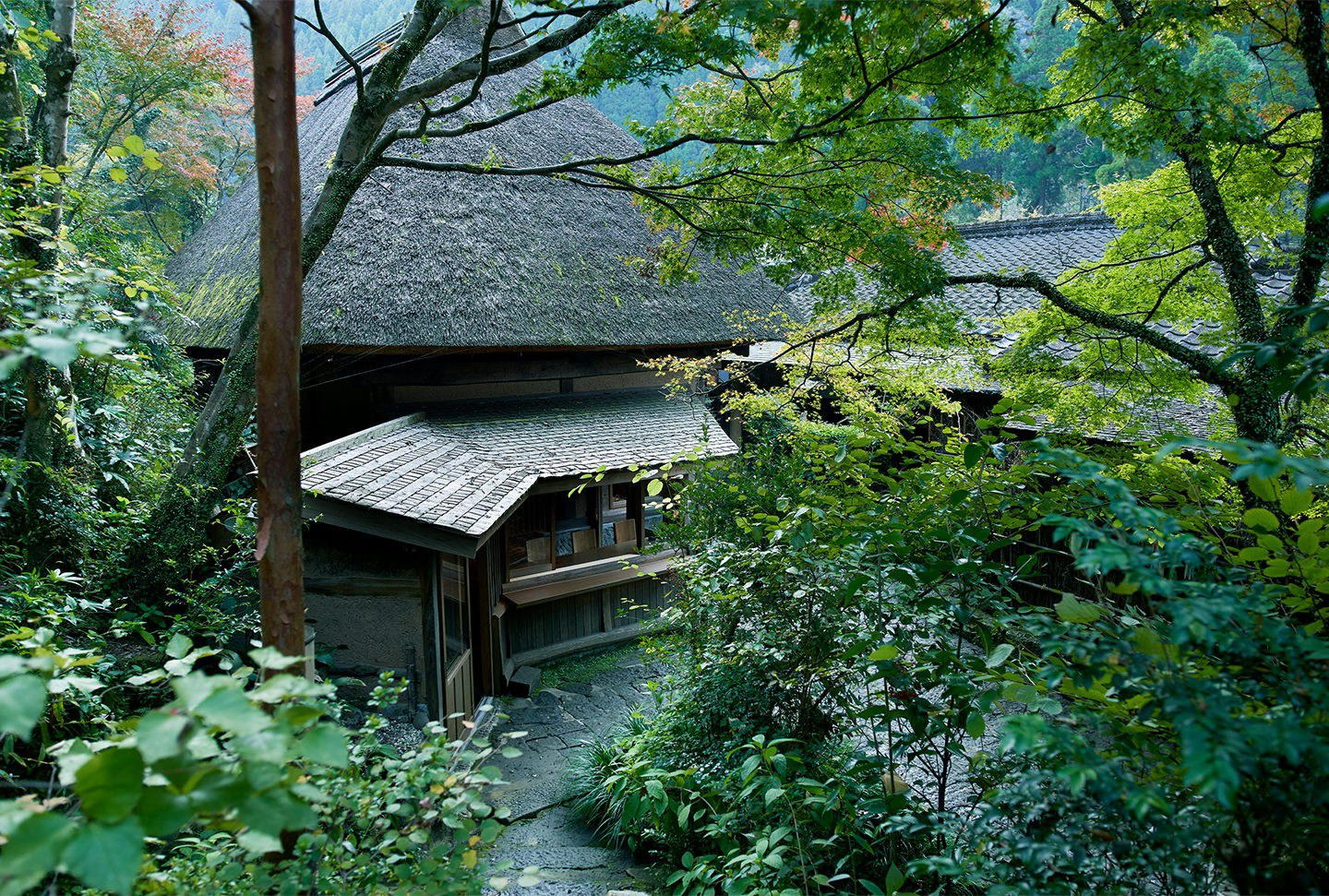
Tenku no Mori occupies a forested ridge above the Kirishima volcanic range in Kagoshima Prefecture, where three private villa suites with dedicated onsen sit against views of Mount Kirishima. The property operates around a farm-to-table Japanese cuisine program under chef Kai Horitzky, placing it in the small cohort of resort dining experiences where the surrounding landscape shapes every course. It holds,000 reviews.

Pearl is the En Primeur Club membership app — saves, bookings, and concierge access live there. Same editors, same standards.
- Address
- Japan, 〒899-6507 Kagoshima, Kirishima, Makizonocho Shukukubota, 市来迫 3389
- Phone
- +81 995-76-0777
- Website
- tenkunomori.net
- Directions
- Get directions
- Booking
- Book on the venue's website
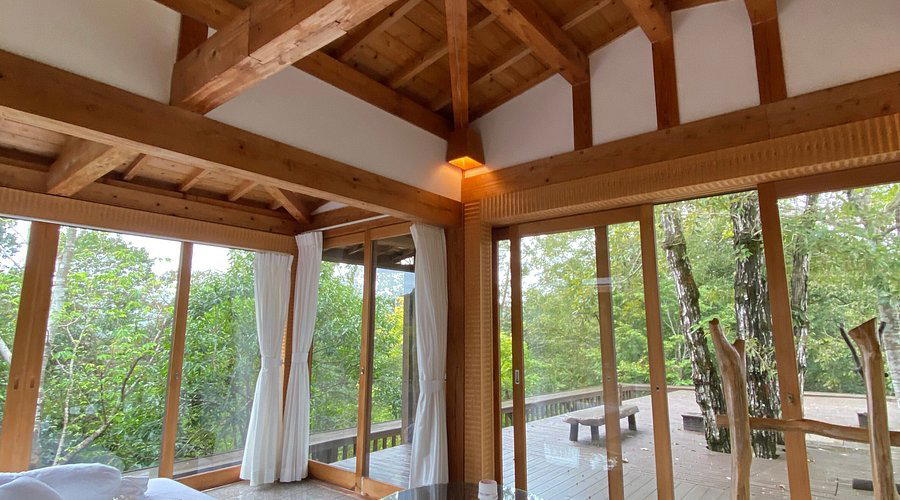
Altitude, Isolation, and the Logic of Place-Based Cuisine
There is a category of Japanese dining property where the address does most of the culinary argument. Tenku no Mori, on a forested ridge in Makizono, Kirishima, belongs firmly in that category. Approaching from the valley floor, the volcanic silhouette of Mount Kirishima fills the horizon, and the property's elevation removes it from the surrounding town's rhythm entirely. This physical remove is not incidental: it is the organising principle of how food, space, and time are structured here. In a country where kaiseki philosophy has long insisted that the season must speak before the cook does, a property this close to active volcanic terrain, high-altitude farmland, and the agricultural traditions of southern Kagoshima has unusually direct material to work with.
For context on where Tenku no Mori sits within Japan's premium dining geography, see our full Kirishima restaurants guide, and for properties combining accommodation with comparable culinary ambition, our full Kirishima hotels guide maps the wider field.
The Kaiseki Frame and What the Volcanic South Adds to It
Kaiseki as a tradition originated in the tea ceremony culture of Kyoto, where restraint, sequencing, and seasonal precision were codified over centuries. By the time it moved into the broader fine-dining register, its logic was established: each course marks a moment in the culinary calendar, visual composition carries as much weight as flavour, and the kitchen's intelligence is measured by what it withholds as much as what it deploys. Urban kaiseki counters from Tokyo to Osaka to Kyoto operate within that framework at the highest technical levels. Properties like Gion Sasaki in Kyoto and HAJIME in Osaka exemplify how kaiseki and its adjacent traditions are interpreted in dense urban settings, where the season arrives through supplier networks and market relationships.
What changes at altitude in southern Kyushu is the proximity of source material. Kirishima sits within a region defined by its volcanic soil, producing sweet potatoes, pork, Wagyu cattle, and mountain vegetables with flavour profiles shaped by mineral-rich ground and significant temperature variation between day and night. A farm-to-table program at this elevation is less a positioning statement than a geographical condition: the distance between field and kitchen is abbreviated in ways that urban properties cannot replicate regardless of sourcing commitment.
The multi-course seasonal format here draws on the same aesthetic principles that govern kaiseki, while the delivery context, three private villas rather than a shared counter or dining room, shifts the register toward something more contemplative and less performative than a city tasting menu. For other Japanese cuisine programs operating outside the major urban centres, Aji Arai in Oita and Beppu Hirokado in Oita represent Kyushu's wider fine-dining geography at a regional level.
Three Villas, Private Onsen, and the Structural Logic of Seclusion
The property's configuration, three villas rather than a hotel with a central dining room, is the defining architectural decision. With only three units, the guest population on any given night is small enough that the kitchen can respond to preferences and pacing in ways that a conventional restaurant format does not permit. Each villa has a private onsen, which means the sequence of bathing, eating, and resting that traditional Japanese inn culture prescribes can unfold without the social choreography of shared facilities. The outdoor environment, forested hillside, volcanic air, views of Mount Kirishima across the valley, functions as a sensory frame for the food rather than a backdrop.
This model sits within a broader pattern in Japanese luxury accommodation where the rotenburo (outdoor hot spring bath) and the kaiseki meal are understood as a single extended experience rather than separate amenities. The volcanic geology of the Kirishima range is directly responsible for the onsen water quality, giving the property a resource that coastal or urban properties cannot source. For visitors considering the full range of what Kirishima offers beyond the table, our full Kirishima experiences guide covers the wider options, and our full Kirishima bars guide and our full Kirishima wineries guide round out the local picture.
How Tenku no Mori Sits Within Japan's Broader Premium Dining Map
Japan's premium dining map has always had strong urban concentration. The density of Michelin-starred counters in Tokyo, from omakase sushi operations like Harutaka to technically demanding kaiseki programs, reflects a culture of culinary prestige built around accessibility to the highest-grade ingredient networks and the critical infrastructure of professional review. Comparable concentration appears in Osaka, Kyoto, and increasingly Fukuoka, where Goh represents the city's premium position within Kyushu's dining conversation.
Rural and resort-based programs occupy a different position in that map: lower in critical visibility, often deliberately removed from the award circuit, but operating with sourcing advantages and guest-to-staff ratios that urban counters cannot match.
It is a serious property in a remarkable natural setting, not a destination that competes on technical cuisine alone. The scene, the onsen, the mountain views, and the structural seclusion carry as much weight as what arrives on the plate.
Other Japanese cuisine programs across the country worth considering in the same travel planning window include akordu in Nara, 1000 in Yokohama, 6 in Okinawa, Abon in Ashiya, affetto akita in Akita, Ajidocoro in Yubari District, and Mitsuyasu in Kyoto.
Planning Your Stay
Frequently asked questions
Is Tenku no Mori family-friendly?
The property's configuration, three secluded villas with private onsen in a forested highland setting above Kirishima, positions it as an adult retreat rather than a family venue. The multi-course dining format and the remote location make it better suited to couples or small adult groups than to families with young children.
What is the vibe at Tenku no Mori?
If you are drawn to properties where the natural environment, volcanic ridgeline, mountain views, private outdoor bathing, takes precedence over urban dining energy, Tenku no Mori delivers on that premise. The three-villa format means the atmosphere is defined by near-total quiet and seclusion rather than the social texture of a restaurant or hotel with significant guest volume.
What should I order at Tenku no Mori?
The farm-to-table Japanese cuisine program under chef Kai Horitzky draws on Kagoshima Prefecture's agricultural character, including the region's Wagyu, sweet potato cultivation, and mountain vegetables shaped by volcanic soil.
Side-by-Side Snapshot
Comparable venues nearby, for context on price, style, and recognition.
| Venue | Cuisine | Price | Awards | Notes |
|---|---|---|---|---|
| Tenku no MoriThis venue — the venue you are viewing | Seasonal Organic Japanese Fine Dining | $500+ | Relais Chateaux Award | Not listed |
| Ichinii San Kokubu ten | Kagoshima black pork shabu-shabu & Japanese hotpot | $30–50 | Tabelog 100 #32 | Kokubu, Kirishima |
| Jidori no Sato Eirakuso | Traditional Japanese Yakiniku & Jidori Chicken | $30–50 | Tabelog 100 #89 | Hayatocho Matsunaga |
| Korean Kirishima ten | Traditional jidori charcoal grill in a rustic countryside house | $20–30 | Tabelog 100 #11 | Kirishima |
| Sushi Sho | Traditional Edomae Sushi Omakase | Not listed | Not listed | Nishiazabu |
Recognition history
Dated appearances from independent guides and award organizations, with the underlying list record or original source where available.
Relais Chateaux Award
Relais Chateaux
Full recognition history (2 entries)
Relais Chateaux Award
Relais Chateaux
Continue exploring
More in Kirishima
Restaurants in Kirishima
Browse all →
Hotels in Kirishima
Browse all →
Wineries in Kirishima
Browse all →
Details
- Romantic
- Quiet
- Scenic
- Elegant
- Intimate
- Sophisticated
- Special Occasion
- Date Night
- Celebration
- Panoramic View
- Private Dining
- Hotel Restaurant
- Sake Program
- Farm To Table
- Local Sourcing
- Organic
- Mountain
- Organic Focus
Serene and secluded natural atmosphere with panoramic mountain vistas, private outdoor hot springs, and a naked dress code policy encouraging complete relaxation in a forested paradise.