
1 Michelin Key
Myoken Ishiharaso is a 15-room family-run ryokan in the Kirishima foothills of Kagoshima, positioned beside a mineral-rich river in one of Kyushu's most concentrated onsen zones. Traditional architecture, open-air hinoki baths, and tatami rooms that open directly onto gardens or the river define the experience. Pricing is available on request only, placing it firmly within Japan's premium ryokan tier.

Pearl is the En Primeur Club membership app — saves, bookings, and concierge access live there. Same editors, same standards.
- Address
- 4376番地 Hayatochō Kareigawa, Kirishima, Kagoshima 899-5113
- Phone
- +81 995-77-2111
- Website
- m-ishiharaso.com
- Directions
- Get directions
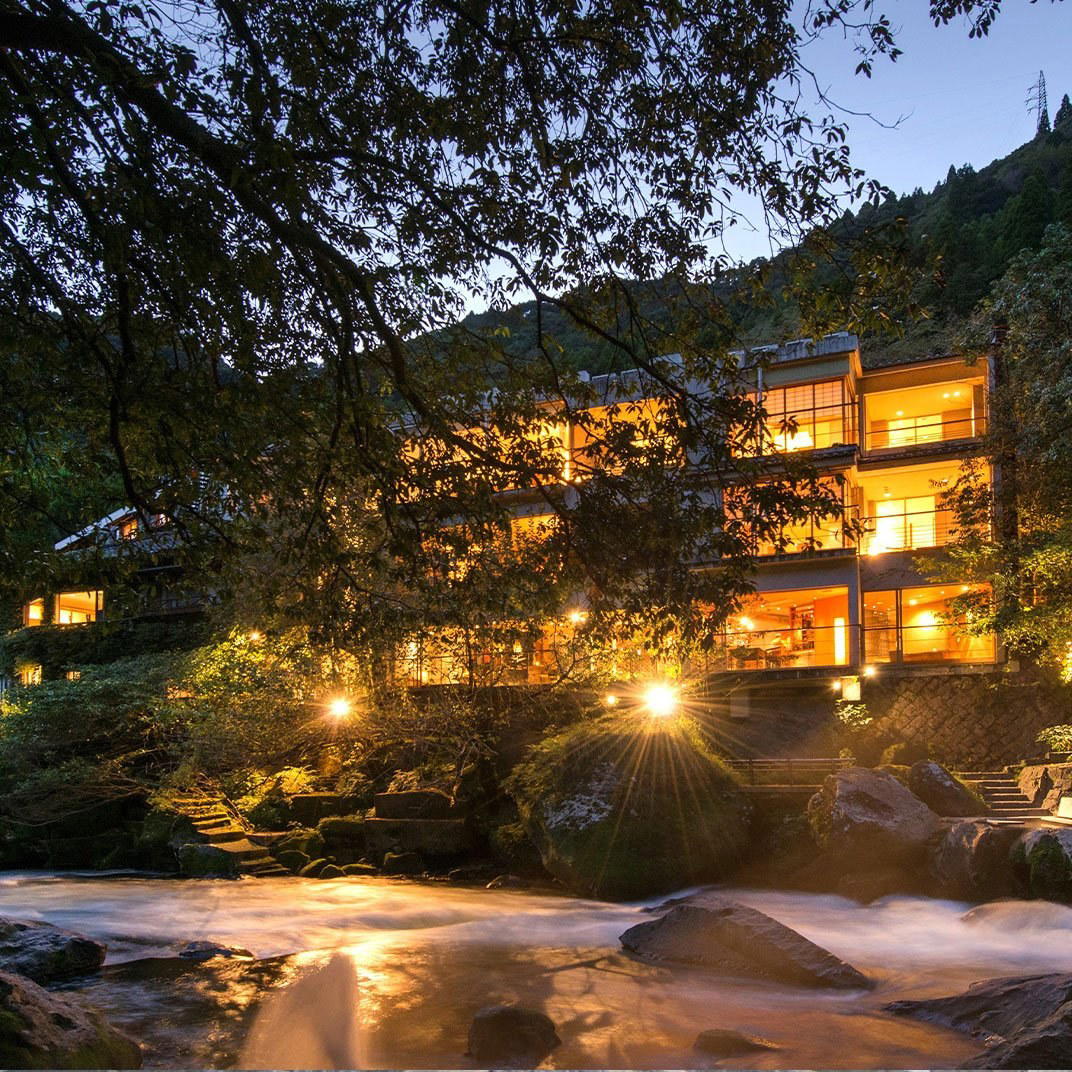
Where the River Sets the Pace
Japan's premium ryokan tradition divides, broadly, into two modes: the grand resort property with a full wellness infrastructure and a broad guest program, and the smaller, family-operated inn where the architecture and the land do most of the work. Myoken Ishiharaso belongs to the second category. With 15 rooms positioned beside a mineral-rich river in the forested foothills of Kirishima, Kagoshima, this is a property where the physical environment is not backdrop — it is the central argument. The sound of the river carries through the rooms. The cedar and hinoki that line the baths and the interiors hold a faint, mineral warmth. The gardens visible from guest rooms are not decorative additions but continuations of the landscape pressing against the buildings from every direction.
Kirishima itself sits in a volcanic zone in northern Kagoshima Prefecture, on Kyushu's southern island. The region's geothermal activity produces some of Japan's most mineral-dense spring water, and the density of quality onsen in this corridor is notable even by Japanese standards. For context on the wider area, our full Kirishima restaurants guide covers the region's dining and hospitality in detail. Within Kirishima's premium accommodation tier, Myoken Ishiharaso's closest local peer is Tenku no Mori, which takes a more expansive, villa-format approach on a forested ridge; the two properties share a commitment to minimal intervention design but occupy different spatial registers.
The Architecture of Restraint
The design language at Myoken Ishiharaso follows a logic that runs through the best of Japan's traditional inn architecture: remove anything that competes with the natural setting, and let material quality carry the aesthetic weight. Tatami floors, shoji paper screens, and cedar soaking tubs are not styled as period features — they are the working fabric of the rooms. The interiors are minimal in the way that requires great confidence: no excess surface decoration, no layering of textiles for visual effect, just the warmth of natural material and the geometry of traditional joinery.
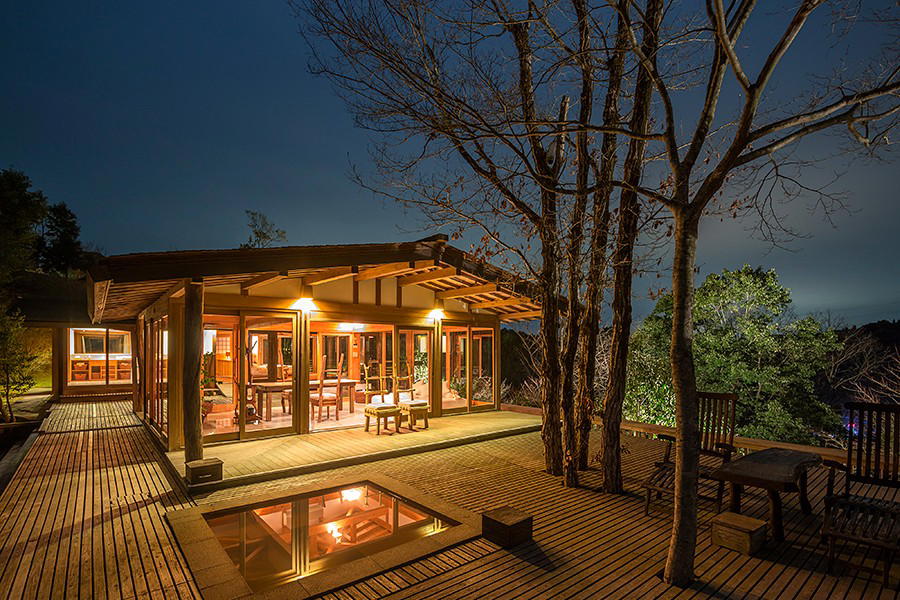
Open-air hinoki baths are central to the property's spatial identity. Hinoki cypress has been used in Japanese bathing architecture for centuries, valued for its antibacterial properties, its durability in wet environments, and the pale, faintly citrus-toned scent it releases with hot water. In the context of Kirishima's mineral-rich spring water, the material combination of hinoki and onsen produces a sensory encounter that is entirely specific to this region. The guest rooms that open onto gardens or the river extend this logic, the threshold between interior and exterior is kept deliberately permeable, so that the experience of the room and the experience of the landscape remain in conversation.
This approach to ryokan design sits within a broader Japanese architectural tradition that prioritises what might be called considered emptiness: space calibrated not by what it contains but by what it allows. Properties in this mode operate at a different register from resort-format luxury, where amenity counts and programmed activities signal value. Here, the stillness itself is the amenity. For travellers accustomed to international luxury hotel formats, this requires a recalibration, and it is precisely that recalibration that draws a specific, well-travelled guest to properties of this type.
The Ryokan Tier: Positioning and Peers
Across Japan's premium ryokan category, pricing at the upper end is typically handled on request or through direct inquiry, a convention that signals both the personalised nature of the stay and the property's position outside standard booking platforms' price architecture. Myoken Ishiharaso follows this model, with rates available on request only. This places it in the same pricing tier as properties such as Araya Totoan in Kaga, Zaborin in Kutchan, and Asaba in Izu, all family-operated or independently managed properties where the guest count is kept deliberately low and the experience is built around intimacy with a specific landscape.
The 15-room scale is significant. At this size, the property cannot absorb large groups without restructuring its character, and it does not try to. This distinguishes it from larger onsen resort formats and aligns it with a cohort of Japanese inns where small scale is a deliberate editorial choice. Nishimuraya Honkan in Kinosaki-cho and Bettei Otozure in Nagato occupy a comparable niche, each rooted in a specific onsen town with a family history that shapes the property's character.
Beyond Japan's ryokan circuit, the closest international parallels in terms of design philosophy and scale are properties like Amanemu in Mie, which also draws on Japanese onsen traditions at a higher price point, and Benesse House in Naoshima, which similarly argues that architecture and environment are sufficient programming. The contrast with international city properties such as Bvlgari Hotel Tokyo or HOTEL THE MITSUI KYOTO is instructive: those properties layer amenity over urban context; Myoken Ishiharaso strips amenity back to reveal natural context.
Planning Your Stay
Kirishima is accessible from Kagoshima Airport, which connects to Tokyo's Haneda and Narita airports as well as Osaka's Itami. The drive from Kagoshima Airport to the Hayatochō Kareigawa area where Myoken Ishiharaso sits takes roughly 40 to 50 minutes depending on route. The Kirishima region sees seasonal variation: spring brings plum and cherry blossom to the foothills, autumn shifts the forest to amber and copper, and the thermal baths carry a particular appeal in winter when the contrast between cold air and hot mineral water is most acute. Summer in Kyushu runs hot and humid, which for some guests heightens the appeal of the river setting and the cool of the forest shade.
Given the property's on-request pricing model and 15-room scale, advance planning is advisable. Bookings at properties of this type typically require direct contact, and peak periods around Japanese public holidays and autumn foliage season fill well ahead. For further reference on comparable premium onsen experiences across Japan, Gora Kadan in Hakone, ENOWA Yufu in Yufu, and Fufu Kawaguchiko in Fujikawaguchiko each offer points of comparison across different Japanese geothermal regions.
Comparable Spots, Quickly
| Venue | Price | Awards |
|---|---|---|
| Myoken IshiharasoThis venue — the venue you are viewing | $300–500 | 1 Michelin Key |
| Bvlgari Hotel Tokyo | Not listed | 3 Michelin Keys · World's 50 Best #24 |
| Aman Kyoto | Not listed | 2 Michelin Keys · World's 50 Best #74 |
| Aman Tokyo | Not listed | 2 Michelin Keys · World's 50 Best #11 |
| Amanemu | Not listed | 3 Michelin Keys · La Liste Top Hotels |
| Four Seasons Hotel Tokyo at Otemachi | Not listed | 3 Michelin Keys · La Liste Top Hotels |
Recognition history
Dated appearances from independent guides and award organizations, with the underlying list record or original source where available.
Michelin 1 Key
Michelin
Full recognition history (2 entries)
Michelin 1 Key
Michelin
Continue exploring
More in Kirishima
Hotels in Kirishima
Browse all →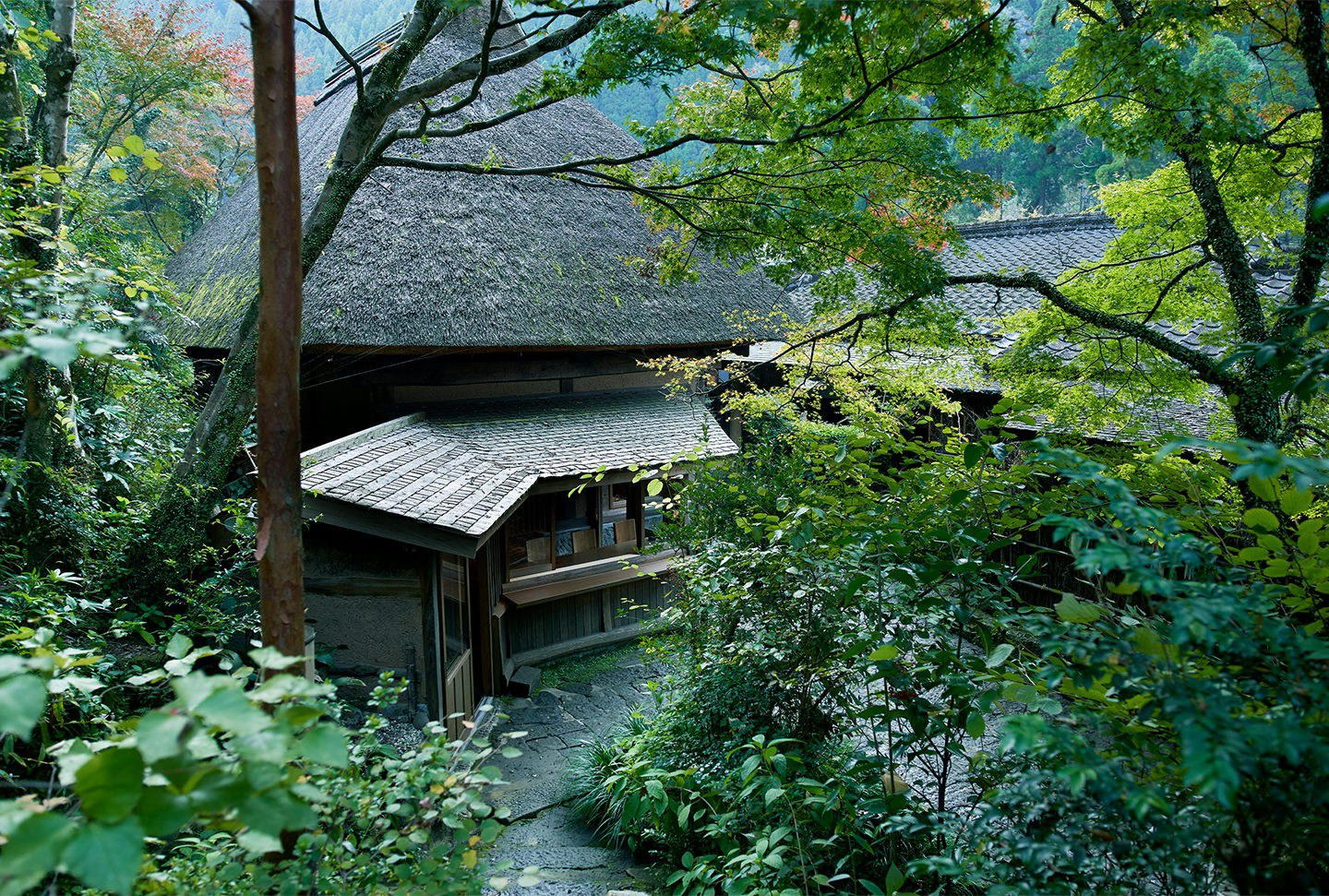
Restaurants in Kirishima
Browse all →
Wineries in Kirishima
Browse all →
Details
- Quiet
- Scenic
- Cozy
- Elegant
- Rustic
- Romantic Getaway
- Wellness Retreat
- Anniversary
- Panoramic View
- Garden
- Wi Fi
- Spa
- Room Service
- Restaurant
- Free Parking
- Garden
- Mountain
- Elevator
Minimal and warm interiors with tatami floors, paper screens, cedar tubs, and the soothing sound of the river creating a serene, nature-immersed atmosphere.