Our verdict
Tempura Endoh Yasaka operates in Kyoto's Higashiyama district, bringing French culinary technique to bear on seasonal Japanese ingredients under chef Masumi Kikuchi. Recognised by Opinionated About Dining's 2023 Japan list, the restaurant runs two services daily, seven days a week, placing it among the more accessible entries in Kyoto's French-inflected fine dining tier.

Pearl is the En Primeur Club membership app, where members save venues, book tables and use the concierge.
The menu
What to order
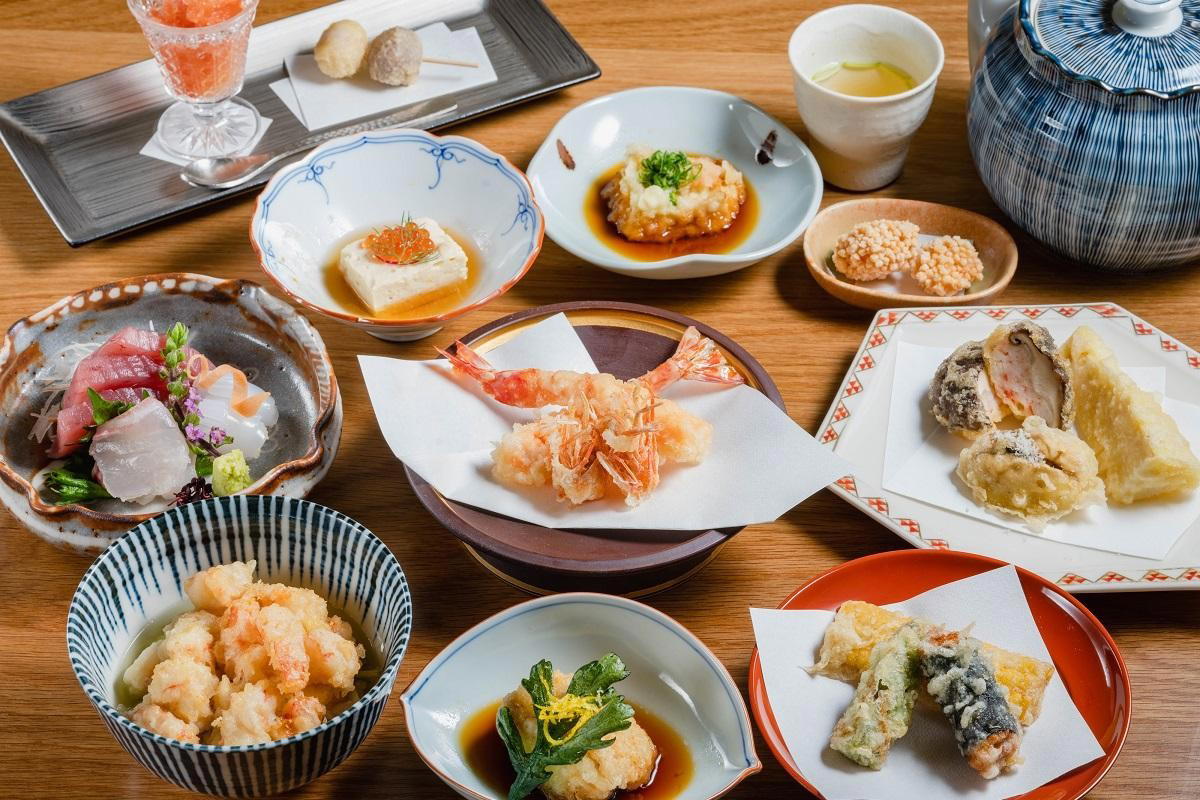
- Shattered corn
- Sea urchin tempura
- Shrimp head
- Shiitake mushroom
Where Higashiyama Meets the French Kitchen
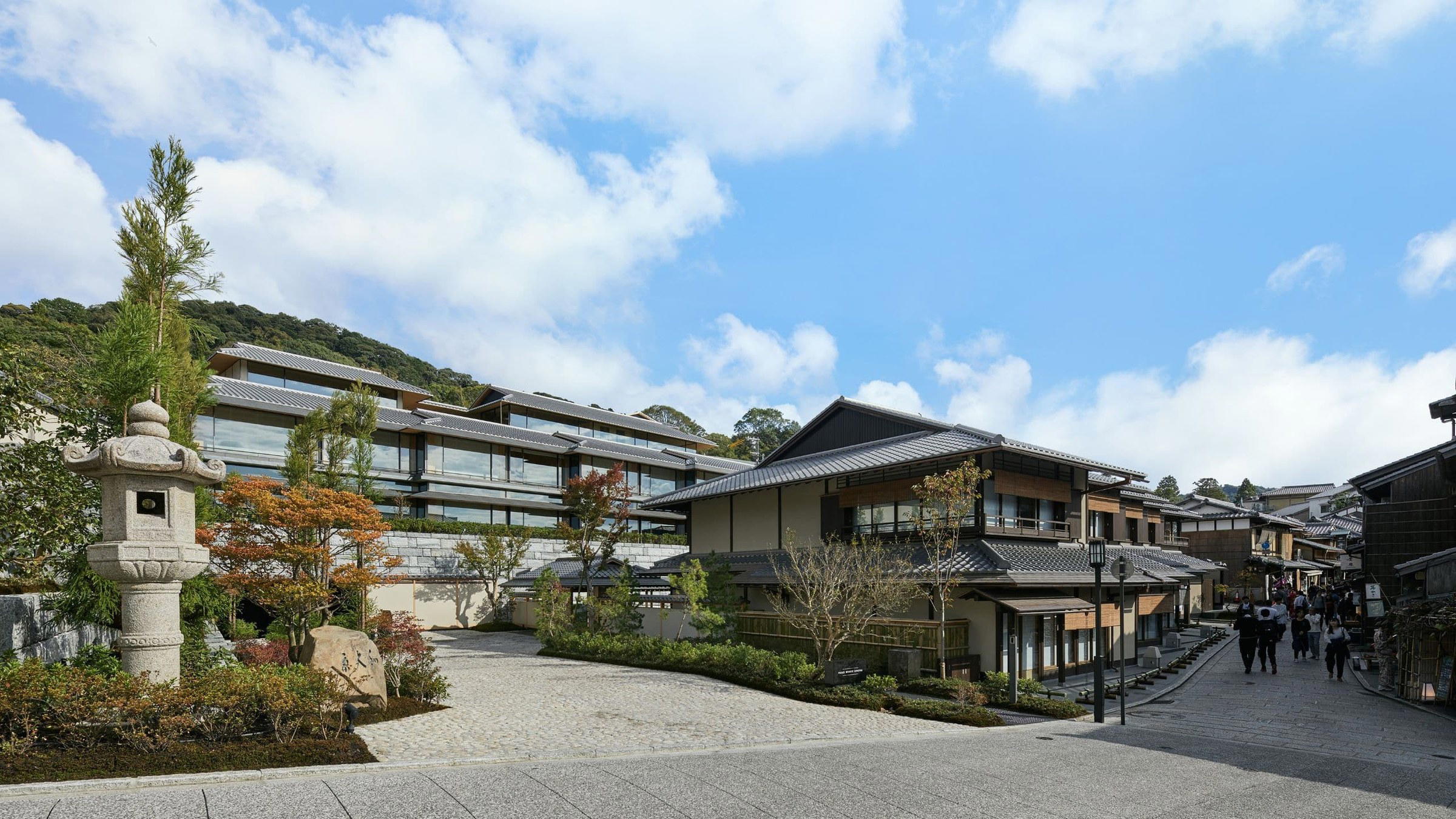
The streets around Yasaka Shrine move at a particular pace, slow in the morning before tour groups arrive, dense with atmosphere by late afternoon when the stone-paved lanes catch slanted light. Komatsucho sits within this pocket of Higashiyama Ward, a neighbourhood whose architectural fabric still reads as pre-industrial Japan even as its restaurants have absorbed a century of Western culinary exchange. Walking toward Tempura Endoh Yasaka, the setting does much of the editorial work: you are in one of Kyoto's oldest quarters, about to eat French-influenced food prepared by a Japanese kitchen. That tension is not incidental, it is the defining character of a specific dining tradition that has taken deep root in this city.
The Kyoto French Tradition in Context
Kyoto has long sustained a French dining culture that diverges from Tokyo's version in instructive ways. Where Tokyo's French restaurants, including Sézanne in Tokyo, tend toward precise Franco-Japanese fusion with international reference points, Kyoto's interpretation leans on hyper-local ingredient sourcing filtered through classical French structure. The city's proximity to Nishiki market, its centuries-old culture of seasonal ingredient reverence, and its kaiseki heritage have all shaped how French technique gets applied here. The result is a category of restaurant that would not exist in quite the same form elsewhere in Japan: French kitchens that think in terms of Kyoto's micro-seasons rather than the French culinary calendar.
Tempura Endoh Yasaka operates in this tradition under chef Masumi Kikuchi. The venue's recognition by Opinionated About Dining's 2023 Leading Restaurants in Japan list places it alongside a select tier of non-Michelin-tracked properties that OAD's contributor network, heavily weighted toward frequent, informed diners, considers significant. That credential carries different information than a Michelin star: it signals repeat-visitor approval from a community that eats widely and compares carefully. For a French-format restaurant in Kyoto's Higashiyama district, that kind of recognition positions it clearly within the city's mid-to-upper French dining tier, distinct from the kaiseki-heavy establishments like Gion Sasaki or Ifuki that dominate Kyoto's fine dining conversation, and alongside French-leaning peers such as Droit, la bûche, and La Biographie.
Local Ingredients, French Structure
The editorial angle that matters most for understanding what happens at Tempura Endoh Yasaka is the intersection of method and material. French culinary training encodes a grammar, how sauces are built, how heat is managed, how a dish is composed on the plate, while Japanese ingredient culture provides the vocabulary: the specific sweetness of Kyoto vegetables, the clean fat of regional fish, the seasonal logic that determines what appears in a kitchen on a given week. When these two systems meet at a high level, neither is decorative. The French technique is not applied as a veneer over Japanese produce; the local ingredients are not mere substitutes for European equivalents. The synthesis requires genuine command of both.
In Kyoto's stronger French kitchens, this shows most clearly in how seasonal transitions are handled. A European kitchen running classical French might track the arrival of white asparagus or Breton lobster; a Kyoto French kitchen tracks kamo eggplant, Kujo negi, or early-season matsutake, and builds the same classical architecture around them. The discipline is comparable; the reference points are entirely local. This is the operating logic that shapes the food at establishments across Kyoto's French-influenced dining scene, and it is the framework within which Tempura Endoh Yasaka, with its Higashiyama address and OAD-recognised kitchen, should be read.
Kyoto is not the only Japanese city where this synthesis has produced interesting results. HAJIME in Osaka represents one of the most formally ambitious expressions of French-Japanese integration in the country, while akordu in Nara applies European technique to the quieter, older ingredient culture of the Yamato region. Internationally, Hotel de Ville Crissier in Crissier represents the classical French reference point against which Japanese adaptations are sometimes measured. Each of these addresses a different local-global tension; Tempura Endoh Yasaka's version is shaped by where it sits, in the oldest, most culturally layered part of Kyoto.
The Service Format and What It Signals
Tempura Endoh Yasaka runs lunch and dinner seven days a week, with the kitchen open from 11am to 3:30pm and again from 5pm to 9:30pm. That format, consistent across all seven days, with clear split-service structure, reflects a restaurant operating at a deliberate pace rather than the reservation-scarce, single-seating model common among Kyoto's most exclusive counters. For visitors, this matters practically: a restaurant open daily across two sessions offers more scheduling flexibility than the two-or-three-days-a-week kaiseki rooms that define much of Kyoto's high-end dining calendar. It also signals a kitchen confident in its ability to maintain consistency across volume, which is its own kind of credential.
Peer restaurants in Kyoto's French tier, including Hiramatsu Kodaiji and anpeiji, each take different approaches to format and frequency. Tempura Endoh Yasaka's seven-day operation places it among the more accessible of these, which shapes both its clientele and its position in the neighbourhood, a daily presence rather than an event-dining destination.
Higashiyama as Dining Context
The Higashiyama district has a different visitor profile than Kyoto's Gion or Kawaramachi precincts. Foot traffic here skews toward cultural tourism, Kiyomizudera, Ninenzaka, Sannenzaka, which means the neighbourhood's restaurants serve a mix of informed travellers and local regulars rather than the expense-account business dining that fills some of Gion's higher-end rooms. A French restaurant in this context occupies an interesting position: it draws visitors who might otherwise gravitate toward kaiseki, offering a format that is familiar in structure but grounded in the same local ingredient logic. For travellers building a Kyoto dining itinerary, the Higashiyama address is direct to incorporate around a morning or afternoon of cultural visits.
For broader orientation, our full Kyoto restaurants guide covers the city's dining categories in depth. Those planning a longer stay can also consult our full Kyoto hotels guide, our full Kyoto bars guide, our full Kyoto wineries guide, and our full Kyoto experiences guide. For French-technique dining elsewhere in Japan, Harutaka in Tokyo, Goh in Fukuoka, 1000 in Yokohama, and 6 in Okinawa each represent the genre as it develops in different regional contexts.
Planning Your Visit
Address: 566 Komatsucho, Higashiyama Ward, Kyoto. Hours: Open daily, lunch 11am–3:30pm, dinner 5–9:30pm. Reservations: Booking method not confirmed; contact directly or check current availability through local concierge services. Dress: No confirmed dress code; Higashiyama's mixed visitor profile suggests smart-casual is appropriate for dinner. Budget: Price range not published; given the OAD recognition and French fine dining format, budget comparable to mid-tier French restaurants in Kyoto. Awards: Opinionated About Dining Leading Restaurants in Japan, Recommended (2023).
What Do Regulars Order at Tempura Endoh Yasaka?
What the cuisine type and editorial angle do confirm is that the kitchen operates within a French framework with attention to seasonal Kyoto produce, the pattern consistent across recognised French restaurants in this part of Higashiyama. Visitors whose priority is understanding what the kitchen emphasises in a given season would do well to enquire directly when booking, as seasonal availability rather than a fixed menu is the operating logic of Kyoto's better French kitchens.
Frequently asked questions
What kind of cuisine does Tempura Endoh Yasaka serve?
Who runs the kitchen at Tempura Endoh Yasaka?
The chef associated with Tempura Endoh Yasaka is Masumi Kikuchi.
What do regulars order at Tempura Endoh Yasaka?
Specific menu data for Tempura Endoh Yasaka has not been compiled in EP Club's verified records. What the OAD 2023 Top Restaurants in Japan recommendation does confirm is a French kitchen, under chef Masumi Kikuchi, operating in Higashiyama, where sourcing from Kyoto's established produce networks is standard practice for restaurants at this recognition level. Ask the floor team at the time of booking for current course details.
What are the opening hours for Tempura Endoh Yasaka?
Hours at Tempura Endoh Yasaka: Hours: Monday 11 am–3:30 pm, 5–9:30 pm Tuesday 11 am–3:30 pm, 5–9:30 pm Wednesday 11 am–3:30 pm, 5–9:30 pm Thursday 11 am–3:30 pm, 5–9:30 pm Friday 11 am–3:30 pm, 5–9:30 pm Saturday 11 am–3:30 pm, 5–9:30 pm Sunday 11 am–3:30 pm, 5–9:30 pm.
Where exactly is Tempura Endoh Yasaka?
Tempura Endoh Yasaka is located at Japan, 〒605-0811 Kyoto, Higashiyama Ward, Komatsucho, 566, Kyoto.
What kind of recognition has Tempura Endoh Yasaka received?
Tempura Endoh Yasaka has received recognition including: Opinionated About Dining Top Restaurants in Japan Recommended (2023).
Price and Recognition
Comparable venues nearby, for context on price, style, and recognition.
| Venue | Cuisine | Price | Awards | Notes |
|---|---|---|---|---|
| Tempura Endoh YasakaThis venue (the venue you are viewing) | Kyoto-Style Tempura | $150–200 | Not listed | Not listed |
| 鮓割烹 なか一 | Traditional Omakase Sushi & Kyoto Kaiseki | $150–200 | 1 Michelin Star | Gion, Sushi Kappo (Edomae Sushi & Kyoto Kaiseki) |
| Kobe Beef Steak Mouriya Gion | Teppanyaki Kobe Beef | $150–200 | Tabelog 100 #46 | Higashiyama, Teppanyaki Kobe Beef |
| Restaurant MAEKAWA | Modern Japanese Ryoriya | $200–300 | Not listed | Higashiyama, Modern Japanese Ryoriya |
| Yamashita | Traditional Kyoto Kaiseki & Kappo | $100–150 | Not listed | Nakagyō, Traditional Kyoto Kaiseki & Kappo |
| Yoshikawa | Traditional Japanese Tempura Kaiseki | $150–200 | Tabelog 100 #43 | Nakagyō, Traditional Japanese Tempura Kaiseki |
Recognition history
Dated appearances from independent guides and award organizations, with the underlying list record or original source where available.
Opinionated About Dining Top Restaurants in Japan Recommended
Opinionated About Dining
Full recognition history (2 entries)
Opinionated About Dining Top Restaurants in Japan Recommended
Opinionated About Dining