

Michelin Bib Gourmand · Tabelog 100 #22
Our verdict
Soba Rojina in Kyoto's Nakagyo Ward holds consecutive Michelin Bib Gourmand recognition for 2024 and 2025, built around juwari soba milled on a hand-crafted stone mortar. The kitchen pairs pure buckwheat noodles with classic Kyoto appetisers, positioning it firmly in the city's affordable specialist tier. Booking ahead is advisable given its small-shop format and sustained critical attention.

Pearl is the En Primeur Club membership app, where members save venues, book tables and use the concierge.
The menu
What to order
- Hari Soba (Sudachi)
- Kamo Seiro
- Iberiko Buta Tsukejiru
Soba Rojina, Kyoto
Where Buckwheat Discipline Meets Kyoto Restraint
The grinding starts before anything arrives at the table. At Soba Rojina in Nakagyo Ward, the sound of buckwheat being worked slowly through a stone mortar sets the tempo for the meal, audible, deliberate, and unlike the background noise of most casual dining rooms in Kyoto. That sensory preamble is not theatre; it is the operational logic of a kitchen that treats grain processing as the central act, not a preparatory footnote.
Kyoto's soba tradition sits in a different register from its kaiseki or kappo circuits. Where the city's high-end dining rooms, from Kaiseki heavyweights like Honke Owariya to formal Japanese houses, command four-figure per-head spends, soba specialists occupy a more democratic tier, one where craft and restraint are still the measures of quality, but the price range stays accessible. Soba Rojina sits squarely in this affordable specialist category, priced at ¥ and drawing Michelin Bib Gourmand recognition in both 2024 and 2025, the guide's designation for places offering notable quality at moderate cost.
The Case for Juwari
Soba in Japan divides broadly into two camps: ni-hachi, where wheat flour makes up roughly 20 percent of the blend for elasticity and ease of handling, and juwari (also called towari or sobagaki), where the noodle is 100 percent buckwheat with no wheat binder. The latter is technically harder to produce, pure buckwheat lacks gluten, making the dough fragile and the rolling demanding, but it delivers a more direct expression of the grain's earthy, slightly nutty character.
Rojina commits to juwari. The owner-chef grinds the buckwheat on a stone mortar he built himself during his apprenticeship, a detail that speaks less to nostalgia than to a particular set of priorities: control over particle size, heat during milling, and the preservation of fragrance that high-speed commercial grinding dissipates. The result is a soba that reads as a clear editorial statement within the city's noodle offer, differentiating Rojina from casual shops that trade on convenience blends.
For further reference on how soba specialists position themselves across Japan's major cities, Akasaka Sunaba in Tokyo and Ayamedo in Osaka offer instructive comparisons in how buckwheat-focused kitchens adapt to their respective urban contexts.
Kyoto Appetisers as Supporting Cast
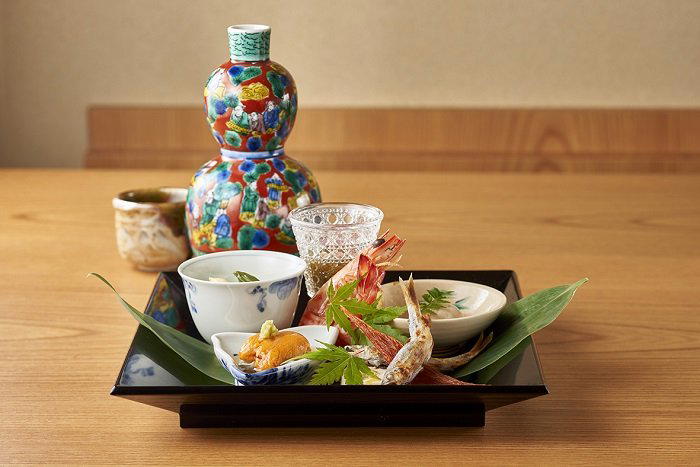
The menu extends beyond noodles into territory that suits a slower, sake-accompanied pace. Two appetisers documented from the kitchen's current offer reflect distinctly local sourcing logic: tofu topped with yuba, the skin that forms on heated soy milk, long associated with Kyoto's Buddhist cooking traditions, and manganji togarashi with jako, a preparation built around the large, mild sweet peppers that are one of Kyoto's recognised vegetable varieties, paired with young dried fish.
These are not decorative additions. In Kyoto's soba culture, small plates served before the noodles function as an invitation to slow down and order a carafe of sake, shifting the visit from a quick lunch stop toward something closer to an early-evening ritual. The kitchen's decision to frame these dishes as alcohol pairings rather than starters positions Rojina within a broader tradition of soba-ya that double as informal drinking rooms, a format with deep roots in both Kyoto and Tokyo, and one that the city's more transient dining options rarely replicate convincingly.
For a different reading of Kyoto's affordable dining circuit, Gombei and Itsutsu offer contrasting approaches to casual quality at the ¥ and ¥¥ tiers. Nakagyo Ward also places Rojina within easy reach of neighbouring restaurants worth noting in the same planning window, including Chikuyuan Taro no Atsumori and Juu-go.
Planning Your Visit: What the Bib Gourmand Recognition Implies
Michelin's Bib Gourmand classification, held consecutively for 2024 and 2025, functions here as a booking signal as much as a quality indicator. Small specialist shops in Kyoto that earn sustained guide recognition typically operate at or near capacity during peak periods, particularly during autumn foliage season (late October through mid-November) and the spring cherry blossom window (late March through mid-April). The shop format at Rojina, a single-unit operation in Nakagyo Ward at 691 Maruyacho, suggests limited seat count, which compresses availability further.
That ratio, combined with the Bib Gourmand status, points to a venue that rewards advance planning over walk-in optimism. Contacting the restaurant directly or checking current booking availability through local reservation channels before arriving in Kyoto is the sensible approach.
For the broader Kyoto dining picture, our full Kyoto restaurants guide maps the city's tiers from accessible soba shops through to the kaiseki circuit. Complementary planning resources include our Kyoto hotels guide, our Kyoto bars guide, and our Kyoto experiences guide.
Where Rojina Sits in a Wider Japanese Context
Across Japan's restaurant cities, the Bib Gourmand tier for noodle specialists functions differently from the starred circuit. It identifies kitchens that could plausibly operate at higher price points but have chosen, through format, location, or philosophy, to remain in the accessible range.
Readers building a Japan itinerary around dining quality across cities can cross-reference notable restaurants in neighbouring prefectures: HAJIME in Osaka, akordu in Nara, and Harutaka in Tokyo represent contrasting points on the quality spectrum. Further afield, Goh in Fukuoka, 1000 in Yokohama, and 6 in Okinawa extend the comparison set across the archipelago.
Practical Details
Address: 691 Maruyacho, Nakagyo Ward, Kyoto, 604-0917, Japan. Cuisine: Soba (juwari, 100% buckwheat). Price range: ¥. Awards: Michelin Bib Gourmand 2024 and 2025. Reservations: No booking method confirmed; direct contact or walk-in with advance timing is advisable during peak seasons. Leading timing: Avoid peak foliage (late October to mid-November) and cherry blossom (late March to mid-April) without a confirmed booking strategy. Also explore: Kyoto wineries for sake producers in the region.
Frequently asked questions
Does Soba Rojina have a Michelin star or similar recognition?
Soba Rojina has received recognition including: To convey the unique character of the soba, the owner-chef prepares juwari with no wheat flour. He made the stone mortar he uses to grind the flour himself, back when he was an apprentice. The entire shop reverberates with the sound of buck….
What does dinner at Soba Rojina typically cost?
Pricing at Soba Rojina is listed as ¥.
What's the must-try dish at Soba Rojina?
The juwari soba is the kitchen's defining preparation: 100% buckwheat, no wheat flour added, ground in-house on a stone mortar the chef built himself during his apprenticeship. That degree of process control is precisely what earned Rojina consecutive Michelin Bib Gourmand recognition in 2024 and 2025. Before the noodles arrive, the kitchen sends out Kyoto appetisers, tofu with yuba and manganji togarashi with jako, designed to be taken with sake at a measured pace.
Where is Soba Rojina located?
Soba Rojina is located at 691 Maruyacho, Nakagyo Ward, Kyoto, 604-0917, Japan, Kyoto.
Cost Snapshot
| Venue | Cuisine | Price | Awards | Notes |
|---|---|---|---|---|
| Soba RojinaThis venue (the venue you are viewing) | Artisanal 100% Buckwheat Soba | $10–20 | Michelin Bib Gourmand · Tabelog 100 #22 | Not listed |
| Gion Sasaki | Modern Kaiseki | $300–500 | 3 Michelin Stars · La Liste Top Restaurants | Kaiseki, Japanese |
| cenci | Innovative Italian-Japanese Fusion | $100–150 | 1 Michelin Star · World's 50 Best #76 | Italian |
| Ifuki | Sumibi Kappo Kaiseki | $200–300 | 2 Michelin Stars · La Liste Top Restaurants | Kaiseki |
| Kyokaiseki Kichisen | Kyoto Kaiseki | $200–300 | 2 Michelin Stars · La Liste Top Restaurants | Japanese |
| Kyo Seika | Modern Chinese Fine Dining | $150–200 | 1 Michelin Star · Tabelog Bronze #216 | Chinese |
Recognition history
Dated appearances from independent guides and award organizations, with the underlying list record or original source where available.
Michelin Bib Gourmand
Michelin
Tabelog 100 #22 · No. 22
Tabelog · Tabelog 100 - Soba - WEST - 2025
Full recognition history (4 entries)
Michelin Bib Gourmand
Michelin
Michelin Bib Gourmand
Michelin
Continue exploring
More in Kyoto
Restaurants in Kyoto
All restaurants in Kyoto →
Bars in Kyoto
All bars in Kyoto →


Hotels in Kyoto
All hotels in Kyoto →

Wineries in Kyoto
Browse all →
Details
- Intimate
- Cozy
- Rustic
- Solo
- Casual Hangout
- Sake Program
- Local Sourcing
- A La Carte
- Sake
Current opening hours
- Monday
- Closed
- Tuesday
- 11:30 AM–2 PM, 5:30–7:30 PM
- Wednesday
- 11:30 AM–2 PM, 5:30–7:30 PM
- Thursday
- 11:30 AM–2 PM, 5:30–7:30 PM
- Friday
- 11:30 AM–2 PM, 5:30–7:30 PM
- Saturday
- 11:30 AM–2 PM, 5:30–7:30 PM
- Sunday
- 11:30 AM–2 PM, 5:30–7:30 PM
Hours can change for holidays and private events. Hours as of .
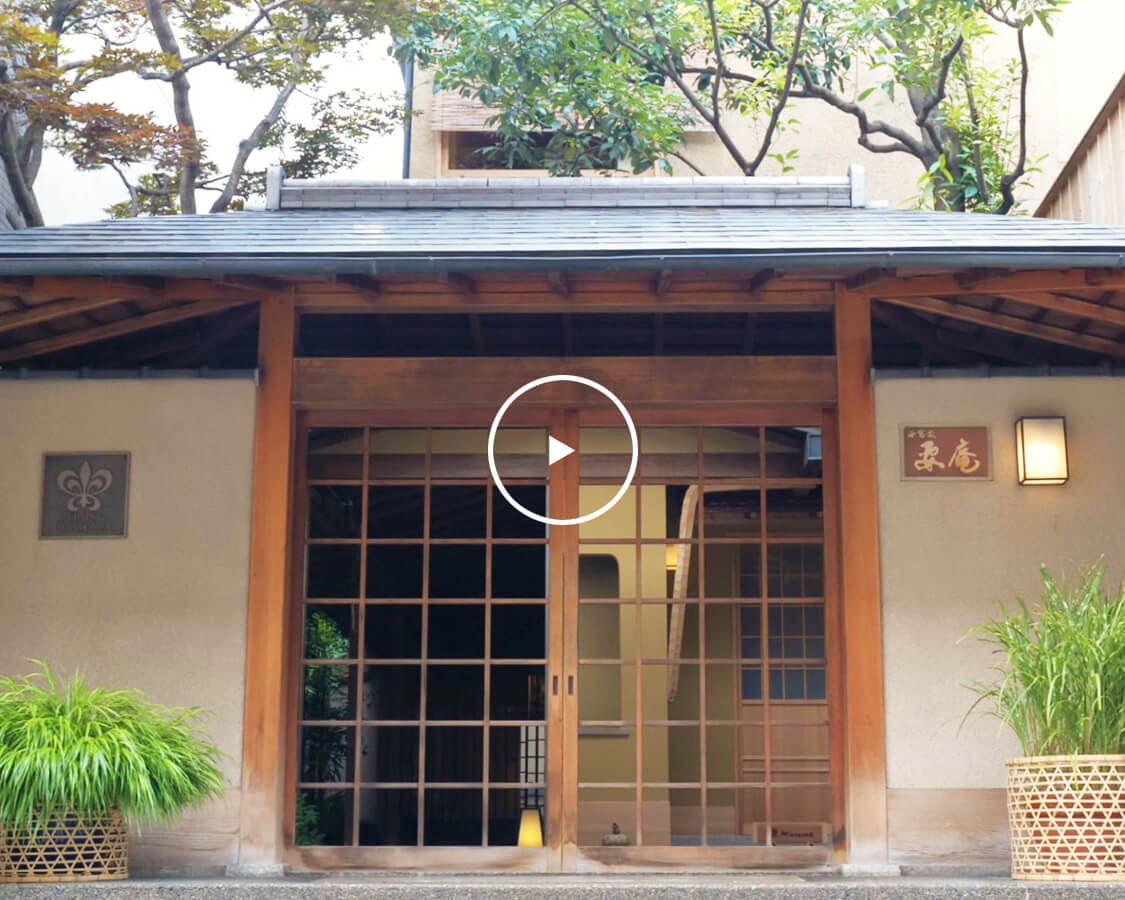
Small authentic Japanese space with counter seating where buckwheat grinding sounds fill the air, creating a relaxing traditional atmosphere.