
A kelp merchant's ramen counter in Nishijin, Kombu to Men Kiichi builds its bowls entirely from kombu dashi — no blended sauces, no shortcuts. The meal opens with a structured tasting of raw kombu varieties before the noodles arrive, turning a single ingredient into a considered argument about umami. Michelin Bib Gourmand 2025. Priced at ¥ — among the most affordable Michelin-recognised bowls in Kyoto.
Pearl is the En Primeur Club membership app — saves, bookings, and concierge access live there. Same editors, same standards.
- Address
- 74-2 Nishiitsutsuji Higashimachi, Kamigyo Ward, Kyoto, 602-8478, Japan
- Phone
- +81 80-7227-7500
- Website
- itutuji.com
- Directions
- Get directions
 Saves & bookings on Pearl
Where Kelp Is the Lesson, Not Just the Stock
Kamigyo Ward's Nishijin district is known for its weaving workshops and the tight residential streets that surround them — not, historically, for ramen. That displacement is part of what makes Kombu to Men Kiichi worth paying attention to. The shop emerged from a kelp merchant with an established local clientele, and the decision to build a ramen counter around that product feels less like a restaurant concept and more like a logical extension of trade. The bowl is the argument. The kombu is the evidence.
Kyoto's ramen scene occupies a distinctive position in Japan's broader noodle geography. Where Sapporo anchors its identity in rich miso and butter, and Hakata builds from tonkotsu, Kyoto ramen has traditionally leaned toward a lighter, chicken-forward broth — refined without being spare. Kombu to Men Kiichi steps outside even that local tradition. The stock here is built entirely from kombu dashi, no sauce added to the soup base, which is unusual enough that Michelin's 2025 Bib Gourmand inspectors specifically called it out as defining the restaurant's identity.
The Structure of the Meal
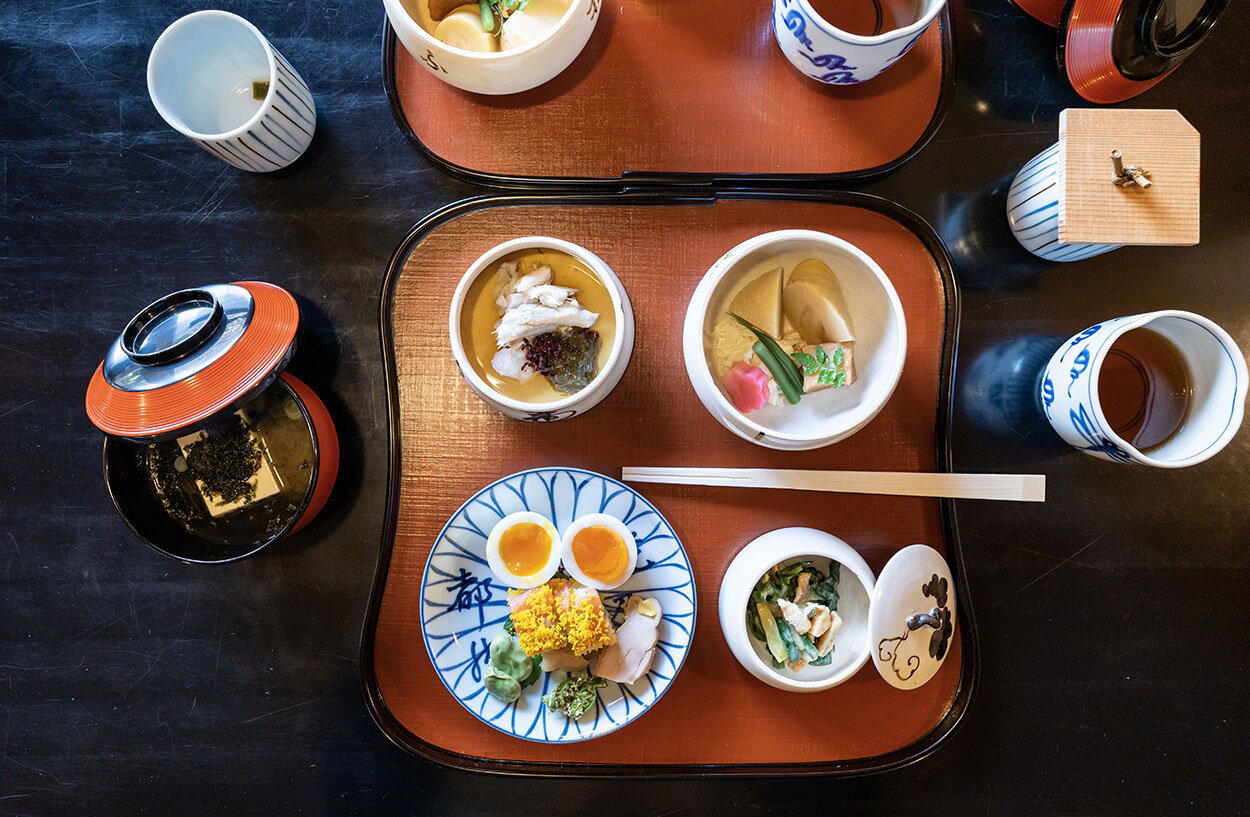
Japanese dining at its most considered operates through pacing and sequence, a principle that kaiseki formalised centuries ago but that surfaces across price points and formats when a kitchen takes its subject seriously. At Kombu to Men Kiichi, the meal is structured around education before consumption. Guests are presented with an introduction to distinct kombu varieties: Rishiri, from the cold northern waters off Hokkaido; Rausu, harvested from the Shiretoko coast and prized for its depth; and makombu, the broadest and most familiar variety used in standard dashi preparation. This is not decorative presentation. It is context-setting, the kind of pre-meal ritual that asks the diner to calibrate before they taste.
Guests are offered kombu water and shredded kelp to sample before the ramen arrives. The sequence is deliberate: by the time the bowl lands, the palate has already been introduced to kombu's register, its faint oceanic salinity, the slow umami that lingers after the initial flavour fades. The ramen, when it comes, reads differently for it. That structural approach places Kombu to Men Kiichi in a category of restaurants where the meal is framed as an argument about a single ingredient, a format more common in high-end tasting menus than in ¥-tier noodle shops.
The dish described in the Michelin record, the Kombu Ramen, carries no sauce in the soup. Every dimension of flavour comes from the kombu itself. This is a constraint that most ramen kitchens would consider a liability, because layering tare (seasoning sauce) into the broth is the standard mechanism for controlling depth and salinity. Working without it requires the stock to carry the entire flavour load, which means ingredient quality and extraction technique are fully exposed. There is no adjustment layer. The bowl either works or it does not.
Nishijin as Context
The neighbourhood matters to understanding what kind of experience this is. Nishijin sits in the northern part of Kyoto, separated from the tourist circuits of Gion and Higashiyama by both geography and character. It is a working district, historically defined by the textile industry, with a population that has used the same local shops across generations. A kelp merchant operating here would have relationships, regulars, and a reputation built on product quality rather than foot traffic from visitors. The ramen counter inherits that credibility.
For comparison, Kyoto's kaiseki tier, venues like Goh in Fukuoka's counterparts in the city, or the multi-starred houses that define the upper bracket of Japanese dining, operates at ¥¥¥¥ price points, where the same reverence for a single ingredient might play out across twelve courses. Kombu to Men Kiichi compresses that argument into a bowl at a fraction of the cost. The Bib Gourmand designation, which Michelin reserves for venues offering good cooking at prices that remain accessible, acknowledges exactly that compression. It is not a consolation prize for restaurants that fall short of star consideration, it is a distinct category, and in Kyoto's competitive restaurant environment it carries real weight.
Ramen in a City That Rarely Centres It
Kyoto's dining identity is built around kaiseki, tofu cuisine, and the precision traditions of washoku. Ramen sits lower in the local prestige hierarchy than it does in Tokyo or Fukuoka, which means the city's serious ramen spots tend to occupy specific niches rather than competing for general recognition. KOBUSHI Ramen, Menya Inoichi, and Mendokoro Janomeya each represent different approaches to what serious ramen looks like in this city. Chinese Noodles ROKU and Muginoyoake extend that range further. Kombu to Men Kiichi enters that conversation from an angle none of them take: it begins with the ingredient source rather than the broth style, and works backward from material to meal.
That approach connects it, in spirit if not in format, to the ingredient-led philosophy that runs through much of Kyoto's higher-end cooking. The discipline required to let a single, unfashionable ingredient carry a dish without amplification is the same discipline that characterises Kyoto kaiseki at its most restrained. The price point is just radically different.
For visitors spending time across the Kansai region, the contrast is instructive. HAJIME in Osaka represents the far end of the formality spectrum; akordu in Nara works in a different register entirely. Kombu to Men Kiichi occupies a position no other venue on that map does: low price, high intention, single-ingredient clarity.
Know Before You Go
| Location | 74-2 Nishiitsutsuji Higashimachi, Kamigyo Ward, Kyoto 602-8478 |
|---|---|
| Cuisine | Ramen (kombu dashi-based) |
| Price | ¥, among the most affordable Michelin-recognised venues in Kyoto |
| Recognition | Michelin Bib Gourmand 2025 |
| District | Nishijin, Kamigyo Ward, residential north Kyoto, away from main tourist corridors |
| Booking | No booking information confirmed; arriving early or outside peak lunch hours is advisable for popular Bib Gourmand spots of this scale |
| Hours | Not confirmed, verify before visiting |
Comparable Spots
| Venue | Cuisine | Price |
|---|---|---|
| Kombu to Men KiichiThis venue — the venue you are viewing | Ramen | ¥ |
| Gion Sasaki | Kaiseki, Japanese | ¥¥¥¥ |
| cenci | Italian | ¥¥¥ |
| Ifuki | Kaiseki | ¥¥¥¥ |
| Kyokaiseki Kichisen | Japanese | ¥¥¥¥ |
| Kyo Seika | Chinese | ¥¥¥ |
Recognition history
Dated appearances from independent guides and award organizations, with the underlying list record or original source where available.
Michelin Bib Gourmand
Michelin
Michelin Bib Gourmand
Michelin
Continue exploring
More in Kyoto
Restaurants in Kyoto
Browse all →

Bars in Kyoto
Browse all →


Hotels in Kyoto
Browse all →
Wineries in Kyoto
Browse all →
At a Glance
- Quiet
- Minimalist
- Elegant
- Intimate
- Solo
- Special Occasion
- Chefs Counter
- Sake Program
- Local Sourcing
Current opening hours
- Monday
- 11 AM–2 PM
- Tuesday
- Closed
- Wednesday
- Closed
- Thursday
- 11 AM–2 PM
- Friday
- 11 AM–2 PM
- Saturday
- 11 AM–2 PM
- Sunday
- 11 AM–2 PM
Hours can change for holidays and private events. Last verified .
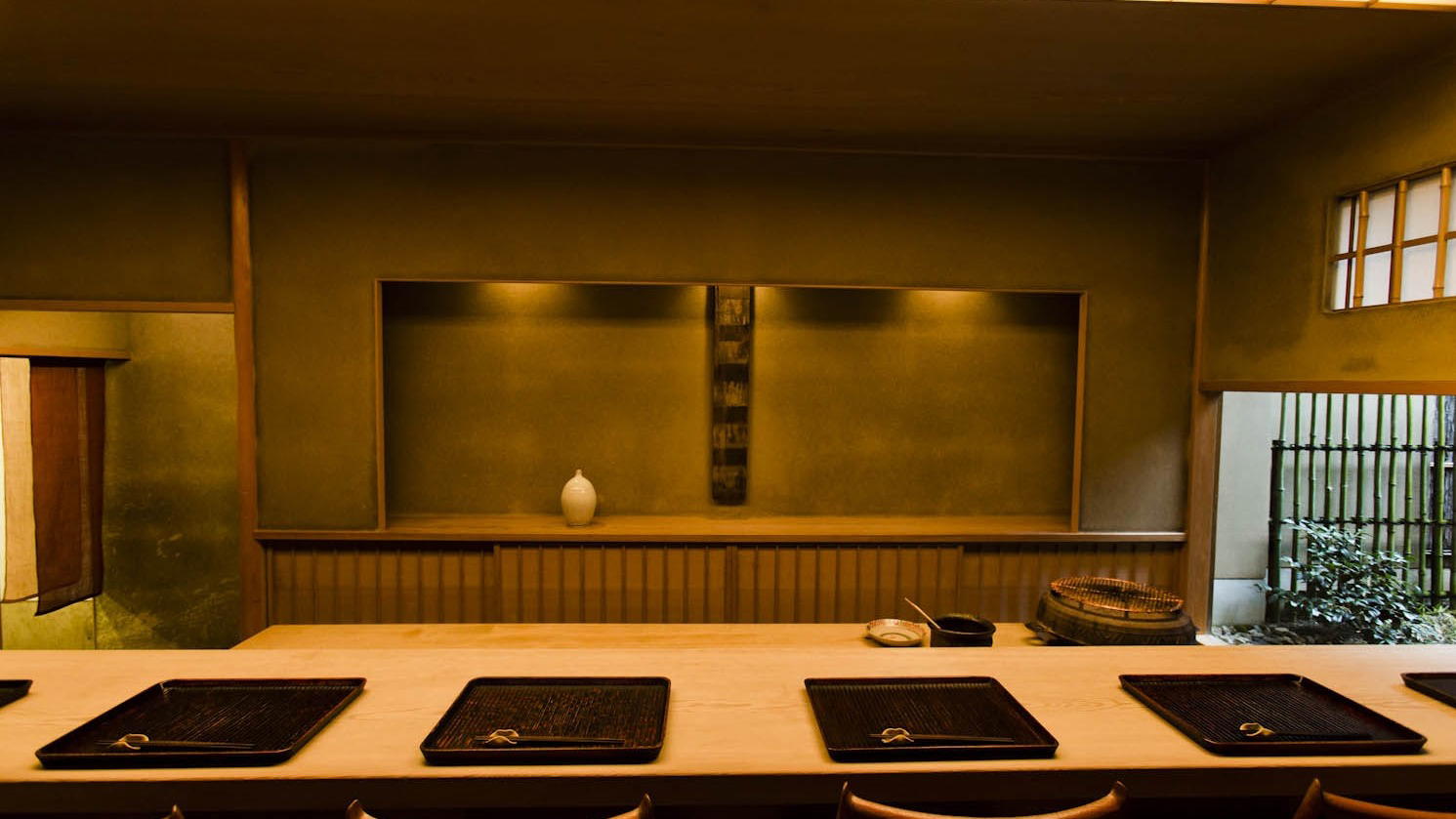
Compact counter seating with natural woods and soft lighting, evoking quiet tea-house luxury.
Know Before You Go
- Getting there
- 74-2 Nishiitsutsuji Higashimachi, Kamigyo Ward, Kyoto, 602-8478, Japan