Our verdict
Salt, Clarity, and the Quiet Art of Shio Ramen There is a particular kind of Tokyo ramen shop that announces itself through restraint rather than spectacle. No neon-lit photo walls, no queue management app, no broth theatre staged for social...

Pearl is the En Primeur Club membership app, where members save venues, book tables and use the concierge.
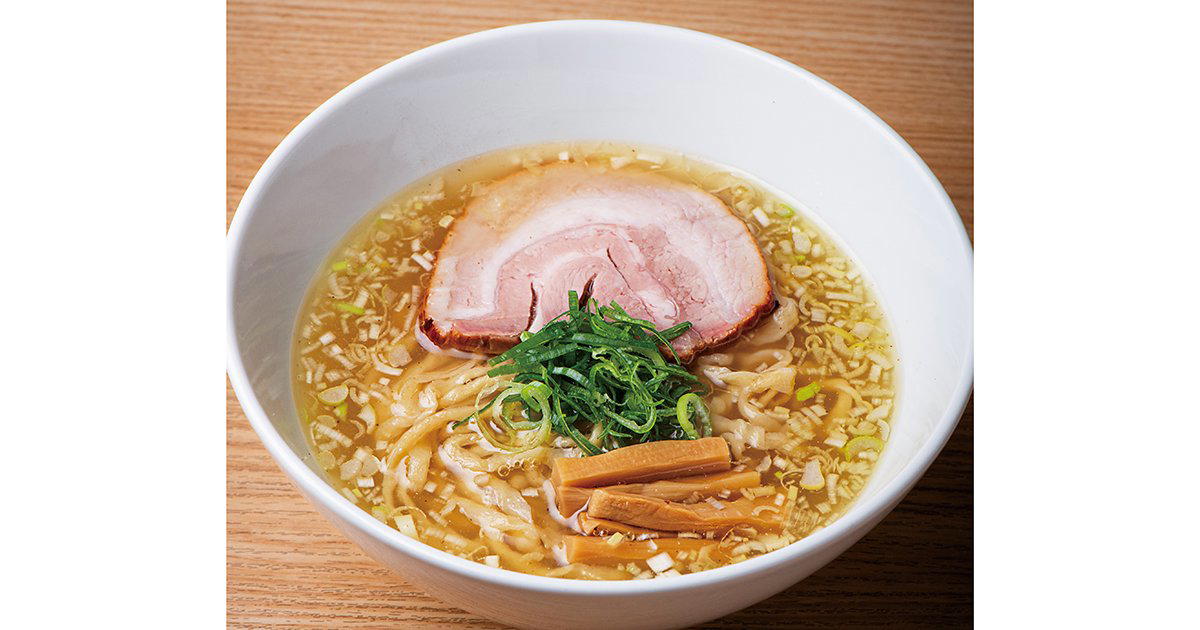
The menu
What to order
- Shio Ramen
- Shio Ramen with Everything
- Niboshi Ramen
- Tsukemen
Salt, Clarity, and the Quiet Art of Shio Ramen
There is a particular kind of Tokyo ramen shop that announces itself through restraint rather than spectacle. No neon-lit photo walls, no queue management app, no broth theatre staged for social media. The experience is anchored instead in the bowl itself: a pale, clarified soup that carries more information per sip than it first appears to. Shio ramen, the salt-seasoned category, is the style that rewards this kind of attention most. At Shio Ramen Shinka in Tokyo, that orientation toward clarity over complexity defines the encounter from the moment you take your seat.
Shio is the oldest of ramen's four canonical seasoning styles, predating the postwar soy and miso variations that came to define the category for international audiences. Where tonkotsu pushes opacity and richness to the extreme, and shoyu builds on a centuries-old fermentation tradition, shio ramen asks the cook to work with almost nowhere to hide. The broth must be clear enough to read through, yet deep enough to hold interest across a full bowl. The seasoning tare, typically built from sea salt blended with dried seafood or poultry reduction, must integrate without dominating. It is a discipline that draws comparison to classical French consommé in its insistence on technical cleanliness as the primary aesthetic value.
A Style That Defines a Competitive Tier
Tokyo's ramen scene has long operated across a wide competitive range, from the high-volume chains serving reliable bowls under fluorescent light to the single-chef ateliers that book weeks in advance and change their menus by season. Shio specialists occupy a particular position in that range. Because the style tolerates no masking of inferior stock, the gap between an average and a serious shio bowl is more immediately legible than in heavier categories. Shops that have earned sustained local recognition in this space do so by controlling every variable: the mineral character of the water used in the base, the ratio of chicken to seafood in the stock, the noodle alkalinity calibrated to hold in a lighter broth without turning slack.
In the same city where Harutaka applies similar technical discipline to omakase sushi, and where RyuGin demonstrates how kaiseki tradition sustains through rigorous ingredient sourcing, the leading shio ramen shops are engaged in a parallel conversation about what Japanese cooking looks like when restraint is the primary value. The price and format may differ sharply, but the intellectual commitment does not.
Cultural Roots of the Salt Bowl
Ramen's origins are contested, but the earliest documented versions sold in Japan in the Meiji era were closer to shio preparations than to anything else on the modern menu. The style has regional strongholds: Hakodate in Hokkaido is commonly cited as Japan's shio ramen capital, with a soup tradition built on local seafood and cold-climate chicken that produces a distinctive golden broth. Kyoto's version leans lighter still, with a delicacy that reflects the city's broader culinary restraint. Tokyo's own shio tradition developed in dialogue with both, absorbing influences from the waves of ramen-ya that opened across the capital through the 20th century.
What defines a Tokyo shio approach today is neither purely regional nor purely classical. The capital's shio shops operate in a city where diners can cross-reference dozens of interpretations within a single ward, and where serious ramen criticism, through dedicated publications, competitive rankings, and the Ramen Database platform that logs tens of thousands of shop reviews, has created an informed consumer base that notices the difference between sodium-forward seasoning and genuinely complex salt work. That critical infrastructure shapes what shops like Shio Ramen Shinka must deliver to hold attention in a crowded field.
Placing Shinka in the Broader Tokyo Scene
Tokyo's dining picture extends well beyond ramen, and understanding where a focused shio specialist sits requires seeing the full range. The city's international recognition comes largely from the ¥¥¥¥ tier occupied by venues like L'Effervescence, Sézanne, and Crony, which collectively represent Tokyo's position in global fine dining. Ramen operates in a different register, one where accessibility, repetition, and daily relevance define the category's cultural weight. A bowl eaten twice a week at a trusted neighbourhood shop carries meaning that a quarterly reservation at a Michelin three-star cannot replicate.
That observation holds across Japan's other major food cities as well. HAJIME in Osaka and Gion Sasaki in Kyoto represent formal Japanese dining at its most considered. Goh in Fukuoka operates at the intersection of kaiseki tradition and local produce culture. What all these venues share with a serious ramen counter is the same underlying principle: a single, coherent idea executed without compromise. The format changes. The commitment does not. For those building a Japan itinerary around that principle, akordu in Nara and regional stops such as dining in Nanao, Sapporo, Takashima, and Nishikawa Machi offer further points of comparison across culinary traditions. See our full Tokyo restaurants guide for broader orientation across the city's dining tiers.
International context is equally relevant. At Le Bernardin in New York, the kitchen's insistence on letting seafood speak without interference maps onto the same philosophy that governs a well-made shio broth. Atomix, also in New York, demonstrates how Korean culinary tradition holds up under the same kind of exacting, focused delivery. The discipline of doing one thing well is not specific to any single culture; it is simply clearer in some formats than others. Shio ramen is one of those formats. Other regional examples worth noting include Birdland in Sakai and Bistro Ange in Toyohashi, both of which demonstrate how focused, single-minded cooking sustains outside of major urban centres.
Planning Your Visit
As with most serious Tokyo ramen shops operating in this tier, visiting on a weekday and arriving close to opening time reduces wait time considerably. Payment at ramen counters across Tokyo is commonly handled by vending machine ticket systems at the door; carrying cash remains advisable across the category. For allergy and dietary queries, contacting the venue directly ahead of your visit is the appropriate approach, as English-language communication capability varies by shop. The full Tokyo dining picture, including reservation-led alternatives across every price tier, is covered in our Tokyo guide.
Quick reference: Shio Ramen Shinka, Tokyo.
Frequently asked questions
How does shio ramen differ from other Tokyo ramen styles, and why does Shinka focus on it?
Shio is the oldest documented seasoning style in Japanese ramen history, with Meiji-era salt-seasoned broths predating the shoyu and tonkotsu formats that later dominated Tokyo and Fukuoka respectively. It is also technically the most demanding: a clear shio broth has no opacity to conceal off-notes, making every variable in the stock, water, timing, salt source, immediately apparent in the finished bowl. A Tokyo shop that builds its identity around shio is making a specific argument about craft over crowd-pleasing familiarity.
What do regulars order at Shio Ramen Shinka?
At shio-focused Tokyo ramen shops as a category, the standard shio bowl is the reference order, it exposes the broth's seasoning control without distraction. Toppings typically run to chashu, menma, and narutomaki, but the bowl itself is the point of the visit.
Do they take walk-ins at Shio Ramen Shinka?
Walk-in queuing remains the dominant format across Tokyo's serious ramen category, including at shops with consistent critical attention. Arriving before opening or at off-peak lunch hours generally offers the shortest wait at comparable venues.
What's the standout thing about Shio Ramen Shinka?
Shinka's commitment to shio, the salt-seasoning style that demands the most from a broth because there is nothing to hide behind, is its defining posture in Tokyo's competitive ramen field. Clarity, mineral balance, and seasoning precision are the metrics a shio specialist is judged against, and this shop positions itself squarely on those terms.
Is Shio Ramen Shinka allergy-friendly?
As a general category note, shio ramen bases in Tokyo frequently involve seafood-derived dashi, poultry stock, and wheat-based noodles, each a concern for common dietary restrictions. Anyone managing serious allergies should check the venue's official channels before visiting.
Does Shio Ramen Shinka justify its prices?
Across Tokyo's serious ramen mid-tier, bowls generally fall between ¥1,000 and ¥2,000, a range that reflects the labour intensity of proper shio broth construction relative to the portion size. At that price point, the comparison is against the city's other dedicated shio specialists, not against casual chain ramen.
Budget Reality Check
Comparable venues nearby, for context on price, style, and recognition.
| Venue | Cuisine | Price | Awards | Notes |
|---|---|---|---|---|
| Shio Ramen ShinkaThis venue (the venue you are viewing) | Traditional Shio Ramen | $10–20 | Not listed | Not listed |
| Tachiataru | Standing Izakaya & Bar | $20–30 | Tabelog 100 #20 | Adachi, Standing Izakaya & Bar |
| Ginza Hachigo | Modern French-inspired Ramen | $10–20 | Michelin Bib Gourmand · Tabelog 100 #74 | Chūō, Modern French-inspired Ramen |
| Satei Zenkashoin Shibuya hikarie ShinQs ten | Kyoto-style Japanese Tea Cafe | $10–20 | Tabelog 100 #36 | Shibuya, Kyoto-style Japanese Tea Cafe |
| 根深 | Modern French Vegetable Omakase | $100–150 | Michelin Plate | Minato, Tempura Kakiage |
| Tempura Kurokawa | Traditional Tempura & Tendon | $20–30 | Tabelog 100 #13 | Chūō, Traditional Tempura & Tendon |
Continue exploring
More in Tokyo
Restaurants in Tokyo
All restaurants in Tokyo →


Bars in Tokyo
All bars in Tokyo →


Hotels in Tokyo
All hotels in Tokyo →

Wineries in Tokyo
Browse all →
Details
- Classic
- Well Known
- Casual Hangout
- Solo
- Open Kitchen
- Standalone
- Local Sourcing
- A La Carte
- Counter Dining
Current opening hours
- Monday
- 11 AM–3 PM, 5:30–10 PM
- Tuesday
- 11 AM–3 PM, 5:30–10 PM
- Wednesday
- 11 AM–3 PM, 5:30–10 PM
- Thursday
- 11 AM–3 PM, 5:30–10 PM
- Friday
- 11 AM–3 PM, 5:30–10 PM
- Saturday
- 11 AM–3 PM, 5:30–10 PM
- Sunday
- 11 AM–3 PM, 5:30–10 PM
Hours can change for holidays and private events. Last verified .
Casual, no-frills ramen shop with a focused, dedicated atmosphere centered on the craft of salt ramen.