
Tabelog 100 #20
Our verdict
Tachiataru puts Tokyo’s tachinomi culture in a compact Kita-Senju frame: standing-room izakaya energy, sake and shochu alongside wine, and a menu built for short pours rather than a long seated meal. Its selection for Tabelog 100 - Tachinomi - 2025 places it in a serious drinking-bar category, while the JPY 2,000 - JPY 2,999 range keeps the format closer to everyday Tokyo than ceremony.

Pearl is the En Primeur Club membership app, where members save venues, book tables and use the concierge.
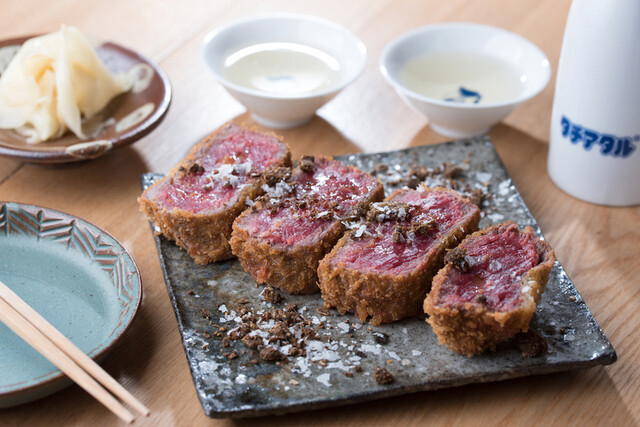
Approaching Tokyo’s drinking lanes, the city changes register. Polished dining rooms give way to a faster, functional style: narrow frontages, short orders, quick rounds, and groups calibrating the night one glass at a time. Tachiataru fits that grammar. It is a tachinomi, a stand-up bar with izakaya bones, designed less for ceremony than momentum.
That matters because Tokyo drinking culture is not singular. Some counters trade on precision and scarcity; other casual rooms fold drinks into small-plate meals; Tokyo’s standing-bar culture is more direct and less self-conscious. Its strength is compact, high-turnover drinking addresses where value, speed and range matter more than polish. Selection for Tabelog 100 - Tachinomi - 2025 gives Tachiataru a useful credential in that category: not a fine-dining claim, but recognition within the standing-bar form.
A standing-bar menu built around the glass, not the table
The menu architecture is the point. Tachinomi ordering works in increments: one drink, one or two snacks, then another decision. The format rewards dishes that arrive fast, hold up to alcohol, and can be shared without slowing the room. Tachiataru’s listed categories, stand-up bar and Japanese-style izakaya, place it in that rhythm. The appeal is broader than a single dish: it is a bar-first format with the looseness and snack-driven logic of an izakaya.
Tokyo has sharpened casual drinking formats, from standing counters that make a quick stop feel intentional to compact izakaya-style rooms built for lower-spend, higher-frequency nights out. The stated dinner budget of JPY 2,000 - JPY 2,999 shows how to read Tachiataru. This is not a destination tasting menu disguised as a bar. Its quality signal is curation inside constraint: short spend, limited space, and a format built to support several styles of evening.
The comparison within Tokyo is instructive. Saiko Gyoza Bo, BOSSA BURGER, Sushi Tanaka, Kadoya, and Senju Takeyabu all sit in different casual or counter-led decision sets, showing how varied Tokyo’s informal dining tiers can be. Tachiataru’s role is clear: a drinking-first address where the meal is assembled through rounds rather than planned as a fixed arc.
For readers mapping a broader Tokyo run, this venue belongs alongside, not instead of, more structured meals. EP Club’s wider city coverage, including Our full Tokyo restaurants guide, Our full Tokyo bars guide, Our full Tokyo hotels guide, Our full Tokyo wineries guide, and Our full Tokyo experiences guide, is useful because Tokyo’s strongest itineraries mix registers. A standing bar in Tokyo can say as much about the city as a reservation-only counter in a more formal register.
Tokyo gives the format its edge
Tokyo’s drinking culture has long balanced destination dining with dense after-work routines. That urban logic shapes the format: venues must be accessible, affordable for repeat use, and flexible enough for two people making a quick stop or a small group stretching the night. Tachiataru’s stand-up bar category reinforces that compactness. Capacity and counter flow are not decorative; they determine tempo, noise level, and how orders move through the room.
The venue’s recognition in the 2025 Tabelog 100 - Tachinomi list places it in a defined casual-drinking category rather than a luxury frame. That is an important distinction for travelers. The relevant questions are not tasting-menu length or chef pedigree, but whether the room works as a quick, well-priced stop and whether its izakaya structure supports another round.
Small standing bars can tighten quickly once they have category recognition, so the safest reading is practical rather than romantic. Treat it as a planned casual stop rather than an improvised fallback, especially if your evening depends on timing. The low listed dinner budget makes it easy to pair with another Tokyo meal, but the format still rewards a clear plan.
There is no need to inflate the experience into luxury language. The appeal is precise: an award-noted tachinomi in a city that understands drinking as routine, not performance. The stand-up bar structure, izakaya category and low dinner spend suit travelers who want a Tokyo night with local cadence. It pairs well with a heavier lunch, a later second stop, or a crawl built around casual drinking rather than cocktails.
How to place it in a Tokyo itinerary
Tachiataru works when the evening is built around contrast. A day that starts with other Tokyo dining, coffee, dessert, or a more structured counter meal can end at a stand-up bar without feeling overbuilt. For a more structured Tokyo sequence, compare it with other unnamed casual counters or izakaya-style stops where the pacing and spend sit differently.
Travelers extending the same casual-dining lens beyond Tokyo can read it against other unnamed dining rooms and snack-led bars in Japan and abroad. The useful comparison is not a like-for-like signature dish, but how Japanese drinking and snack formats translate across cities, often with more explanation outside Japan and more native speed in Tokyo.
The editorial verdict is simple: this is a category play, not a trophy meal. Choose it for tachinomi structure, Tokyo atmosphere, izakaya flexibility, and a spend level that encourages ordering in rounds. In a city where luxury dining often dominates international attention, the standing bar remains one of Tokyo’s sharpest ways to understand how people actually drink after work.
Frequently asked questions
What should I budget for a meal at Tachiataru?
Pricing at Tachiataru is listed as JPY 2,000 - JPY 2,999 for dinner.
When can I go to Tachiataru?
Check the venue's official channels before visiting.
What's Tachiataru's location?
Tokyo.
What's the signature at Tachiataru?
There is no single named signature on the public record. The draw is the tachinomi format itself: a stand-up bar with Japanese-style izakaya character in Tokyo. Check the venue's official channels for the latest details.
Cuisine Lens
Comparable venues by price and recognition.
| Venue | Cuisine | Price | Awards | Notes |
|---|---|---|---|---|
| TachiataruThis venue (the venue you are viewing) | Standing Izakaya & Bar | $20–30 | Tabelog 100 #20 | Not listed |
| 餃子歩兵 | Kyoto-style Gyoza | $10–20 | Not listed | Ginza |
| 虎白 | Modern Japanese Kaiseki | $300–500 | 2 Michelin Stars · La Liste Top Restaurants | Shinjuku |
| Okonomiyaki Kiji Marunouchi ten | Osaka-style okonomiyaki | $20–30 | Tabelog 100 #31 | Chiyoda |
| Sakazuki | Standing Japanese sake bar with omakase pairing course | $30–50 | Tabelog 100 #4 | Chūō |
| 傳 | Modern Japanese Kaiseki | $150–200 | 2 Michelin Stars · World's 50 Best #51 | Shibuya |
Recognition history
Dated appearances from independent guides and award organizations, with the underlying list record or original source where available.
Tabelog 100 #20 · No. 20
Tabelog · Tabelog 100 - Tachinomi - 2025
Continue exploring
More in Tokyo
Restaurants in Tokyo
All restaurants in Tokyo →



Bars in Tokyo
All bars in Tokyo →








Details
- Lively
- Cozy
- Energetic
- After Work
- Casual Hangout
- Group Dining
- Solo
- Late Night
- Standalone
- Sake Program
- Beer Program
- A La Carte
- Small Plates
- Counter Dining
- Sake
- Beer
- Sour Cocktails
- Wine
Current opening hours
- Monday
- 4–11:30 PM
- Tuesday
- 4–11:30 PM
- Wednesday
- 4–11:30 PM
- Thursday
- 4–11:30 PM
- Friday
- 4–11:30 PM
- Saturday
- 4–11:30 PM
- Sunday
- 4–11:30 PM
Hours can change for holidays and private events. Hours as of .
Casual and energetic standing bar atmosphere with a cozy, alleyway izakaya feel; guests describe it as a friendly, good-value spot where people gather after work for drinks and small plates rather than a formal sit-down meal.