Our verdict
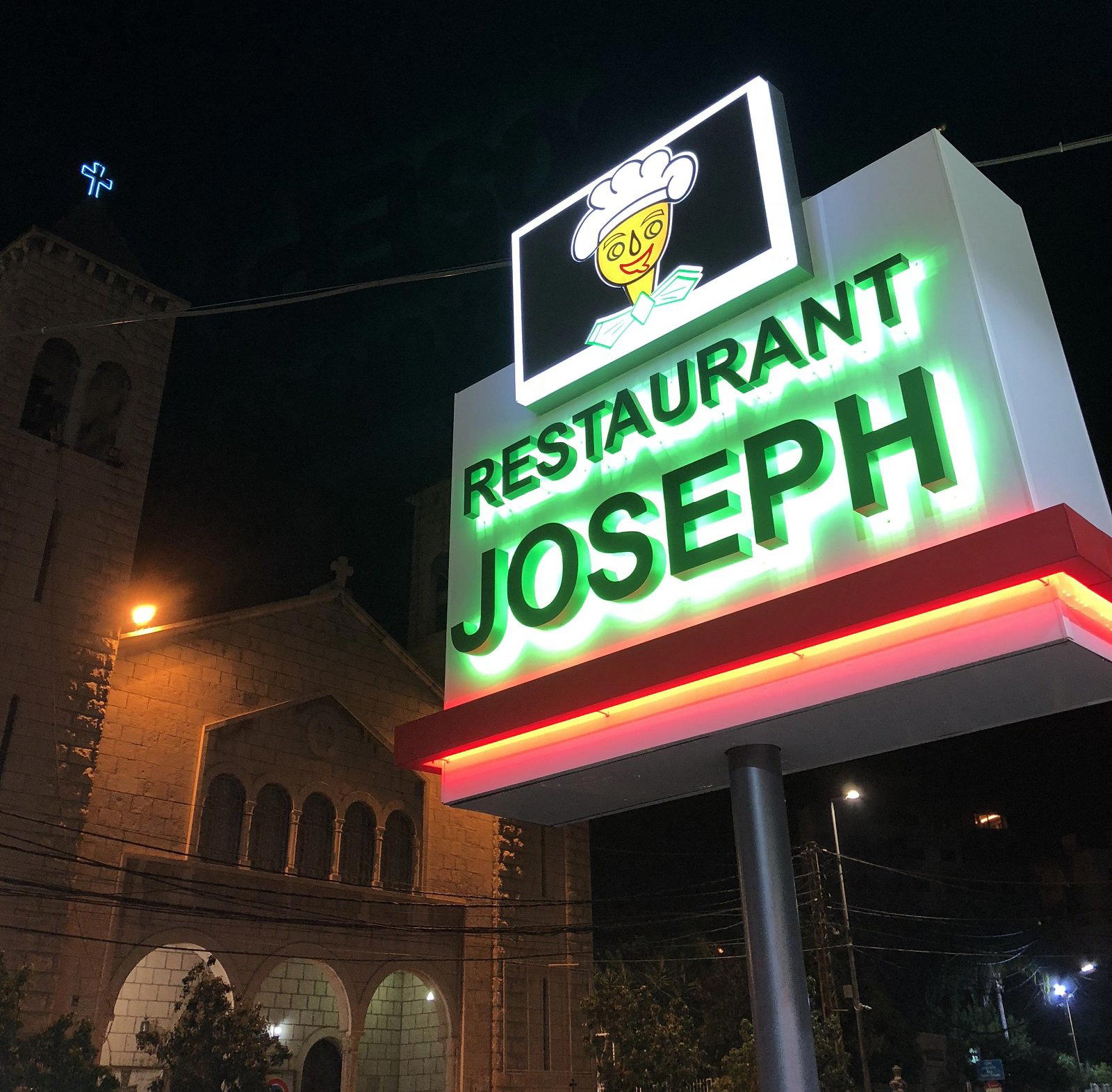
Restaurant Joseph occupies a specific tier in Beirut's dining scene where Lebanese hospitality tradition meets considered modern execution. The kitchen, front-of-house, and cellar operate as a coordinated unit rather than separate departments, a distinction that separates it from more casually run neighbourhood restaurants in the city. For visitors building a serious Beirut itinerary, it belongs on the shortlist alongside the city's more discussed addresses.

Pearl is the En Primeur Club membership app — saves, bookings, and concierge access live there. Same editors, same standards.
- Address
- Beirut, Lebanon
- Directions
- Get directions
The menu
What to order
- Shawarma
- Falafel
- Sandwiches
Where the Room Works as Hard as the Kitchen
Beirut's restaurant culture has always rewarded a certain kind of choreography. The city's most durable dining addresses are not simply places where good food arrives at the table; they are rooms where the entire operation moves in coordination, where a sommelier's intervention at the right moment or a front-of-house team that reads a table without hovering makes the difference between a functional meal and a genuinely memorable evening. Restaurant Joseph sits inside that tradition. The guest experience here is shaped less by any single showpiece element than by the accumulated effect of a team that appears to have agreed, in advance, on exactly what kind of evening they are producing.
That model of collaborative service has become a meaningful differentiator in Beirut, where the economic pressures of the past several years have forced restaurants to make difficult choices about where to concentrate investment. Many operations have contracted around a strong kitchen and let service thin out. Restaurant Joseph has maintained the opposite emphasis: the floor and cellar are treated as equal contributors to the outcome, not support staff for the chef's vision. In a city where places like Em Sherif have built reputations partly on the scale and ceremony of their hospitality, Joseph operates at a different register, more intimate in its ambitions and more consistent in delivery.
The Setting and What It Signals
Approaching any Beirut restaurant tells you something about its intended audience. The city's dining geography has fragmented significantly since 2019, with some neighbourhoods rebuilding faster than others and the density of serious restaurants shifting accordingly. Restaurant Joseph occupies the kind of space that signals commitment to a specific guest rather than a broad walk-in trade. The room itself is calibrated for conversation, not spectacle: lighting, acoustics, and table spacing all suggest that the experience is meant to unfold over time rather than turn over quickly.
The contrast with high-volume Lebanese dining, represented by institutions like Al Falamanki Sodeco or the sprawling meze-forward approach of Al Halabi, is deliberate. Joseph is not competing on scale or on the theatre of abundance; it is competing on precision and coherence.
The Team Dynamic as Editorial Argument
The case for front-of-house and cellar operating as genuine creative partners, rather than executors of kitchen decisions, is well-established at the level of Le Bernardin in New York or Atomix, where the guest experience is designed floor-up as much as kitchen-out. In Beirut's context, that model is rarer. Most of the city's celebrated kitchens still operate on a hierarchy where the chef's output is the primary event and service is its delivery mechanism. Restaurant Joseph's approach of treating the room as a co-author of the evening puts it in a smaller, more interesting category.
What this means practically is that the sommelier's wine recommendations, where available, are not an afterthought or an upsell exercise. They are framed as part of the same culinary argument the kitchen is making. Lebanese wine production has expanded and matured considerably over the past two decades, with producers from the Bekaa Valley operating at export-competitive quality levels, and a sommelier who knows how to position that output within a meal rather than around it is adding genuine editorial value to the evening. For context on how that regional wine culture extends beyond Beirut, BRUT by Youssef Akiki in Keserwan District represents one of the more ambitious cellar programs operating outside the capital.
Lebanese Dining Tradition and Where Joseph Sits Within It
Lebanese cuisine at the serious end of the market has been navigating a tension for the better part of a decade: how much to modernise, and in which direction. Some addresses have leaned toward a Franco-Lebanese register, others toward a more rigorous documentation of regional and sectarian culinary traditions. Places like Al Rawda in Shatila operate as repositories of neighbourhood cooking rather than fine dining propositions. Feniqia in Byblos works within a coastal Phoenician tradition. Lakkis Farm in Baalbek anchors its offer to agricultural provenance in the Bekaa. Restaurant Joseph sits closer to the modernist-hospitality end of that spectrum, where the cuisine is grounded in Lebanese ingredients and technique but the frame of presentation and service draws on international fine dining conventions.
That positioning is neither unusual nor uncontested. It reflects a genuine argument about what Lebanese cuisine should be doing at its most ambitious, and reasonable diners disagree. What matters at Joseph is that the argument is made coherently across every department: the kitchen, the floor, and the cellar are all making the same case, which is rarer than it sounds.
Planning Your Visit
Beirut restaurant booking behaviour has shifted in recent years. The city's dining public has become more willing to book ahead at serious addresses, partly because the shrinkage of the overall hospitality sector has concentrated demand at the restaurants that have survived with their standards intact. For a meal at Restaurant Joseph, booking in advance is advisable; walk-in availability at the level of service this address offers is not reliable, particularly on Thursday through Saturday evenings when Beirut's dining traffic concentrates. Visitors building a multi-day Beirut itinerary would do well to combine Restaurant Joseph with other addresses that represent different registers of the city's food culture: Falafel Sahyoun for the counter-service end of the spectrum, Onno Bistro in Bourj Hammoud for a neighbourhood bistro sensibility, or Jammal in Batroun District for a coastal excursion. The full picture of Lebanon's dining culture extends well beyond the capital, as our full Beirut restaurants guide maps in detail, with regional counterparts like Kitchen Garage in Aley District, Laiterie Massabki in Chtoura, and Shams Restaurant in Aanjar each representing distinct culinary geographies worth the drive. For a broader Matn-area comparison, Al Halabi Restaurant in Matn District shows how the same kitchen tradition operates at different scales and settings.
Frequently asked questions
How does Restaurant Joseph fit into Beirut's broader Lebanese dining tradition?
Beirut's serious restaurant scene has spent the better part of a decade working through how much to modernise Lebanese cuisine and in which direction. Restaurant Joseph's position within that conversation — where the room and cellar carry creative weight alongside the kitchen — reflects a local hospitality tradition that treats front-of-house as a substantive editorial role, not a service function.
What's the best thing to order at Restaurant Joseph?
Specific menu details for Restaurant Joseph are not published in advance, which is consistent with how Beirut's more considered dining addresses handle their offer — the kitchen drives the agenda. Asking the front-of-house team for their reading of what's current is the more productive approach than arriving with a fixed order in mind.
Can I walk in to Restaurant Joseph?
Beirut's dining public has shifted toward booking ahead at serious addresses, and Restaurant Joseph sits within that tier. Walking in remains possible on quieter nights, but given the room's reputation within the city, a reservation made in advance is the lower-risk approach.
What's the signature at Restaurant Joseph?
The case the restaurant makes most forcefully is not about a single dish but about the relationship between the dining room and the cellar operating as genuine creative partners. That front-of-house authorship — rather than any one plate — is the defining characteristic returning guests cite.
Can Restaurant Joseph accommodate dietary restrictions?
Lebanese cuisine at the serious end of the market tends to work with seasonal and regional produce, which gives kitchens reasonable flexibility around dietary requirements. Communicating restrictions at the time of booking, rather than on arrival, gives the team the best chance to accommodate them properly.
Is eating at Restaurant Joseph worth the cost?
Pricing details are not publicly listed, which puts Restaurant Joseph in a category of Beirut addresses where the cost conversation happens on contact. The restaurant's durability in a city where the dining geography has shifted sharply since 2019 is itself a form of evidence about the value proposition it delivers to its regular audience.
Price Lens
| Venue | Cuisine | Price | Awards | Notes |
|---|---|---|---|---|
| Restaurant JosephThis venue — the venue you are viewing | Lebanese Street Food | $10–20 | Not listed | Not listed |
| Albergo Rooftop | Mediterranean with Italian Accents | $50–100 | Relais Chateaux Award | Lebanese Cuisine |
| Em Sherif | Traditional Lebanese Fine Dining | $50–100 | World's 50 Best #13 | Not listed |
| Beihouse | Modern Levantine Mediterranean | $50–100 | World's 50 Best #5 · The Best Chef One Knife | Not listed |
| Buco | Modern Gastro Burgers | Not listed | World's 50 Best #39 | Not listed |
| Liza | Modern Lebanese | $50–100 | Not listed | Not listed |
Continue exploring
More in Beirut
Restaurants in Beirut
Browse all →
Bars in Beirut
Browse all →
Hotels in Beirut
Browse all →

Details
- Lively
- Classic
- Well Known
- Casual Hangout
- Solo
- Standalone
- A La Carte
- Soft Drinks
- Vegetarian Friendly