
Michelin Plate
Our verdict
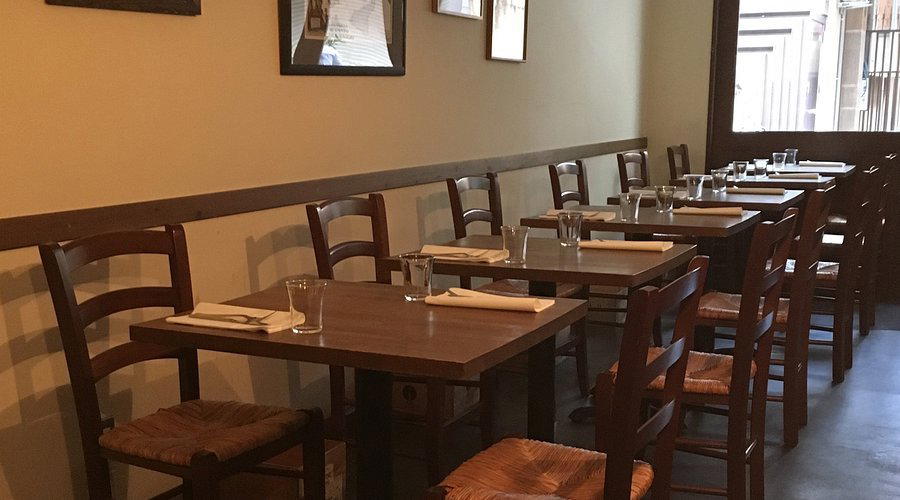
A Michelin Plate-recognised Tuscan kitchen in Nakagyo Ward, Osteria Il Canto del Maggio brings Florentine tradition to Kyoto through a menu that rotates with Japan's four seasons. The chef's Tuscany apprenticeship shapes everything from the bistecca alla Fiorentina to spring gnocchi and winter beef-and-pear stew. At ¥¥ pricing, it sits well below Kyoto's Italian fine-dining tier and represents a disciplined, regionalist alternative.

Pearl is the En Primeur Club membership app, where members save venues, book tables and use the concierge.
The menu
What to order
- Bistecca alla Fiorentina
- Gnocchi
- Pear ravioli
A Tuscan Address in Nakagyo Ward
Kyoto's foreign restaurant scene has long operated on two tiers: the high-end Italian rooms that price against the city's kaiseki counters, and a smaller cohort of neighbourhood places where a specific regional identity matters more than spectacle. Osteria Il Canto del Maggio belongs firmly to the second group. Located at 512-2 Kikuyacho in Nakagyo Ward, it occupies a part of the city where the restaurant density is lower and the pace is less performative than Gion or the main dining corridors near Kawaramachi. Arriving here, you are not walking into theatre. The name itself signals something quieter and more deliberate: a reference to the Tuscan region where the chef trained, carried intact to Japan.
The Tuscan Regional Argument
Italian cooking in Japan has a complicated history. Tokyo's high-end Italian scene matured early, and cities like Kyoto followed with a wave of ambitious cucina italiana that often sought to match the formality of local fine dining. What makes the regionalist approach at Osteria Il Canto del Maggio interesting, from a culinary-tradition standpoint, is how decisively it resists that drift toward elaboration. Tuscany is not a cuisine of complexity for its own sake. It is built on quality ingredients, direct preparation, and a short list of techniques that have remained stable for generations. The bistecca alla Fiorentina, the leading dish here, is perhaps the clearest expression of that philosophy: a cut of beef, a fire, salt, and timing. Nothing in that equation benefits from reinvention.
Compared to cenci, which operates at ¥¥¥ and works within a more contemporary Italian idiom, or Bini, Osteria Il Canto del Maggio presents a narrower, more anchored regional proposition. It is not trying to synthesise Japanese and Italian traditions, nor is it pushing toward the avant-garde. The competitive set it most resembles is a certain type of serious Florentine trattoria: one where the menu changes by season, the wine list is structured around central Italian producers, and the cooking is assessed by its faithfulness to a specific place rather than by innovation.
Wine and Food as a Regional System
The editorial angle here matters. In Tuscan cooking, wine is not an accompaniment chosen after the food is decided. It is part of the same regional logic. Bistecca alla Fiorentina was not designed for Pinot Grigio; it was designed for Sangiovese-based wines, specifically the tannic structure of Chianti Classico or the fuller body of a Brunello di Montalcino, wines that have evolved alongside the food over centuries of proximity. The same regional coherence extends down the menu. The chestnut ravioli of autumn maps naturally to a slightly earthier, older-vintage Chianti or a Morellino di Scansano. The lighter spring gnocchi from new potatoes invites something fresher, perhaps a Vernaccia di San Gimignano or a Vermentino from the Tuscan coast.
But the culinary framework is there. A kitchen this committed to Tuscan seasonal rhythms creates the conditions for a genuinely regional pairing programme, and any visitor who approaches the meal that way, asking for guidance on central Italian wines to match each course, is working with the grain of what the chef has set up. That is a different experience from most restaurants at the ¥¥ tier, where the wine approach is often either generic or afterthought.
For reference points at a higher register: 8 1/2 Otto e Mezzo Bombana in Hong Kong operates as one of Asia's most formally structured Italian wine programmes, and Frasca Food & Wine in Boulder has built its entire identity around the wine-food inseparability of Friuli. Osteria Il Canto del Maggio works at a more intimate scale, but the regional logic it applies to food is the same kind of thinking that drives those more elaborate programmes.
A Menu That Moves With the Calendar
The seasonal structure of the menu is one of the most legible things about this kitchen, and it connects directly to why Kyoto is a coherent location for this kind of cooking. Japan's four-season awareness, expressed through the kaiseki tradition, shares a philosophical kinship with the Italian agrarian calendar, even if the two cuisines share no direct lineage. Spring brings gnocchi made from new potatoes, a dish that depends on the specific starch content and moisture of early-season tubers. Summer introduces zucchini fritti, a direct preparation that relies on the vegetable being harvested young and cooked immediately. Autumn shifts to chestnut ravioli, a filled pasta that maps to the chestnut harvests of the Apennines and Tuscan hills. Winter closes the cycle with a beef-and-pear stew, a combination that appears in various forms across central Italy's colder months.
This is not a fusion exercise. Each dish is traceable to a Tuscan or broader central Italian source. The calendar is Florentine, transplanted to a city that already understands seasonal eating at an almost cellular level. The result is a menu that reads coherently in both culinary traditions without attempting to merge them.
Where It Sits in Kyoto's Wider Dining Picture
Kyoto's high-end restaurants are well documented. TAKAYAMA and Vena represent different points in the city's contemporary dining spectrum, while BOCCA del VINO operates as another Italian-focused option with its own positioning. Osteria Il Canto del Maggio at ¥¥ sits below most of these in price and operates without the formal structure of a multi-course tasting menu.
The Michelin Plate recognition in both 2024 and 2025 is meaningful in context. A Michelin Plate does not carry the weight of a star, but it does signal that inspectors found the cooking worth noting, specifically for food quality. For a small osteria at the ¥¥ level, that is a credible endorsement of consistency. It places the restaurant inside a tier of Kyoto dining that includes serious neighbourhood kitchens operating below the city's more discussed fine-dining addresses.
For those building a wider Japan itinerary, the contrast with HAJIME in Osaka or Harutaka in Tokyo is instructive about the range the country's restaurant culture now spans. Regional Italian cooking at neighbourhood scale, practised with genuine Florentine grounding, is a specific niche, and outside of a few rooms in major Japanese cities, it is not a crowded one. See our full Kyoto restaurants guide for broader orientation, and our Kyoto hotels guide, bars guide, and experiences guide for the rest of the city.
Planning Your Visit
Address: 512-2 Kikuyacho, Nakagyo Ward, Kyoto, 604-8127, Japan. Price range: ¥¥ (mid-range by Kyoto standards). Awards: Michelin Plate 2024 and 2025. Reservations: Seasonal note: The menu changes across all four seasons, so the visit experience differs meaningfully depending on when you go. Spring gnocchi, summer zucchini fritti, autumn chestnut ravioli, and winter beef-and-pear stew each represent a distinct iteration of the same kitchen's output.
Frequently asked questions
What part of town is OSTERIA IL CANTO DEL MAGGIO in?
OSTERIA IL CANTO DEL MAGGIO is located at 512-2 Kikuyacho, Nakagyo Ward, Kyoto, 604-8127, Japan, Kyoto.
What kind of recognition has OSTERIA IL CANTO DEL MAGGIO received?
OSTERIA IL CANTO DEL MAGGIO has received recognition including: Both the name and culinary style are legacies of where the chef apprenticed in Tuscany. Steak à la Florentine is the leading dish in a line-up that recreates that region’s flavours in a simple way. Gnocchi from new potatoes is offered in sp….
What do regulars order at OSTERIA IL CANTO DEL MAGGIO?
The bistecca alla Fiorentina is the anchor dish and the clearest direct expression of the chef's Tuscan training. Beyond the steak, the kitchen's seasonal rotation draws repeat visits: gnocchi from new potatoes in spring, zucchini fritti in summer, chestnut ravioli in autumn, and a beef-and-pear stew in winter. The Michelin Plate recognition in both 2024 and 2025 reflects consistency across that calendar structure rather than a single showpiece dish.
How much does it cost to eat at OSTERIA IL CANTO DEL MAGGIO?
Pricing at OSTERIA IL CANTO DEL MAGGIO is listed as ¥¥.
Comparable Spots, Quickly
| Venue | Cuisine | Price | Awards | Notes |
|---|---|---|---|---|
| OSTERIA IL CANTO DEL MAGGIOThis venue (the venue you are viewing) | Tuscan Osteria | $50–100 | Michelin Plate | Not listed |
| Gion Sasaki | Modern Kaiseki | $300–500 | 3 Michelin Stars · La Liste Top Restaurants | Kaiseki, Japanese |
| cenci | Innovative Italian-Japanese Fusion | $100–150 | 1 Michelin Star · World's 50 Best #76 | Italian |
| Ifuki | Sumibi Kappo Kaiseki | $200–300 | 2 Michelin Stars · La Liste Top Restaurants | Kaiseki |
| Kyokaiseki Kichisen | Kyoto Kaiseki | $200–300 | 2 Michelin Stars · La Liste Top Restaurants | Japanese |
| Kyo Seika | Modern Chinese Fine Dining | $150–200 | 1 Michelin Star · Tabelog Bronze #216 | Chinese |
Recognition history
Dated appearances from independent guides and award organizations, with the underlying list record or original source where available.
Michelin Plate
Michelin
Full recognition history (3 entries)
Michelin Plate
Michelin
Michelin Plate
Michelin
Continue exploring
More in Kyoto
Restaurants in Kyoto
All restaurants in Kyoto →
Bars in Kyoto
All bars in Kyoto →

Hotels in Kyoto
All hotels in Kyoto →



Wineries in Kyoto
Browse all →
Details
- Rustic
- Cozy
- Intimate
- Elegant
- Date Night
- Special Occasion
- Sake Program
- A La Carte
- Wine
Current opening hours
- Monday
- 6–10 PM
- Tuesday
- 6–10 PM
- Wednesday
- Closed
- Thursday
- Closed
- Friday
- 6–10 PM
- Saturday
- 6–10 PM
- Sunday
- 6–10 PM
Hours can change for holidays and private events. Hours as of .
Simple and unassuming interior with warm, inviting service creating a cozy, Tuscany-like atmosphere.