1 Michelin Star · Tabelog 100 #69
Our verdict
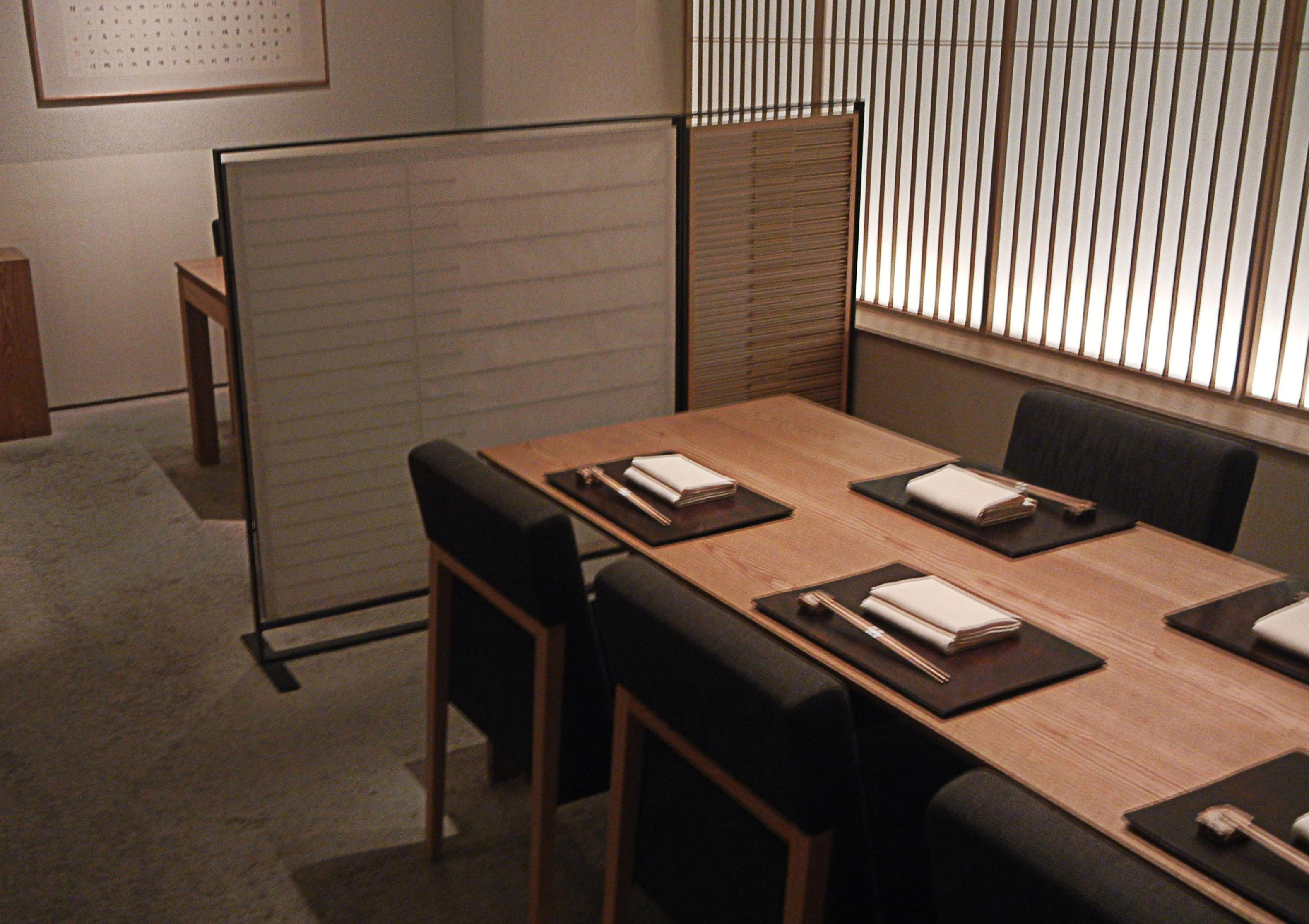
A Michelin-starred sushi counter in the heart of Asakusa, Oku operates in one of Tokyo's most historically layered neighbourhoods, where the chef's deep roots in the district inform both the spirit and the craft. Carrying tools, serving ware, and technique from his mentor, the chef works within edomae tradition while introducing considered personal touches.

Pearl is the En Primeur Club membership app, where members save venues, book tables and use the concierge.
Asakusa and the Sushi Counter That Grew Up Here
Tokyo's omakase scene tends to concentrate in Ginza, Minami-Aoyama, and Roppongi, where the density of high-spending clientele and proximity to luxury hotels creates a natural commercial logic. Asakusa operates differently. The neighbourhood north of Ueno carries the weight of Edo-period Tokyo more visibly than almost anywhere else in the city: the shallow streets around Senso-ji, the craft workshops, the persistent rhythms of a working district that never fully pivoted to service-sector polish. Sushi here is not positioned against the Ginza counter hierarchy. It has its own context.
Oku sits within that context not as an outlier that happened to land in Asakusa, but as a counter that formed here. The chef has lived in the neighbourhood since his apprenticeship, making Asakusa a second hometown in a literal biographical sense. That distinction matters when reading the restaurant's Michelin one-star recognition in 2024, which places it inside a category earned through consistent technical standard, and when reading the emotional register of the place, which carries the kind of neighbourhood embeddedness that is genuinely difficult to manufacture. For comparable edomae craft operating in a more central setting, counters like Harutaka, Sushi Kanesaka, and Sukiyabashi Jiro Roppongiten occupy a premium Ginza tier where price and prestige operate in close alignment. Oku does not compete in that register.
The Weight of Inherited Tools
Succession is one of the core mechanisms through which Japanese culinary tradition transmits itself. The formal master-apprentice structure is well documented in kaiseki and soba, but at the sushi counter it takes a particularly tangible form: the physical tools. When a mentor passes knives, serving ware, and working implements to a successor, the transfer carries a meaning beyond the material. It implies approval, alignment of philosophy, and a continuity of method that shared training alone cannot confirm.
The chef at Oku inherited both tools and serving ware from his mentor, alongside what the restaurant describes as the spirit and skill of the older tradition. That framing is standard in the language of Japanese culinary succession, but the physical fact of working with inherited implements at a Michelin-recognised counter in the same neighbourhood where that training took place is not standard. It produces a closed loop between place, person, and practice that most counters opening in the 2020s cannot claim. Counters like Edomae Sushi Hanabusa and Hiroo Ishizaka demonstrate that Tokyo's sushi tier includes a range of approaches to tradition; Oku's is defined by its rootedness in a single place and a single lineage.
Old Teachings, Particular Additions
Edomae sushi is a tradition built around disciplined preparation techniques: curing, marinating, ageing, and seasoning fish in ways that both preserve and concentrate flavour. The restraint and precision of that tradition are what distinguish it from broader Japanese sushi formats, and they are what Michelin inspectors are reading when they assess a counter at this level. At Oku, the base is orthodox, the chef's stated position is one of reverence for old teachings.
The additions are considered and specific. Sweet potato shochu folded into rich soy syrup introduces a regional warmth to one of the core condiments. Soy milk worked into rolled omelette shifts the texture and softens the sweetness of a dish that is itself a traditional craft marker at any serious edomae counter. These are not fusions or reinterpretations in the contemporary sense; they read more as the kind of incremental personal adjustments that accumulate over decades of working within a form. They are also the details that distinguish the counter from a strict preservation exercise, which would be its own kind of affectation at a working restaurant in 2024.
The detail about the chef's surname carries its own significance within the Oku narrative. The character for Oku, as the chef himself has noted, is formed from components representing house, rice, and the palm of a hand: a combination that aligns, however coincidentally, with the act of hand-shaping rice at a counter. Whether one reads this as fated or merely fortuitous, it functions as a kind of anchoring story that the restaurant carries without needing to perform it. The name already contains the argument.
Asakusa as a Dining District
A visit to Oku is also, inevitably, a visit to Asakusa, and the two experiences reinforce each other. The neighbourhood rewards arrival on foot from the Senso-ji direction or from the quieter backstreets of Taito City, where the Edo-period street pattern survives more intact than in most of central Tokyo. The address in the Asakusa Daikan Plaza Tenin Building places the counter within a commercial building typical of the neighbourhood's pragmatic urban fabric, the kind of location that would register as unremarkable locally and as a discovery to visitors accustomed to Ginza's purpose-built restaurant towers.
The timing of a visit shapes the surrounding experience. Asakusa's main corridors, particularly around Nakamise-dori, peak in visitor density on weekend mornings and during major festival periods, including the Sanja Matsuri in May, one of Tokyo's largest. Weekday evenings, particularly outside the summer peak and the New Year period, allow the neighbourhood's older residential character to reassert itself. That quieter register is a better frame for a sushi counter built on continuity and inheritance rather than on spectacle.
Visitors planning around the broader Tokyo dining circuit can find further editorial guidance in our full Tokyo restaurants guide, alongside parallel guides for hotels, bars, wineries, and experiences. For those extending beyond Tokyo, the EP Club Japan coverage includes HAJIME in Osaka, Gion Sasaki in Kyoto, akordu in Nara, Goh in Fukuoka, 1000 in Yokohama, and 6 in Okinawa. For edomae-trained sushi operating outside Japan, the comparison set includes Sushi Shikon in Hong Kong and Shoukouwa in Singapore, both of which demonstrate how rigorously the edomae format has translated across regional borders while remaining legible as Japanese in its fundamentals.
Know Before You Go
Planning Details
- Cuisine: Sushi (edomae)
- Price range: ¥¥¥
- Recognition: Michelin 1 Star (2024)
- Guest rating:
- Address: 3 Chome-42-12, Asakusa, Taito City, Tokyo 〒111-0032 (Asakusa Daikan Plaza Tenin Building)
- Neighbourhood: Asakusa, east Tokyo
- Booking: Contact directly, no booking link currently listed
- Hours: Not confirmed, verify before visiting
- Timing note: Weekday evenings outside the May festival period and summer peak offer a quieter neighbourhood context more in keeping with the counter's character
Frequently asked questions
What is the signature dish at Oku?
No single dish is confirmed as a signature in the available record. What is documented is that the chef works within an edomae sushi framework, inherited from his mentor, and introduces two particular personal additions: sweet potato shochu blended into soy syrup, and soy milk incorporated into the rolled omelette. Both are departures from strict tradition, but measured ones. The rolled omelette, known as tamago, functions as a traditional craft test at serious edomae counters, and the soy milk addition is the detail most specific to Oku. The broader form, however, is omakase, meaning the selection is the chef's, calibrated to what is available and at its peak on any given service. For edomae counters with documented dish specifics elsewhere in the Tokyo circuit, see Edomae Sushi Hanabusa and Hiroo Ishizaka.
Comparable Spots
| Venue | Cuisine | Price | Awards | Notes |
|---|---|---|---|---|
| OkuThis venue (the venue you are viewing) | Edomae Sushi Omakase | $150–200 | 1 Michelin Star · Tabelog 100 #69 | Not listed |
| Harutaka | Edo-Style Omakase Sushi | $200–300 | 3 Michelin Stars · World's 50 Best #76 | Sushi |
| RyuGin | Modern Kaiseki | $500+ | 3 Michelin Stars · World's 50 Best #41 | Kaiseki, Japanese |
| L'Effervescence | Modern French with Japanese Influences | $200–300 | 3 Michelin Stars · World's 50 Best #69 | French |
| HOMMAGE | Modern French with Japanese Influences | $150–200 | 2 Michelin Stars · World's 50 Best #78 | Innovtive French, French |
| MAZ | Innovative Peruvian-Japanese Fusion | $150–200 | 2 Michelin Stars · World's 50 Best #28 | Innovative |
Recognition history
Dated appearances from independent guides and award organizations, with the underlying list record or original source where available.
Michelin 1 Star
Michelin
Tabelog 100 #69 · No. 69
Tabelog · Tabelog 100 - Sushi - TOKYO - 2025
Full recognition history (3 entries)
Michelin 1 Star
Michelin