
A Michelin-starred kappo in Kyoto's Saga district, Okina is run by a father-and-son team whose menus pivot on locally sourced fish and tofu from the surrounding neighbourhood. Guests choose between à la carte and omakase formats, with fish prepared across multiple techniques and a dedicated lunch menu built around Saga tofu.
Pearl is the En Primeur Club membership app — saves, bookings, and concierge access live there. Same editors, same standards.
- Address
- Japan, 〒616-8422 Kyoto, Ukyo Ward, Sagashakadodaimoncho, 11−11 おきな
- Phone
- +81 75-861-0604
- Website
- saga-okina.com
- Directions
- Get directions
 Saves & bookings on Pearl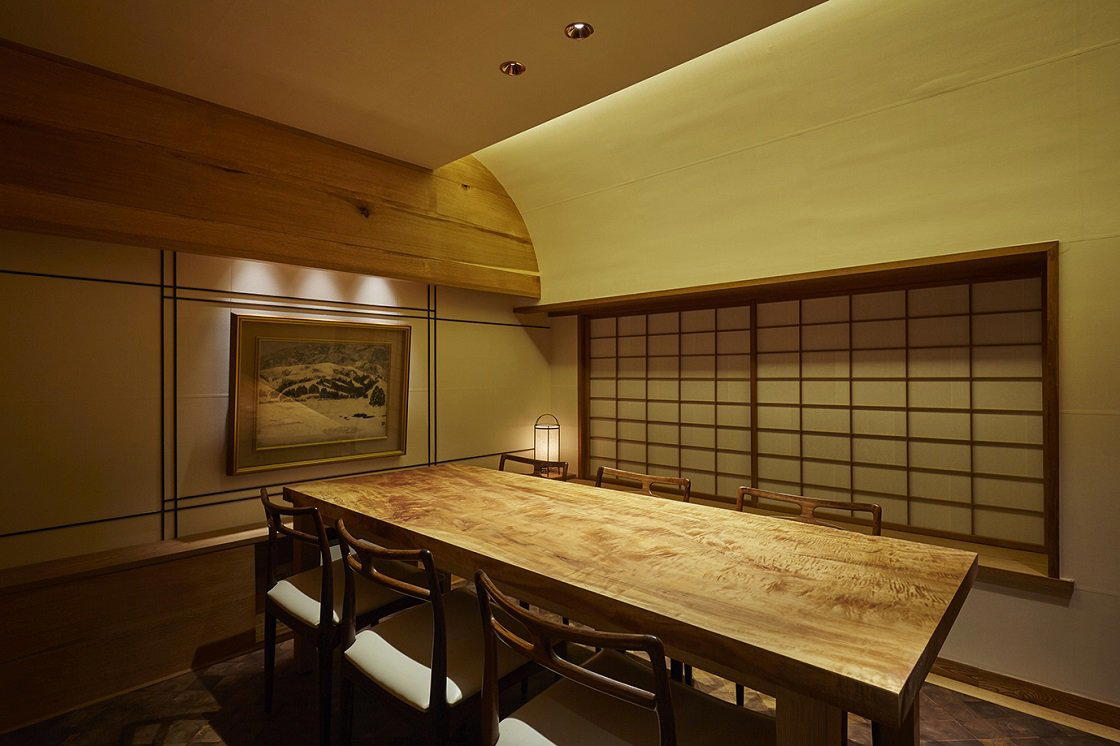
Where Saga Meets the Counter
Okina is a one-star Michelin restaurant in Kyoto's Ukyo Ward, with a price tier of ¥¥¥. Here, the dining tradition is quieter and more rooted in neighbourhood supply lines than in prestige signalling. Kappo restaurants in this part of the city tend to reflect that character: counter-based, ingredient-led, and oriented toward regulars rather than reservation queues. Okina fits that model precisely, drawing its identity from the locality around it rather than from the competitive theatre of central Kyoto's high-end dining scene.
That said, its Michelin star places Okina in a tier that demands attention beyond its postcode. In a city where Michelin recognition is distributed across kaiseki houses, sushi counters, and specialist formats, a one-star kappo in a residential district signals something specific: the inspectors found something in the cooking that the neighbourhood already knew.
The Counter as Stage
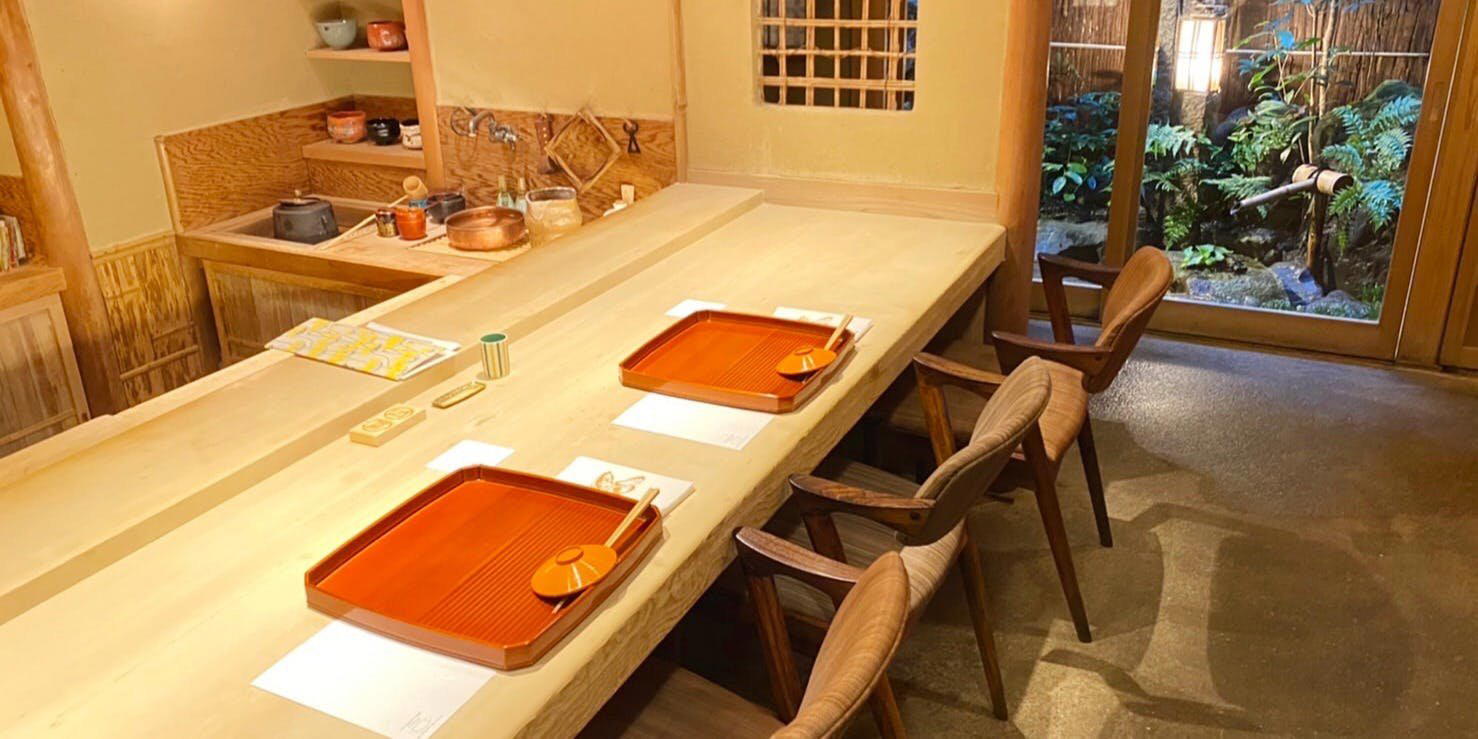
Kappo, as a format, is built around visibility. The word itself derives from the Japanese for cutting and cooking, and the counter arrangement, guests seated facing the preparation area, makes the kitchen a performance space by design. This is not the concealed-kitchen formality of kaiseki, where courses arrive at a tatami-room pace and the cooking process stays offstage. In kappo, the work is in front of you. The sounds of a fish being broken down, the smell of a sauce reducing, the sight of a steamer being lifted: these are part of the meal in a way that no amount of precise plating can replicate.
At Okina, this format is sustained by a family operation. The father-and-son team and their wives run the room together, which concentrates the hospitality in a way that larger brigade-staffed restaurants rarely achieve. The welcome is described in Michelin's own notes as warm, and in a counter setting that warmth is structural rather than incidental: you are seated close enough to speak to the people cooking for you. Compare this with the studied formality at kaiseki operations like Isshisoden Nakamura or the multi-course architecture of Kikunoi Roan, and Okina's proposition becomes clearer: it is intimate in a specific, earned way.
Fish, Technique, and the Eel Distinction
The editorial angle that Michelin uses to characterise Okina is consistent: fish dishes are the stars of the menu, and the preparation approach is deliberately comparative. That last point matters. In many fine dining contexts, a single technique is applied to a single ingredient as an expression of the chef's stance. Okina takes a different approach with eel, preparing it both unseasoned and dipped in soy-based sauce so that guests can taste and evaluate the difference directly. This is a teaching gesture as much as a culinary one, and it positions the counter as a space of engagement rather than passive consumption.
The broader fish menu spans steaming with salt and sake, grilling, and preparation methods requested by the guest. That last option is rare at the one-star level, where the kitchen's editorial control typically governs what you eat and how. Offering flexibility within a starred framework suggests a confidence in the ingredient quality that does not depend on any single technique to justify itself. The fish is good enough to be cooked how you want it.
This flexibility also distinguishes Okina's format from the locked omakase counters that dominate Tokyo's top tier, for a comparable fixed-menu counter approach in Tokyo, see Harutaka or Myojaku. In Kyoto, where ingredient sourcing and restraint carry more cultural weight than kitchen spectacle, Okina's approach aligns with the city's dining values while the counter format keeps it distinct from the tatami-room kaiseki template.
The Lunch Menu and the Tofu Supply Chain
At lunch, the menu reorganises around boiled tofu and hiryuzu, the deep-fried tofu preparation mixed with thinly sliced vegetables. This is a meal format with deep roots in Kyoto's culinary identity: the city's Buddhist temple cooking tradition treats tofu as a primary ingredient rather than a protein substitute, and the quality differential between commodity tofu and locally made Kyoto tofu is significant in both texture and flavour. Okina sources its tofu from Saga itself, keeping the supply line within the neighbourhood. That is a deliberate regionalism, and it places the restaurant in a longer tradition of Kyoto cooking that treats provenance as a form of flavour.
The lunch format also positions Okina differently against its Michelin-starred peers in the city. Many comparable operations in Kyoto cluster their value and accessibility at dinner, with lunch either unavailable or offered at a compressed version of the evening experience. A lunch built around tofu and hiryuzu rather than a reduced kaiseki menu gives the midday visit its own identity rather than treating it as a gateway format. For visitors planning a broader Kyoto dining itinerary, this creates a genuinely distinct occasion from the evening counter experience.
Placing Okina in Kyoto's Broader Dining Map
Kyoto's Michelin-starred restaurant field is weighted toward kaiseki, the multi-course seasonal format that the city effectively defines for the rest of Japan. Operations like Gion Matayoshi, Kenninji Gion Maruyama, and Kodaiji Jugyuan represent that tradition at varying price points and formality levels. Okina sits outside that axis: it is not kaiseki, not a sushi counter, and not a specialist single-format operation. The kappo model it occupies is less represented in Kyoto's Michelin geography than in Osaka or Tokyo, which makes its one-star status in 2024 a useful corrective to the assumption that the city's dining recognition flows only through the kaiseki channel.
At ¥¥¥, Okina prices below the ¥¥¥¥ tier occupied by kaiseki houses like Gion Sasaki or Ifuki, placing it in a bracket where the comparable options include non-Japanese formats, Kyoto's Italian and Chinese one-star operations also sit at ¥¥¥. The price point is not the defining characteristic, but it does indicate that access to the Saga counter does not require the financial commitment of the city's leading kaiseki tier. For a broader view of where Okina fits within Kyoto's restaurant field, the full Kyoto restaurants guide maps the city's dining options by format, neighbourhood, and price tier.
Beyond Kyoto, the Kansai and wider Japan circuit provides further reference points for this style of cooking. HAJIME in Osaka represents a different expression of Japanese fine dining in the region, while akordu in Nara, Goh in Fukuoka, 1000 in Yokohama, and 6 in Okinawa extend the picture of how Japan's regional dining scene distributes its Michelin-recognised talent beyond the major urban centres. Tokyo comparisons, including Azabu Kadowaki, round out the context for how a family-run counter operation translates to the country's most competitive dining market.
Planning a Visit
Okina holds. The Saga address in Ukyo Ward sits in western Kyoto, accessible but away from the pedestrian density of central tourist routes. The restaurant is run by a family team, which affects both the rhythm of service and the booking window: small, family-operated counters at this recognition level tend to fill ahead, and coordinating a visit requires planning beyond walk-in assumptions. Advance reservations are recommended.
| Venue | Format | Price Tier | Recognition | Booking Approach |
|---|---|---|---|---|
| Okina | Kappo counter, à la carte / omakase | ¥¥¥ | Michelin 1 Star (2024) | Advance reservation recommended |
| Gion Sasaki | Kaiseki | ¥¥¥¥ | Michelin recognised | Advance reservation required |
| Ifuki | Kaiseki | ¥¥¥¥ | Michelin recognised | Advance reservation required |
| Kyo Seika | Chinese | ¥¥¥ | Michelin recognised | Advance reservation recommended |
The Minimal Set
Comparable venues nearby, for context on price, style, and recognition.
| Venue | Cuisine | Price | Notes |
|---|---|---|---|
| OkinaThis venue — the venue you are viewing | Ukyō, Traditional Kyoto Kappo | $$$ | Not listed |
| Gion Mamma | Not listed | $$$ | Higashiyama, Michelin-Starred Kaiseki with Charcoal Grilling |
| Kokyu | Kamigyō, Seasonal Kaiseki | $$$$ | Not listed |
| Mizuno | Not listed | $$$$ | Higashiyama, Michelin-Starred Creative Kyoto Kaiseki |
| Muromachi Yui | Nakagyō, Michelin-Starred Kaiseki | $$$$ | Not listed |
| Nijo Minami | Nakagyō, Michelin-Starred Kyoto Kaiseki | $$$$ | Not listed |
Recognition history
Dated appearances from independent guides and award organizations, with the underlying list record or original source where available.
Michelin 1 Star
Michelin
Michelin 1 Star
Michelin
Continue exploring
More in Kyoto
Restaurants in Kyoto
Browse all →

Bars in Kyoto
Browse all →
Hotels in Kyoto
Browse all →
Wineries in Kyoto
Browse all →
At a Glance
- Cozy
- Intimate
- Relaxed
- Special Occasion
- Family
- Sake Program
- Local Sourcing
Current opening hours
- Monday
- 12–1:30 PM, 6–7:30 PM
- Tuesday
- 12–1:30 PM, 6–7:30 PM
- Wednesday
- Closed
- Thursday
- 12–1:30 PM, 6–7:30 PM
- Friday
- 12–1:30 PM, 6–7:30 PM
- Saturday
- 12–1:30 PM, 6–7:30 PM
- Sunday
- 12–1:30 PM, 6–7:30 PM
Hours can change for holidays and private events. Last verified .
Warm, relaxing atmosphere with counter seating and tatami rooms in a small traditional shophouse.