Noguchi occupies a residential pocket of Nakatsu, in Osaka's Kita Ward, where the city's appetite for precision cooking meets the unglamorous side streets that often produce its most considered dining. The address alone signals an operation built for repeat local custom rather than tourist traffic, placing it in a category of Osaka restaurants that reward prior research over casual discovery.
Pearl is the En Primeur Club membership app — saves, bookings, and concierge access live there. Same editors, same standards.
- Address
- Japan, 〒531-0071 Osaka, Kita Ward, Nakatsu, 3 Chome−14−2 平家アパート 102
- Phone
- +815030911052
- Website
- noguci.com
- Directions
- Get directions
 Saves & bookings on Pearl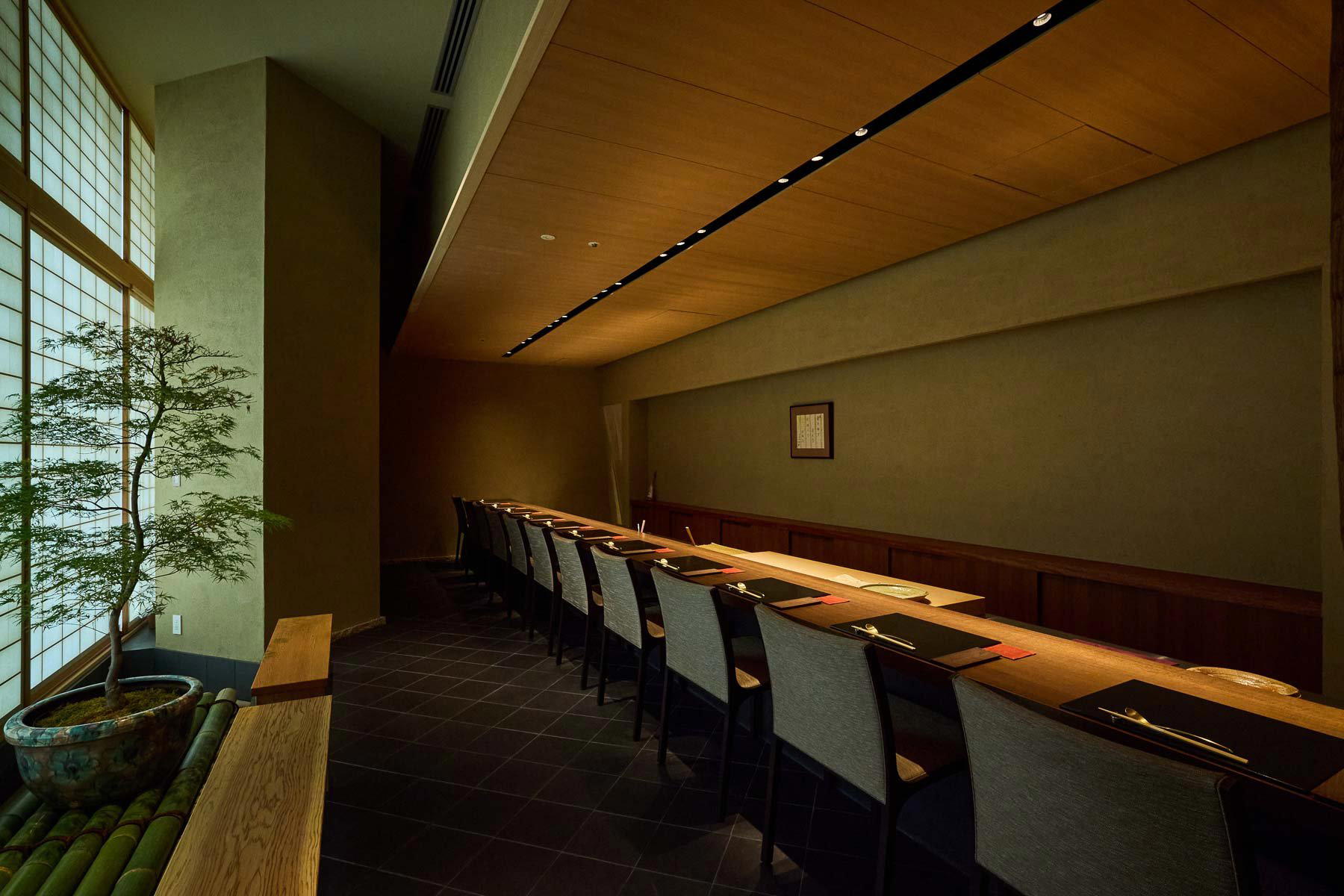
Nakatsu sits just north of the Umeda axis, a neighbourhood where Osaka's commercial energy gives way to narrower streets and the kind of low-rise residential fabric that has historically housed the city's more understated restaurants. The approach to Noguchi, tucked inside a modest apartment building in Kita Ward, is itself an orientation exercise. You are not arriving at a stage set; you are arriving at a restaurant that has made a deliberate choice about what kind of attention it wants.
Osaka's Local-Ingredients Tradition and Where Technique Enters
Osaka's culinary identity has long been organised around the phrase kuidaore, the idea that the city will eat itself into ruin before it compromises on quality. What that phrase obscures, however, is how technically disciplined stronger examples from that eating actually is. The city has produced a generation of operators who absorb French, Spanish, or contemporary European technique and redirect it through strictly local produce sourcing. That pattern, visible at places like Calendrier and Aka to Shiro, reflects a broader shift in Kansai cooking where the imported method becomes invisible and the local ingredient becomes the message.
Noguchi's address in this ecosystem is that of a neighbourhood-scale operation in a city that takes neighbourhood-scale operations seriously. Osaka has always been more willing than Tokyo to grant cultural authority to a restaurant that does not announce itself with signage or a Michelin endorsement. That confidence in the diner to find and evaluate without external prompting is part of what defines the city's relationship with its smaller rooms.
The Intersection of Method and Material
The broader culinary context here matters. Kita Ward sits adjacent to the Tenjinbashisuji shopping street corridor and within reasonable reach of the Kyoto-Osaka produce axis, which remains one of Japan's most considered supply chains for vegetables, tofu, and freshwater fish. Restaurants operating in this geography tend to have access to Kyoto-adjacent ingredients, Naniwa aubergine, Mizuno cucumber, and Osaka's own Namba leek varieties, that carry protected regional identities. When those ingredients intersect with technique drawn from outside Japan, the results tend to be more precise than either tradition would achieve alone.
This is the dynamic that defines a meaningful cohort of contemporary Osaka dining. At HAJIME in Osaka, the intersection of French rigour and Japanese ingredient philosophy has earned three Michelin stars. At akordu in Nara, the Spanish-trained kitchen directs its attention toward Yamato vegetables in a way that uses Basque Country fermentation logic against completely different raw material. Noguchi, at a smaller scale and a more residential address, belongs to the same axis of thinking, where the technique is a vehicle rather than the product.
Nakatsu as a Dining Destination
Nakatsu has not historically attracted the same density of coverage as Namba, Shinsaibashi, or Kitashinchi, which makes it a reliable indicator of operator confidence. Restaurants that open here are not opening for walk-in traffic or tourist adjacency. They are opening for regulars, for word-of-mouth referrals, and for the kind of diner who has already established a mental map of Osaka's less-photographed rooms. That demographic tends to be more patient, more engaged, and less interested in the signal a reservation sends than in what actually arrives at the table.
For comparison, Ajihei Sonezaki and Ajikitcho Bunbuan both operate within the broader Kita Ward geography and represent the kind of considered, ingredient-led cooking that has made this part of the city a serious reference point for Japanese cuisine at a high level of craft. Noguchi's Nakatsu address places it in that cultural orbit while operating at what appears to be a more intimate, apartment-building scale.
Placing Noguchi in the Wider Kansai and National Context
Japan's more considered regional dining culture extends well beyond Osaka. Gion Sasaki in Kyoto represents the kaiseki tradition at a level of rigour that sets the benchmark for the Kansai region. Harutaka in Tokyo and Goh in Fukuoka demonstrate how differently cities outside the Kansai axis handle the relationship between technique and local ingredient. Further north, restaurants like 夕仙山乃 in Sapporo and 一本木 石川割烹 in Nanao show how the local-ingredients priority shifts when the supply chain changes from Kansai to Hokuriku or Hokkaido. Internationally, the logic finds parallels at Le Bernardin in New York City, where French discipline applied to Atlantic seafood produces a result neither tradition would reach independently, and at Atomix in New York City, where Korean culinary memory is filtered through contemporary European plating discipline.
Other Japan-based addresses worth understanding in comparison include 琵琶湖畔 in Takashima, where the lakeside geography shapes ingredient access in ways Osaka's urban kitchens cannot replicate, and 庄羽屋 in Nishikawa Machi, which operates in a completely different regional register. Birdland in Sakai, just south of Osaka city limits, and Az in Osaka complete a picture of how the broader Osaka metropolitan area handles specialisation at the smaller end of the dining spectrum.
Planning a Visit
Noguchi is located at 3-chome-14-2 Nakatsu, Kita Ward, Osaka, inside an apartment building at unit 102. Nakatsu Station on the Midosuji Line places the address within a short walk of the city's main north-south transit artery, which connects directly to Umeda, Shinsaibashi, and Namba. For visitors building an Osaka itinerary, the neighbourhood works as a complement to a Kitashinchi evening or a daytime exploration of the Tenjin area. Given the residential setting and the absence of published booking details or hours in current records, advance contact through local hotel concierge or a specialist Japan dining service is a reliable way to confirm availability. Our full Osaka Shi restaurants guide covers the broader context for planning a considered dining itinerary across the city.
Credentials Lens
Comparable venues nearby, for context on price, style, and recognition.
| Venue | Cuisine | Price | Notes |
|---|---|---|---|
| NoguchiThis venue — the venue you are viewing | Modern Japanese Omakase | $$$$ | Not listed |
| ç©ºå¿ ä¼½èå | Seasonal Kaiseki Omakase | $$$$ | Kita |
| Kawaharasaki | Kamigata Tempura | $$$$ | Kita |
| Kobe Beef Sakura Osaka Shochikuza Store | Kobe Beef Steakhouse | $$$$ | Chūō |
| Koryu Keishin | Naniwa Kappo | $$$$ | Kita |
| Kobe Beef WANOMIYA Kita Shinsaibashi Store | Kobe Beef Teppanyaki | $$$$ | Chūō |
Continue exploring
More in Osaka
Restaurants in Osaka
Browse all →




Bars in Osaka
Browse all →




Hotels in Osaka
Browse all →




Wineries in Osaka
Browse all →
At a Glance
- Intimate
- Sophisticated
- Classic
- Date Night
- Special Occasion
- Solo
- Chefs Counter
- Standalone
- Sake Program
A small, counter-style room with an intimate, focused atmosphere designed around careful tasting and close attention to the cooking process.