
Tabelog 100 #67
Our verdict
Kawaharasaki occupies a first-floor address in Nishitenma, Osaka's Kita Ward, placing it inside one of the city's most concentrated corridors for serious dining. The venue sits within a neighbourhood where counter-format and omakase-style restaurants define the competitive set, and where booking difficulty frequently signals quality tier. Planning ahead is the operative approach for any visit.

Pearl is the En Primeur Club membership app, where members save venues, book tables and use the concierge.
The menu
What to order
- Firefly squid tempura
- Seasonal vegetable tempura
- Fish marinated in miso tempura
Nishitenma and the Logic of Osaka's Northern Dining Quarter
The Nishitenma district, tucked inside Kita Ward's western edge, has accumulated a density of destination restaurants that functions differently from Osaka's more tourist-facing corridors. Where Namba and Dotonbori operate on volume and visibility, Nishitenma runs on repetition: regulars, referrals, and the kind of incremental reputation that accrues over years of consistent kitchen output. The address at 3-chome, 1-5 in Nishitenma puts Kawaharasaki inside that ecosystem. For visitors approaching from central Osaka, the area rewards deliberate navigation rather than spontaneous exploration. The physical environment along this stretch is modest by design, low-rise blocks, narrow frontages, and interiors that make their case on the plate rather than through architectural statement.
This pattern repeats across Osaka's serious dining tier. At venues like Ajihei Sonezaki and Ajikitcho Bunbuan, the external presentation is deliberately understated, the city's dining culture has historically rewarded substance over staging. Kawaharasaki fits that tendency. First-floor positioning, a building address shared with other tenants, and the absence of a prominent digital footprint all signal a venue operating primarily through word-of-mouth channels rather than platform-driven discovery.
Planning a Visit: What the Booking Reality Looks Like
The editorial angle most relevant to a first visit to Kawaharasaki is not the menu, it is the planning. Across Osaka's Kita Ward, counter-format restaurants with strong local reputations operate on compressed capacity, and the booking window at many of them runs several weeks ahead at minimum. The practical data for Kawaharasaki, phone, website, confirmed hours, and seat count, is not publicly available in consolidated form, which itself communicates something about the venue's operating model. Restaurants that prioritise existing relationships over new traffic rarely maintain aggressive digital presences.
The practical implication: an approach via hotel concierge or a Japanese-language intermediary carries more weight here than a cold online enquiry. This is not unusual within Kita Ward's dining tier. Aka to Shiro and Az both occupy segments of the same neighbourhood where personal introductions and concierge relationships meaningfully improve booking success rates. Treating the Nishitenma dining circuit as a whole, planning several venues across a trip rather than isolating a single reservation, is a more productive strategy than pursuing any one address in isolation.
For international travellers, the wider Osaka Shi dining infrastructure is worth mapping before arrival. The full Osaka Shi restaurants guide covers the city's competitive tiers across neighbourhood contexts and provides a useful frame for sequencing a multi-day itinerary. Pairing a Nishitenma dinner with visits to venues across different price points and cuisine formats gives the kind of comparative perspective that makes any single meal more legible.
Where Kawaharasaki Sits in a Broader Japan Context
Osaka's restaurant scene occupies a specific position within Japan's culinary hierarchy. It is not Tokyo, where the sheer concentration of Michelin stars and international press attention creates a globally legible ranking. Osaka operates with more internal coherence, a city where local critical consensus carries more weight than external awards coverage, and where kaiseki and counter formats have deep civic roots. Venues in cities like Kyoto operate on related but distinct principles: Gion Sasaki in Kyoto represents the formality of the kaiseki tradition as filtered through Kyoto's particular cultural registers, while Osaka's equivalent venues tend toward a register that is more direct and seasonally flexible.
The comparison extends further across Japan's regional dining circuit. Harutaka in Tokyo sits inside the capital's sushi counter tier, a format that differs structurally from Osaka's dominant counter traditions. Goh in Fukuoka and akordu in Nara each represent how regional cities outside the Tokyo-Osaka axis have developed distinct fine dining identities, a pattern that makes the Nishitenma dining environment more intelligible when read alongside peer venues elsewhere. For serious Japan itineraries, venues like 一本木 恵川製 in Nanao, 夕仙四乗九 in Sapporo, and 滋賀庵 in Takashima round out a picture of how Japan's non-capital dining scene distributes quality across geography.
Within Osaka itself, the reference points are sharper. HAJIME in Osaka operates at the city's most formally recognised level, and Calendrier represents a different slice of the city's French-influenced counter dining. Understanding where Kawaharasaki sits relative to those reference points is a function of booking difficulty and local reputation rather than award documentation, signals that the Nishitenma address and operating model both support.
Planning Details
Kawaharasaki is located at 3-chome, 1-5 Nishitenma in Kita Ward, Osaka. The address places it within walking range of central Kita Ward transport connections. Confirmed hours, pricing, and seat count are not available through public digital channels, which makes advance planning through a hotel concierge or specialist booking service the practical approach. Visitors with Japanese-language capability or access to a local contact will find the booking process more direct. Given the operating model, attempting a walk-in without prior arrangement is unlikely to yield a table during peak service periods. For context on the surrounding neighbourhood's dining options and to build a fuller Osaka itinerary, the Osaka Shi guide provides a broader map of the city's dining tiers.
Frequently asked questions
How do I find Kawaharasaki?
Kawaharasaki is located at Japan, 〒530-0047 Osaka, Kita Ward, Nishitenma, 3 Chome−1−5 英和ビル 1階, Osaka Shi.
How does Kawaharasaki's Nishitenma location affect the dining experience compared to central Osaka venues?
Kawaharasaki sits at 3-chome, 1-5 Nishitenma in Kita Ward, a district that functions as a quieter, locally-oriented alternative to the higher-traffic dining corridors around Umeda and Shinsaibashi. That address places it within walking range of Kita Ward transit connections while maintaining the neighbourhood register that Osaka's serious counter restaurants have historically preferred. The trade-off is lower foot-traffic visibility and stronger reliance on word-of-mouth, which in Osaka's culinary culture often reads as a credential rather than a limitation.
What do regulars order at Kawaharasaki?
What the Nishitenma address does signal is a counter-format operation where the house typically drives the menu rather than à la carte selection. Regulars at this category of Kita Ward restaurant generally defer to whatever the kitchen is running that evening.
Do they take walk-ins at Kawaharasaki?
Counter restaurants in Nishitenma's concentration of destination venues, 3-chome in particular, tend to fill seats well in advance, especially on weekends. Arriving without a reservation is a risk; local advice consistently points toward making arrangements through the restaurant directly before travelling.
What do critics highlight about Kawaharasaki?
It sits within Nishitenma, a district in Kita Ward, Osaka that has drawn editorial attention for its density of serious, counter-led restaurants.
Is Kawaharasaki good for vegetarians?
Counter restaurants in Osaka's Kita Ward frequently work within fixed menus where substitutions are limited. Contacting the venue directly before booking is the practical approach for any dietary requirements.
Quick Comparison
Comparable venues nearby, for context on price, style, and recognition.
| Venue | Cuisine | Price | Awards | Notes |
|---|---|---|---|---|
| KawaharasakiThis venue (the venue you are viewing) | Kamigata Tempura | $200–300 | Tabelog 100 #67 | Not listed |
| Hanagatami | Michelin-Starred Japanese Tempura & Kaiseki | $150–200 | Michelin Plate | Kita |
| 老松 ひさ乃 | Seasonal Kaiseki | $200–300 | Not listed | Kita |
| Numata Sou | Tempura Omakase | Not listed | 1 Michelin Star · Tabelog 100 #11 | Kita |
| Noguchi | Omakase Tonkatsu | $20–30 | Tabelog Bronze #323 | Kita |
| 弧柳 | Modern Japanese Omakase | $200–300 | 2 Michelin Stars · La Liste Top Restaurants | Chūō |
Recognition history
Dated appearances from independent guides and award organizations, with the underlying list record or original source where available.
Tabelog 100 #67 · No. 67
Tabelog · Tabelog 100 - Tempura - 2025
Continue exploring
More in Osaka
Restaurants in Osaka
All restaurants in Osaka →



Bars in Osaka
All bars in Osaka →



Hotels in Osaka
All hotels in Osaka →


Wineries in Osaka
Browse all →
Details
- Elegant
- Intimate
- Sophisticated
- Classic
- Special Occasion
- Date Night
- Business Dinner
- Chefs Counter
- Open Kitchen
- Sake Program
- Counter Dining
- Tasting Menu
- Sake
Current opening hours
- Monday
- 5:30–10 PM
- Tuesday
- 5:30–10 PM
- Wednesday
- Closed
- Thursday
- 5:30–10 PM
- Friday
- 5:30–10 PM
- Saturday
- 5:30–10 PM
- Sunday
- 5:30–10 PM
Hours can change for holidays and private events. Last verified .
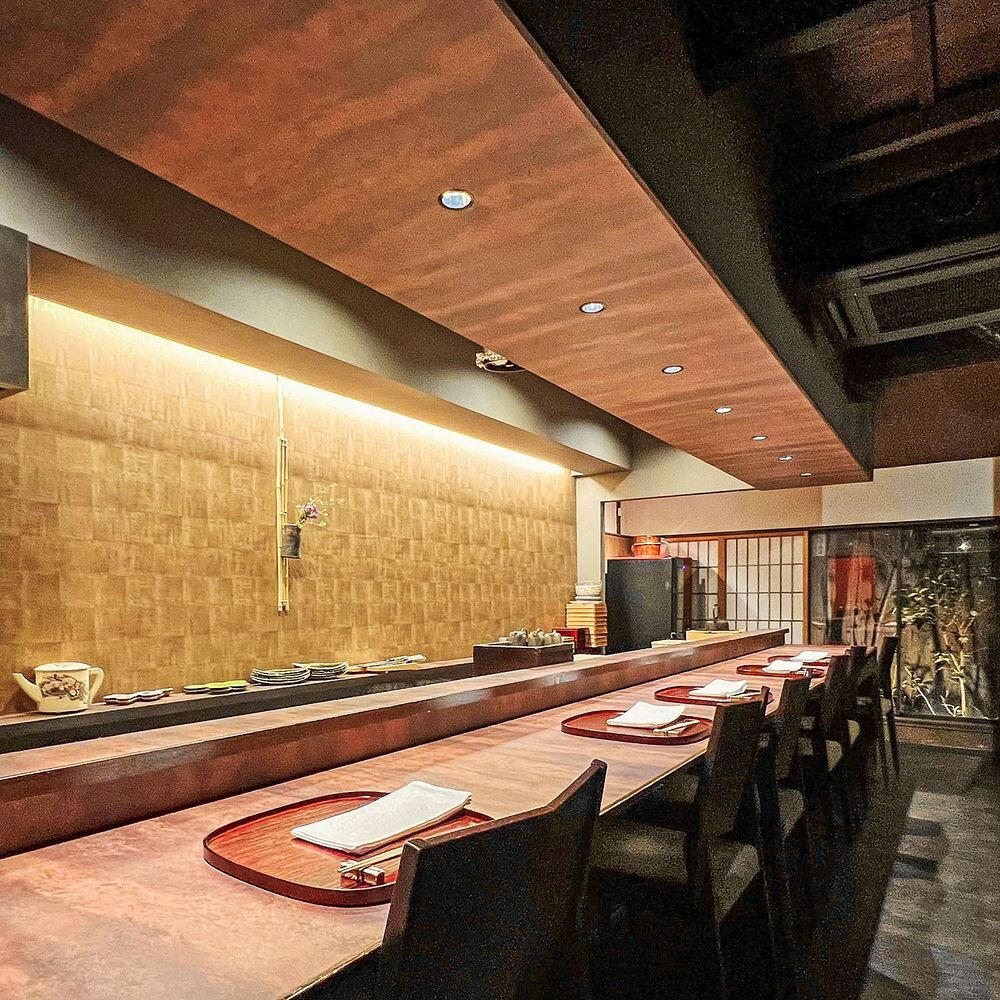
Refined, intimate counter setting with visible bronze oil pot and open kitchen; guests experience the chef's lively performance and aroma of tempura being cooked in real-time.