On the fourth floor of a Kita Ward building in Sonezaki Shinchi, 空忠 伽藍堂 occupies a quieter register than Osaka's louder dining corridors. The menu architecture here follows a course-driven logic that positions it alongside the city's serious kappo and kaiseki operations rather than its casual kushikatsu or takoyaki circuits. Visitors looking for structure and deliberate sequencing will find the address worth tracking down.
Pearl is the En Primeur Club membership app — saves, bookings, and concierge access live there. Same editors, same standards.
- Address
- Japan, 〒530-0002 Osaka, Kita Ward, 曽æ ¹崎新地1 Chome−5−18 零北新地 4F
- Phone
- +81642566604
- Website
- kuushin.com
- Directions
- Get directions
 Saves & bookings on Pearl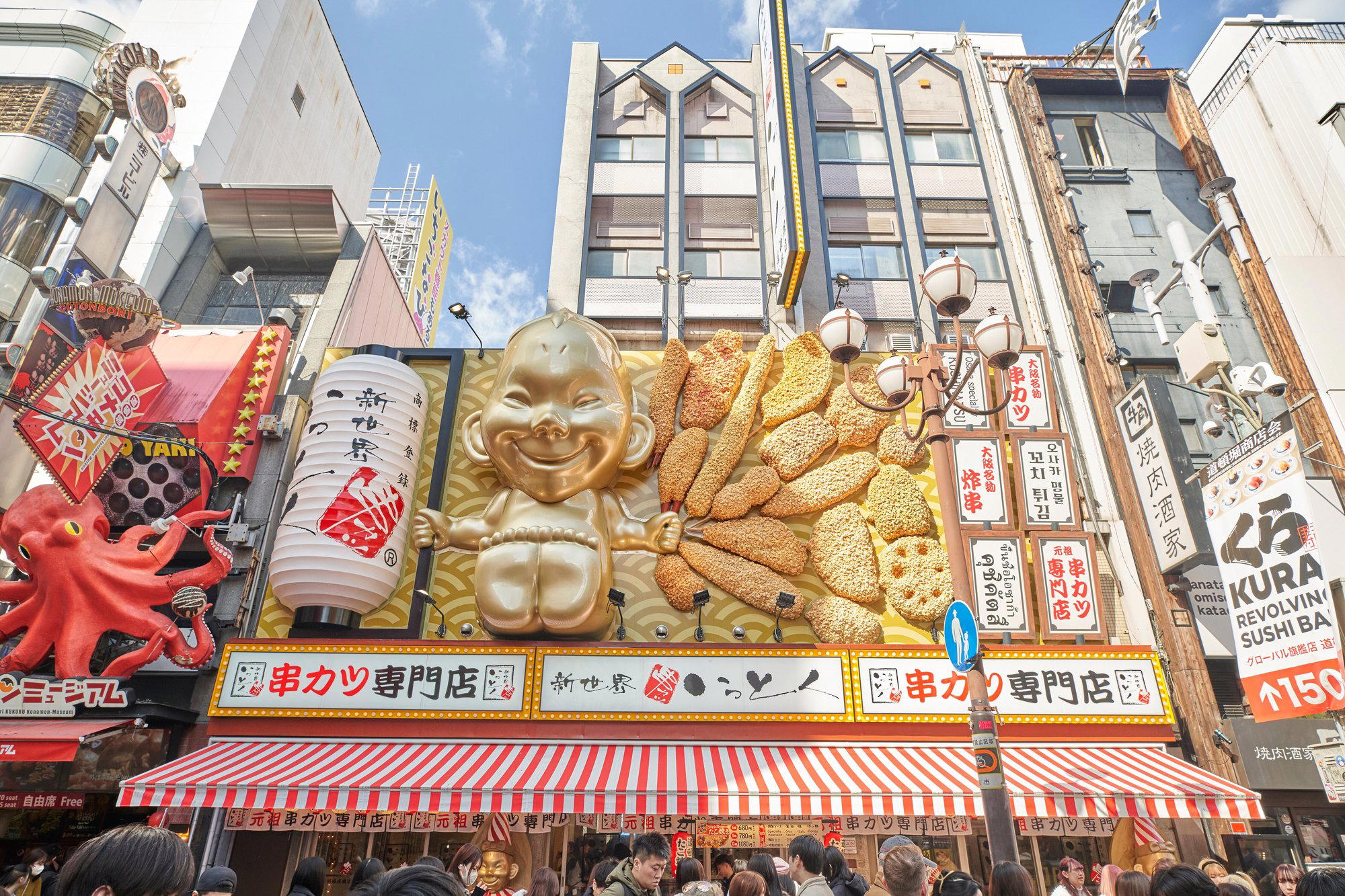
Sonezaki Shinchi and the Art of the Fourth Floor
Osaka's Kita Ward runs two distinct dining registers at once. Street level belongs to the gregarious: yakitori smoke drifting across packed alleys, ramen counters with no reservations and no apologies. One floor up, or sometimes four, is where the city's more considered kitchens tend to locate themselves, away from the foot traffic, accessible only to those who already know to look. 空忠 伽藍堂, on the fourth floor of a building in Sonezaki Shinchi's 1-chome, belongs to this quieter upper tier. The address itself functions as a filter: guests who arrive have already committed, in some sense, before they walk through the door.
Sonezaki Shinchi carries a particular character among Osaka's dining precincts. It is not the tourist-facing spectacle of Dotonbori, nor the white-tablecloth formality of the hotel dining rooms clustered further north. It sits in the productive middle ground that Osaka has always managed well, close enough to business Osaka to draw a serious clientele, loose enough in its social codes to allow for something other than ceremony. Kappo restaurants have historically found this district hospitable, and the current generation of course-driven kitchens has followed the same logic.
Menu Architecture as Editorial Statement
In Japanese fine dining, the structure of a menu is rarely incidental. The sequence of courses, the proportion of raw to cooked, the moment at which rice arrives, all of these are decisions that carry weight, and experienced diners read them as signals about a kitchen's point of view. The kaiseki tradition encodes this most explicitly, moving from light to substantial in a progression that mirrors the arc of a meal as both nourishment and conversation. Kappo, the more interactive format, allows a chef to deviate from that fixed grammar, reading the room and adjusting the sequence accordingly.
What distinguishes the more serious operations in Osaka's current mid-to-upper dining tier is that they tend to hold a clear position on this question rather than hedging. A restaurant that tries to be both an à la carte operation and a tasting menu simultaneously often serves neither format well. The kitchens that develop reputations in precincts like Sonezaki Shinchi are usually those that commit to a structural logic and execute it with consistency. Comparable course-driven addresses in the city include Ajihei Sonezaki and Ajikitcho Bunbuan, both of which occupy a similar structural register, sequenced, deliberate, and resistant to the casual drop-in.
At the higher end of Osaka's dining spectrum, that commitment to menu architecture reaches its most codified form. HAJIME in Osaka represents the city's most formally structured contemporary approach, while Aka to Shiro and Calendrier each demonstrate how a defined course structure can anchor a kitchen's identity across different price points. Az takes yet another structural approach, which illustrates how varied the menu logic can be even within a single city's serious dining tier.
The Kansai Context
Osaka does not operate in culinary isolation. The Kansai region as a whole represents one of Japan's most concentrated zones of serious dining, and the cross-pollination between Osaka, Kyoto, and Nara is constant. Chefs train across prefectural lines, suppliers distribute across the region, and diners increasingly treat the three cities as a single extended dining destination. Gion Sasaki in Kyoto and akordu in Nara each anchor their respective cities' upper tiers in ways that make them useful reference points for understanding where Osaka's serious kitchens sit in the broader regional conversation.
Further afield, the comparison set expands. Harutaka in Tokyo and Goh in Fukuoka both demonstrate how course-driven formats operate differently depending on city character, Tokyo's tends toward formality and precision, Fukuoka's toward warmth and regionality. Osaka has always leaned closer to Fukuoka's register on this spectrum: technically serious but socially accessible, more interested in the pleasures of the table than in the performance of refinement for its own sake. That temperament runs through the city's better small restaurants, and Sonezaki Shinchi has long been a district where that balance is maintained.
For those building a broader regional itinerary, addresses like Abon in Ashiya and more distant reference points such as affetto akita in Akita, Aji Arai in Oita, Ajidocoro in Yubari District, and Akakichi in Imabari illustrate how Japan's serious dining culture distributes well beyond its major cities, a pattern worth keeping in mind when planning a multi-stop itinerary through the country. Internationally, the course-driven commitment that defines this tier finds parallels at Le Bernardin in New York City and Lazy Bear in San Francisco, both of which demonstrate how a fixed menu format can carry significant editorial weight across different culinary traditions.
Planning a Visit
The fourth-floor location in Sonezaki Shinchi's 1-chome positions 空忠 伽藍堂 within walking distance of Osaka's Umeda transport hub, making it logistically direct to reach from central Osaka or from the Shinkansen at Shin-Osaka. Kita Ward is well-served by multiple subway lines, and the Sonezaki Shinchi area is compact enough to navigate on foot once you arrive. As with most serious Japanese restaurants operating above the casual tier, advance contact before visiting is advisable, the fourth-floor format and the likely course-menu structure both suggest a kitchen that works well with prior notice rather than walk-in arrivals. Reservations are essential.
At a Glance
Comparable venues nearby, for context on price, style, and recognition.
| Venue | Cuisine | Price | Notes |
|---|---|---|---|
| ç©ºå¿ ä¼½èå This venue — the venue you are viewing | Kita, Seasonal Kaiseki Omakase | $$$$ | Not listed |
| う越貞 | Not listed | $$$$ | Fukushima, Aged Seafood Japanese Fine Dining |
| 靱本町がく | Nishi, Michelin-Starred Seasonal Kaiseki | $$$$ | Not listed |
| Kobe Beef WANOMIYA Dotonbori Main Store | Chūō, Teppanyaki Kobe Beef | $$$$ | Not listed |
| 奈良きみや -別邸柘榴(ざくろ)- | Not listed | $$$$ | Kita, Premium Yakiniku - Filet Specialist |
| きたしんち 弓場慎之佑 | Kita, Modern Japanese Kappo | $$$$ | Not listed |
Continue exploring
More in Osaka
Restaurants in Osaka
Browse all →




Bars in Osaka
Browse all →




Hotels in Osaka
Browse all →



Wineries in Osaka
Browse all →
At a Glance
- Intimate
- Elegant
- Sophisticated
- Special Occasion
- Date Night
- Chefs Counter
- Sake Program
Dimly lit with soft natural light filtering through shoji screens, creating an intimate and refined atmosphere praised for its tranquility.