

Michelin Plate · Tabelog 100 #92
Our verdict
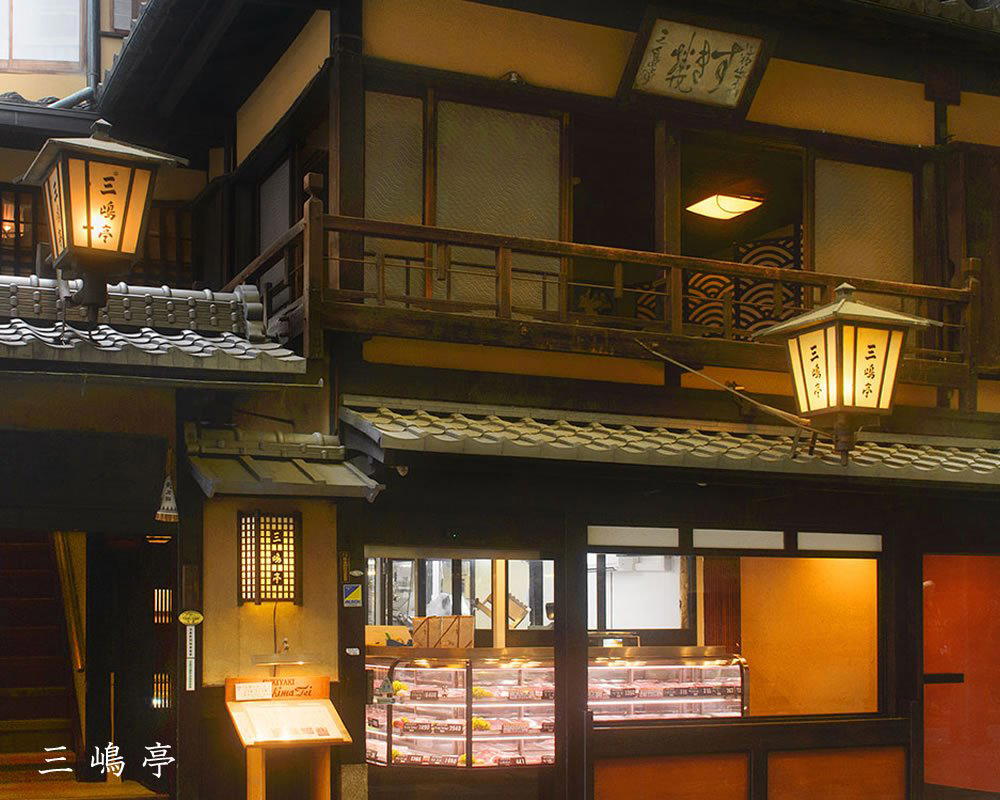
One of Kyoto's most historically grounded sukiyaki restaurants, Mishimatei has operated in Nakagyo-ku since the late 19th century. The tiled roof, lantern sign, and octagonal iron pots signal a continuity of practice that few dining rooms in Japan can match. Writers Yasunari Kawabata and Shotaro Ikenami were among its documented devotees, a patronage that says something about the calibre of regulars this kitchen has always attracted.

Pearl is the En Primeur Club membership app, where members save venues, book tables and use the concierge.
The menu
What to order
- Premium sukiyaki
- Sukiyaki with ribeye
- Sukiyaki with sirloin
A Room That Has Already Decided What It Is
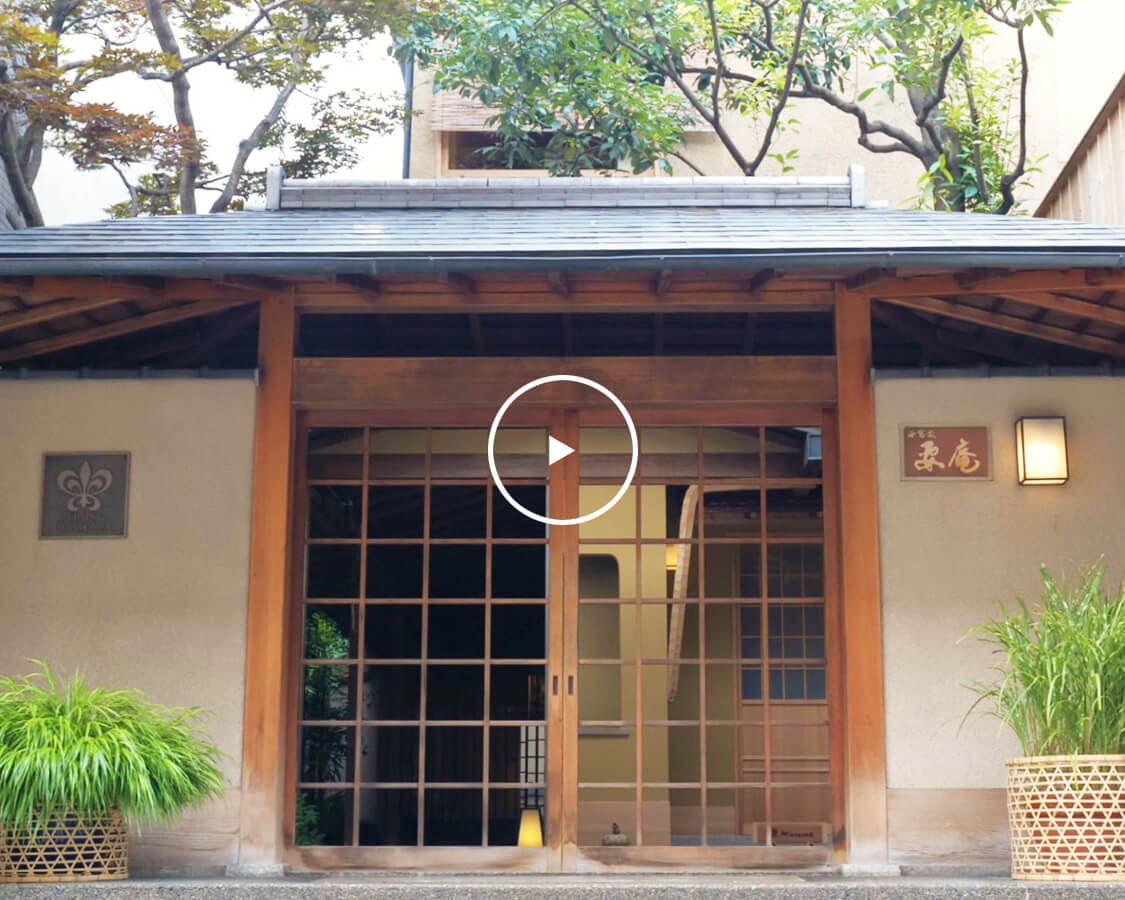
The approach to Mishimatei on Sakuranocho, in Kyoto's Nakagyo-ku, does something that very few dining rooms manage: it announces its own age without apology. The tiled roof and hanging lantern sign read less as decoration than as evidence, a visible record of continuous operation stretching back to the late 19th century. In a city that trades heavily on historical patina, this is still a notable claim. Kyoto's kaiseki circuit, represented by rooms like Gion Sasaki, Hyotei, and Kikunoi Honten, operates within a tradition of seasonal refinement and codified presentation. Mishimatei occupies a different register entirely: a single-format house built around sukiyaki, unchanged in its essentials across more than a century of service.
The Logic of the Octagonal Table
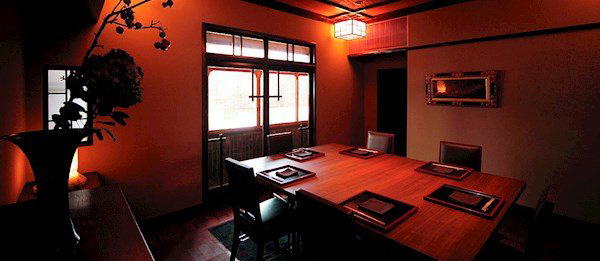
Japanese dining rooms rarely leave structural details to chance, and Mishimatei is no exception. The tables here are octagonal, a shape chosen in direct reference to the number eight and its association with suehirogari, a concept of spreading good fortune, derived from the kanji's widening form. The iron pots set into these tables are not decorative. They are the mechanism of the meal. This kind of material symbolism, embedded in the architecture of the room rather than announced on a menu, reflects a wider Japanese hospitality tradition in which the physical setting carries meaning before a single dish is served. The room does not need to explain itself. Regular diners understand the reference; first-timers absorb it through the atmosphere.
The Hostess, the Beef Fat, and the Stock
In most contemporary restaurant models, front-of-house and kitchen operate as distinct departments. At Mishimatei, the distinction collapses at the table. A dedicated hostess prepares the sukiyaki in front of the diner, grilling beef in beef fat and sugar before introducing the sukiyaki stock, a format that places the service staff at the centre of the cooking process rather than at its periphery. This is the editorial angle worth pressing on: in an era when tasting-menu restaurants increasingly treat the pass as a stage and the sommelier as a performance pivot, Mishimatei's model assigns the most technically consequential task to the person seated closest to the guest. The hostess is not narrating the dish. She is making it.
This kind of tableside authority is more common in older Japanese hospitality forms than in contemporary fine dining. Rooms like Isshisoden Nakamura and Mizai operate kaiseki formats in which the kitchen retains full control of presentation and timing. The Mishimatei model inverts that hierarchy for the sukiyaki course: the hostess holds both the pan and the pacing. Whether one prefers the distance of a formal pass or the immediacy of tableside preparation is a matter of temperament, but the Mishimatei approach is not a casual affectation. It is the original format, sustained since the restaurant's founding.
Literary Patronage as a Trust Signal
The documented association of Mishimatei with novelists Yasunari Kawabata and Shotaro Ikenami is the kind of credential that resists easy comparison. Kawabata, who received the Nobel Prize in Literature in 1968, and Ikenami, whose fiction drew extensively on Edo-period merchant culture, represent a mid-20th-century Tokyo and Kyoto intellectual milieu that treated restaurants as serious places. Their patronage of Mishimatei is not mere name-dropping, it positions the restaurant within a specific stratum of cultural life that valued discretion, continuity, and craft over novelty. This is the company Mishimatei has kept. It is not the company of trend-chasing rooms.
Across Japan, a handful of restaurants have achieved comparable cultural anchoring through literary or artistic association. The difference at Mishimatei is that the format itself has not shifted to accommodate a broader audience. There is no multi-page menu designed to demonstrate range. Sukiyaki remains the organising principle, as it was when Kawabata visited.
Where Mishimatei Sits in the Kyoto Picture
Kyoto's serious dining scene is dominated by kaiseki at the upper end and a growing tier of international-influenced rooms in the middle. Mishimatei fits neither category neatly. It is not kaiseki, which requires seasonal multi-course architecture and a codified progression from soup to rice. It is not modern fusion. It is a sukiyaki specialist with a century-old format, sitting in a Nakagyo-ku address that places it within reach of both central Kyoto hotels and the city's primary culinary corridors. For visitors arriving from Harutaka in Tokyo or HAJIME in Osaka, rooms operating at the technical frontier of their respective formats, Mishimatei offers a deliberate counter-experience: depth through continuity rather than through innovation.
Comparisons further afield underscore the point. Le Bernardin in New York City and Emeril's in New Orleans represent long-running institutional restaurants in their own cities, each carrying the weight of extended reputation. Mishimatei's durability sits in the same category of civic anchoring, though its format is considerably more focused. Single-discipline restaurants of this age are rare anywhere in the world, and rarer still when the format has not been expanded or modified to capture a wider market.
For readers planning wider journeys through the region, akordu in Nara, Goh in Fukuoka, Bleston Court Yukawatan in Nagano, and giueme in Akita represent the range of serious dining available across Japan's regions. Mishimatei connects to that broader picture not as a contemporary peer but as a historical reference point, a room that most of these newer kitchens would recognise as part of the tradition they are working within or against.
Planning Your Visit
Mishimatei is located at 405 Sakuranocho, Nakagyo-ku, Kyoto. The address places it in the middle of the city, accessible from the major hotel corridors and a reasonable walk or short taxi ride from Kyoto Station. Given the restaurant's age and standing, advance reservations are strongly advised, particularly for evening sittings and during peak travel periods in spring (cherry blossom season) and autumn (foliage season), when Kyoto's dining rooms at every tier fill quickly. For broader orientation across the city's restaurants, bars, hotels, and cultural experiences, the EP Club guides to Kyoto restaurants, Kyoto hotels, Kyoto bars, Kyoto wineries, and Kyoto experiences provide the surrounding context.
Frequently asked questions
Is Mishimatei okay with children?
The format involves open iron pots and tableside cooking with beef fat and live flame, which warrants real caution for very young children. The room itself is historically grounded and formal in register, shaped by over a century of consistent operation, so the environment is better suited to older children who can sit attentively through a structured meal.
What's the vibe at Mishimatei?
The tiled roof and lantern sign on Sakuranocho set the tone before you reach the door: this is a room that reads as a preserved institution rather than a curated one. The octagonal tables and dedicated hostess format give the dining experience a deliberate, almost ceremonial pace that sits apart from Kyoto's kaiseki rooms and further still from the city's more contemporary tasting-menu venues.
What awards or recognition does Mishimatei have?
Mishimatei has received recognition including: This purveyor of sukiyaki has maintained its reputation since the late 19th century. The restaurant’s appearance, with its tiled roof and lantern sign, attests to its history. The octagonal design of tables and iron pots is inspired by the ….
What's the signature dish at Mishimatei?
Sukiyaki is the only format Mishimatei has operated since the late 19th century. A dedicated hostess grills beef in beef fat and sugar at the table, then seasons it with sukiyaki stock, a method that attracted novelists Yasunari Kawabata and Shotaro Ikenami and remains unchanged in its essentials today.
Where do I go for Mishimatei?
Mishimatei is located at 405 Sakuranocho, Nakagyo-ku, Kyoto.
Cuisine Lens
Comparable venues nearby, for context on price, style, and recognition.
| Venue | Cuisine | Price | Awards | Notes |
|---|---|---|---|---|
| MishimateiThis venue (the venue you are viewing) | Traditional Japanese Sukiyaki | $100–150 | Michelin Plate · Tabelog 100 #92 | Not listed |
| Pontocho Sushi Ishiya | Traditional Japanese Omakase Sushi | $50–100 | Michelin Plate | Nakagyō |
| Nonkiya Mune | Kyoto Izakaya | $50–100 | Michelin Plate · Tabelog 100 #12 | Nakagyō |
| Unagi Hirokawa | Grilled Unagi Specialist | $30–50 | Tabelog 100 #93 | Ukyō |
| Nikuryori Shibuya | Japanese Wagyu Omakase | $100–150 | Michelin Plate | Shimogyō |
| Totoyoshi | Seafood Kappo | Not listed | Michelin Plate | Nakagyō |
Recognition history
Dated appearances from independent guides and award organizations, with the underlying list record or original source where available.
Michelin Plate
Michelin
Tabelog 100 #92 · No. 92
Tabelog · Tabelog 100 - Hot Pot - 2024
Continue exploring
More in Kyoto
Restaurants in Kyoto
All restaurants in Kyoto →
Bars in Kyoto
All bars in Kyoto →
Hotels in Kyoto
All hotels in Kyoto →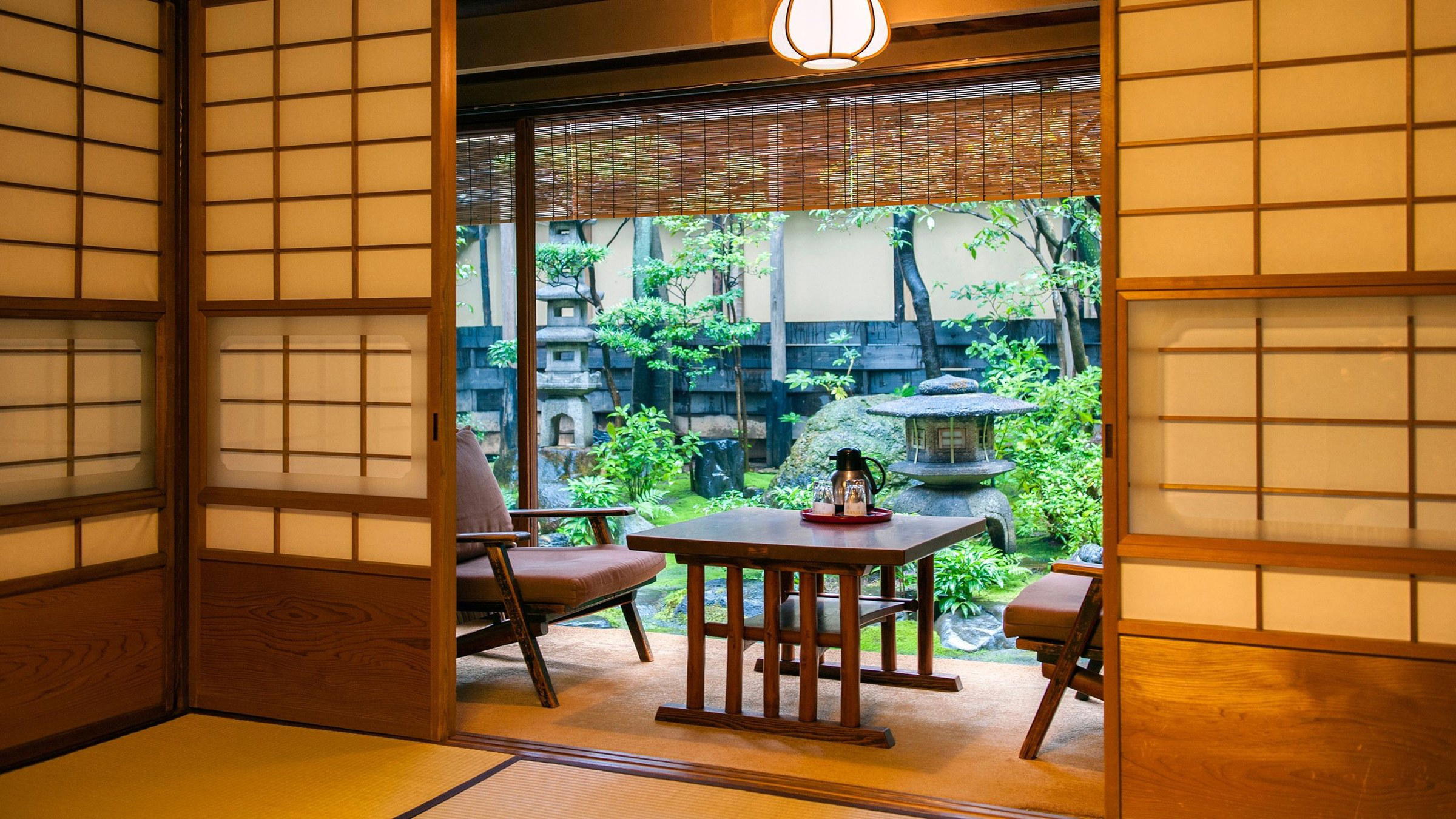
Wineries in Kyoto
Browse all →
Details
- Classic
- Elegant
- Cozy
- Intimate
- Special Occasion
- Family
- Celebration
- Private Dining
- Historic Building
- Sake Program
- Garden
- Set Menu
Current opening hours
- Monday
- 11 AM–9 PM
- Tuesday
- 11 AM–9 PM
- Wednesday
- 11 AM–9 PM
- Thursday
- 11 AM–9 PM
- Friday
- 11 AM–9 PM
- Saturday
- 11 AM–9 PM
- Sunday
- 11 AM–9 PM
Hours can change for holidays and private events. Hours as of .
Traditional tatami-matted rooms, garden rooms, and teahouse with turn-of-the-century wood-frame atmosphere, cozy and elegant.