

Opened in January 2025 in the mountain village of Tenkawa, deep in Yoshino District, SÉN holds a Michelin star and a 2026 Tabelog Award Bronze with a score of 3.88. The lunch-only format runs Tuesday through Saturday, with courses priced between JPY 20,000 and JPY 29,999, and the kitchen frames regional Yoshino ingredients as the central argument of every plate.
 Discover on Pearl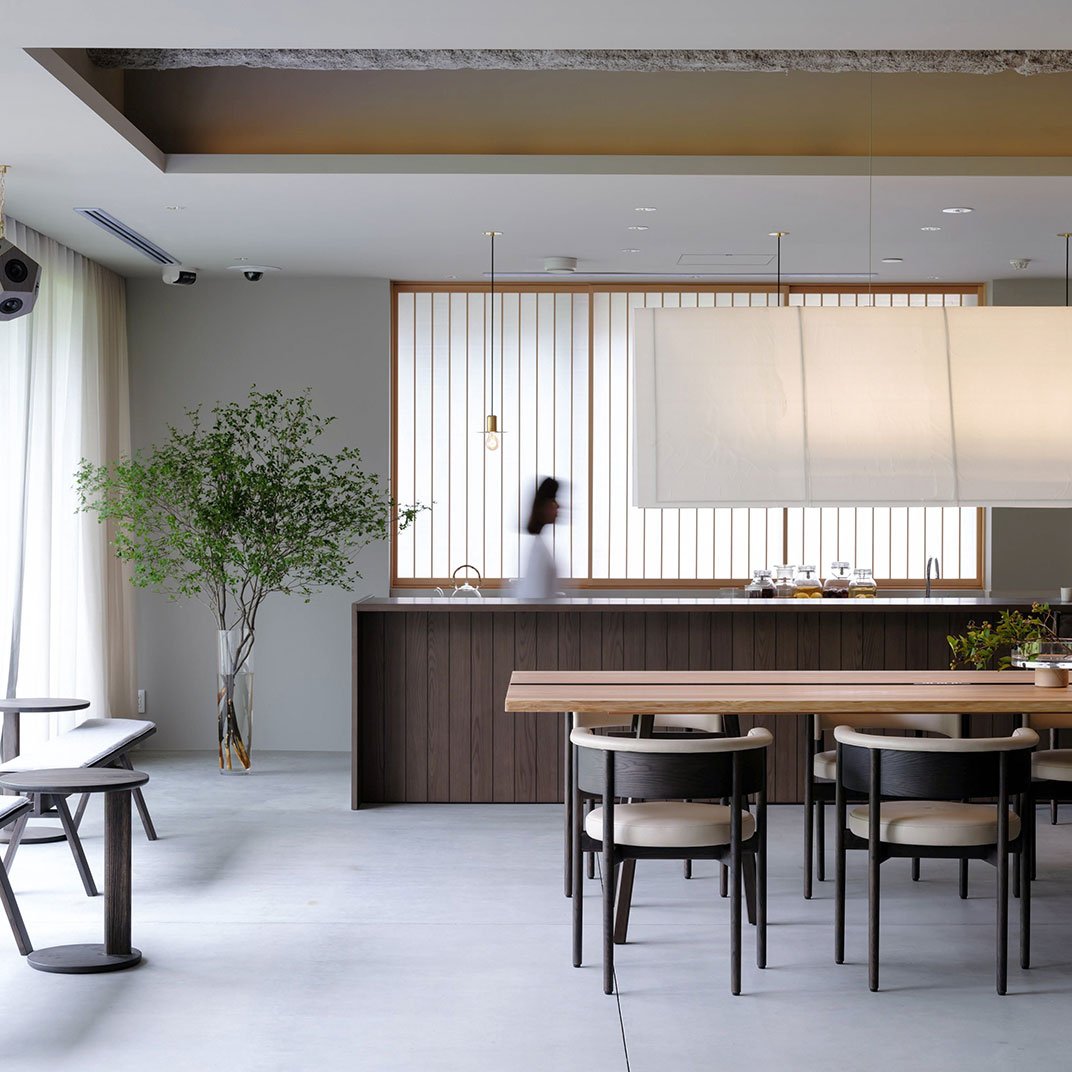
A Mountain Village as the Opening Course
The drive into Tenkawa village along the Yoshino River corridor is itself a kind of palate preparation. By the time the road narrows past Dorogawa Onsen and the cedar stands close in around the valley, the register of dining has already shifted. Rural Nara's approach to serious cooking operates on fundamentally different terms from the kaiseki rooms of Nara City or the precision counters of Osaka: here, geography is not backdrop but ingredient. SÉN, which opened on 11 January 2025 inside a house restaurant at 267 Kawai, Tenkawa, places that geography at the centre of every course.
The format is lunch-only, running Tuesday through Saturday from 11:30 to 16:00 with a wide service window that accommodates an unhurried multi-course progression. That extended afternoon block is not incidental: it signals a kitchen built around sequencing rather than throughput. Reservation is the only path in, and the restaurant can be reserved for private use, which means the pacing of any given meal is determined almost entirely by the table's own rhythm.
The shortlist, unlocked.
Hard-to-book tables, cellar releases, and concierge-planned trips.
Get Exclusive Access →What Tabelog and Michelin Are Measuring Here
Japan's two dominant recognition systems tend to weight different things. Michelin's single star, awarded in 2025, registers technical execution and consistency within a defined cuisine category. Tabelog's 2026 Bronze, with a score of 3.88 placing SÉN 393rd nationally among Bronze recipients, reflects accumulated peer-reviewed opinion across a broader dining public. For a restaurant that opened less than a year before its first major award cycle, holding both simultaneously puts it in a narrow cohort of debuts that arrived with a fully formed kitchen rather than a work-in-progress one.
At the ¥¥¥ price tier with a documented lunch spend of JPY 20,000 to JPY 29,999, SÉN positions itself inside the same bracket as akordu and NARA NIKON within Nara's premium dining tier, though the geographic remove of Tenkawa means the competitive set it really trades against is less Nara City's central restaurants and more the category of destination-specific, ingredient-driven lunches that require a journey as part of the proposition. Comparable formats elsewhere in the Kansai region, such as Gion Sasaki in Kyoto, demonstrate that regional credential and sourcing specificity can sustain Michelin recognition independent of urban proximity.
The Arc of the Meal: Tenkawa as Narrative Structure
SÉN's description on Tabelog frames its approach as creating a "cultural necessity" on the plate by incorporating local ingredients while embracing the connections of the region. That framing maps onto a recognisable format within Japanese Innovative cuisine: the multi-course lunch as a kind of argued progression, where each dish functions less as a standalone and more as a continuation of a single thesis about place. The Yoshino District provides a specific larder: mountain vegetables, river fish, cultivated produce from an area whose forested terrain and altitude produce growing conditions unlike those of the coastal lowlands.
In practice, the tasting progression at this kind of house restaurant format tends to build from lighter, more structurally transparent preparations toward courses of greater density and fat. The opening sequences in region-anchored innovative Japanese cooking typically use raw or minimally processed local materials to establish what the landscape actually tastes like before the kitchen begins to reinterpret it. The middle courses introduce technique more assertively. The closing savory courses and any transition to sweet tend to resolve the textural and flavour tensions established earlier. Without verified menu specifics from a confirmed source, the actual dishes at SÉN remain outside the scope of what can responsibly be described here, but the format and the stated sourcing philosophy indicate a kitchen structured around that kind of deliberate arc.
The house restaurant setting reinforces this. Unlike a purpose-built dining room calibrated for brand identity, a house restaurant places the meal in domestic spatial context, which tends to soften formality and shift attention from the theatre of the room to the content of the plate. Several of Japan's most discussed destination lunches operate in precisely this register, including properties in rural Kyushu and the Japanese Alps where the building's ordinariness functions as a deliberate contrast to the precision on the table.
Getting There Is Part of the Calculation
Tenkawa is not convenient, and the distance is a feature rather than a liability for the format SÉN operates. From Shimokitaguchi Station, the Nara Kotsu bus bound for Dorogawa Onsen reaches the Amakawa Kawai stop, which is approximately a two-minute walk from the restaurant. The bus journey itself runs through the Yoshino Valley, and the absence of a direct rail link to the village means that arriving by car is the more practical choice for most visitors, particularly given parking is available on site.
Pairing the reservation with an overnight stop in the Tenkawa or Dorogawa Onsen area is a logical approach for visitors travelling from Osaka or Kyoto, both of which are within roughly two to three hours. For context on lodging options across the prefecture, our full Nara hotels guide covers the range of accommodation tiers available. The Yoshino region also offers its own distinct experiences beyond the restaurant; our full Nara experiences guide maps those further.
Where SÉN Sits in the Broader Innovative Dining Conversation
Japan's Innovative category at the premium tier has diversified significantly over the past decade. Urban expressions of the format, such as HAJIME in Osaka or MAZ in Tokyo, tend toward high technique and conceptual density within purpose-built environments. Rural and periurban expressions pursue a different register, where the sourcing geography itself supplies the conceptual frame and technique serves to clarify rather than transform the ingredient. SÉN belongs to the latter group.
Internationally, the pattern of destination lunch restaurants anchored to hyperlocal ingredient narratives has produced several of the most discussed tables of the past decade, from Scandinavia through rural France to coastal Japan. The format's credibility rests on whether the sourcing argument is genuinely specific or merely decorative: whether the Yoshino ingredient is irreplaceable in the dish, or whether it could be substituted without loss. The regional recognition SÉN has accumulated within a year of opening suggests the kitchen is treating that question seriously.
For those building a wider Nara dining itinerary, Oryori Hanagaki, Tsukumo, and VILLA COMMUNICO represent different points on the prefecture's fine dining spectrum. Across the broader Kansai and regional Japan circuit, Goh in Fukuoka, Harutaka in Tokyo, 1000 in Yokohama, and 6 in Okinawa each demonstrate how regional ingredient specificity intersects with technical ambition in different Japanese contexts. Beyond Japan, alla prima in Seoul shows how the Innovative category operates in a neighbouring culinary tradition. NARA NIKON and akordu remain the most direct Nara-based comparisons at the same price tier. Our full Nara restaurants guide, bars guide, and wineries guide cover the rest of the prefecture's premium offerings.
Know Before You Go
- Address: 267 Kawai, Tenkawa, Yoshino District, Nara 638-0301
- Hours: Tuesday to Saturday, 11:30 to 16:00. Closed Monday and Sunday.
- Price: JPY 20,000 to JPY 29,999 per person at lunch
- Reservations: Reservation only. Private use of the full venue is available.
- Getting there: Take the Nara Kotsu bus bound for Dorogawa Onsen from Shimokitaguchi Station. Alight at Amakawa Kawai, approximately a two-minute walk from the restaurant. On-site parking is available.
- Payment: Credit cards accepted (VISA, Mastercard, JCB, AMEX, Diners Club). Electronic money accepted. QR code payments not accepted.
- Smoking: Non-smoking throughout.
- Website: sen-tenkawa.com
What is the signature dish at SÉN?
No specific dish has been confirmed through a verified source, so naming one would be speculative. What the restaurant's Tabelog description and awards record do confirm is that the kitchen builds its courses around Yoshino District ingredients treated as a statement of regional identity rather than as interchangeable produce. The 2025 Michelin star and 2026 Tabelog Bronze with a score of 3.88 indicate that the progression holds up to both critical and peer scrutiny. Reservations can be made via the restaurant's website at sen-tenkawa.com, where current menu details are likely available in Japanese.
267 Kawai, Tenkawa, Yoshino District, Nara 638-0301, Japan
+81 50-1721-9991
Compact Comparison
A quick peer snapshot; use it as orientation, not a full ranking.
| Venue | Notes | Price |
|---|---|---|
| SÉN | This venue | ¥¥¥ |
| akordu | Spanish, Innovative, ¥¥¥ | ¥¥¥ |
| Wa Yamamura | Kaiseki, Japanese, ¥¥¥ | ¥¥¥ |
| Araki | Sushi, Japanese, ¥¥¥ | ¥¥¥ |
| Tama | Okinawan, French, ¥¥¥ | ¥¥¥ |
| NARA NIKON | Japanese, ¥¥¥ | ¥¥¥ |
Need a table?
Our members enjoy priority alerts and concierge-led booking support for the world's most difficult tables.
Get Exclusive AccessThe shortlist, unlocked.
Hard-to-book tables, cellar releases, and concierge-planned trips.
Get Exclusive Access →