

Tabelog Bronze #245
Our verdict
A ten-seat kaiseki counter in Gion operating since 2012, Maeda 前田 holds a Tabelog score of 3.89 and has appeared in Opinionated About Dining's Japan rankings every year from 2023 to 2025, reaching as high as #50. Dinner runs JPY 40,000–49,999, with a programme that places particular emphasis on fish cookery and a nihonshu selection. Photography is not permitted.

Pearl is the En Primeur Club membership app, where members save venues, book tables and use the concierge.
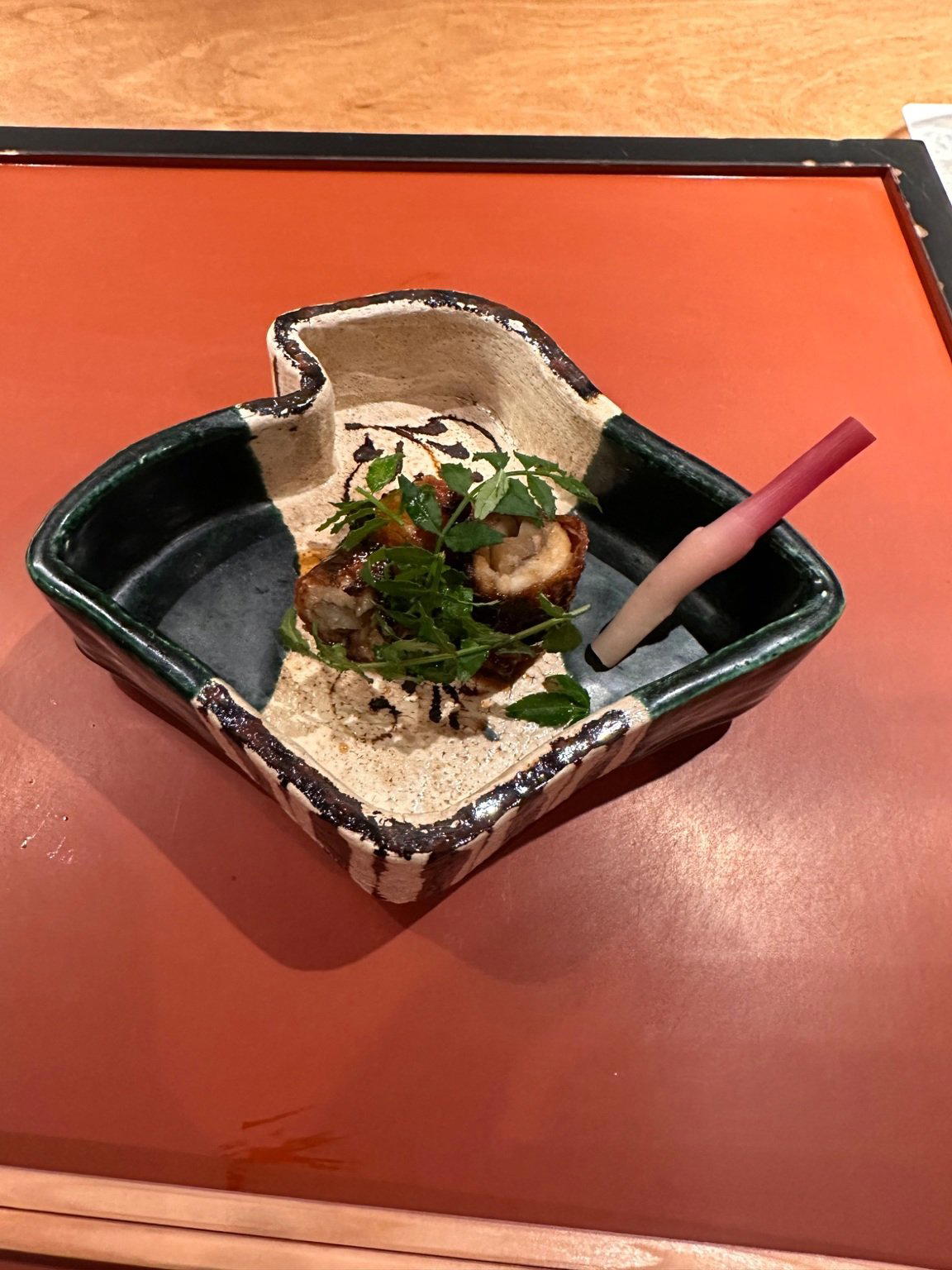
Gion's Counter Kaiseki at Night
Gionmachi Minamigawa after dark operates on a different register from the district's daytime tourist flow. The stone-paved lane quiets, the machiya facades close off the street, and the restaurants that matter here run almost entirely on reservations made weeks or months in advance. Within this compressed geography, a few hundred metres of some of Japan's most competitive kaiseki, the ten-seat counter at Maeda 前田 has held a consistent position since opening in September 2012. It sits on the ground floor of a narrow building at address 570-118, roughly 300 metres from Gion Shijo Station, close enough to walk from most central Kyoto hotels but tucked far enough from the main Hanamikoji axis to feel removed from the district's more theatrical tier. Comparable counters in the same ward, including Chihana and Gion Suetomo, occupy a similar price band and shared sensibility around restraint and seasonal sequence.
Sake as a Structural Element, Not an Afterthought
In formal kaiseki, the beverage programme is not decoration. Sake selection functions as a parallel seasonal argument: the choice between junmai, ginjo, and aged styles tracks the progression from light, delicate opening courses through richer, more reduced preparations later in the meal. At Maeda, the Tabelog record notes a particular emphasis on nihonshu, which places it among the subset of Kyoto kaiseki counters where the sake list is curated with the same seriousness applied to ingredient sourcing. That distinction matters in practical terms. A kaiseki meal at the JPY 40,000–49,999 price point typically includes beverage pairing as an expected complement; the difference between a house-sake-only programme and a considered nihonshu selection with regional breadth is significant, both for the meal's rhythm and for the reader's total spend calculation.
Kyoto's position in sake culture is geographic and historical. The city sits between the major brewing regions of Nada (Kobe) and Fushimi (southern Kyoto), and the soft water of Fushimi has produced a style of sake described as feminine and smooth compared to Nada's harder mineral structure. A counter that signals care around nihonshu in this city has access to a wider range of local and regional producers than comparable restaurants in Tokyo or Osaka. At Doujin and Ifuki, beverage programmes similarly reflect the regional depth available to Kyoto kaiseki kitchens. The contrast with kaiseki counters in Tokyo, such as Kikunoi Tokyo or Hirosaku, is partly one of sourcing proximity: the Kansai geography gives Kyoto operators a structural advantage in sake breadth that Tokyo counters offset with different procurement channels.
Fish-Centred Kaiseki in a Landlocked City
That Maeda's kitchen emphasises fish is a meaningful editorial signal. Kyoto is landlocked, and the prefecture's kaiseki tradition historically worked around that constraint through dried, cured, and fermented preparations, saba from the Obama coast, dried yuba, preserved vegetables, rather than sashimi-forward presentations. The modern kaiseki counter has largely resolved the freshness problem through overnight logistics from Osaka's markets and direct relationships with coastal suppliers, but the philosophical orientation of a given kitchen still varies. A counter noted specifically for fish emphasis in a city where vegetable-centred kaiseki (kyo-yasai, seasonal pickles, tofu) represents the other dominant pole is positioning itself in a distinct way. Tabelog reviewers flagging this as a distinguishing characteristic suggests the fish cookery is specific enough to be identifiable, not simply a feature of any kaiseki menu.
The Awards Trajectory and What It Signals
Maeda's Tabelog award history runs from Bronze in 2017 through Silver in 2018, 2019, and 2020, returning to Bronze from 2021 onward. A Bronze-to-Silver-to-Bronze arc does not necessarily indicate decline; the Tabelog Award system recalibrates annually across a large review pool, and scores in the high-3.8 to 3.9 range can shift between tiers without corresponding changes in kitchen output or quality. The current score of 3.89 sits at the upper end of the Bronze band. More instructive is the Tabelog 100 selection in the Japanese Cuisine West category for 2021, 2023, and 2025, a list that names fewer counters than the broader award tiers and implies more consistent peer recognition over time. The Opinionated About Dining Japan rankings add an external cross-reference: ranked #115 in 2023, #72 in 2024, and #50 in 2025, the trajectory there is upward, which cuts against any reading of the Tabelog Bronze as a downgrade signal. A counter moving from #115 to #50 in OAD rankings over two years, while holding a Tabelog 3.89 and repeat Tabelog 100 selection, is consolidating rather than declining.
For context, the Gion district's kaiseki scene at the upper tier includes names such as Gion Sasaki and Kyokaiseki Kichisen, both of which operate at the ¥¥¥¥ price point. Ankyu occupies a related bracket within the broader Higashiyama cluster. Maeda at JPY 40,000–49,999 per dinner positions itself within this competitive set, not below it.
Format, Seating, and the Counter Experience
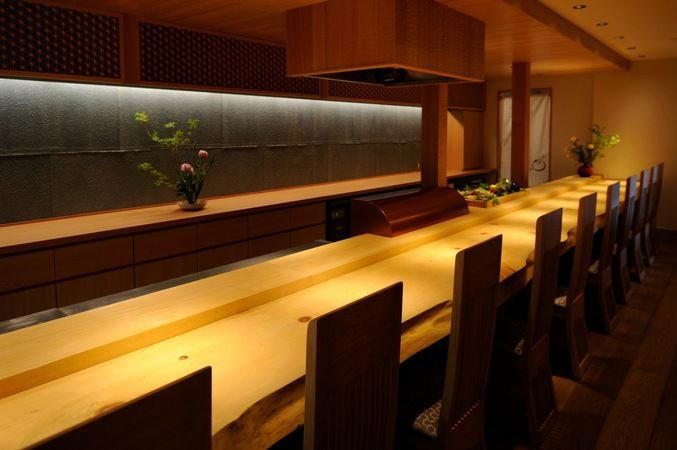
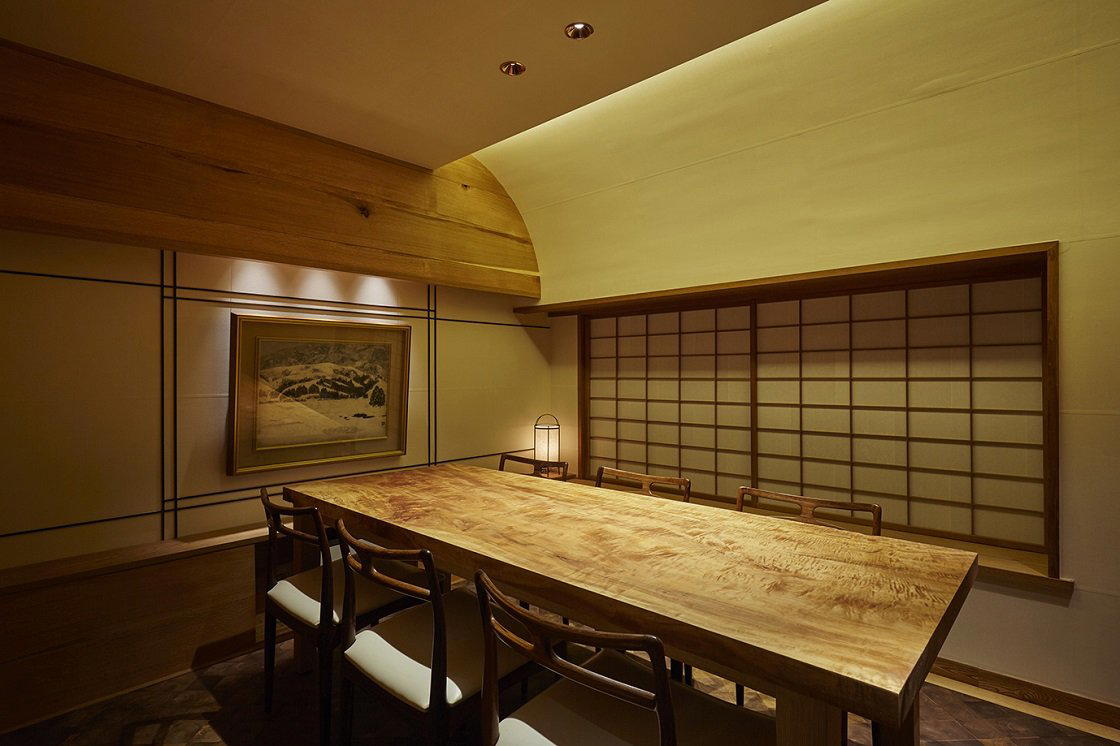
Ten seats is a common format for serious kaiseki counters in Kyoto, but it has specific operational implications. At this scale, a single kitchen team controls the entire service rhythm, courses arrive to all seats simultaneously, and the chef's attention is distributed across a small enough group to allow adjustment. The format also means the counter can be reserved for private use by groups up to 20 people, an unusual capacity note for a ten-seat room that suggests the space may be configurable or that adjacent space is available for private events. Photography is not permitted, a restriction that is increasingly standard at this tier of Japanese dining and worth noting for first-time visitors who may have different expectations. Service runs Monday through Saturday, 18:00 to 23:00, with last admission at 19:30, and the restaurant is closed on Sundays.
The no-photography rule is not incidental. In the kaiseki counter tier, the policy reflects both an aesthetic position and a practical one: plating at this level is calibrated for the diner at distance, not for a lens held a few centimetres above the bowl, and the restriction preserves the pace and atmosphere of service. Counters with similar policies include several peers across Kyoto and Osaka's top tier. The comparison with Harutaka in Tokyo or HAJIME in Osaka illustrates that this approach is not regionally specific but category-wide at the upper end of Japanese fine dining.
Planning Your Visit
The course is priced at JPY 20,000 according to Tabelog data, placing it at the lower end of the JPY 40,000–49,999 average-spend range when beverages and sake pairing are factored in. Major credit cards are accepted (Visa, Mastercard, JCB, Amex, Diners); electronic money and QR code payments are not. The restaurant is non-smoking. Reservations are available through Tabelog. The nearest train access is Gion Shijo Station, approximately 300 metres away. Parking is not available.
| Venue | Cuisine | Dinner Price Range | Seats | Closed |
|---|---|---|---|---|
| Maeda 前田 | Kaiseki | JPY 40,000–49,999 | 10 | Sunday |
| Gion Sasaki | Kaiseki | ¥¥¥¥ | N/A | N/A |
| Ifuki | Kaiseki | ¥¥¥¥ | N/A | N/A |
| Chihana | Kaiseki | ¥¥¥¥ | N/A | N/A |
| Ankyu | Kaiseki | ¥¥¥¥ | N/A | N/A |
For broader context on where Maeda sits within Kyoto's dining scene, see our full Kyoto restaurants guide. For accommodation context, our Kyoto hotels guide covers the options closest to the Gionmachi area. Further Kyoto planning resources include our Kyoto bars guide, our Kyoto wineries guide, and our Kyoto experiences guide. For comparable kaiseki outside Kyoto, akordu in Nara and Goh in Fukuoka offer regional reference points, as do 1000 in Yokohama and 6 in Okinawa for readers building a broader Japan itinerary.
Frequently asked questions
What are the operating hours at Maeda 前田?
Hours at Maeda 前田: Hours: Monday 5–9 pm Tuesday 5–9 pm Wednesday 5–9 pm Thursday 5–9 pm Friday 5–9 pm Saturday 5–9 pm Sunday Closed.
How do I find Maeda 前田?
Maeda 前田 is located at Japan, 〒605-0074 Kyoto, Higashiyama Ward, Gionmachi Minamigawa, 570-118 1F, Kyoto.
Comparison Snapshot
Comparable venues nearby, for context on price, style, and recognition.
| Venue | Cuisine | Price | Awards | Notes |
|---|---|---|---|---|
| Maeda 前田This venue (the venue you are viewing) | Modern Kaiseki | $300–500 | Tabelog Bronze #245 | Not listed |
| Miyagawacho Tensho | Seasonal Tempura Kaiseki | $150–200 | Michelin Plate | Higashiyama |
| Noguchi | Modern Kaiseki Counter Dining | $300–500 | Tabelog Silver #67 | Kamigyō |
| Oryori Maeshiro | Modern Kyoto Kaiseki | $100–150 | Michelin Plate | Nakagyō |
| Saeki | Modern Edomae Omakase | Not listed | Tabelog Bronze #378 | Nakagyō |
| SATOWA | Seasonal Kaiseki with Unagi | $150–200 | Michelin Plate | Nakagyō |
Recognition history
Dated appearances from independent guides and award organizations, with the underlying list record or original source where available.
Opinionated About Dining Top Restaurants in Japan Ranked #71
Opinionated About Dining
Tabelog Bronze #245
Tabelog
Full recognition history (7 entries)
Opinionated About Dining Top Restaurants in Japan Ranked #50
Opinionated About Dining
Tabelog Bronze
Tabelog
Tabelog 100 #92 · No. 92
Tabelog · Tabelog 100 - Japanese cuisine - WEST - 2025
Opinionated About Dining Top Restaurants in Japan Ranked #72
Opinionated About Dining
Opinionated About Dining Top Restaurants in Japan Ranked #115
Opinionated About Dining
Continue exploring
More in Kyoto
Restaurants in Kyoto
All restaurants in Kyoto →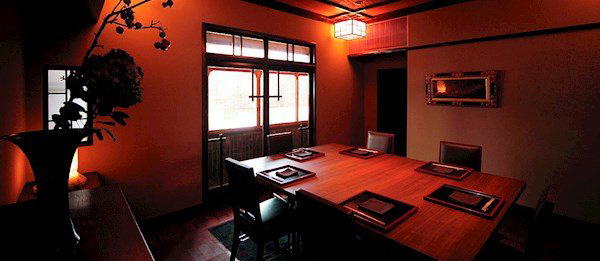

Bars in Kyoto
All bars in Kyoto →

Hotels in Kyoto
All hotels in Kyoto →

Wineries in Kyoto
Browse all →
Details
- Intimate
- Elegant
- Sophisticated
- Minimalist
- Special Occasion
- Date Night
- Chefs Counter
- Sake Program
- Omakase
- Counter Dining
- Sake
Current opening hours
- Monday
- 5–9 PM
- Tuesday
- 5–9 PM
- Wednesday
- 5–9 PM
- Thursday
- 5–9 PM
- Friday
- 5–9 PM
- Saturday
- 5–9 PM
- Sunday
- Closed
Hours can change for holidays and private events. Hours as of .
Minimalist counter setting in historic Gion with warm, engaging chef interaction fostering communal celebration amid sophisticated, no-photo policy dining.