A Room That Does the Work First In Kyoto, the architecture of a dining room often communicates more than the menu does. The city's long tradition of spatial restraint, rooted in the same aesthetic sensibility that governs its temple gardens and...
Pearl is the En Primeur Club membership app — saves, bookings, and concierge access live there. Same editors, same standards.
- Address
- 京都市, 京都府, 600-8019
- Directions
- Get directions
 Saves & bookings on Pearl
A Room That Does the Work First
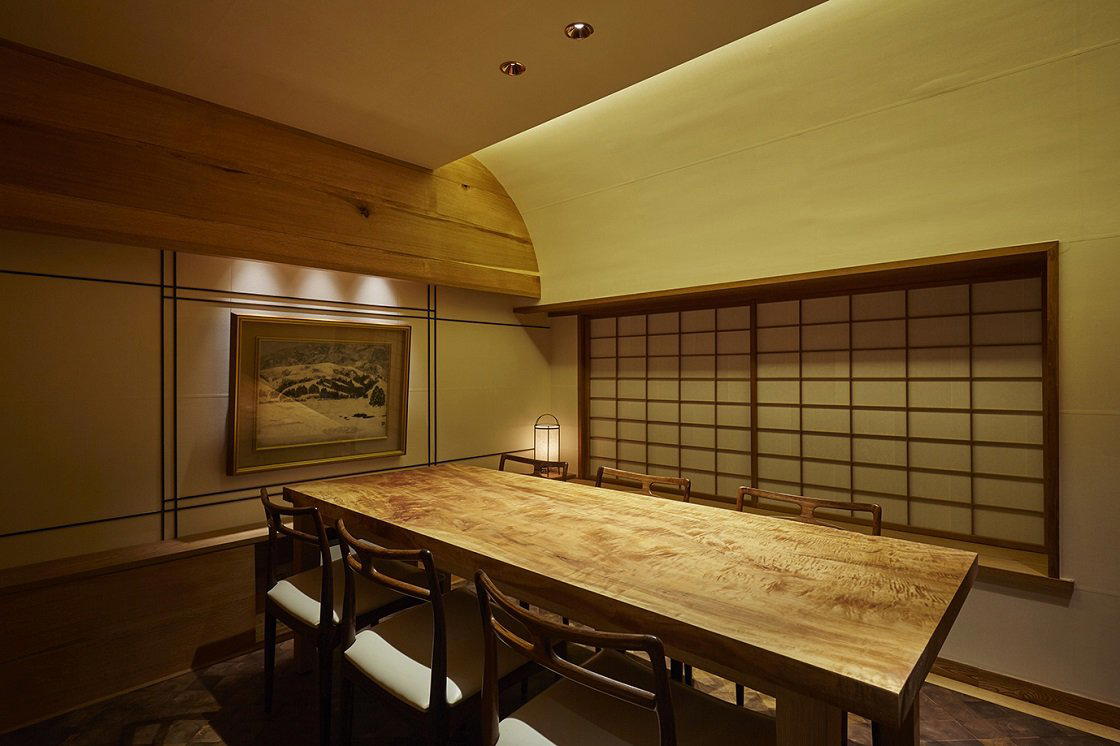
In Kyoto, the architecture of a dining room often communicates more than the menu does. The city's long tradition of spatial restraint, rooted in the same aesthetic sensibility that governs its temple gardens and lacquerware, means that interiors are rarely neutral. A well-considered room here positions a kitchen before a single dish is served. Shokudo Miyazaki operates within this tradition, and the physical container is where the experience begins.
That framing matters in a city where the competition for attention is genuinely fierce. Kyoto's kaiseki circuit includes counters like Gion Sasaki, Hyotei, and Kikunoi Honten, each carrying formal pedigree and institutional weight. Against that backdrop, a smaller, less categorically obvious room tends to communicate something different: a narrower focus, a more personal register, and pricing that does not necessarily follow the Michelin bracket logic of the city's top tier.
The Architecture of Attention
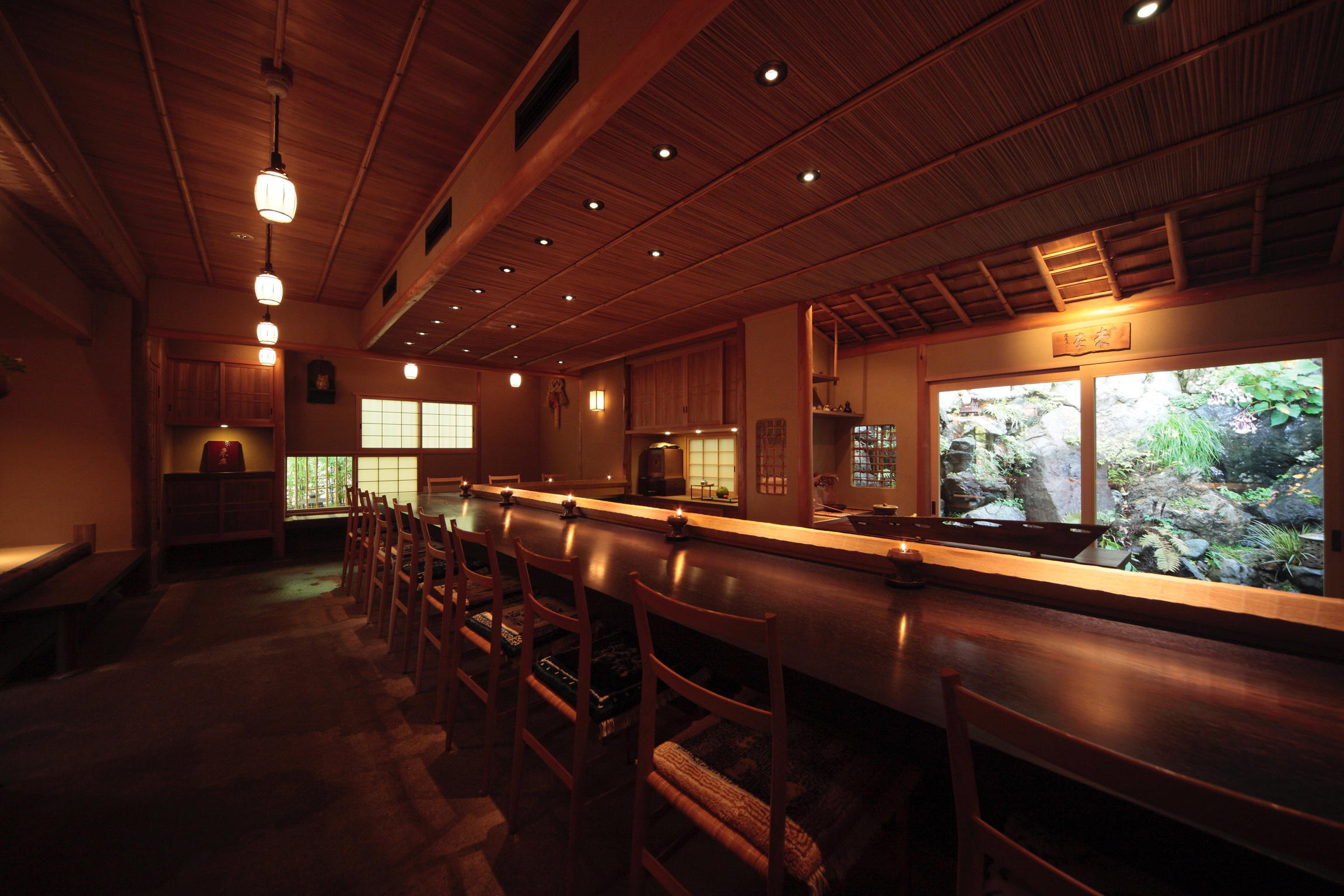
Japanese dining at the serious end of the market has long used spatial design as a primary instrument. Counter seating, in particular, does specific structural work: it collapses the distance between kitchen and guest, makes the cook visible, and turns production into part of the narrative. The seated distance at a counter is not incidental, it is a deliberate editorial choice about what the diner is supposed to attend to.
Shokudo, as a Japanese term, typically describes an eating house with a more grounded register than the formal kaiseki or kappo formats that dominate Kyoto's international reputation. A shokudo implies daily cooking, a room with habitual customers, and a design sensibility that does not perform grandeur. That framing places Miyazaki in a different competitive conversation than the ¥¥¥¥ tier occupied by Mizai or Isshisoden Nakamura. The implied audience is not the first-time visitor assembling a prestige itinerary. It is someone returning to Kyoto with enough prior experience to seek a different gear.
Across Japan, this tier of establishment has gained significant critical attention in recent years. Venues in Osaka like HAJIME and in Fukuoka like Goh represent one end of the spectrum: technically driven, internationally recognized, and priced accordingly. The quieter end, which Shokudo Miyazaki suggests by name and format, is where craft operates closer to the everyday, and where the room's design serves a social rather than theatrical function.
Kyoto's Dining Stratification
Understanding where a venue sits in Kyoto's dining structure requires mapping the full range. The city's most recognized addresses carry the institutional weight of multi-generational kitchens or chefs trained within lineages that trace back through documented masters. Below that, a stratum of mid-formal establishments, some kaiseki-adjacent, some Italian-influenced like the ¥¥¥-tier cenci, serves a clientele that has moved beyond tourist benchmarks. Further still, the shokudo category functions as a daily-use register, though at serious addresses, daily-use does not mean low-craft.
This stratification matters because it determines who a venue's regulars are and what they expect from a room. At the counter-intensive formats common in Kyoto, the layout itself signals how much theatre the kitchen intends to provide. An open counter running along one wall, materials drawn from local craft traditions, low-saturation palettes, and the absence of decorative noise are all architectural choices that position a room on the quieter, more durable side of the spectrum. That reading applies across Japan: in Nara, akordu uses similar spatial restraint to locate itself outside the competitive logic of the larger cities. The design vocabulary communicates before the food does.
What to Expect at the Table
With the venue data available, it is not possible to specify signature dishes, pricing, or confirmed hours with accuracy. What can be said is that the shokudo format, when executed at this level in Kyoto, typically draws from the same ingredient sourcing networks that supply the city's formal kaiseki rooms: Kyoto vegetables from Fushimi or Nishikyo, tofu from longstanding producers in the Higashiyama district, and seasonal proteins calibrated to what the market offers week by week. The cooking in this register prizes daily adjustment over fixed menus, and the room's design usually reflects that: no elaborate staging apparatus, no mise-en-place theatre, just the cook's immediate decisions made visible.
For comparison, the format shares structural DNA with what Harutaka in Tokyo represents in the sushi context: a deliberate reduction of spectacle in service of focus. At international comparisons further afield, the ethos is not unlike what Atomix in New York City pursues within a Korean fine dining frame, or what Le Bernardin in New York City has long maintained in the seafood idiom: a room designed to direct attention rather than compete for it.
How Shokudo Miyazaki Fits the Broader Kansai Picture
The Kansai region sustains one of the highest concentrations of serious dining in Japan, extending from Kyoto through Osaka and into smaller cities like Nara and, further north, the Takashima area where æ¹é庵 operates. Within that geography, Kyoto holds a particular position: it is the city most associated with formal tradition, which means that restaurants choosing a lower-register format are making a deliberate statement about where they sit relative to that tradition. They are not rejecting it. They are working within it at a different frequency.
That is the most accurate way to read Shokudo Miyazaki from the outside. The name signals a cooking house, not a kaiseki pavilion. The city signals that even a cooking house operates within layers of accumulated craft expectation. The result is a venue that likely addresses a specific gap in Kyoto's offering: serious daily cooking in a room designed for return visits rather than milestone occasions. For a fuller orientation across Kyoto's dining options, our full Kyoto restaurants guide maps the city by format, price tier, and neighbourhood.
Know Before You Go
Location: Kyoto, Japan
Category: Shokudo (Japanese eating house format)
Price Range: Not confirmed; shokudo format typically sits below the ¥¥¥¥ kaiseki tier
Awards: None confirmed in current data
Leading for: Return visitors to Kyoto seeking a grounded, craft-focused register outside the formal kaiseki circuit
See also: Gion Sasaki, Hyotei, Kikunoi Honten, Mizai
Fast Comparison
Comparable venues nearby, for context on price, style, and recognition.
| Venue | Cuisine | Price | Notes |
|---|---|---|---|
| Shokudo MiyazakiThis venue — the venue you are viewing | Refined Kyoto Omakase | $$$ | Not listed |
| Takamatsu | Traditional Kyoto Kaiseki | $$$ | Nakagyō |
| Uzura Ya Kyoto ・ shijo | Traditional Yakitori Counter | $$$ | Higashiyama |
| Gion Nishi | Traditional Kyoto Kaiseki | $$$ | Higashiyama |
| Muge Sanbo Salon de Muge | Traditional Japanese Kaiseki / Bentō | $$$ | Higashiyama |
| Morita Ya Kiya machi ten | Traditional Japanese Sukiyaki & Shabu-Shabu | $$$ | Nakagyō |
Continue exploring
More in Kyoto
Restaurants in Kyoto
Browse all →
Bars in Kyoto
Browse all →
Hotels in Kyoto
Browse all →
Wineries in Kyoto
Browse all →
At a Glance
- Intimate
- Cozy
- Elegant
- Quiet
- Sophisticated
- Date Night
- Special Occasion
- Solo
- Chefs Counter
- Open Kitchen
- Historic Building
- Sake Program
Current opening hours
- Monday
- 5–10:30 PM
- Tuesday
- 5–10:30 PM
- Wednesday
- Closed
- Thursday
- 5–10:30 PM
- Friday
- 5–10:30 PM
- Saturday
- 5–10:30 PM
- Sunday
- 5–10:30 PM
Hours can change for holidays and private events. Last verified .
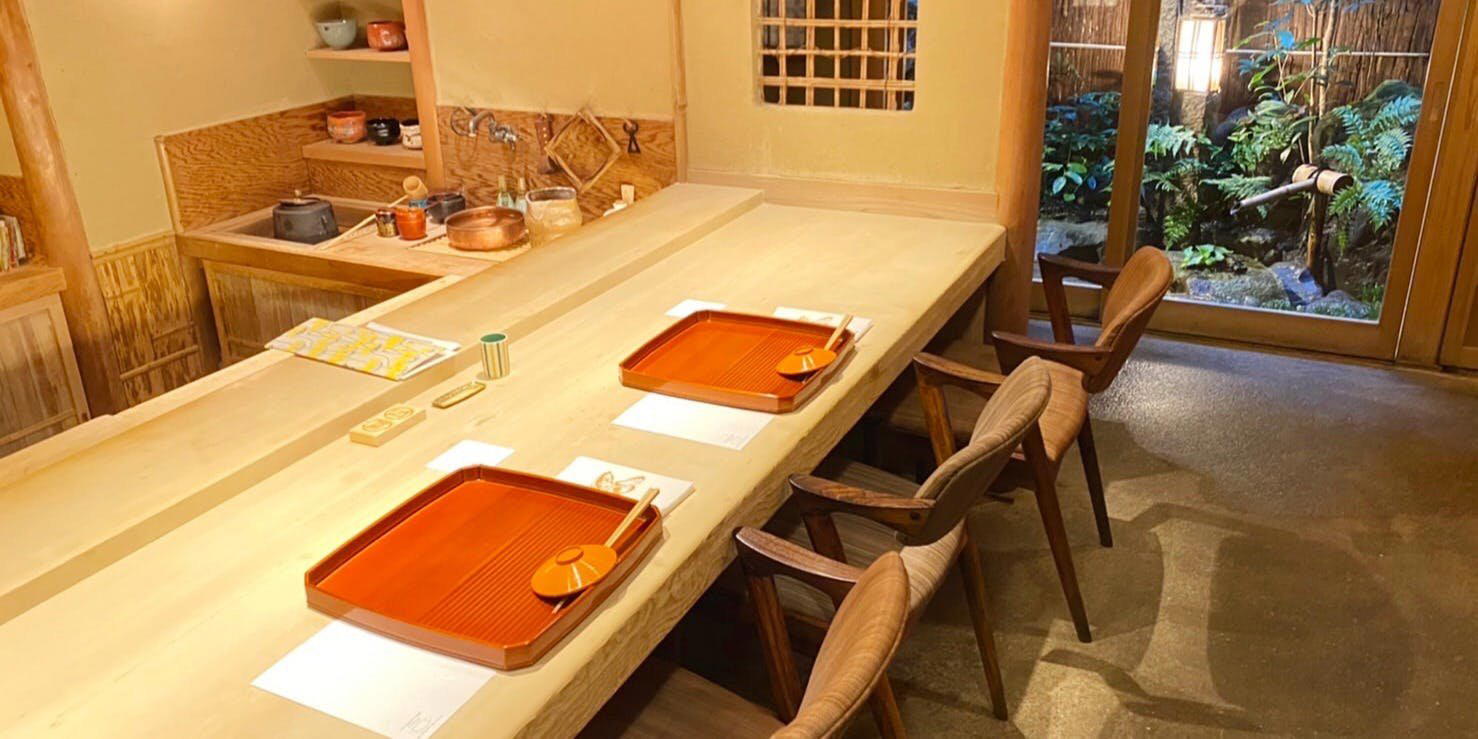
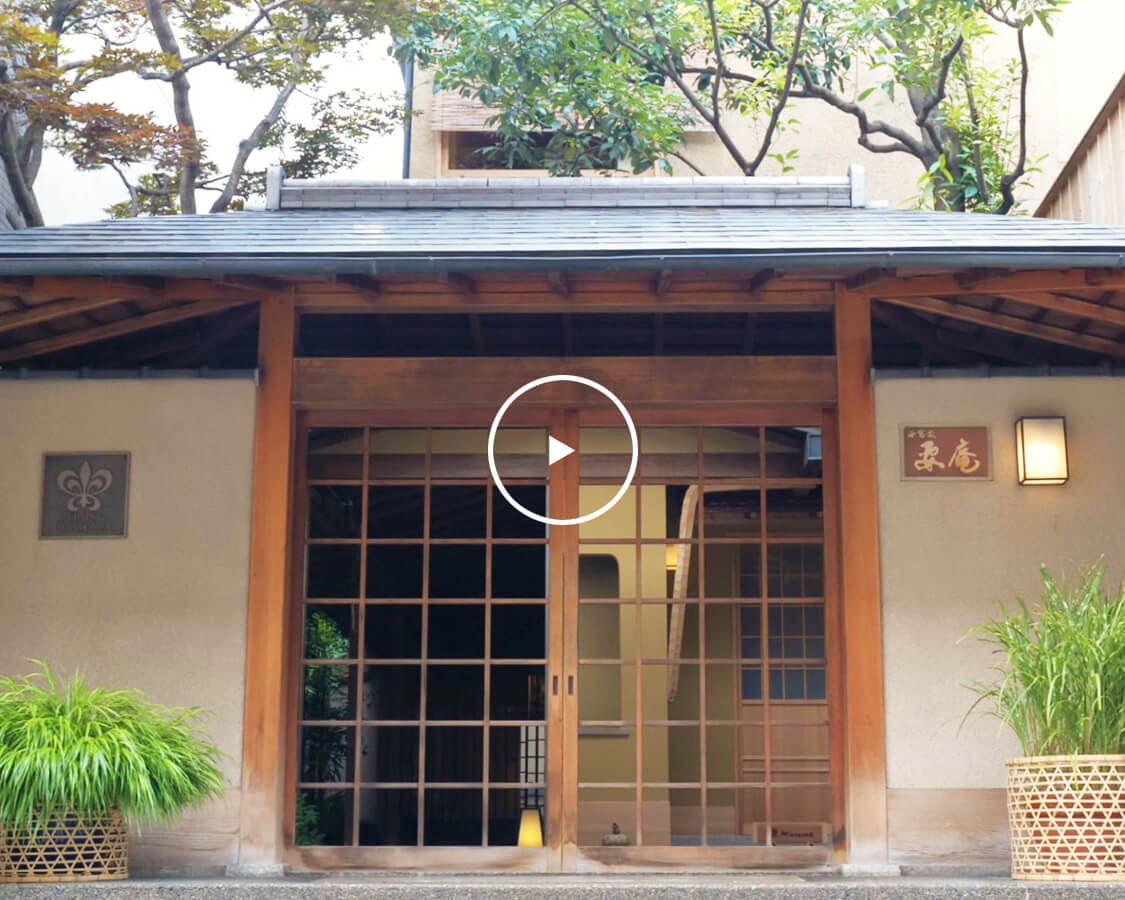
Intimate L-shaped wooden counter in a compact machiya with warm earthen walls and subtle lighting, fostering a serene and focused atmosphere.
Know Before You Go
- Getting there
- 京都市, 京都府, 600-8019