Our verdict
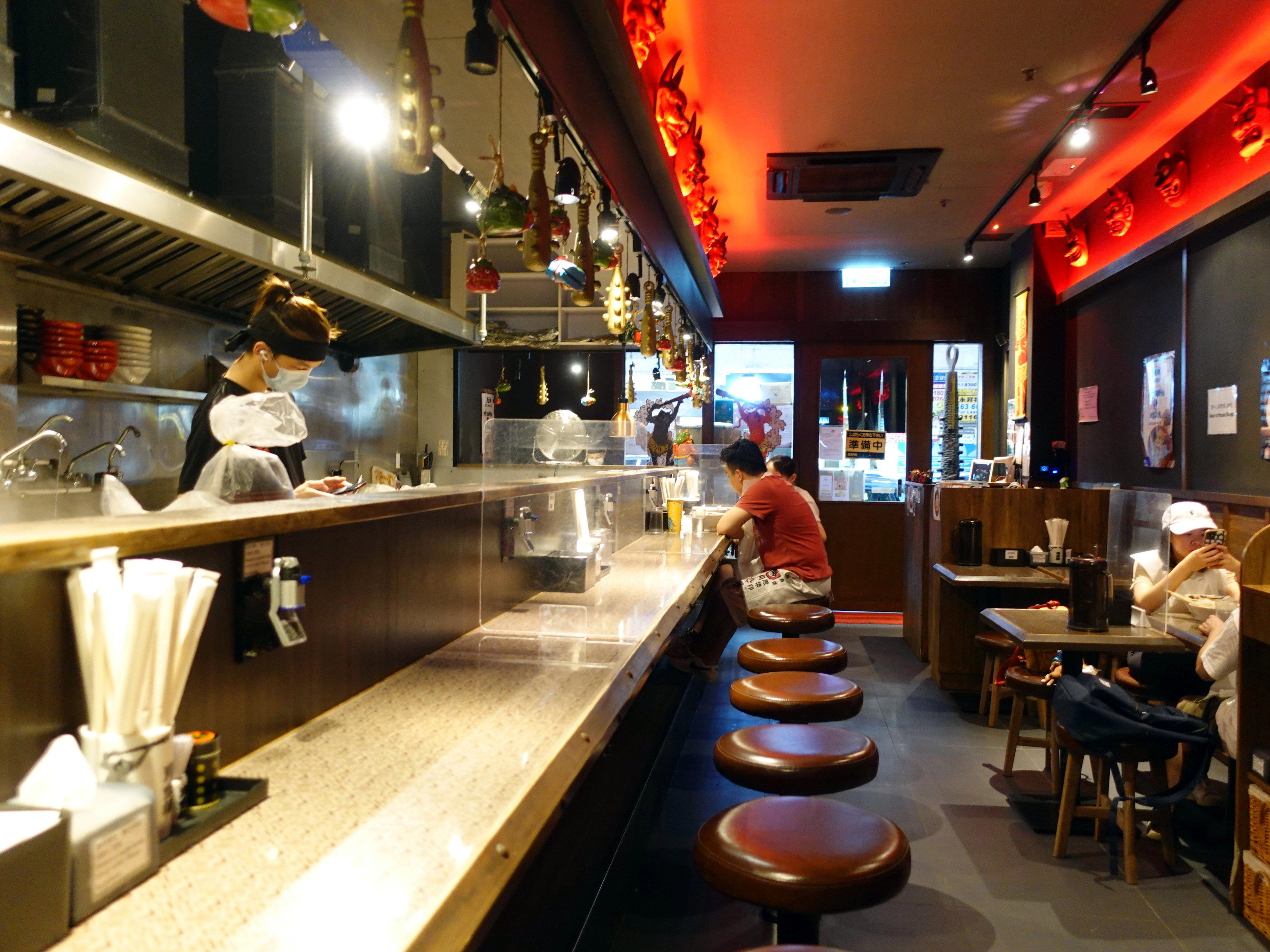
Kikanbo has ranked in Opinionated About Dining's Casual Japan list every year from 2023 to 2025, most recently at #22, placing it among Tokyo's most closely watched ramen counters. Operating out of Kajicho in Chiyoda, the shop focuses on a spice-forward karashibire style that draws queues well before the 11am opening. A compact format and precise heat calibration make it a reference point in the capital's spicy ramen conversation.

Pearl is the En Primeur Club membership app, where members save venues, book tables and use the concierge.
The menu
What to order
- Karashibi Miso Ramen
- Oni Ramen
- Deluxe Bowl with Extra Pork
The Queue on Kajicho and What It Tells You About Tokyo Ramen
The stretch of Kajicho in Chiyoda-ku is not the neighbourhood that typically appears in luxury travel itineraries. Its surroundings are functional, dense, and commercial in the way that large parts of central Tokyo are functional, dense, and commercial. Yet on any given morning, a line forms outside a ramen shop here that has appeared on our full Tokyo restaurants guide peer lists and climbed the Opinionated About Dining Casual Japan ranking three years running. That queue is the editorial. The city's ramen culture has long operated on exactly this logic: quality does not require a prestigious address, and the leading signals of a serious bowl are not décor or dining room size but consistency, repeat custom, and the kind of word-of-mouth that builds slowly and holds.
Kikanbo sits inside one of Tokyo ramen's most specific and demanding subgenres: karashibire, a style built on the dual heat of kara (spice, from chilli) and shibe (the numbing tingle of Sichuan peppercorn). It is a format that rewards precision. Too much heat and the broth becomes one-dimensional; too little and the entire premise collapses. The shops that have built lasting reputations in this style, and the OAD Casual Japan list is as reliable a measure as exists for tracking them, are those that control that calibration reliably across service, across seasons, and across the years. Kikanbo's consecutive appearances on that list, at #29 in 2023, #42 in 2024, and #22 in 2025, confirm it belongs to that tier. The upward trajectory is the more interesting data point: improving rank across three consecutive years, against an increasingly competitive field, is not a coincidence.
Karashibire as a Culinary Discipline
To frame Kikanbo through the kaiseki philosophy assigned by editorial angle is not as counterintuitive as it might first appear. Kaiseki's governing principle is attention to what is in front of you: seasonal material, handled with restraint, in service of an overall composition that has internal coherence. That framework translates meaningfully to the karashibire bowl. The layering of fat, broth, chilli oil, and peppercorn is a compositional act. Each element should arrive in proportion. The question a ramen cook is answering with every service is the same question a kaiseki chef answers with every course: does the whole communicate what I intended, or has one element overpowered the rest?
Karashibire as a style has a clear reference point in Sichuan cooking, where the pairing of dried chilli heat with the anaesthetic quality of huajiao peppercorn creates the sensation known as mala. Tokyo's version, as practised by Kikanbo and its closest peers, treats that sensation as a dial rather than a switch. Customers at most serious karashibire shops are given the option to set their preferred level of each element independently. This is not a gimmick. It reflects a genuine understanding that the relationship between heat and numbness is personal and that the bowl performs differently for different palates at different calibration settings.
For points of comparison within the broader ramen conversation, Afuri represents the lighter, yuzu-forward end of the Tokyo spectrum, while Fuunji holds a different position in the tsukemen category. The capital's ramen field is wide enough to hold all of these without contradiction, and the OAD Casual Japan list captures that range. Chukasoba Ginza Hachigou and Chukasoba KOTETSU occupy different positions on the same list, as does Chuogo Hanten Mita, which reflects how fragmented and specialist the Tokyo ramen scene has become. Each shop is effectively its own category.
Ranking as Evidence of Consistency
Opinionated About Dining's Casual Japan list functions differently from a Michelin guide. It aggregates opinions from a network of serious eaters rather than a small team of anonymous inspectors, and it tends to surface consistency over spectacle. A Michelin star reflects a visit or a small number of visits. A sustained OAD ranking reflects repeated engagement from a community of people who eat at these places regularly. Kikanbo's appearance at #22 in 2025, preceded by #29 in 2023 and #42 in 2024, tells a story about a shop that is getting sharper over time. That is the relevant finding. In a city where ramen shops open and close with frequency, multi-year ranked consistency is the credential worth examining.
That combination of specialist recognition from OAD and broad approval at scale is not common. It suggests the shop is managing two different audiences without compromising for either.
Ramen in Tokyo's Wider Restaurant Context
One of the more instructive exercises for anyone building a Tokyo dining week is to consider where ramen sits relative to the city's fine-dining tier. The comparison venues in this city's upper bracket, three-Michelin-star kaiseki houses, European-influenced tasting menu restaurants, high-end sushi counters, operate at price and access levels that require planning months in advance and significant expenditure. Ramen at Kikanbo operates on a different axis entirely: accessible during a long lunch break, priced for daily consumption, and requiring nothing more than the willingness to queue. Both tiers are doing serious culinary work. They are simply doing it in different registers. For visitors who want depth across a trip rather than concentration at one price point, the ramen tier is not a compromise; it is a different category of knowledge about the city's food culture.
Those travelling beyond Tokyo with serious eating in mind might note that the same OAD framework applies at the fine-dining level across Japan. HAJIME in Osaka, Gion Sasaki in Kyoto, akordu in Nara, Goh in Fukuoka, 1000 in Yokohama, and 6 in Okinawa each represent distinct regional approaches to serious cooking. Kikanbo sits at a different price tier but draws from the same underlying principle: a specific discipline, executed with attention and consistency over time.
For those who encounter karashibire-style ramen outside Japan, Afuri Ramen in Portland and Akahoshi Ramen in Chicago represent the format's international reach, though the style each shop practises is distinct. The Tokyo original remains the reference point for the category.
Planning a Visit
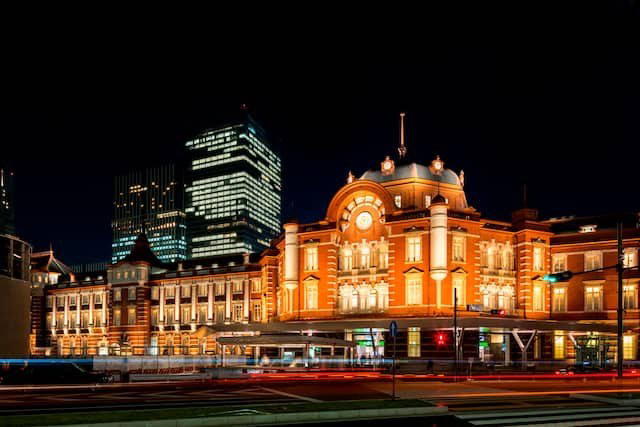
Kikanbo's Kajicho location in Chiyoda-ku keeps it within reasonable distance of Tokyo Station and the surrounding business district. The shop opens at 11am Monday through Saturday, closing at 9:30pm, and runs a shortened Sunday service from 11am to 4pm. Arriving close to opening avoids the longer midday and post-work queues that the shop's OAD ranking reliably generates. No booking method is required or available for this format; queueing is part of the transaction.
For fuller orientation across the city's eating, drinking, and lodging options, see our full Tokyo hotels guide, our full Tokyo bars guide, our full Tokyo wineries guide, and our full Tokyo experiences guide.
At a glance: Kikanbo, 2 Chome-10-9 Kajicho, Chiyoda City, Tokyo. Open Mon–Sat 11am–9:30pm, Sun 11am–4pm. No reservation required. OAD Casual Japan #22 (2025).
at Kikanbo?
Kikanbo's reputation is built on its karashibire ramen, where the defining feature is the independently adjustable levels of chilli heat (kara) and Sichuan peppercorn numbness (shibe). The shop's consistent OAD Casual Japan ranking across three years reflects the quality of this core bowl. First-time visitors are typically advised to start at a moderate setting for each element to understand the base composition before calibrating to personal preference. The broth, rather than the spice level alone, is what has sustained the shop's standing in a competitive field.
Frequently asked questions
Where exactly is Kikanbo?
Kikanbo is located at 2 Chome-10-9 Kajicho, Chiyoda City, Tokyo 101-0044, Japan, Tokyo.
Who's behind the kitchen at Kikanbo?
The chef associated with Kikanbo is Various.
What's the best thing to order at Kikanbo?
Kikanbo's reputation rests on the karashibire ramen, where kara (chilli heat) and shibire (Sichuan pepper numbing) are set independently at the time of ordering, a format that makes the bowl genuinely configurable rather than generically spiced. That customisation system is the reason Opinionated About Dining has ranked the shop on its Casual Japan list three consecutive years, reaching #22 in 2025. First-time visitors typically set both levels at medium to read the broth's base character before committing to a higher register on a return visit.
What should I expect cuisine-wise at Kikanbo?
What are the opening hours for Kikanbo?
Hours at Kikanbo: Hours: Monday 11 am–9:30 pm Tuesday 11 am–9:30 pm Wednesday 11 am–9:30 pm Thursday 11 am–9:30 pm Friday 11 am–9:30 pm Saturday 11 am–9:30 pm Sunday 11 am–4 pm.
Is Kikanbo award-winning?
Kikanbo has received recognition including: Opinionated About Dining Casual in Japan Ranked #22 (2025); Opinionated About Dining Casual in Japan Ranked #42 (2024); Opinionated About Dining Casual in Japan Ranked #29 (2023).
Comparable Spots
| Venue | Cuisine | Price | Awards | Notes |
|---|---|---|---|---|
| KikanboThis venue (the venue you are viewing) | Spicy Miso Ramen (Karashibi Miso Ramen) | $10–20 | Not listed | Not listed |
| Harutaka | Edo-Style Omakase Sushi | $200–300 | 3 Michelin Stars · World's 50 Best #76 | Sushi |
| RyuGin | Modern Kaiseki | $500+ | 3 Michelin Stars · World's 50 Best #41 | Kaiseki, Japanese |
| L'Effervescence | Modern French with Japanese Influences | $200–300 | 3 Michelin Stars · World's 50 Best #69 | French |
| HOMMAGE | Modern French with Japanese Influences | $150–200 | 2 Michelin Stars · World's 50 Best #78 | Innovtive French, French |
| MAZ | Innovative Peruvian-Japanese Fusion | $150–200 | 2 Michelin Stars · World's 50 Best #28 | Innovative |
Recognition history
Dated appearances from independent guides and award organizations, with the underlying list record or original source where available.
Opinionated About Dining Casual in Japan Ranked #39
Opinionated About Dining
Full recognition history (4 entries)
Opinionated About Dining Casual in Japan Ranked #22
Opinionated About Dining
Opinionated About Dining Casual in Japan Ranked #42
Opinionated About Dining
Opinionated About Dining Casual in Japan Ranked #29
Opinionated About Dining