Tabelog 100 #57
Our verdict
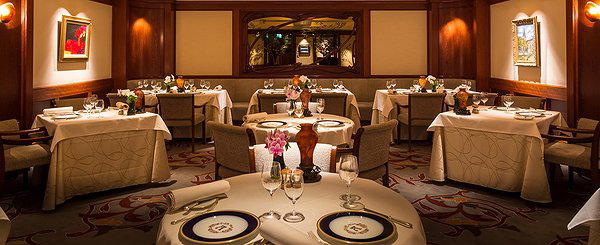
Keyakizaka occupies the fourth floor of the Grand Hyatt Tokyo in Roppongi, positioning itself inside one of the city's most scrutinised hotel-dining tiers. The restaurant draws on Japanese culinary tradition with a sourcing philosophy rooted in seasonal produce and premium domestic ingredients, placing it alongside Tokyo's most serious hotel restaurant addresses rather than its casual dining circuit.

Pearl is the En Primeur Club membership app, where members save venues, book tables and use the concierge.
The menu
What to order
- Keyakizaka Beef
- Hokkaido Scallop with Tomato Butter Sauce
- Foie Gras with Caramelized Fig
- Garlic Fried Rice
Hotel Dining in Roppongi: Where the Sourcing Standard Sets the Tier
Tokyo's hotel restaurant category divides more sharply than in most cities. At the lower end, hotel dining functions as a convenience offering for guests who don't want to venture out. At the upper end, it competes directly with the city's independent restaurant circuit, attracting locals who treat the address as a destination rather than a fallback. Keyakizaka, on the fourth floor of the Grand Hyatt Tokyo in Roppongi, sits in the latter group. The question for any hotel restaurant operating at this level isn't whether the kitchen is technically proficient; it's whether the sourcing program and culinary framework justify the positioning against Tokyo's broader dining tier.
Roppongi has always occupied an interesting place in Tokyo's dining geography. The district carries international hotel density, proximity to embassies, and a guest profile that skews toward business travelers and expense-account dinners. That context shapes what hotel restaurants here need to do: produce food that reads as serious to a Japanese dining audience while remaining legible to international guests. The properties that manage this balance well tend to anchor their menus in seasonal Japanese ingredients, allowing the sourcing story to do the cultural translation work that menu design alone cannot.
The Ingredient Logic Behind Japanese Restaurant Seasons
Japanese cuisine operates on a sourcing calendar more precise than almost any other culinary tradition. The concept of shun, the seasonal peak of an ingredient, governs menu construction at serious restaurants across all price tiers. At the upper end of the market, where Keyakizaka competes, that calendar extends beyond seasonality into provenance specificity: which prefecture, which farm, which fishing cooperative, and in some cases which individual producer. The domestic Japanese ingredient network is among the most developed in the world, with regional specialisations that create meaningful differences between, say, wagyu from Kagoshima versus Miyazaki, or sea bream from the Seto Inland Sea versus the Pacific coast.
For a Japanese restaurant inside a major international hotel, engaging this sourcing network seriously is a statement of intent. It positions the kitchen not as a hotel amenity operating from a standardised purchasing program, but as a participant in the same ingredient conversations happening at the city's independent kaiseki and washoku counters. Restaurants like RyuGin, with three Michelin stars and a kaiseki framework built explicitly around shun ingredients, set the benchmark for what rigorous seasonal sourcing looks like in Tokyo's upper dining tier. The comparison matters because it defines the competitive set that any serious Japanese restaurant in the city implicitly enters.
Roppongi's Position in the Tokyo Dining Map
Tokyo's fine dining concentration isn't evenly distributed. Ginza and Azabu-Juban carry the highest density of Michelin-recognised addresses. Shibuya and Ebisu have seen significant independent restaurant growth over the past decade. Roppongi functions differently: its hotel infrastructure anchors the area's upper dining tier, which means the comparison set for a restaurant like Keyakizaka includes not just the neighborhood's independent addresses but the hotel dining programs across the district and, by extension, across the city.
For context, Tokyo's independent Japanese restaurant circuit at the ¥¥¥¥ tier includes addresses like Harutaka in Ginza, a three-Michelin-star sushi counter operating with the kind of sourcing discipline and reservation scarcity that defines the city's omakase upper bracket. The French tier at comparable price points includes L'Effervescence and Sézanne, both three-star addresses that have used French technique applied to Japanese seasonal ingredients as their core editorial proposition. Understanding where Keyakizaka sits relative to these addresses requires knowing that hotel dining in Tokyo carries its own credibility framework, separate from but not subordinate to the independent circuit.
What a Japanese Restaurant at This Level Typically Serves
Japanese restaurants operating at the Grand Hyatt Tokyo's positioning level typically present multi-course formats anchored by seasonal produce, domestic seafood, and wagyu beef from named Japanese prefectures. Teppanyaki, kaiseki-influenced progression, and à la carte formats built around premium proteins are all common frameworks at this tier. The meal structure tends to reflect the Japanese culinary principle of balance across temperature, texture, and preparation method, with sourcing transparency serving as the primary signal of kitchen seriousness.
For comparison, Tokyo's innovative Japanese tier includes restaurants like Crony, which holds two Michelin stars and applies French technique to Japanese ingredients within a more contemporary format. The traditional kaiseki framework, as seen at RyuGin, prioritises seasonal produce sequenced through classical Japanese progression. Keyakizaka's positioning within a major international hotel suggests a format that can accommodate both the kaiseki-literate Japanese diner and the international guest encountering premium Japanese ingredients for the first time, which is itself a specific and demanding editorial brief for any kitchen.
The Grand Hyatt Tokyo as Dining Context
The Grand Hyatt Tokyo opened in Roppongi Hills in 2003, part of the Mori Building-led urban development that repositioned the district as a serious commercial and cultural address. Hotel restaurants that have operated continuously within that context accumulate a different kind of credibility than newly opened independents: longevity in a demanding market, sustained investment in kitchen infrastructure, and the institutional sourcing relationships that multi-decade operation makes possible. Our full Tokyo hotels guide maps this hotel tier in more detail for readers planning a broader stay.
For readers visiting Tokyo and weighing where Keyakizaka fits into a broader dining itinerary, the regional context extends beyond the city. Japan's restaurant circuit rewards planning across multiple cities: HAJIME in Osaka, Gion Sasaki in Kyoto, and Goh in Fukuoka each represent serious regional expressions of the same Japanese seasonal sourcing tradition. Our full Tokyo restaurants guide covers the independent circuit that surrounds Keyakizaka's hotel context.
Planning a Visit
The table below positions Keyakizaka within its immediate peer context across a few practical planning dimensions.
| Venue | Cuisine | Price Tier | Recognition | Format |
|---|---|---|---|---|
| Keyakizaka | Japanese | ¥¥¥¥ (est.) | Hotel dining tier | Hotel restaurant |
| RyuGin | Kaiseki | ¥¥¥¥ | Michelin 3 Stars | Independent counter |
| Harutaka | Sushi | ¥¥¥¥ | Michelin 3 Stars | Independent omakase |
| Crony | Innovative French | ¥¥¥¥ | Michelin 2 Stars | Independent |
For drinks programming around any Tokyo dining itinerary, our full Tokyo bars guide covers the city's cocktail and sake bar tier. Readers with broader interests across the Japan circuit can also consult our guides for akordu in Nara, 1000 in Yokohama, and 6 in Okinawa for regional comparison. International readers benchmarking Tokyo's upper dining tier against other global cities may find useful reference points in Le Bernardin and Atomix in New York, both of which operate at comparable price tiers with their own sourcing-led kitchen philosophies.
Frequently asked questions
How do I find Keyakizaka?
Keyakizaka is located at Japan, 〒106-0032 Tokyo, Minato City, Roppongi, 6 Chome−10−3 グランド ハイアット東京 4階, Tokyo.
Is Keyakizaka suitable for a business dinner in Tokyo?
The Grand Hyatt Tokyo's fourth-floor location places Keyakizaka directly inside one of Roppongi Hills' most established international business addresses, making it a practical choice for client dinners where setting carries weight alongside the meal. The Japanese fine dining format, structured, course-driven, and attentive to pace, suits a dinner where conversation takes priority. The hotel's concierge infrastructure also supports group bookings and dietary requirements in a way that many standalone Tokyo restaurants do not.
What should I eat at Keyakizaka?
Keyakizaka operates within the Japanese fine dining tradition, meaning the menu follows shun, the seasonal sourcing calendar that determines what appears at the table. Without a current verified menu on record, the practical approach is to trust the kitchen's seasonal direction rather than arriving with fixed requests. Grand Hyatt Tokyo's dining tier sets an expectation for ingredient quality that runs across the menu, from sashimi selections to grilled and simmered courses.
Can I walk in to Keyakizaka?
Keyakizaka sits on the fourth floor of the Grand Hyatt Tokyo in Roppongi Hills, a property that draws a steady mix of hotel guests and destination diners. Walk-in availability at restaurants in this category and location is inconsistent, particularly on weekends and during peak seasons. Contacting the restaurant directly or booking through the Grand Hyatt Tokyo's reservations system before arrival is the more reliable approach.
What's the standout thing about Keyakizaka?
The address tells part of the story: the Grand Hyatt Tokyo opened in 2003 as the anchor dining destination within the Mori Building's Roppongi Hills development, which repositioned the district as a serious commercial and cultural address. Within that context, Keyakizaka represents the property's commitment to Japanese cuisine at a tier where sourcing precision, not spectacle, is the differentiator. That positions it alongside a category of Tokyo hotel restaurants that operate more like independent fine dining addresses than hotel amenities.
Cuisine and Recognition
Comparable venues nearby, for context on price, style, and recognition.
| Venue | Cuisine | Price | Awards | Notes |
|---|---|---|---|---|
| KeyakizakaThis venue (the venue you are viewing) | Modern Teppanyaki with Premium Wagyu | $150–200 | Tabelog 100 #57 | Not listed |
| Sushi Mitani (鮨 三谷) | Edomae Omakase | $200–300 | La Liste Top Restaurants · Tabelog Gold #16 | Yotsuya |
| Isana sushi bar | Traditional Edomae Sushi Omakase | $150–200 | Not listed | Minato |
| 天てんぷら うち津 | Michelin-Starred Tempura Omakase | $150–200 | 1 Michelin Star | Shibuya |
| すし匠 | Sushi Sho-style Edomae Omakase | $300–500 | Tabelog 100 #49 | Shinjuku |
| Yakiniku Kaiseki Tomoji | Halal Yakiniku Kaiseki | $50–100 | Not listed | Chiyoda |
Recognition history
Dated appearances from independent guides and award organizations, with the underlying list record or original source where available.
Tabelog 100 #57 · No. 57
Tabelog · Tabelog 100 - Steak / Teppanyaki - EAST - 2025