
Michelin Plate
Our verdict
The kitchen operates in an orthodox edomae register, brined, marinated, and simmered preparations, while introducing deep-fried formats, including a signature cream croquette of tiger prawn in shrimp miso reduction, that most sushi counters would never attempt. The chef's language skills brought him to cater a diplomatic dinner between Japanese and American heads of state.

Pearl is the En Primeur Club membership app, where members save venues, book tables and use the concierge.
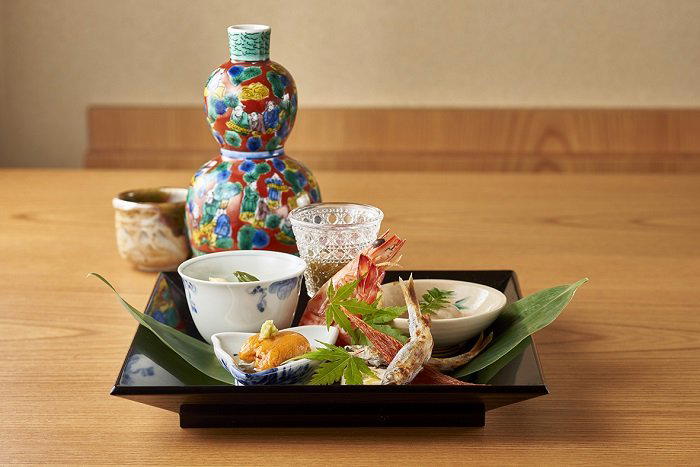
A Kanda Counter That Sits Outside the Ginza Orbit
Tokyo's premium sushi conversation is dominated by Ginza and its dense cluster of omakase counters at the ¥¥¥¥ tier, Harutaka, Sukiyabashi Jiro Roppongiten, and Sushi Kanesaka among the most scrutinised addresses. But Tokyo's sushi geography extends well beyond that corridor. Kanda Nishikicho, a district in Chiyoda that trades more in old office buildings and salaryman lunch spots than in destination dining, is exactly the kind of neighbourhood where a counter earns its reputation through the food alone rather than the address.
The positioning matters for context. At the ¥¥¥ band in Tokyo sushi, a kitchen is competing with counters like Edomae Sushi Hanabusa and others working a middle ground between neighbourhood sushiya and full destination-dining investment. What distinguishes Takaharu within that tier is a specific tension the menu has chosen to hold: orthodox edomae technique on the sushi side, and an extension into deep-fried formats that most counters would refuse on principle. That dual commitment is neither a compromise nor a novelty act, it is the coherent identity of this particular kitchen.
What Edomae Means Here, and Why It Still Matters
Edomae sushi, the Tokyo tradition of preparing fish through brining, marinating, simmering, or ageing before it reaches the counter, is in partial retreat at the top end of the market, where raw, lightly brushed, or barely seasoned preparations have become the dominant language of prestige. Counters that maintain the older toolkit of kobujime (kelp-cured) fish, tsuke (soy-marinated) tuna, and simmered shellfish are making a statement about what sushi actually is as opposed to what it has recently been celebrated for being.
At Takaharu, the sushi side of the menu is described as traditionally prepared: brined, marinated, or simmered. That language is specific enough to signal genuine edomae fluency, not just the use of the term as a marketing category. For diners accustomed to the lighter-touch, ingredient-showcase approach that defines many ¥¥¥¥ counters, this kitchen offers a different argument, one in which the chef's intervention is the point, not a distraction from pristine sourcing. Hiroo Ishizaka represents another address in Tokyo working with sustained technical attention; Takaharu operates in a comparable frame but from a different neighbourhood base and price position.
The Croquette That Defines the Format
The signature item at Takaharu is not a piece of nigiri. It is a cream croquette of tiger prawn, dressed in a reduction of shrimp miso. That a sushi counter has a deep-fried item as its defining preparation is genuinely unusual. Deep-frying and sushi have an uncomfortable relationship in the serious-counter world, the oil temperature, the texture disruption, the informality of the format all push against the meditative, minimalist aesthetic that high-end sushi has long cultivated.
Takaharu's kitchen appears to have concluded that the discomfort is worth engaging with directly. Deep-fried items appear as a category, not as a concession, and the prawn croquette with its shrimp miso reduction represents novel ideas applied to time-honoured material. The miso reduction specifically, built from the shells and heads of the same crustacean that fills the croquette, is the kind of technical decision that points to a kitchen thinking through flavour logic rather than reaching for garnish. It also situates Takaharu in a broader Tokyo trend: restaurants at the ¥¥¥ tier, from kaiseki-adjacent counters to innovative Japanese formats like Den, have been the more fertile ground for this kind of playful-but-precise cooking, while the ¥¥¥¥ tier has trended toward austerity.
Diplomatic Credentials and What They Imply
The chef at Takaharu was selected to cater a dinner meeting between the Japanese and American heads of state, a commission attributed in part to his language skills. The detail is worth noting not because it functions as a celebrity endorsement but because of what it implies about the kitchen's standing and versatility. State-level diplomatic dining in Japan operates under extraordinary scrutiny: the food must be above reproach technically, the sourcing must be defensible, and the format must communicate something coherent about Japanese culinary culture to an international audience. That this counter was chosen for that context, rather than one of the Ginza three-star addresses, says something about how the chef's particular combination of traditional technique, inventive format, and bilingual accessibility was read by whoever made that selection.
It also places Takaharu in a small category of ¥¥¥-tier Tokyo restaurants that carry a credibility beyond their price band. The Michelin Plate (2025) is the appropriate recognition for a kitchen operating at this level: it signals that the guide's inspectors found the cooking to merit attention without placing it in the starred bracket. At a counter where the food is doing this much work, that distinction feels precise.
Kanda Nishikicho in the Broader Tokyo Dining Map
Tokyo's dining geography rewards the visitor who is willing to move beyond the established luxury districts. Kanda, broadly defined, is not a dining destination in the way that Ginza, Minami-Aoyama, or Nishi-Azabu are. It is a working part of central Tokyo, close to Akihabara, adjacent to the old merchant quarters, and full of the kind of lunch counters and standing bars that serve office populations rather than expense accounts. A serious sushi counter embedded in this environment operates differently from its Ginza peers: the clientele is more mixed, the atmosphere is less performatively exclusive, and the counter earns repeat visits from people who work nearby as much as from destination seekers.
That neighbourhood character is part of what makes a Michelin Plate here read differently from the same recognition in Ginza. The guide is acknowledging cooking quality in a context where the surroundings do not do the work for the kitchen. For the diner, it means an experience that skews toward the food and away from the theatre of high-end sushi as social event.
For those building a broader Japan itinerary, the EP Club guides cover the full range: HAJIME in Osaka, Gion Sasaki in Kyoto, akordu in Nara, Goh in Fukuoka, 1000 in Yokohama, and 6 in Okinawa. The full Tokyo picture is covered in our Tokyo restaurants guide, with companion guides for hotels, bars, wineries, and experiences.
Planning a Visit
Takaharu is located at 1 Chome-17-5 Kanda Nishikicho, Chiyoda City, Tokyo, on the ground floor of the Daiwa Kandabashi building. The price range sits at ¥¥¥.
Quick reference: Sushi counter, ¥¥¥, Kanda Nishikicho, Chiyoda, Tokyo.
Frequently asked questions
Does Kandanishikicho Sushi Takaharu work for a family meal?
At the ¥¥¥ tier, Takaharu operates as a counter-format sushi restaurant, the kind of setting structured around a fixed sequence, close proximity to the chef, and a quiet, focused pace. That format suits adults rather than children. The Michelin Plate recognition reinforces this as a destination meal rather than a casual family outing.
What's the overall feel of Kandanishikicho Sushi Takaharu?
Kanda Nishikicho is a workaday central Tokyo district, and Takaharu sits on the ground floor of the Daiwa Kandabashi building, removed from the curated calm of Ginza's high-end corridors. The Michelin Plate and the diplomatic commission (the chef catered a Japanese-American leaders' dinner) signal serious intent, but the neighbourhood gives the room a less performative register than comparably priced counters further south.
Has Kandanishikicho Sushi Takaharu won any awards?
Kandanishikicho Sushi Takaharu has received recognition including: Novel ideas meet time-honoured craftsmanship. The signature snack is cream croquette of tiger prawn, dressed in a reduction of shrimp miso. Deep-fried items are also offered, bringing a satisfaction rarely found at sushi shops. For its part….
What's the must-try dish at Kandanishikicho Sushi Takaharu?
The cream croquette of tiger prawn, dressed in a reduction of shrimp miso, is the kitchen's defining preparation, a deep-fried item that most traditional sushi counters would not consider serving. The sushi itself follows Edomae convention: brined, marinated, or simmered. Order both to understand what separates Takaharu from a straight-omakase format.
What does dinner at Kandanishikicho Sushi Takaharu typically cost?
Pricing at Kandanishikicho Sushi Takaharu is listed as ¥¥¥.
What's the address for Kandanishikicho Sushi Takaharu?
Kandanishikicho Sushi Takaharu is located at Japan, 〒101-0054 Tokyo, Chiyoda City, Kanda Nishikicho, 1 Chome−17−5 Daiwa Kandabashi, 1F, Tokyo.
The Short List
A short peer table to compare basics side-by-side.
| Venue | Cuisine | Price | Awards | Notes |
|---|---|---|---|---|
| Kandanishikicho Sushi TakaharuThis venue (the venue you are viewing) | Edomae Omakase Sushi | $150–200 | Michelin Plate | Not listed |
| Harutaka | Edo-Style Omakase Sushi | $200–300 | 3 Michelin Stars · World's 50 Best #76 | Sushi |
| RyuGin | Modern Kaiseki | $500+ | 3 Michelin Stars · World's 50 Best #41 | Kaiseki, Japanese |
| L'Effervescence | Modern French with Japanese Influences | $200–300 | 3 Michelin Stars · World's 50 Best #69 | French |
| HOMMAGE | Modern French with Japanese Influences | $150–200 | 2 Michelin Stars · World's 50 Best #78 | Innovtive French, French |
| MAZ | Innovative Peruvian-Japanese Fusion | $150–200 | 2 Michelin Stars · World's 50 Best #28 | Innovative |
Recognition history
Dated appearances from independent guides and award organizations, with the underlying list record or original source where available.
Michelin Plate
Michelin
Full recognition history (2 entries)
Michelin Plate
Michelin
Continue exploring
More in Tokyo
Restaurants in Tokyo
All restaurants in Tokyo →
Bars in Tokyo
All bars in Tokyo →
Details
- Elegant
- Intimate
- Sophisticated
- Quiet
- Classic
- Date Night
- Special Occasion
- Business Dinner
- Chefs Counter
- Sake Program
- Sustainable Seafood
- Omakase
- Counter Dining
- Sake
Current opening hours
- Monday
- 12–2:30 PM, 5–10 PM
- Tuesday
- 12–2:30 PM, 5–10 PM
- Wednesday
- Closed
- Thursday
- 12–2:30 PM, 5–10 PM
- Friday
- 12–2:30 PM, 5–10 PM
- Saturday
- 12–2:30 PM, 5–10 PM
- Sunday
- 12–2:30 PM, 5–10 PM
Hours can change for holidays and private events. Last verified .
Serene wooden counter seating with beautiful Yoshino cypress grain and aroma, fostering a relaxing and sophisticated atmosphere.