
Tabelog 100 #14
Our verdict
Iwasawa occupies a first-floor space in Nishigotanda, Shinagawa, a district that rewards those willing to look past Tokyo's more trafficked dining corridors. In a city where reservation difficulty often tracks closely with critical recognition, understanding what Iwasawa represents within its neighbourhood tier matters as much as knowing what to order.

Pearl is the En Primeur Club membership app, where members save venues, book tables and use the concierge.
Arriving in Nishigotanda: What the Address Tells You
Shinagawa's Nishigotanda district sits at an interesting remove from the concentrated fine-dining corridors of Ginza, Minami-Aoyama, and Azabu-Juban. That distance is not a disadvantage, it is, for a certain category of Tokyo restaurant, precisely the point. The city's most attentive dining rooms have long understood that high rents in destination postcodes are a cost ultimately passed to the guest, and that serious kitchens can operate with more latitude when they are not competing for the same Ginza square metre. Iwasawa's first-floor address in Nishigotanda places it within a broader Tokyo pattern: restaurants that earn their audience through word of mouth and repeat visitors rather than foot traffic and visibility.
Approaching from Nishigotanda station, the neighbourhood reads as residential-commercial mixed use, the kind of streetscape that in Tokyo often conceals a counter or a dining room that would merit a detour from considerably further away. The physical modesty of the surroundings is consistent with a tier of Tokyo restaurant that spends its budget on product and technique rather than location premium or interior spectacle.
The Booking Question: How This Restaurant Gets Filled
In Tokyo's tighter dining categories, the booking experience itself functions as a signal. Rooms that fill through direct relationships, through Japanese-language reservation systems, or through returning guests operate on different logic than those accessible via international platforms.
This is a recognised pattern across Japan's more serious independent restaurants. Harutaka in Ginza, for instance, operates within a reservation framework that rewards familiarity and direct contact. The lesson from that tier is consistent: international booking platforms capture only a portion of available Tokyo dining, and rooms that do not appear on those platforms are not necessarily less accomplished; they are often more so. For visitors planning a Tokyo itinerary, Iwasawa warrants the same advance groundwork as any restaurant in the ¥¥¥¥ Ginza bracket, regardless of postcode.
Practically, this means building contact attempts into the planning timeline at least four to six weeks before arrival, and ideally working through a hotel concierge with existing supplier relationships in Shinagawa. Tokyo's luxury hotel concierge desks, particularly those affiliated with properties in the Shinagawa corridor, which anchors the Shinkansen gateway south of the city, carry specific local knowledge that international concierges rarely replicate. If you are routing through Tokyo from Kyoto or Osaka via the Shinkansen, Shinagawa station's central position makes an Iwasawa visit logistically coherent without requiring a cross-city transfer.
Where Iwasawa Sits in the Tokyo Dining Context
Tokyo's restaurant tier structure does not map neatly onto geographic prestige. Rooms like RyuGin and L'Effervescence occupy the upper end of the capital's critically recognised bracket, while a secondary tier of independent restaurants, often outside Ginza and Minami-Aoyama, operates with comparable seriousness at different price points or different visibility levels. Iwasawa's Nishigotanda placement suggests the latter cohort: a room built for guests who already know what they are looking for rather than those working from a recognised-name shortlist.
Compared with the more internationally profiled rooms, Sézanne in Four Seasons Marunouchi draws a global press contingent; Crony has built its audience through a specific progressive-French positioning; Iwasawa operates in a quieter register. That quiet is a feature of Shinagawa dining more broadly: the ward has enough residential density and business-traveller traffic to sustain serious independent restaurants without requiring the marketing infrastructure that Ginza venues depend on.
For reference points outside Tokyo: the same dynamic of serious independent kitchens operating below international radar plays out at Goh in Fukuoka, at akordu in Nara, and in the broader Kansai context at HAJIME in Osaka. Japan's dining geography rewards visitors who look past the concentrated prestige corridors of any given city. The same applies within Tokyo itself, Shinagawa included.
What to Order and What to Expect at the Table
What is consistent across Tokyo's more serious independent dining rooms, regardless of format, is the expectation that the guest arrives having done some preparation. This is not a cultural formality; it is a practical matter. Omakase counters and kaiseki rooms in particular move at a pace set by the kitchen, with little tolerance for mid-service menu explanation. Arriving with dietary requirements communicated in advance, ideally in Japanese, is standard practice in this tier. Hotels in Shinagawa and the surrounding wards can facilitate this communication if guests flag it at booking.
For broader Japan itinerary context, pairing an Iwasawa visit with an evening at Gion Sasaki in Kyoto, if the travel route permits, provides a useful contrast between Tokyo's independent counter culture and Kyoto's more codified kaiseki tradition. Regional comparisons across Japan often clarify what is distinctive about any individual room more effectively than direct peer-to-peer Tokyo comparisons.
Readers building wider Japan itineraries should also consider dining in Nanao, Sapporo, and Takashima as part of a broader regional picture. For a full Tokyo orientation, our complete Tokyo restaurants guide maps the capital's dining across cuisines, price tiers, and booking-difficulty brackets.
For guests calibrating expectations against non-Japanese reference points: the structural discipline of Tokyo's counter-dining culture has more in common with Atomix in New York, another room where format, sequence, and advance preparation define the experience, than with larger Western tasting-menu formats like Le Bernardin, where the room absorbs a wider range of guest preparation levels. Additional Japan regional dining worth considering includes Birdland in Sakai, Bistro Ange in Toyohashi, dining in Nishikawa Machi, and the broader regional spread represented across EP Club's Tokyo coverage.
Know Before You Go
- Address: 5-chome-6-11, Nishigotanda, Shinagawa City, Tokyo 141-0031 (1F, NSV Building)
- Access: Nishigotanda Station (Tokyu Ikegami Line) is the closest rail point; Shinagawa Station (Shinkansen, JR, Keikyu) is accessible by taxi or a short connecting ride
- Lead time: Allow four to six weeks minimum for reservation attempts; adjust upward for peak travel periods (Golden Week, late March cherry blossom, October)
- Dietary communication: Flag restrictions at the time of reservation, ideally in Japanese
Frequently asked questions
How do I find Iwasawa?
Iwasawa is located at Japan, 〒141-0031 Tokyo, Shinagawa City, Nishigotanda, 5 Chome−6 11NSVビル 1F, Tokyo.
How Iwasawa Tokyo compares with similar nearby venues.
| Venue | Cuisine | Price | Awards |
|---|---|---|---|
| IwasawaThis venue (the venue you are viewing) | Edo-style Omakase Sushi | $200–300 | Tabelog 100 #14 |
| Hao Hao | Vegan Hong Kong & Taiwanese Chinese | $10–20 | Tabelog 100 #70 |
| Curry no Mise Udon | Japanese Curry House | $10–20 | Tabelog 100 #53 |
| ARALIYA LANKA Gotanda honten | Not listed | Not listed | Tabelog 100 #90 |
| Meat Yazawa Gotanda honten | Wagyu Steakhouse | $30–50 | Tabelog 100 #24 |
| Age Fuku | Specialist Tonkatsu Restaurant | $30–50 | Tabelog 100 #33 |
Recognition history
Dated appearances from independent guides and award organizations, with the underlying list record or original source where available.
Tabelog 100 #14 · No. 14
Tabelog · Tabelog 100 - Sushi - TOKYO - 2025
Continue exploring
More in Tokyo
Restaurants in Tokyo
All restaurants in Tokyo →


Bars in Tokyo
All bars in Tokyo →





Details
- Cozy
- Intimate
- Elegant
- Date Night
- Special Occasion
- Chefs Counter
- Sake Program
- Omakase
- Counter Dining
Current opening hours
- Monday
- 5:30–7:30 PM, 8–9 PM
- Tuesday
- 5:30–7:30 PM, 8–9 PM
- Wednesday
- 5:30–7:30 PM, 8–9 PM
- Thursday
- 5:30–7:30 PM, 8–9 PM
- Friday
- 5:30–7:30 PM, 8–9 PM
- Saturday
- 5:30–7:30 PM, 8–9 PM
- Sunday
- 5:30–7:30 PM, 8–9 PM
Hours can change for holidays and private events. Hours as of .
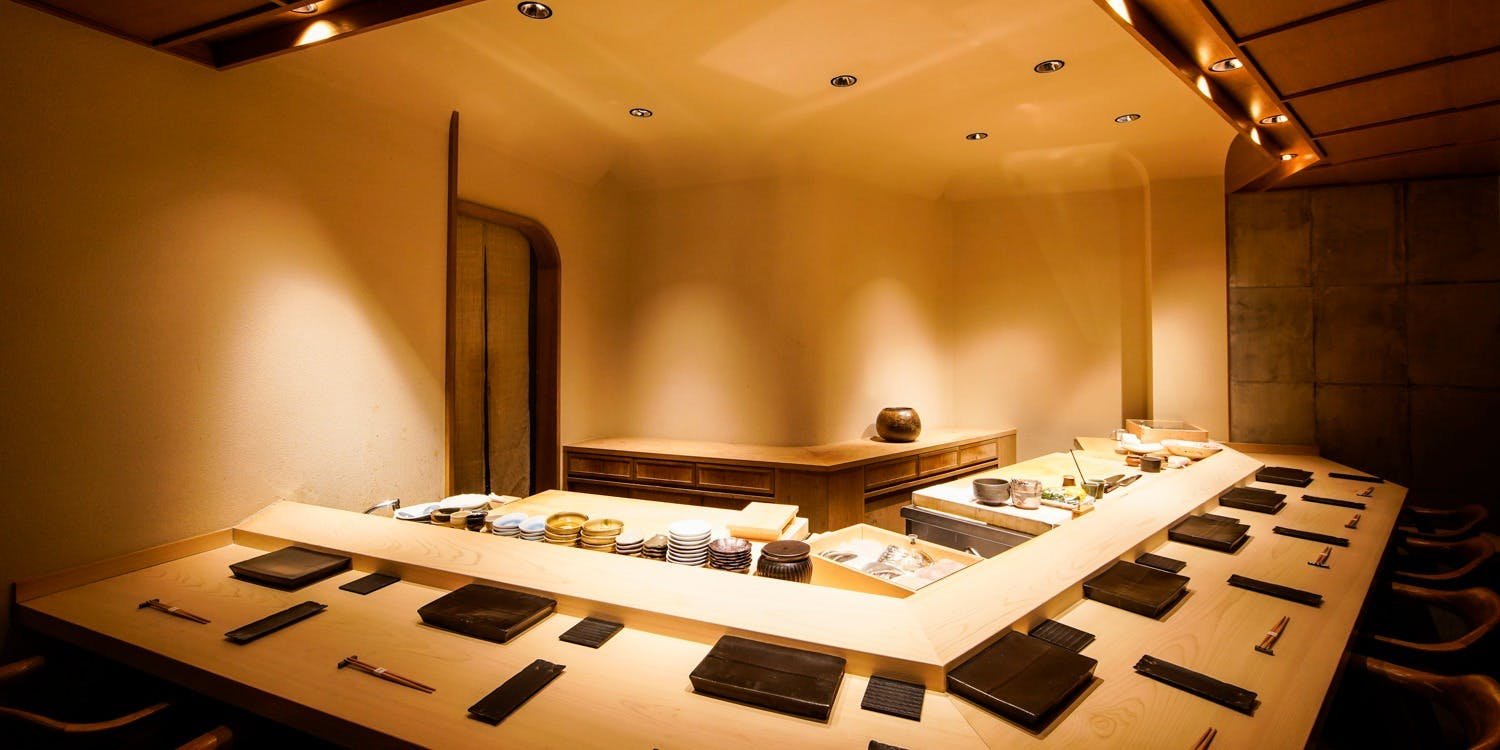
Cozy counter seating with polished white wood counter in a residential area.