
Michelin Bib Gourmand
Our verdict
A Michelin Bib Gourmand recipient in consecutive years (2024 and 2025), Ikkon Uehara operates from Kyoto's Kita Ward as a neighbourhood table in the truest sense: omakase at lunch, à la carte in the evening, and a horigotatsu counter where a couple serves returning regulars with warmth and without ceremony. The ¥¥ pricing makes it one of the more accessible entries in Kyoto's serious Japanese dining tier.

Pearl is the En Primeur Club membership app, where members save venues, book tables and use the concierge.
The menu
What to order
- Kamameshi
- Hassun platter
- Grilled fish
- Tempura
The Street Behind the Shrine
Kyoto's northern wards hold a different kind of dining culture from the Gion corridor or the kaiseki rooms that line the Kamo River. Up in Kita Ward, the restaurants that earn repeat business do so by becoming fixtures of their immediate neighbourhood rather than destinations on a tourist circuit. Ikkon Uehara sits on this quieter register. The address, Kamigoryokamiecho, a residential pocket well north of the central sightseeing belt, tells you something before you even step inside: this is a place built for locals who return, not for visitors checking off a list.
That distinction matters more in Kyoto than in most cities. The capital's dining reputation is dominated by multi-generation kaiseki houses, a tier represented by venues like Isshisoden Nakamura and Gion Matayoshi, where the formality of service and the depth of seasonal craft sit alongside prices that reflect it. Ikkon Uehara occupies a structurally different position: the ¥¥ price range, the neighbourhood address, and the couple-run format all signal a local institution rather than a pilgrimage venue. The Michelin Bib Gourmand in both 2024 and 2025 confirms the quality at that tier, awarded to places where the inspectors find exceptional cooking relative to price rather than exceptional performance relative to the city's most decorated tables.
Counter Culture, Kita Ward Edition
The format anchors the experience. Lunch at Ikkon Uehara runs omakase only, a set menu that removes the decision overhead and lets the kitchen sequence its strongest work. The evening opens into à la carte, which serves the repeat customer well: regulars can return without following a predetermined arc, ordering around what they want rather than what the kitchen has chosen. This dual-mode structure is common in Kyoto's mid-tier neighbourhood restaurants, where the challenge is building a menu broad enough to retain regulars while maintaining enough discipline to justify the omakase format at midday.
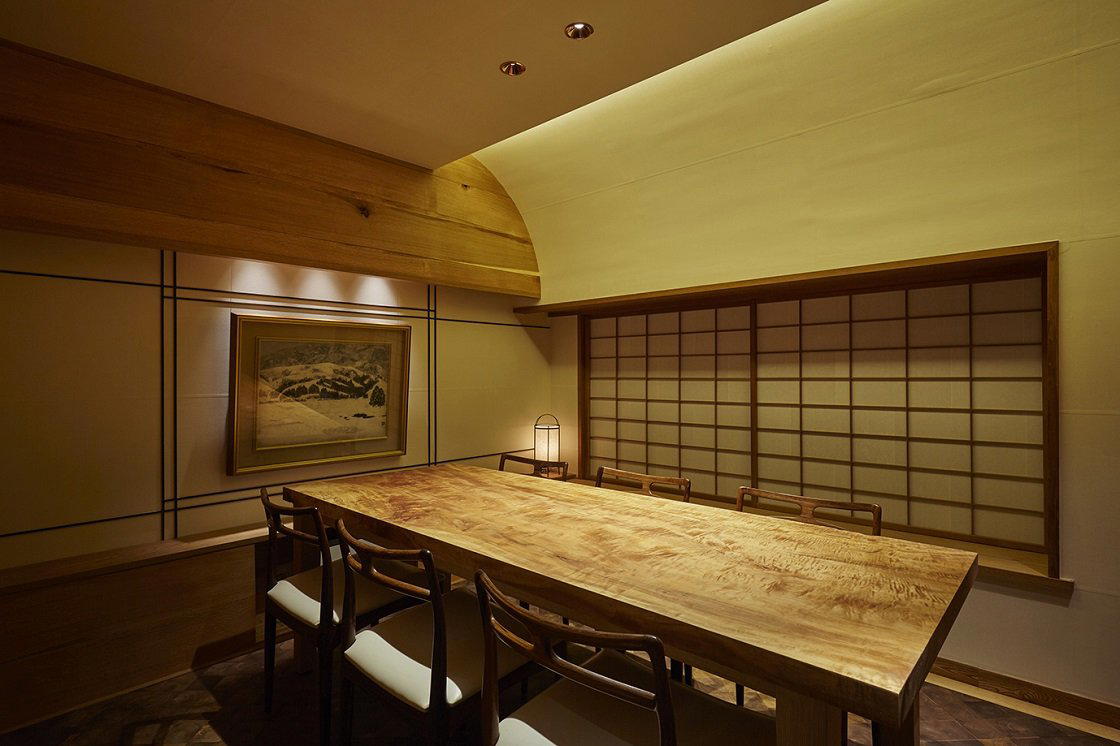
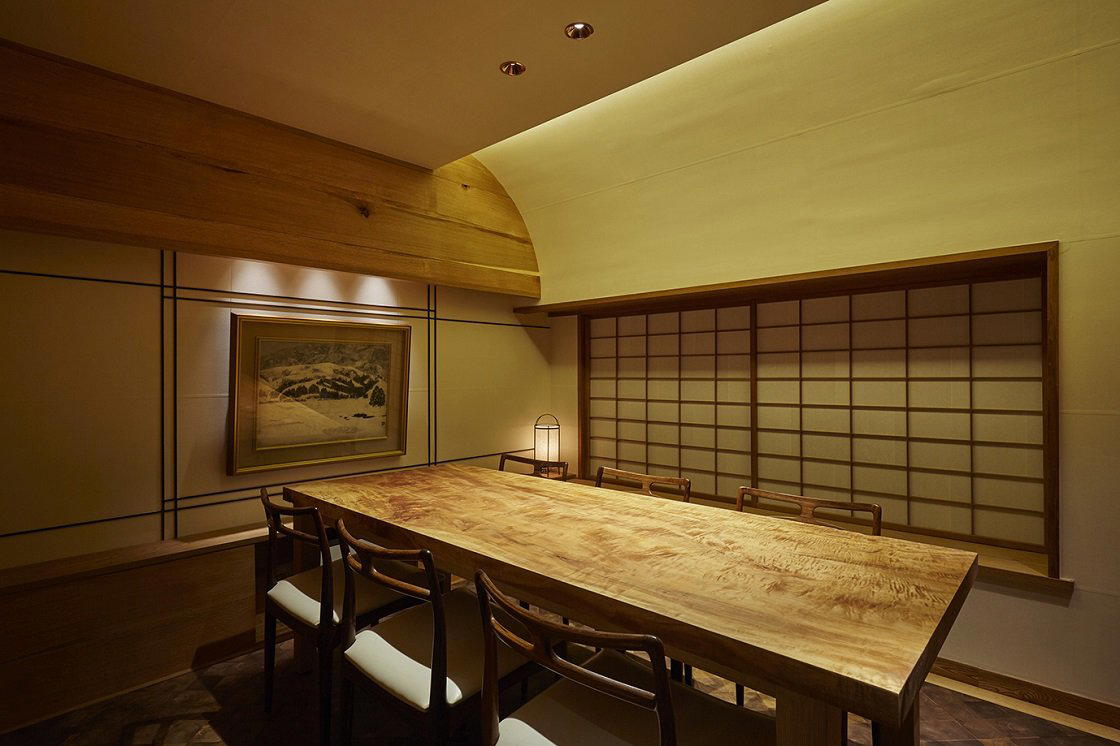
The counter itself is a horigotatsu configuration, the recessed-floor seating style that allows diners to sit at counter height with legs hanging below, a format associated with informal hospitality and long, unhurried meals. It is not the refined, lacquered counter of a multi-star kaiseki room; it is the kind of seat that invites you to stay. Behind the counter, the couple who run the place deliver service described as cheerful and gracious, a combination that positions this firmly as a neighbourhood table rather than a performance space. At venues like Kenninji Gion Maruyama or Kikunoi Roan, the service register is precise and composed in a different way, calibrated to the formality of the room. Here, the warmth is the point.
What the Food Signals
Kitchen's philosophy becomes legible through two specific elements in the available record. The assorted appetiser platter is described as a demonstration that the old ways are not forgotten, a phrase that speaks to the continuity between Kyoto's deep culinary traditions and what lands on the plate. Kyoto cuisine has long been defined by restraint: small portions of seasonal ingredients prepared to highlight their inherent character rather than their transformation. The appetiser platter, loaded and varied, sits within that tradition while communicating generosity rather than austerity.
Fishcake in clear broth is the second signal, and it is the more telling one. Clear broth, osumashi in Japanese, is technically demanding precisely because there is nowhere to hide. The broth must be transparent in flavour as well as appearance: well-seasoned, clean, and deep without opacity. Serving fishcake in this format, rather than in a richer or more visually elaborate preparation, is a conservative choice that rewards the kitchen for technique rather than spectacle. It reads as comfort food, yes, but the category of comfort food that requires genuine skill to produce correctly. This is different from the multi-course kaiseki architecture found at venues such as Kodaiji Jugyuan, where the sequence itself becomes the statement. At Ikkon Uehara, individual dishes carry the weight.
Sake sits naturally inside this meal. The instruction to tip a cup or two and feel the seasons change is as close as the record comes to a sensory recommendation, and it aligns with how sake has always functioned in this kind of neighbourhood setting, as an accompaniment that extends the meal rather than a programme element to be evaluated separately. Kyoto sake culture, for this tier, is about what is in the carafe on the counter, not a list drawn from a wine director's cellar.
Placing Ikkon Uehara in Kyoto's Price Map
Kyoto's recognised Japanese dining runs across a steep gradient. At the leading, Michelin two- and three-star kaiseki houses operate at price points where a single dinner represents a significant outlay, and where the booking window stretches months ahead. The ¥¥ tier that Ikkon Uehara occupies is structurally different: accessible enough that a local might eat here on a regular weeknight without treating it as an event. The Bib Gourmand designation is specifically designed to mark this register, and Ikkon Uehara's consecutive recognitions in 2024 and 2025 make it one of the more reliably documented options in that bracket for Kita Ward.
For visitors building a Kyoto itinerary across multiple price points, balancing an evening at a kaiseki counter with lunches that don't require the same financial commitment, this kind of venue fills a real gap. The omakase lunch format means the kitchen still controls the narrative at midday, which produces a more coherent experience than ordering à la carte without local knowledge.
For a broader look at where Ikkon Uehara sits within the city's dining options, the full Kyoto restaurants guide covers the range from neighbourhood tables to the city's most decorated rooms. Those planning a longer stay can also consult the Kyoto hotels guide, the Kyoto bars guide, the Kyoto wineries guide, and the Kyoto experiences guide for a complete picture.
Beyond Kyoto: Japanese Dining at Comparable Points
The Bib Gourmand tier that Ikkon Uehara represents has equivalents across Japan's major cities, each operating on similar logic: serious cooking, accessible pricing, a local rather than destination clientele. Myojaku in Tokyo and Azabu Kadowaki in Tokyo operate within Tokyo's Japanese dining spectrum at different price registers. Further afield, HAJIME in Osaka, Harutaka in Tokyo, akordu in Nara, Goh in Fukuoka, 1000 in Yokohama, and 6 in Okinawa each represent the regional variation in how Japan's serious dining culture expresses itself outside the leading metropolitan tier.
Know Before You Go
- Cuisine: Japanese
- Price range: ¥¥
- Awards: Michelin Bib Gourmand 2024, Michelin Bib Gourmand 2025
- Format: Omakase set menu at lunch; à la carte also available in the evening
- Seating: Horigotatsu counter
- Service: Couple-run; service style is warm and informal
- Address: 232-9 Kamigoryokamiecho, Kita Ward, Kyoto, 603-8147, Japan
- Booking:
Frequently asked questions
What's the price range at Ikkon Uehara?
Pricing at Ikkon Uehara is listed as ¥¥.
Where exactly is Ikkon Uehara?
Ikkon Uehara is located at 232-9 Kamigoryokamiecho, Kita Ward, Kyoto, 603-8147, Japan, Kyoto.
How It Stacks Up
| Venue | Cuisine | Price | Awards | Notes |
|---|---|---|---|---|
| Ikkon UeharaThis venue (the venue you are viewing) | Kyoto Kappo and Kaiseki | $50–100 | Michelin Bib Gourmand | Not listed |
| Gion Sasaki | Modern Kaiseki | $300–500 | 3 Michelin Stars · La Liste Top Restaurants | Kaiseki, Japanese |
| cenci | Innovative Italian-Japanese Fusion | $100–150 | 1 Michelin Star · World's 50 Best #76 | Italian |
| Ifuki | Sumibi Kappo Kaiseki | $200–300 | 2 Michelin Stars · La Liste Top Restaurants | Kaiseki |
| Kyokaiseki Kichisen | Kyoto Kaiseki | $200–300 | 2 Michelin Stars · La Liste Top Restaurants | Japanese |
| Kyo Seika | Modern Chinese Fine Dining | $150–200 | 1 Michelin Star · Tabelog Bronze #216 | Chinese |
Recognition history
Dated appearances from independent guides and award organizations, with the underlying list record or original source where available.
Michelin Bib Gourmand
Michelin
Full recognition history (3 entries)
Michelin Bib Gourmand
Michelin
Michelin Bib Gourmand
Michelin
Continue exploring
More in Kyoto
Restaurants in Kyoto
All restaurants in Kyoto →

Bars in Kyoto
All bars in Kyoto →


Hotels in Kyoto
All hotels in Kyoto →

Wineries in Kyoto
Browse all →
Details
- Intimate
- Cozy
- Elegant
- Minimalist
- Date Night
- Solo
- Special Occasion
- Chefs Counter
- Open Kitchen
- Sake Program
- Local Sourcing
- Omakase
- A La Carte
- Counter Dining
- Sake
Current opening hours
- Monday
- 12–3 PM, 5:30–10 PM
- Tuesday
- 12–3 PM, 5:30–10 PM
- Wednesday
- Closed
- Thursday
- 5:30–10 PM
- Friday
- 12–3 PM, 5:30–10 PM
- Saturday
- 12–3 PM, 5:30–10 PM
- Sunday
- 12–3 PM, 5:30–10 PM
Hours can change for holidays and private events. Hours as of .
Warm, inviting, and intimate with wood surfaces, compact layout, and focus on the chef's counter; direct and cheerful service in a minimalistic setting.