Our verdict
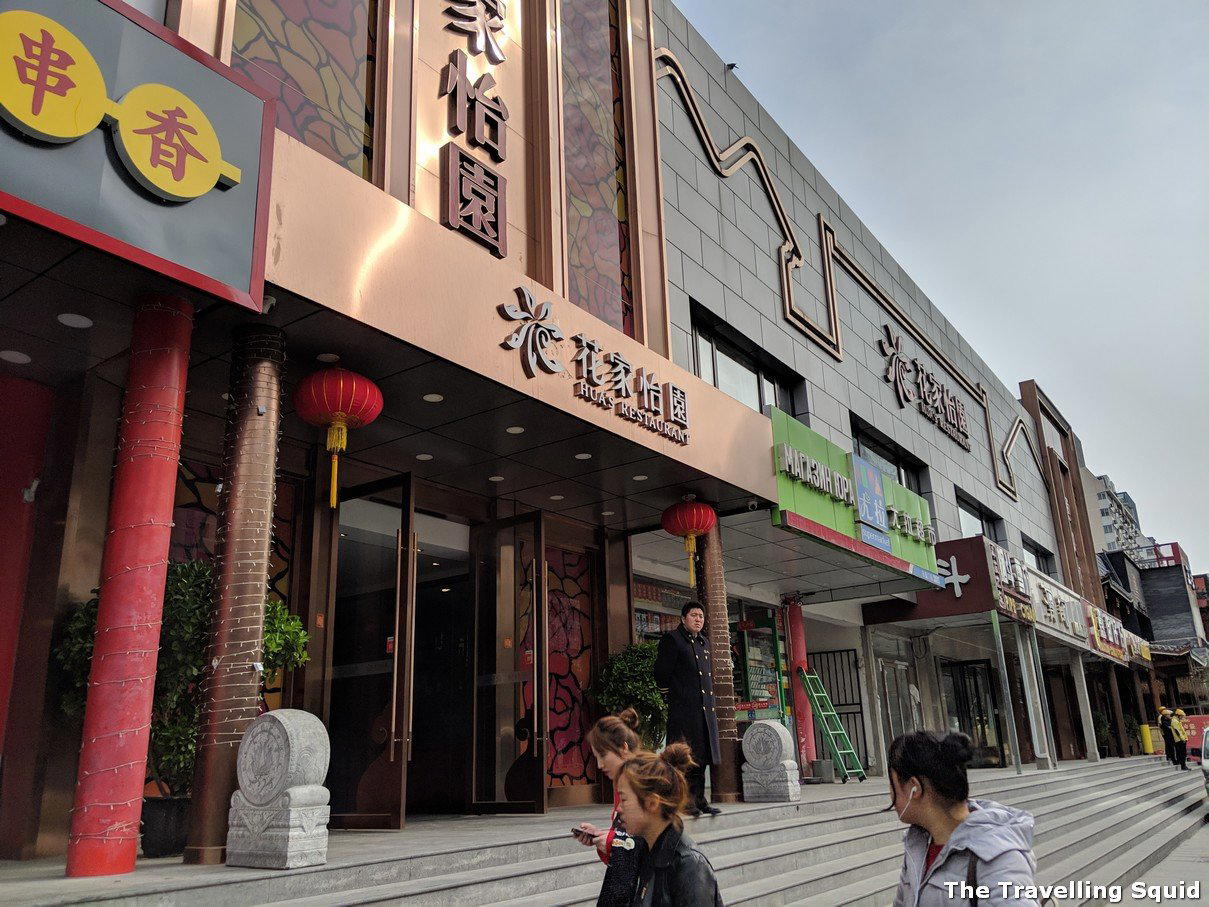
Huajia Yiyuan occupies a courtyard setting in Beijing's Dongcheng district, where the format draws on the domestic traditions of old Beijing cuisine in a city that has increasingly split between high-volume tourist dining and more considered, ingredient-led Chinese cooking. The address, in the alleyway network near Dongzhimen, places it within a neighbourhood where hutong character still shapes the dining experience.

Pearl is the En Primeur Club membership app, where members save venues, book tables and use the concierge.
The menu
What to order
- Baye Peking Duck
Old Beijing Courtyards and the Question of Authenticity
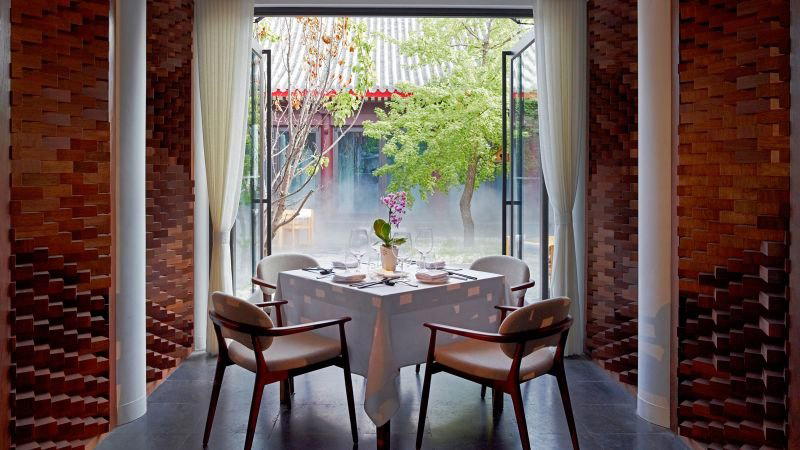
Beijing's most interesting dining division is not between Chinese and international kitchens, but between the institutions that performed old Beijing cuisine for decades without revising it and the smaller addresses that have begun applying more exacting ingredient sourcing and cleaner technique to the same classical framework. Huajia Yiyuan, set in the hutong alleyway network near Beixin Bridge in Dongcheng, belongs to a category of Beijing restaurant that the city's food culture has historically produced in small numbers: addresses where the architectural setting and the food share the same logic. The courtyard format is not decorative here. It is structural to the experience, the way space has always organised Chinese hospitality at the domestic scale.
Dongcheng, and specifically the Dongzhimen corridor running toward Beixin Qiao, has retained more of its residential lane character than the commercialised hutong blocks further south. Arriving through the alleyway approach, before any dish arrives, places a diner within a physical argument about how Beijing eating worked before the hotel dining room and the mall food court reshaped the city's restaurant stock. That spatial context is worth registering, because it conditions everything that follows inside.
Where Indigenous Ingredients Meet Revised Thinking
The broader trend in serious Chinese dining across the mainland has moved toward a more disciplined interrogation of regional products. At restaurants like Xin Rong Ji (Xinyuan South Road), the Taizhou seafood tradition is applied with precision sourcing that would have been logistically difficult a decade ago. At Chao Shang Chao in Chaoyang, Chaozhou cooking is presented with the kind of formal restraint that signals a kitchen thinking carefully about product provenance. What connects these addresses, despite their different regional roots, is an approach in which indigenous Chinese ingredients are the point of departure, not the backdrop.
Huajia Yiyuan operates within that broader shift, framing itself around the domestic register of Beijing cuisine rather than the banquet-hall version that dominated the city's restaurant identity through much of the twentieth century. The courtyard dining form draws directly from the siheyuan, the enclosed residential compound around which Beijing's social life was organised for centuries. Applying that framework to a restaurant is a curatorial decision, one that carries the risk of becoming a heritage performance rather than a live kitchen. The test, always, is whether the cooking engages with the same seriousness the setting implies.
Across Chinese cities, the most credible addresses in this territory tend to share certain characteristics: they source seasonal produce from identifiable regional origins, they avoid the heavy saucing that characterised hotel-era Chinese cooking, and they treat the dining room as a place where the rhythm of service is as deliberate as the food. King's Joy in Beijing demonstrates what happens when a vegetarian Chinese kitchen applies those principles rigorously, achieving Michelin recognition for cooking that treats plant-based ingredients at the same level of attention typically reserved for premium protein. Lamdre, also Beijing-based and vegetarian, occupies a parallel tier with its own approach to seasonal and regional sourcing.
Beijing's Courtyard Dining Tradition in Context
The siheyuan restaurant format has experienced several waves of revival in Beijing, each reflecting different cultural pressures. The first wave, in the 1990s, was largely touristic, deploying the courtyard as spectacle for visitors encountering the capital's historical fabric. The second, from roughly 2010 onward, has been more substantive, coinciding with broader shifts in Chinese consumer attitudes toward domestic heritage, artisanal production, and the rejection of international-as-aspirational. Huajia Yiyuan fits within this second wave, and its location in the Dongcheng hutong network rather than in a developed heritage zone like Nanluoguxiang or Shichahai signals a preference for the residential over the curated.
Comparative points from other Chinese cities clarify the pattern. Ru Yuan in Hangzhou applies a similar logic to Jiangnan cuisine, using a garden setting to frame what is essentially a very serious approach to Zhejiang regional cooking. 102 House in Shanghai approaches the intersection of architectural heritage and contemporary Chinese cooking from a different angle, using a colonial-era shikumen building as its frame. The setting-as-argument strategy is not unique to Beijing, but Beijing's courtyard typology is the most domestic in register, which makes the hospitality feel closer to the residential ideal that Chinese dining culture has always placed at its centre.
Beyond the mainland, the formal Chinese dining tradition has found different expressions. Chef Tam's Seasons in Macau works at the intersection of Cantonese precision and fine-dining structure, while Imperial Treasure Fine Chinese Cuisine in Guangzhou represents the southern Chinese banquet tradition applied at a premium price point. Against these, Beijing's courtyard format occupies a distinct position: less focused on technical virtuosity as the primary signal of seriousness, more invested in the setting and the pacing of the meal as the frame for the food. Whether that distinction holds in practice depends on what the kitchen delivers on any given service.
Seasonal Timing and the Rhythm of a Beijing Meal
Beijing's culinary calendar has always been seasonal in a way that northern China's climate enforces rather than encourages. The transition months, late spring and early autumn, when the city's markets carry the clearest signal of the growing season turning, tend to be when courtyard dining is at its most coherent. Summer services run into the evening heat that makes open courtyard tables a variable experience; winter, while atmospherically compelling in a walled courtyard with braziers, compresses the outdoor element that the format depends on at its finest. For a visit calibrated to the setting's full effect, April through early June and September through October represent the period where the physical and the culinary arguments align.
For our full Beijing restaurants guide, the broader pattern is that the city's most considered Chinese kitchens are distributed across several neighbourhoods rather than concentrated in a single district. Alongside Huajia Yiyuan in Dongcheng, Jingji represents Beijing cuisine at the formal end of the price spectrum with ¥¥¥¥ positioning, while addresses in the Chaoyang dining corridor like Chao Shang Chao demonstrate how non-Beijing regional traditions have established serious footholds in the capital. The comparison is useful because it clarifies what is specifically Beijing about an address like Huajia Yiyuan: the courtyard, the domestic register, and the northern Chinese seasonal rhythm that sets the terms of the menu.
For readers cross-referencing across the broader Chinese dining circuit, the regional cooking intelligence from addresses like Dingshan Jiangyan in Suzhou, Fleurs Et Festin in Xiamen, Jiangnan Wok Rong in Fuzhou, Shang Palace in Yangzhou, and Dai Yuet Heen in Nanjing provides a useful map of how different Chinese cities are handling the same tension between regional authenticity and contemporary dining standards. Beijing's courtyard tradition is one answer to that tension. It is not the only one, but it is the one most specific to this city's domestic history.
For international comparisons in technique-led serious dining, Le Bernardin in New York City and Atomix in New York City represent what happens when indigenous culinary traditions, French seafood cooking and Korean cuisine respectively, are applied with exacting technical discipline in a fine-dining frame. The contrast with a Beijing courtyard restaurant is instructive: where those addresses signal seriousness through technique and tasting-menu structure, Huajia Yiyuan's signal is spatial and traditional. The cooking has to carry the weight of the setting's argument.
Planning Your Visit
Huajia Yiyuan is located in the Beixin Qiao area of Dongcheng, reachable from Dongzhimen subway station on Lines 2 and 13, with the hutong approach requiring a short walk or taxi from the main road. Booking in advance is advisable, particularly for weekend lunch and evening services, and for visits during the prime seasonal windows of April to June and September to October.
Frequently asked questions
What's the address for Huajia Yiyuan?
Huajia Yiyuan is located at China, Beijing, Dongcheng, Dongzhimen, Beixin Brg Tou Aly é®æ¿ç¼ç , Beijing.
How does Huajia Yiyuan's courtyard setting compare to other siheyuan restaurants in Beijing?
Beijing's siheyuan restaurant category divides between venues that treat the courtyard as decorative backdrop and those where the architecture genuinely shapes the dining rhythm, and Huajia Yiyuan's Beixin Qiao location in Dongcheng places it in the hutong-dense district where original courtyard structures are most intact. The Dongzhimen area carries more residential texture than the tourist-facing courtyard addresses near Houhai or Nanluoguxiang, which tends to shift the clientele and atmosphere noticeably. That neighbourhood positioning is one of the more reliable indicators of where a courtyard restaurant's priorities actually sit.
What do people recommend at Huajia Yiyuan?
Visitor consensus at Huajia Yiyuan consistently prioritises the courtyard setting as central to the experience, with traditional Beijing-style dishes drawing the most repeat attention. The Dongcheng location places it within the hutong belt where northern Chinese culinary conventions, braised preparations, layered savoury profiles, remain the reference point. Specific dish recommendations are best confirmed at the time of booking, as seasonal availability shapes the menu.
Is Huajia Yiyuan reservation-only?
Advance booking is strongly advisable rather than optional. Courtyard restaurants in Dongcheng at this positioning fill during peak seasonal periods, spring and autumn are the busiest windows in Beijing, and the siheyuan format limits seating capacity by its architecture. Walk-ins during high season carry real risk of being turned away.
What's the signature at Huajia Yiyuan?
Huajia Yiyuan's positioning within Beijing's courtyard dining tradition points toward classic northern Chinese preparations rather than a chef-driven tasting format, which means the setting itself functions as the organising principle of the meal. Visitors should ask staff directly about daily or seasonal specialities.
How does Huajia Yiyuan handle allergies?
For visitors with serious dietary requirements, the practical approach is to arrive with a written note in Mandarin specifying the restriction. Traditional Beijing cuisine relies heavily on wheat, sesame, and soy-based condiments, which is worth factoring into planning.
Peers in This Market
Comparable venues nearby, for context on price, style, and recognition.
| Venue | Cuisine | Price | Awards | Notes |
|---|---|---|---|---|
| Huajia YiyuanThis venue (the venue you are viewing) | Traditional Beijing Peking Duck | $30–50 | Not listed | Not listed |
| Sanqingtan | Refined Cantonese Roast Goose & Dim Sum | Not listed | Michelin Plate | Sanlitun |
| QUANJUDE | Traditional Peking Roast Duck | $30–50 | Not listed | Qianmendajie |
| 功德林 | Modern Chinese | $50–100 | Michelin Bib Gourmand | Zhengyilu |
| 游龙饭庄 | Traditional Beijing Imperial Cuisine | Not listed | Not listed | Chongwen District |
| Din Tai Fung | Taiwanese Soup Dumplings | $20–30 | Not listed | Sanlitun |
Continue exploring
More in Beijing
Restaurants in Beijing
All restaurants in Beijing →
Bars in Beijing
All bars in Beijing →
Details
- Classic
- Elegant
- Lively
- Business Dinner
- Group Dining
- Special Occasion
- Courtyard
- Private Dining
- Historic Building
- Live Music
- Garden
- A La Carte
- Vegetarian Friendly
Current opening hours
- Monday
- 9 AM–9 PM
- Tuesday
- 9 AM–9 PM
- Wednesday
- 9 AM–9 PM
- Thursday
- 9 AM–9 PM
- Friday
- 9 AM–9 PM
- Saturday
- 9 AM–9 PM
- Sunday
- 9 AM–9 PM
Hours can change for holidays and private events. Hours as of .
Lively and cultural atmosphere in a beautifully restored traditional Chinese courtyard house with elegant private rooms.