
Tabelog 100 #16
Our verdict
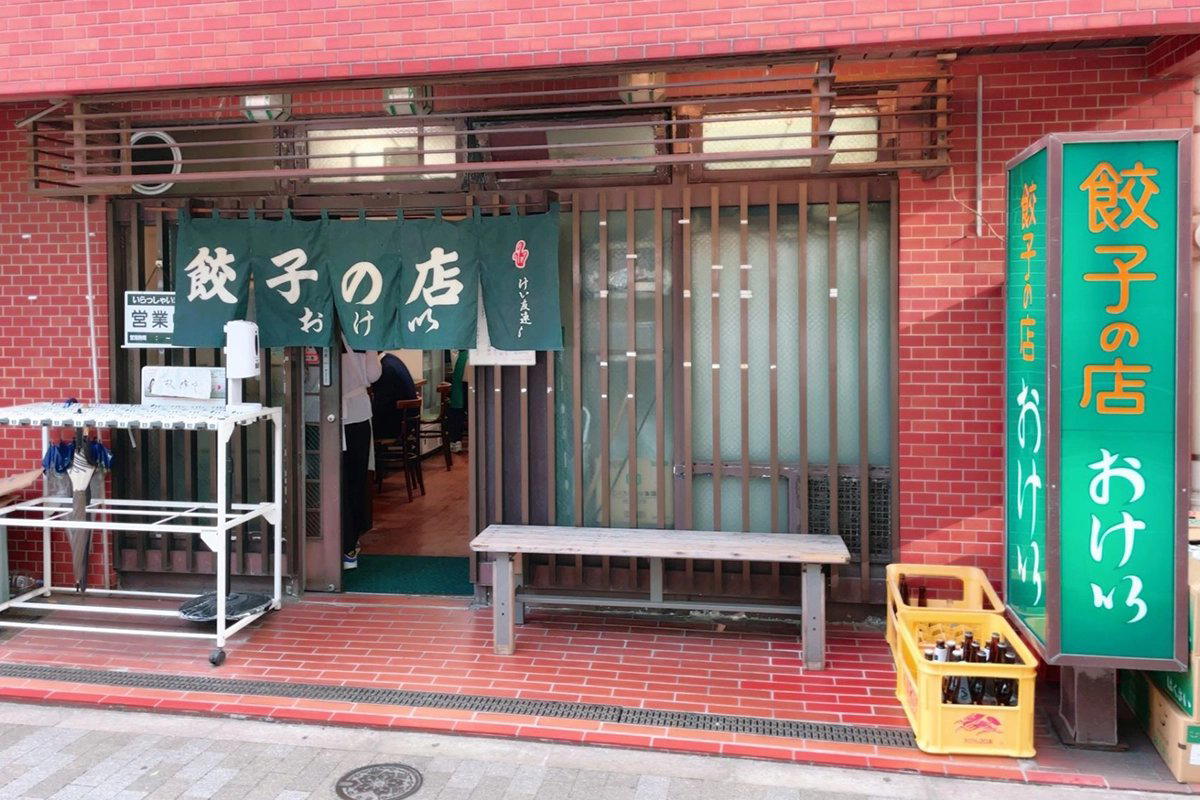
Tokyo's gyoza specialty counters occupy a narrower, more committed niche than the city's broader dumpling scene suggests. Gyōzanomise Okei sits within that specialist tier, where the form itself, wrapping technique, filling balance, cook method, carries the editorial weight that tasting menus carry elsewhere. A focused stop for anyone mapping Tokyo's single-dish dining tradition.

Pearl is the En Primeur Club membership app, where members save venues, book tables and use the concierge.
The menu
What to order
- Gyoza dumplings
- Fried rice
- Yakisoba
- Mapo tofu
The Single-Dish Counter in Tokyo's Dining Order
Tokyo's restaurant culture has a particular regard for the specialist: the tempura-only counter, the soba shop that has refined one noodle for three generations, the yakitori stand where the whole menu is a single bird broken into its leading parts. Gyoza belongs to this tradition of disciplined reduction, and Gyōzanomise Okei operates within it. In a city where a ¥¥¥¥ omakase at a counter like Harutaka competes for attention against kaiseki programs at RyuGin and French tasting menus at L'Effervescence, the gyoza specialist occupies a quieter but no less rigorous position. The measure of quality here is not a multi-course progression but the integrity of a single shape, repeated and refined.
That specialist mode is worth understanding before you arrive. Tokyo's gyoza scene splits, roughly, between izakaya side-dish gyoza, fried in bulk, serviceable, not the point, and the smaller category of shops where the dumpling is the entire premise. Gyōzanomise Okei belongs to the latter group. What that means practically: the room is likely compact, the menu narrow, and the decision-making simplified to style of preparation and filling variant rather than a page of options.
Technique as the Editorial Subject
The editorial angle that defines a place like Gyōzanomise Okei is the one most relevant to Tokyo's current dining conversation: the meeting of imported technique and local product. Japanese gyoza is itself a studied adaptation of Chinese jiaozi, a form that crossed into Japan through Manchuria in the early twentieth century and was slowly repatriated into something distinct, thinner skin, more garlic and cabbage in the filling, the characteristic one-sided pan-fry that produces the crisp bottom and steamed leading simultaneously. The technique has local roots now, but its origins remain part of its identity.
What the more serious gyoza counters in Tokyo have done in recent years is apply precision to that inherited form: controlling skin hydration and thickness to the millimetre, sourcing pork from specific regional producers, calibrating the balance between nira (garlic chives), hakusai (napa cabbage), and ginger with the same attention a French kitchen applies to a sauce reduction. Restaurants like Crony and Sézanne have demonstrated how much the Tokyo dining public now expects ingredient specificity and sourcing transparency even in non-tasting-menu formats. That expectation has migrated downward through price tiers. A gyoza specialist in 2024 is not immune to it.
The intersection of global technique and indigenous products shows up most clearly in the sourcing choices that define a shop's character.
Where Gyōzanomise Okei Sits in Tokyo's Broader Map
Tokyo rewards category specialization more consistently than almost any other major dining city. The evidence is structural: single-product restaurants, ramen shops, sushi counters, tempura specialists, command queues, critical attention, and, in several cases, Michelin recognition that their generalist counterparts rarely receive. Gyoza has been slower to collect that tier of formal recognition than ramen or sushi, but the category is not without serious practitioners. Japan's regional gyoza traditions, Utsunomiya's boiled-then-fried approach, Hamamatsu's ring-arrangement pan-fry served with bean sprouts, Kyoto's smaller, more delicate form, each carry distinct regional identity, and Tokyo, as the country's culinary aggregator, absorbs and sometimes refines all of them.
For context on how Japan's serious eating extends beyond Tokyo, it is worth noting the regional competition for attention: HAJIME in Osaka, Gion Sasaki in Kyoto, akordu in Nara, and Goh in Fukuoka each demonstrate how regional culinary identity sharpens when a kitchen commits to a specific product set and place. The gyoza specialist operates at a different price point and format, but the underlying logic, commitment to a product, refusal of distraction, is consistent across tiers. Further afield, this counter in Nanao, this Sapporo address, this Takashima restaurant, and this Nishikawa Machi table each show how Japan's specialist dining logic travels outside its major cities.
Internationally, the single-product discipline finds analogues in places like Le Bernardin in New York, where seafood exclusivity is an identity rather than a constraint, or Atomix, where Korean culinary language gets rendered in a precise tasting format. The comparison is not about price parity but about the editorial coherence that comes from choosing a lane and holding it. Birdland in Sakai and Bistro Ange in Toyohashi occupy similarly committed single-register positions in their respective categories.
Planning Your Visit
Tokyo's specialist counters at this level, shops where a queue or a short booking window is the primary friction, tend to operate on walk-in systems or short-notice reservations rather than the multi-month advance booking required at ¥¥¥¥ omakase counters. Because gyoza specialists in Tokyo often operate lunch and dinner services with defined break periods, arriving at opening time is generally the most reliable way to secure a seat without a reservation. For broader context on where Gyōzanomise Okei fits within Tokyo's full dining picture, see our full Tokyo restaurants guide.
Frequently asked questions
at Gyōzanomise Okei?
How far ahead should I plan for Gyōzanomise Okei?
What makes Gyōzanomise Okei worth seeking out?
How does Gyōzanomise Okei handle allergies?
Does Gyōzanomise Okei justify its prices?
Is Gyōzanomise Okei a good introduction to Tokyo's specialist dumpling scene for visitors unfamiliar with regional Japanese gyoza styles?
The Short List
Comparable venues nearby, for context on price, style, and recognition.
| Venue | Cuisine | Price | Awards | Notes |
|---|---|---|---|---|
| Gyōzanomise OkeiThis venue (the venue you are viewing) | Traditional Japanese Gyoza | $10–20 | Tabelog 100 #16 | Not listed |
| 南方中華料理 南三 | Taiwanese | Not listed | Tabelog 100 #14 | Shinjuku, Taiwanese |
| Anda Gyoza Yoyogi uehara ten | Chinese Gyoza | $20–30 | Tabelog 100 #71 | Shibuya, Chinese Gyoza |
| chuukaryouri tokutake | Modern Chinese & Ramen | $30–50 | Tabelog 100 #33 | Sumida, Modern Chinese & Ramen |
| MUDAN JIANG | Chinese Izakaya | $30–50 | Tabelog 100 #49 | Chūō, Chinese Izakaya |
| Chuka Dining Ichizu Isshin | Casual Seasonal Chinese Dining | $30–50 | Tabelog 100 #60 | Katsushika, Casual Seasonal Chinese Dining |
Recognition history
Dated appearances from independent guides and award organizations, with the underlying list record or original source where available.
Tabelog 100 #16 · No. 16
Tabelog · Tabelog 100 - Dumplings - 2024
Continue exploring
More in Tokyo
Restaurants in Tokyo
All restaurants in Tokyo →



Bars in Tokyo
All bars in Tokyo →




Details
- Cozy
- Classic
- Intimate
- Lively
- Casual Hangout
- Solo
- Standalone
- Sake Program
- A La Carte
- Counter Dining
- Small Plates
Current opening hours
- Monday
- 5–8:30 PM
- Tuesday
- 5–8:30 PM
- Wednesday
- 5–8:30 PM
- Thursday
- 5–8:30 PM
- Friday
- 5–8:30 PM
- Saturday
- 11:30 AM–2 PM, 5–8:30 PM
- Sunday
- Closed
Hours can change for holidays and private events. Hours as of .