Tabelog 100 #59
Our verdict
A six-seat counter in Nakagyo Ward, Guu has earned Tabelog Silver in 2026 and a score of 4.39, placing it among the most recognised Chinese restaurants in western Japan. Bookings open via Instagram DM on the first of each month, with dinner priced between JPY 20,000 and JPY 29,999. It is one of the few Chinese fine-dining addresses in Kyoto operating at this tier of critical recognition.

Pearl is the En Primeur Club membership app, where members save venues, book tables and use the concierge.
The menu
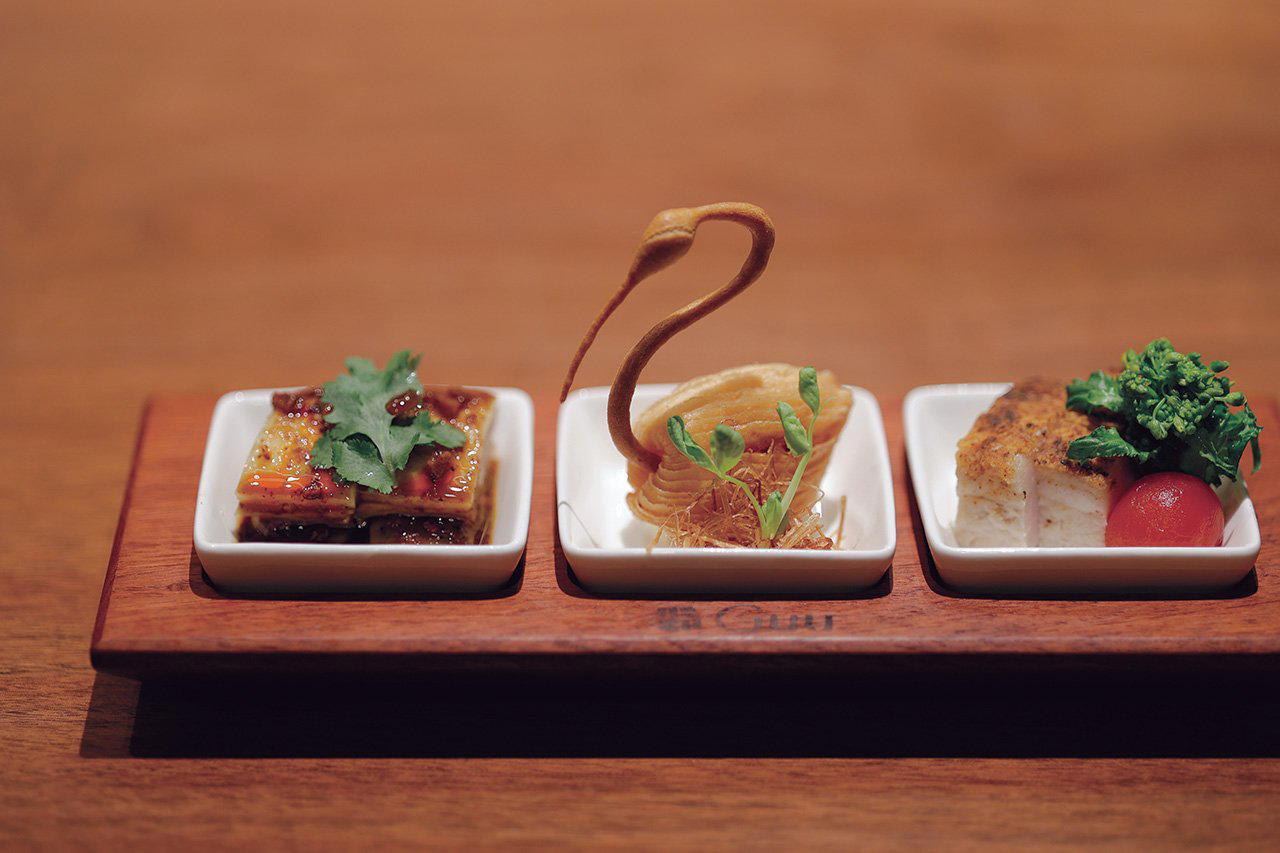
What to order
- Peking duck
- Shark fin soup
- Dragon fried rice
Where Chinese Fire Meets Kyoto Restraint
Kyoto's dining identity is so thoroughly defined by kaiseki that serious Chinese cooking tends to be read as an outlier rather than a fixture. That framing misses something. The city has, over decades, developed a small but consequential tier of Chinese restaurants that absorb the local preference for precision and seasonal attentiveness without softening the fundamental character of the cuisine. The wok flame stays high. The heat is real. What changes is the editorial judgment applied to every element on the plate.
Guu, operating from a six-seat counter in Nakagyo Ward since September 2022, sits at the top of that tier. Its Tabelog score of 4.39 and Silver award for 2026 place it ahead of the Bronze it held in 2025, a trajectory that tracks with its selection for the Tabelog Chinese WEST "Tabelog 100" in 2024. For context, Tabelog Silver is a classification shared by a small number of restaurants nationally, and the Chinese category in western Japan produces fewer Silver recipients than washoku categories. That relative scarcity matters when reading what the award signals about peer position.
The Counter as a Format Argument
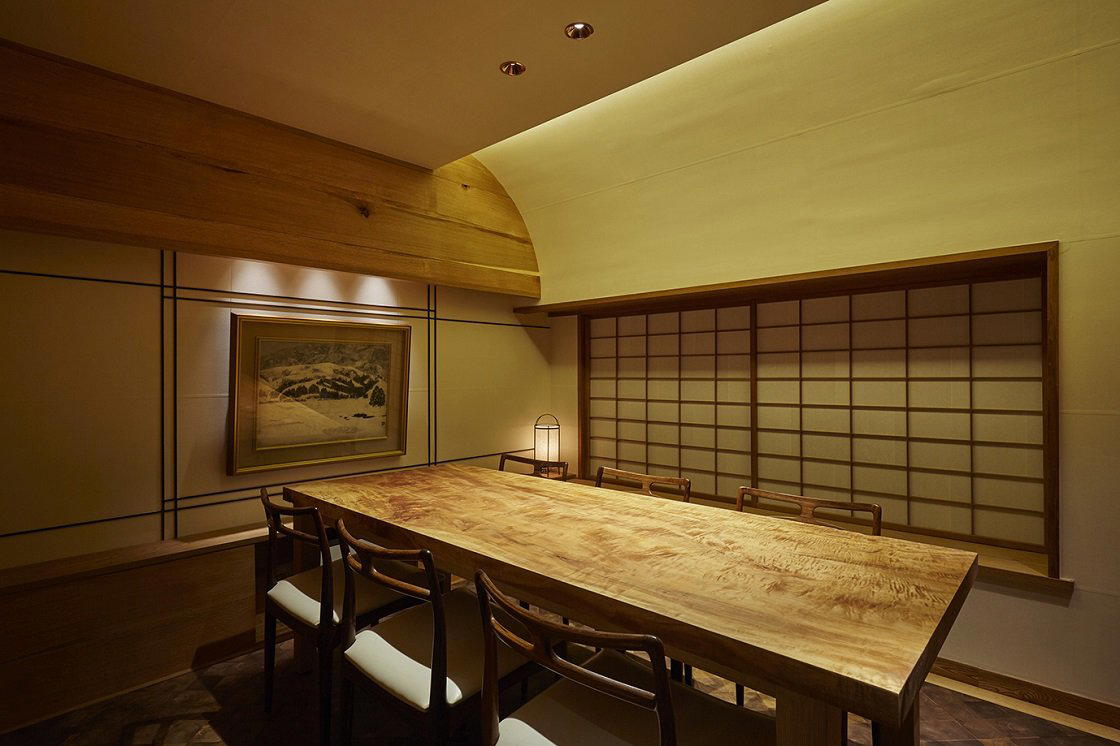
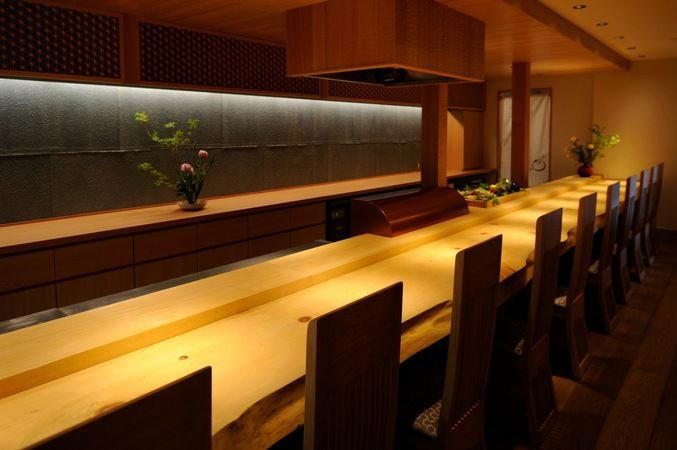
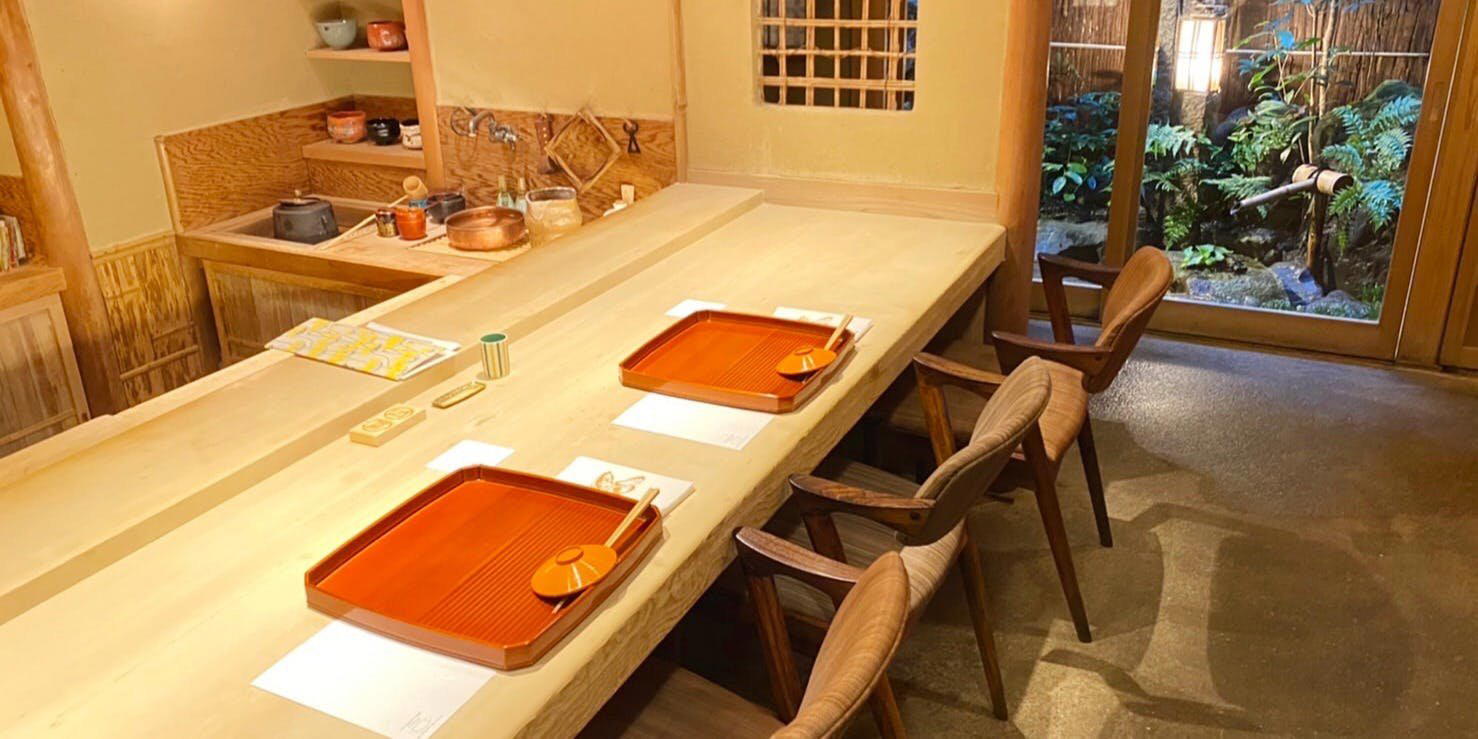
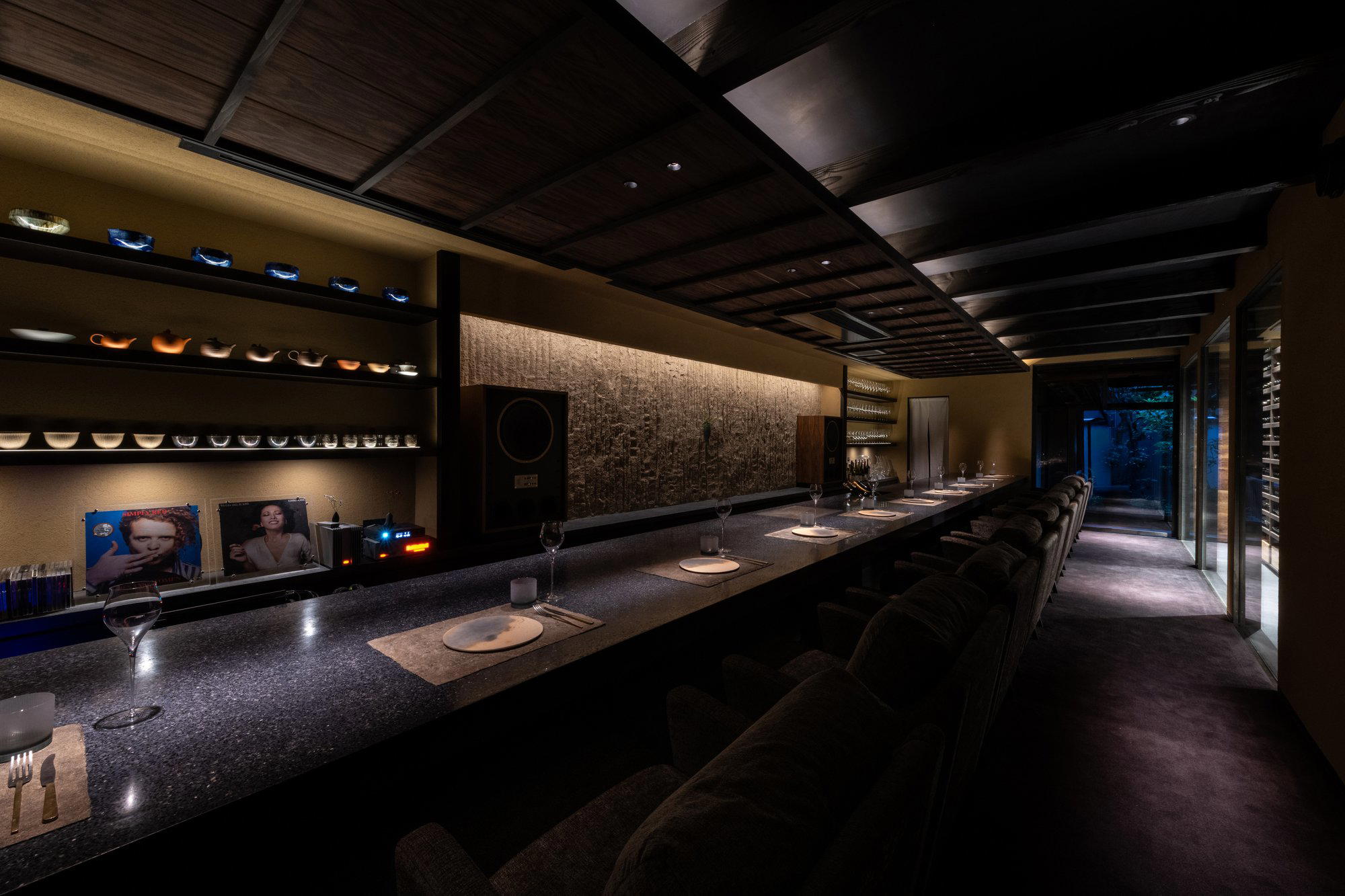
Six seats at a counter is not a capacity constraint, it is a format declaration. It places Guu in the same structural tier as Kyoto's most closely held omakase experiences, where the ratio of kitchen attention to covers is the primary product. Kaiseki counters at venues like Gion Sasaki or Mizai operate on a similar logic: the room is small, the interaction is direct, and the absence of a dining room with ambient noise is itself a signal about what the kitchen considers important. Guu applies that same spatial discipline to Chinese cooking, a cuisine more commonly associated with large, loud, table-service rooms.
That displacement is worth sitting with. Chinese haute cuisine in Japan, what the industry refers to loosely as chugoku ryori at its formal end, has historically been delivered in settings that emphasise hospitality scale: tablecloths, trolleys, service teams. The counter format at Guu strips that scaffolding away and asks the food to hold the room on its own terms. At JPY 20,000 to JPY 29,999 per head for both lunch and dinner, the price point supports that positioning. It aligns more closely with two- and three-Michelin-star kaiseki pricing in the city than with the typical Chinese restaurant range. For comparison, Kyoto's Michelin-recognised Chinese address Kikunoi Honten occupies a different category entirely, and the kaiseki tier represented by Hyotei or Isshisoden Nakamura confirms that JPY 20,000-plus is the threshold at which Kyoto restaurants signal serious intent.
Chinese Cuisine's Place in a Kaiseki City
The cultural context behind a restaurant like Guu requires some unpacking for visitors whose Kyoto itinerary is built around Japanese culinary tradition. Formal Chinese cooking arrived in Japan through multiple routes, diplomatic hospitality in Nagasaki, the Shippoku tradition, the post-war Chinese community restaurants of Osaka and Kobe, and its finest contemporary expressions have absorbed Japanese sourcing instincts and seasonal thinking while retaining the technical foundations of Cantonese, Shanghainese, and Sichuan cooking. The result is a distinct sub-genre that does not exist in quite the same form anywhere else.
What the Tabelog description references, fierce flames and rising steam as the visible language of the kitchen, points directly to wok technique, the irreducible skill that separates Chinese fine dining from other categories. Wok hei, the breath of the wok, is a function of heat management that cannot be replicated outside a professional kitchen environment and requires years of repetition to command. Its presence in a six-seat counter setting, where the theatre is intimate rather than concealed, is the experience Guu is selling. That combination of technical intensity and spatial closeness is the editorial argument the format makes.
Elsewhere in the Kansai region, HAJIME in Osaka represents a different model of high-intent Japanese fine dining, and the contrast is instructive: where HAJIME works in a French idiom shaped by Japanese aesthetics, Guu works entirely within Chinese technique. Both operate at comparable price points; both attract the same type of reservation-driven, advance-planning diner. The difference is in what the kitchen considers its primary inheritance.
How the Reservation System Works
Guu's booking structure is deliberate and requires attention. For new customers, reservations for remaining seats the following month open via Instagram DM at midnight on the first of each month, on a first-come, first-served basis. Lunch service is available by private reservation only. Dinner begins at 18:00. The restaurant is closed on Mondays, Sundays, and additional days that are not fixed in advance, confirmation before any visit is essential.
This Instagram-DM model is increasingly common among small, high-demand Japanese counters. It functions as a soft filter: diners who engage with it are, by definition, paying attention. It also means Guu does not appear on the major reservation platforms that handle most international bookings, which depresses its visibility among first-time visitors to Japan who rely on those channels. The restaurant accepts major credit cards (VISA, Mastercard, JCB, AMEX, Diners). Electronic money and QR code payments are not accepted.
Getting to Nakagyo Ward from central Kyoto is direct by public transport: approximately five minutes on foot from Kyoto City Hall Station on the Tozai Subway Line, or roughly six minutes from Sanjo Station on the Keihan Main Line. From Kyoto Station, a taxi takes approximately 16 minutes. There is no on-site parking.
The Competitive Set in Western Japan
Situating Guu within the broader Japanese fine dining map is useful for planning purposes. The Tabelog Chinese WEST "Tabelog 100" selection places it in a peer group drawn from across the Kansai and western Japan region, rather than the national Tabelog 100 for all categories. Within Kyoto specifically, the Chinese fine dining field is thin at this price point. Kyo Seika holds a Michelin star in the Chinese category and operates at a lower price tier, making Guu and that address structurally different propositions despite sharing a cuisine category.
For visitors building a multi-city itinerary around serious Japanese dining, Guu sits alongside high-intent counter experiences in other cities: Harutaka in Tokyo, akordu in Nara, Goh in Fukuoka, 1000 in Yokohama, and 6 in Okinawa each represent the same genre of tightly controlled, small-capacity, reservation-essential dining. The common thread across that group is that the format itself is the argument: small rooms, high attention, prices that reflect the ratio of effort to covers rather than the cost of decor.
For international visitors comparing Guu to fine dining reference points elsewhere, say, Le Bernardin in New York City or Atomix, the price range is comparable, though the format is considerably more intimate and the cuisine tradition entirely different. That comparison is useful for calibrating expectations around value and experience density, not for drawing culinary equivalences.
Browse the full Kyoto restaurants guide to place Guu within the wider dining picture, or explore Kyoto hotels, Kyoto bars, Kyoto wineries, and Kyoto experiences for the full picture.
Know Before You Go
- Address: 467-2 Hinokuchicho, Nakagyo Ward, Kyoto, 604-0912, Japan
- Dinner price: JPY 20,000 – JPY 29,999 per person
- Lunch price: JPY 20,000 – JPY 29,999 (private reservation only)
- Dinner service: Starts at 18:00
- Closed: Mondays, Sundays, plus additional unannounced closures, confirm before visiting
- Seats: 6 counter seats only
- Reservations: New customers via Instagram DM from midnight on the 1st of each month for remaining seats the following month
- Payment: Credit cards accepted (VISA, Mastercard, JCB, AMEX, Diners); no electronic money or QR payments
- Getting there: 5-min walk from Kyoto City Hall Station (Tozai Line); 6-min walk from Sanjo Station (Keihan Line); ~16 min by taxi from Kyoto Station
- Parking: Not available
- Smoking: Non-smoking throughout
- Private hire: Available for up to 20 people
- Opened: September 2022
Frequently asked questions
Is Guu okay with children?
Guu is structured as an adult dining experience. The six-seat counter format, per-head pricing of JPY 20,000 to JPY 29,999, and appointment-only reservation system via Instagram all point toward a setting that expects focused, patient diners. No children's menu or family accommodation is noted in available data.
What should I expect atmosphere-wise at Guu?
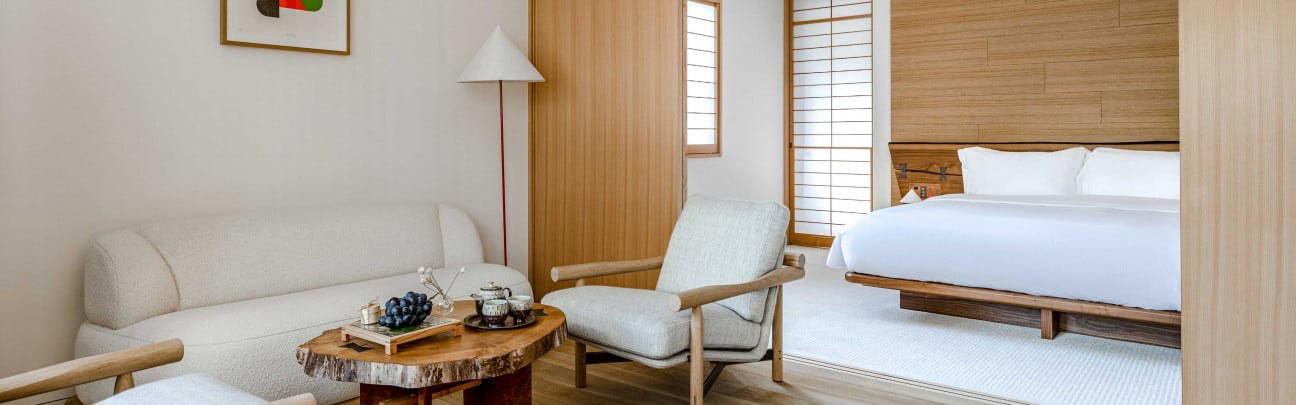
Six counter seats in Nakagyo Ward means close proximity to an open kitchen defined by high-heat wok cooking, Tabelog's own description references fierce flames and rising steam as central to the experience. The spatial scale is comparable to Kyoto's intimate kaiseki counters, but the energy runs hotter, literally. Dinner service begins at 18:00; lunch is private reservation only.
Is Guu Michelin-listed?
Guu has received recognition including:
What do people recommend at Guu?
Tabelog reviewers, who have given Guu a score of 4.39 and placed it among the Tabelog Chinese WEST "Tabelog 100" for 2024, consistently point to the wok technique as the defining draw. The venue's own framing, 'fierce flames and rising steam, everything is a feast', captures what guests cite: live-fire Chinese cooking executed at counter range, with nowhere to hide and nothing diluted.
What time does Guu open and close?
Hours at Guu: ■Business hoursLunch 12:00 - Private reservation onlyDinner starts at 18:00■Closed onMondays, Sundays, and not fixed.
Cost and Credentials
Comparable venues nearby, for context on price, style, and recognition.
| Venue | Cuisine | Price | Awards | Notes |
|---|---|---|---|---|
| GuuThis venue (the venue you are viewing) | Kyoto-style Chinese Omakase | $100–150 | Tabelog 100 #59 | Not listed |
| 微風台南 | Authentic Taiwanese Street Food | $10–20 | Not listed | 上京区, Authentic Taiwanese Street Food |
| Hachiraku | Kyoto-style Chinese | Not listed | Michelin Plate | Higashiyama, Kyoto-style Chinese |
| Madam Koran | Kyoto-style Chinese in a traditional machiya | $50–100 | Tabelog 100 #17 | Nakagyō, Kyoto-style Chinese in a traditional machiya |
| Nikuryori Kanae | Meat Kaiseki (Niku-Kappo) | $150–200 | Not listed | Nakagyō, Meat Kaiseki (Niku-Kappo) |
| Poquito | Authentic Spanish Tapas & Wine Bar | $30–50 | Star Wine List | Nakagyō, Authentic Spanish Tapas & Wine Bar |
Recognition history
Dated appearances from independent guides and award organizations, with the underlying list record or original source where available.
Tabelog 100 #59 · No. 59
Tabelog · Tabelog 100 - Chinese cuisine - WEST - 2026
Full recognition history (3 entries)
Tabelog Silver #29
Tabelog
Tabelog Bronze
Tabelog