Google: 4.9 · 101 reviews
.png)
A Michelin-starred kappo in Higashiyama Ward, Gion Kajisho brings Kyoto cuisine within reach of a broader audience without abandoning the discipline that earned its recognition. The kitchen draws on Nagasaki seafood and regional noodle traditions alongside kappo classics, offering both set formats and à la carte options in the evening. Google reviewers rate it 5.0 across 68 responses.
 Discover on Pearl
Pearl is the En Primeur Club membership app — saves, bookings, and concierge access live there. Same editors, same standards.
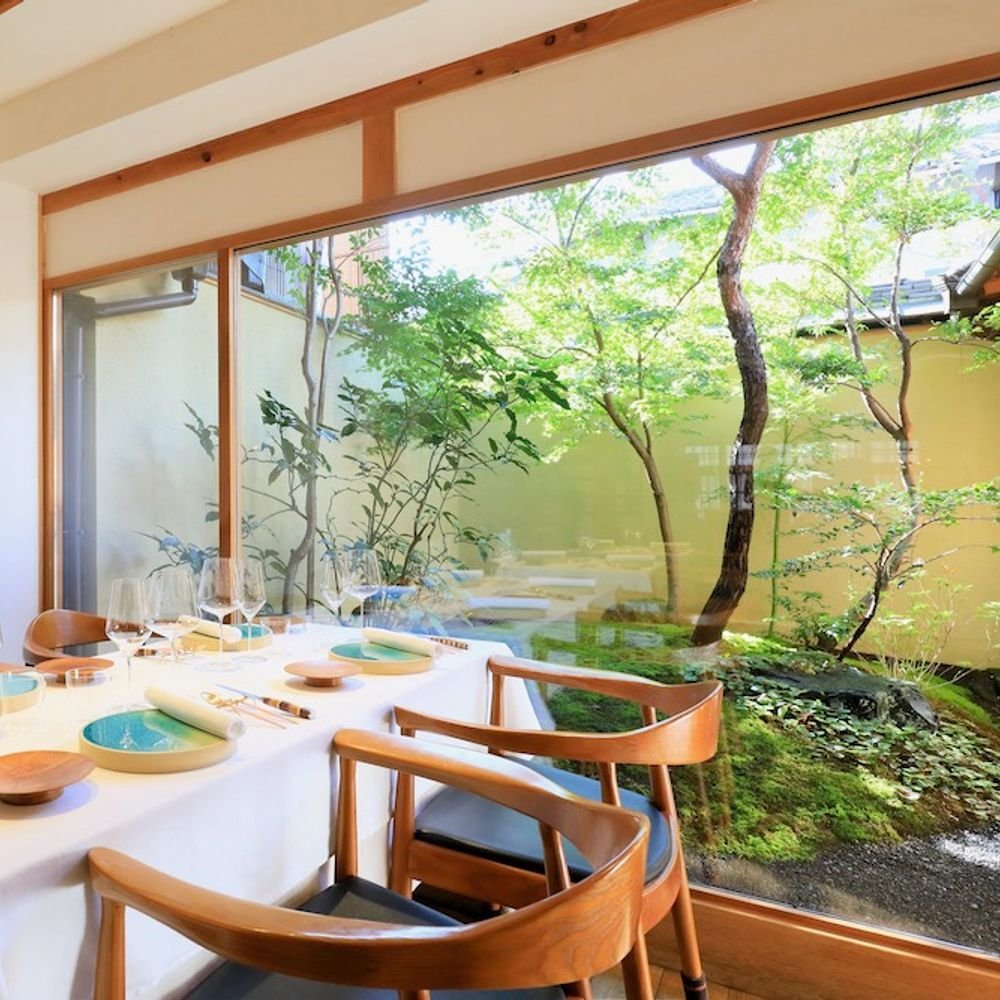
Kappo Kyoto, Scaled Down and Brought Closer
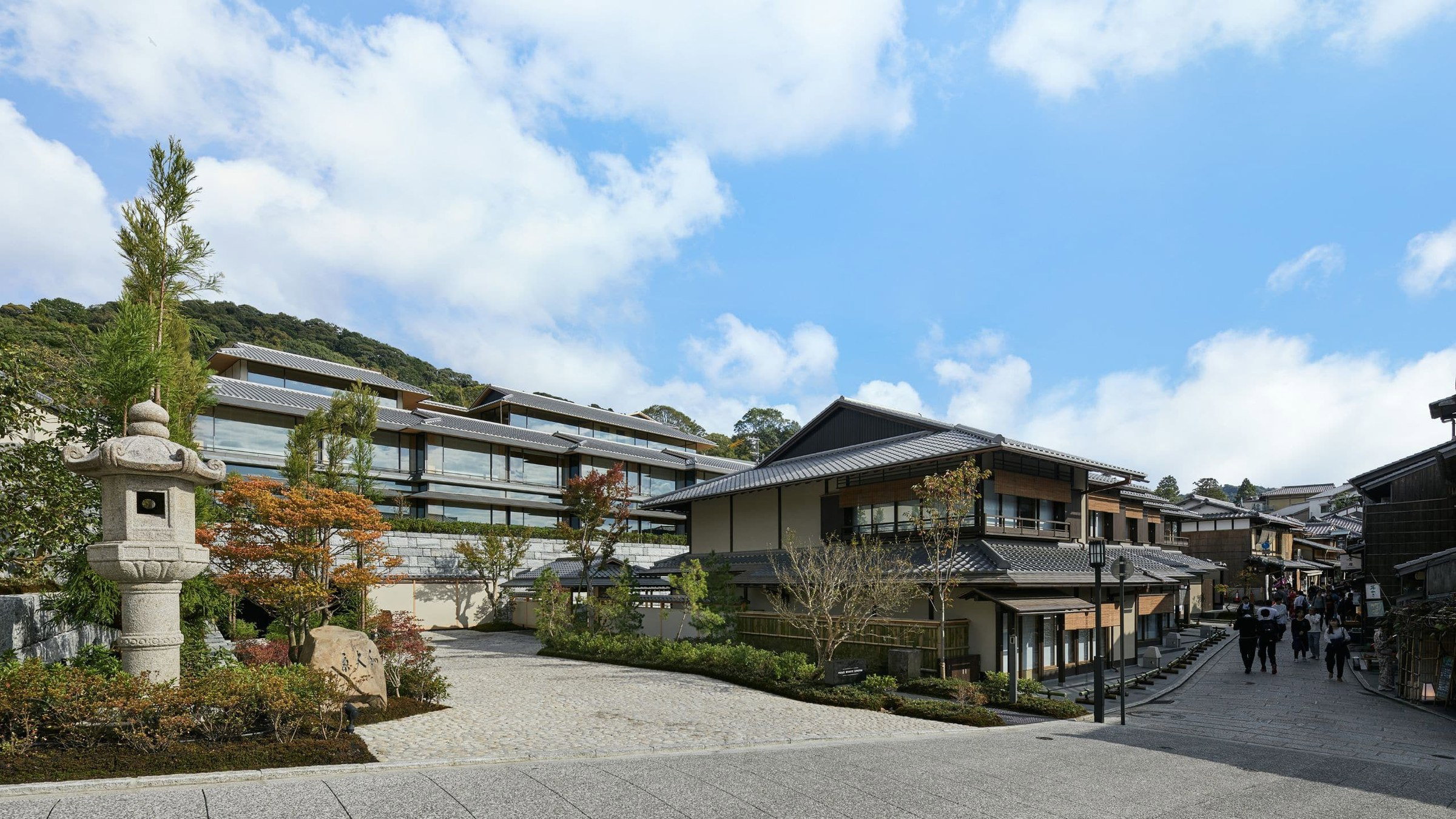
Higashiyama Ward sets a particular kind of expectation. The stone-paved lanes around Kiyomotocho attract visitors moving between shrines and preserved machiya streetscapes, and the restaurants that have survived here tend to occupy two distinct tiers: multi-generation kaiseki houses with deep roots and reservation waitlists measured in months, and smaller, more approachable rooms where the cooking is equally serious but the formality has been deliberately reduced. Gion Kajisho sits in the second category, though its Michelin 1 Star (2024) and Michelin Plate (2025) place it clearly within the first tier of recognition. The address — 371-2 Kiyomotocho — puts it inside one of Kyoto's most atmospherically dense neighbourhoods, where the physical environment does a considerable amount of editorial work before a guest even sits down.
The Kappo Format and What It Implies About the Room
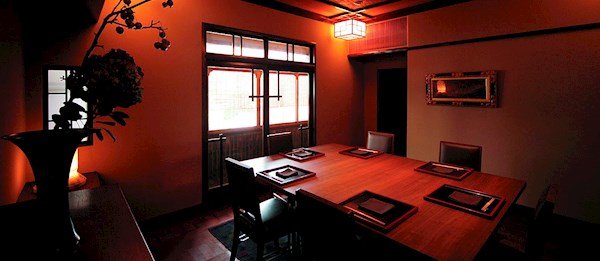
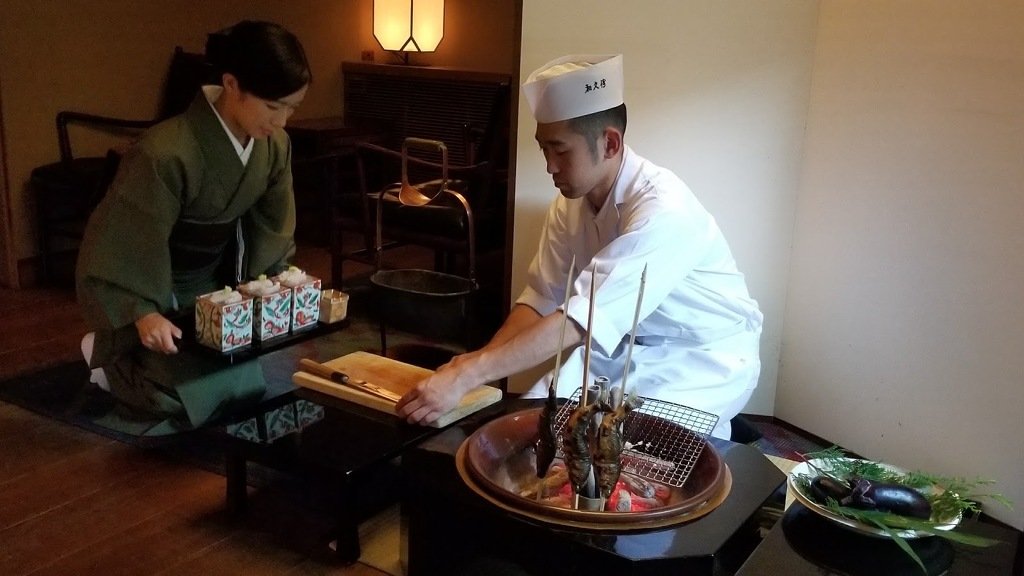
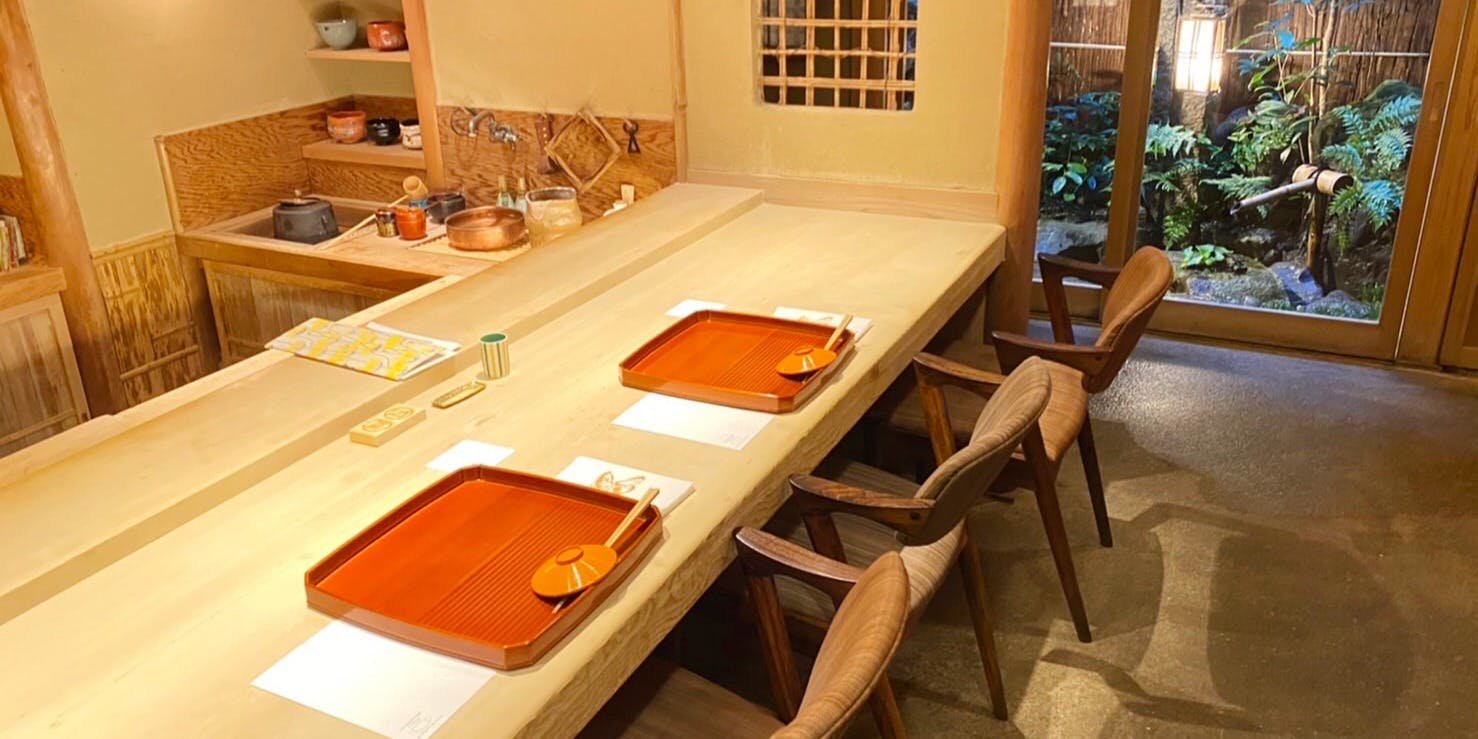
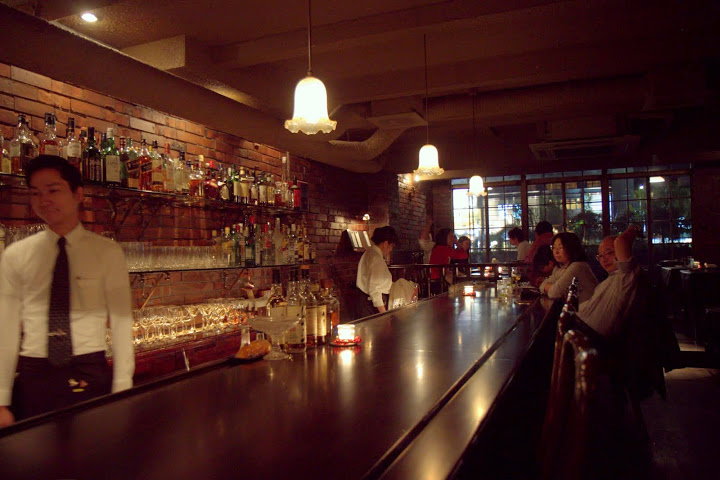
Kappo occupies a specific position in Japanese dining. The format sits between the strict ceremony of kaiseki and the more casual izakaya register: cooking happens at a counter or in open view, the chef-to-guest relationship is direct, and the pacing tends to be more conversational than choreographed. Across Kyoto, kappo counters have been the training ground for some of the city's most consequential kitchens. The format rewards a particular kind of interior: compact, counter-led, with sightlines that connect the cooking process to the guest experience. Gion Kajisho explicitly invokes this atmosphere as part of its intention, framing the space as a recreation of the kappo air rather than a departure from it. That framing matters when reading the room: the physical container here is meant to communicate accessibility and craft simultaneously, the counter as both stage and table.
In this regard, Gion Kajisho joins a category of Kyoto restaurants where the design of the space carries as much meaning as the food it produces. Compare this to the heavier formality of three-star kaiseki rooms like Isshisoden Nakamura or the refined settings of Gion Matayoshi, and the deliberate decision to maintain a kappo atmosphere reads as a positioning choice as much as an aesthetic one. A kappo counter communicates that questions are welcome, that the pace can flex, and that the evening does not require a rehearsed ritual knowledge to navigate.
Accessibility as a Cooking Thesis
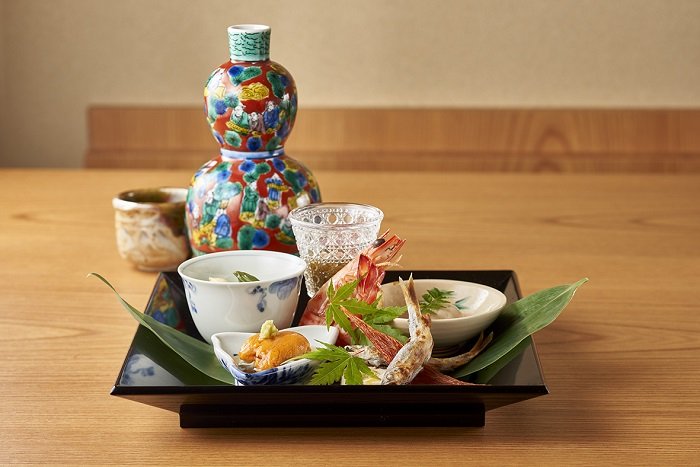
The stated intention , making Kyoto cuisine accessible to all , shapes what appears on the menu more directly than most restaurant mission statements do. This is not a vague aspiration toward approachability; it shows up in specific structural decisions. The rolled omelette, a dish that traces its lineage to popular delivery items and apprentice-era box lunches, sits on the menu as a deliberate callback to the less rarefied end of Japanese food culture. Preserving that dish within a Michelin-starred context is a statement about what belongs on a serious menu, not just a nostalgic gesture.
The regional sourcing reinforces the same argument. Seafood from Nagasaki and Goto-udon noodles both reference the chef and proprietress's hometown, which means the kitchen is drawing on a food culture that sits outside the Kyoto kaiseki canon. In a city where the prestige of local ingredient sourcing and the weight of culinary tradition can sometimes narrow a menu toward a single approved register, the decision to bring in flavours from western Kyushu represents a modest but legible divergence. Kyoto cuisine, the menu seems to argue, does not have to be Kyoto-only.
Evening à la carte format extends this logic further. Braised pork and chawanmushi as standalone options mean a guest can construct a meal that does not follow the prescribed kaiseki sequence. That structural flexibility is unusual in this price tier and recognition bracket , at many of Kyoto's comparable one-star rooms, the format is fixed and the sequence is not negotiable. Gion Kajisho's willingness to offer individual dishes alongside whatever set formats it operates suggests a kitchen confident enough in individual components that it does not require the full narrative arc to make the cooking land.
Where It Sits in the Kyoto One-Star Tier
Kyoto's Michelin one-star bracket is wide and internally varied. The ¥¥¥ price tier places Gion Kajisho in a more accessible segment than the ¥¥¥¥ houses: kaiseki institutions like Kikunoi Roan, multi-course specialists like Kodaiji Jugyuan, and the kaiseki houses sitting above the ¥¥¥¥ threshold all occupy a different financial and experiential register. Kenninji Gion Maruyama offers another point of comparison within the Gion area itself.
The Google rating of 5.0 across 68 reviews is a data point worth noting carefully. A perfect score on a relatively modest review count could reflect a self-selecting audience , guests who researched extensively before booking and arrived with calibrated expectations , as much as it reflects universal satisfaction. That said, across a food city as exacting as Kyoto, consistent perfect scores in the Michelin-recognised tier are not easily accumulated. The number suggests a high rate of expectation-meeting, which in a restaurant explicitly committed to accessibility is the correct thing to be optimising for.
For those building a broader picture of serious Japanese cooking across the country, HAJIME in Osaka, Harutaka in Tokyo, akordu in Nara, Goh in Fukuoka, 1000 in Yokohama, 6 in Okinawa, Myojaku in Tokyo, and Azabu Kadowaki in Tokyo all represent the wider context in which Gion Kajisho operates.
Planning a Visit
The restaurant is located at 371-2 Kiyomotocho in Higashiyama Ward, an address most easily reached on foot from the Gion-Shijo or Kiyomizugojo stations on the Keihan line, or by taxi from central Kyoto. The neighbourhood is busiest during spring cherry blossom season and autumn foliage , both periods when reservation pressure across all of Higashiyama increases significantly, and when booking well ahead becomes non-negotiable. The Michelin 1 Star recognition means demand tracks the international award cycle; the period following each year's Michelin announcement typically sees a surge in reservation requests at star-holding addresses throughout Kyoto. The ¥¥¥ price position makes this one of the more accessible entry points into Michelin-recognised Kyoto dining. Phone and booking platform details are leading confirmed directly given that specifics are subject to change. For broader planning across the city, our full Kyoto restaurants guide covers the range of options, and additional context on the city is available through our Kyoto hotels guide, our Kyoto bars guide, our Kyoto wineries guide, and our Kyoto experiences guide.
Where It Fits
A quick snapshot of similar venues for side-by-side context.
| Venue | Cuisine | Awards | Notes |
|---|---|---|---|
| Gion Kajisho | Japanese | Michelin 1 Star | This venue |
| Gion Sasaki | Kaiseki, Japanese | Michelin 3 Star | Kaiseki, Japanese, ¥¥¥¥ |
| cenci | Italian | Michelin 1 Star | Italian, ¥¥¥ |
| Ifuki | Kaiseki | Michelin 2 Star | Kaiseki, ¥¥¥¥ |
| Kyokaiseki Kichisen | Japanese | Michelin 2 Star | Japanese, ¥¥¥¥ |
| Kyo Seika | Chinese | Michelin 1 Star | Chinese, ¥¥¥ |
Continue exploring