1 Michelin Star
Our verdict
A Michelin-starred counter in Ginza's eighth floor dining corridor, Ginza Kousui channels the ingredients and seasonal calendar of Shizuoka through a chef shaped equally by Kyoto kaiseki tradition. Suruga Bay seafood, hinoki cypress joinery, and nori-enhanced soy dressings define a menu that reads as both regional tribute and considered technique.

Pearl is the En Primeur Club membership app, where members save venues, book tables and use the concierge.
A Counter Built From One Prefecture's Larder
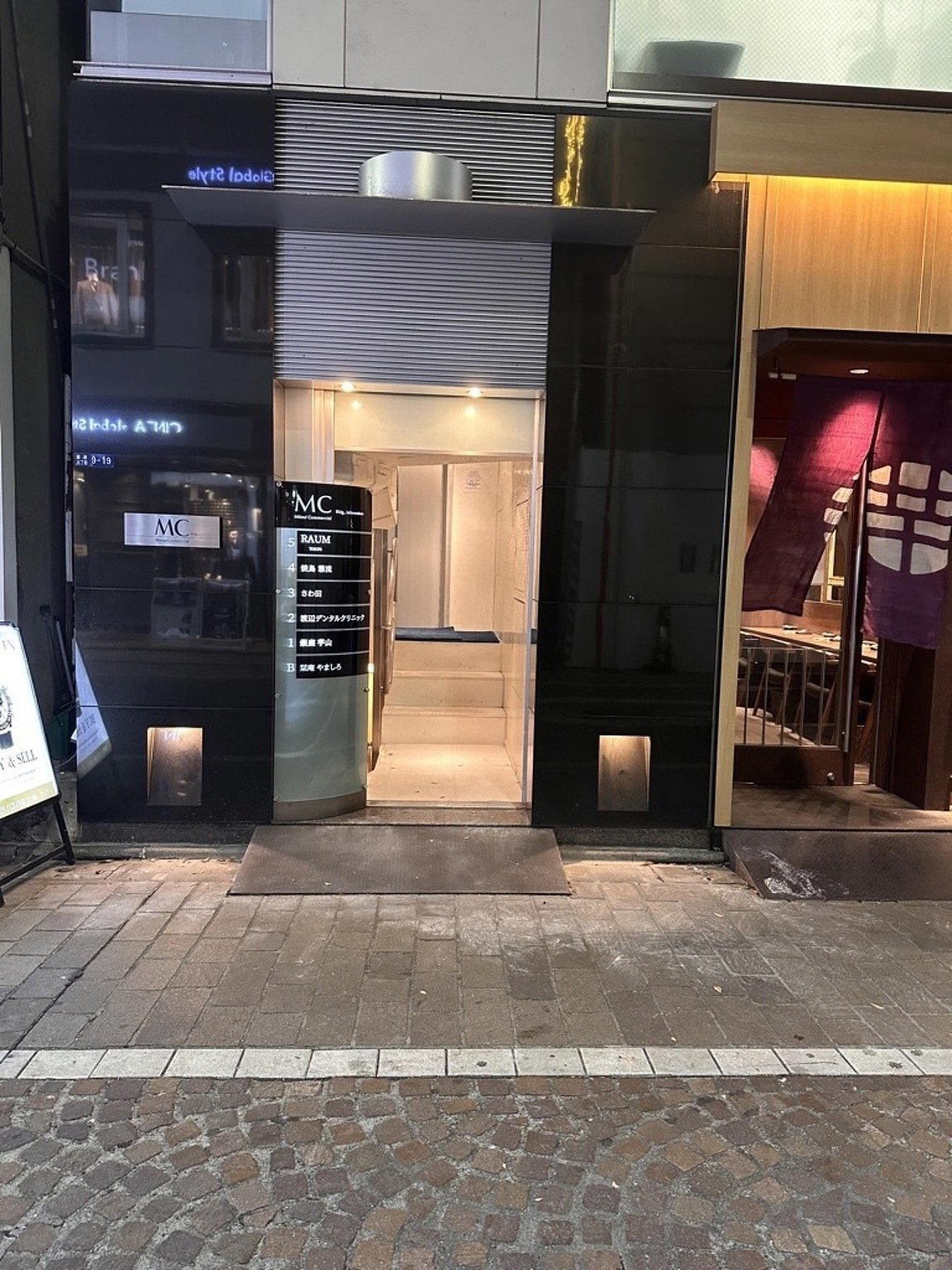
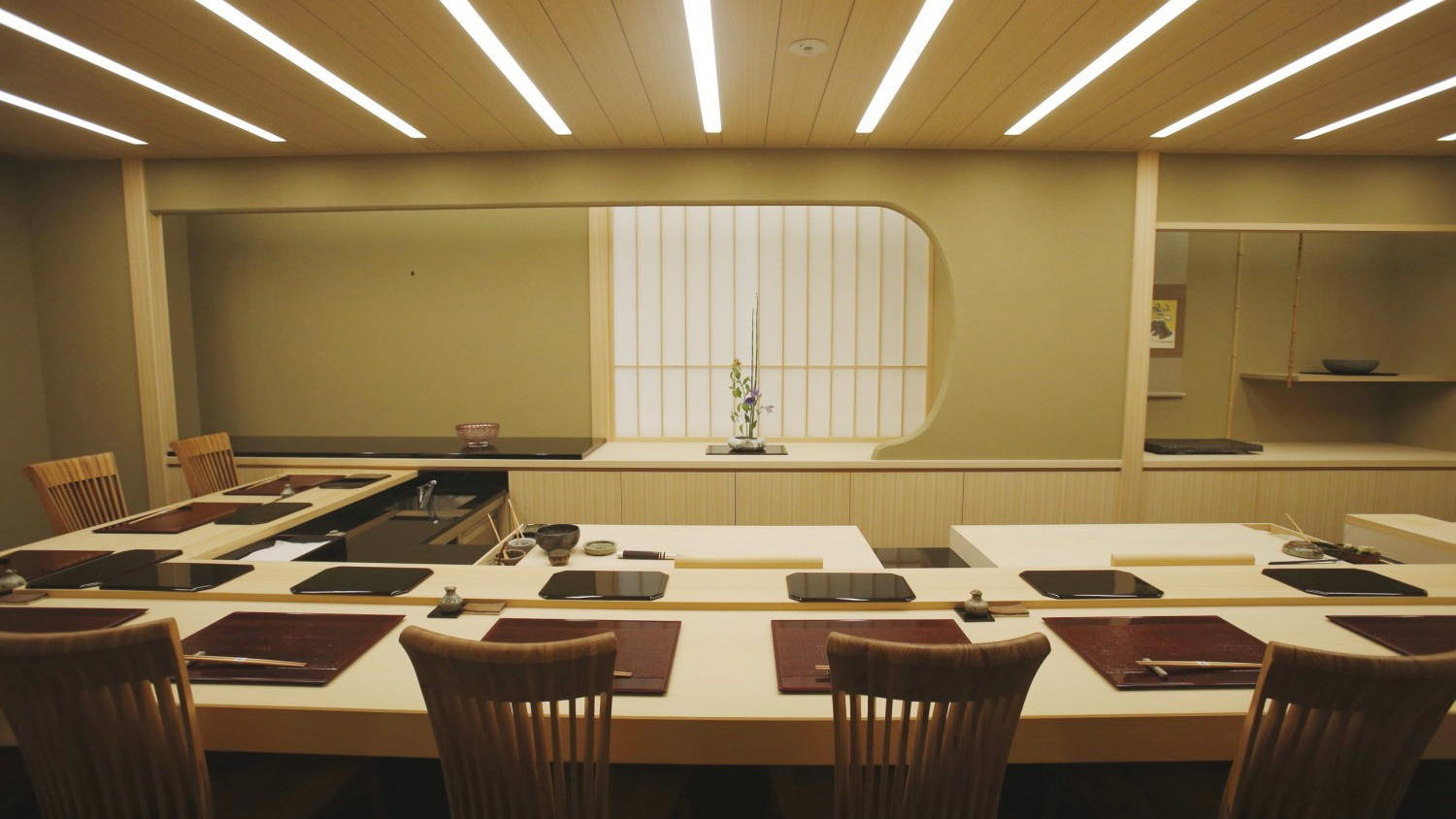
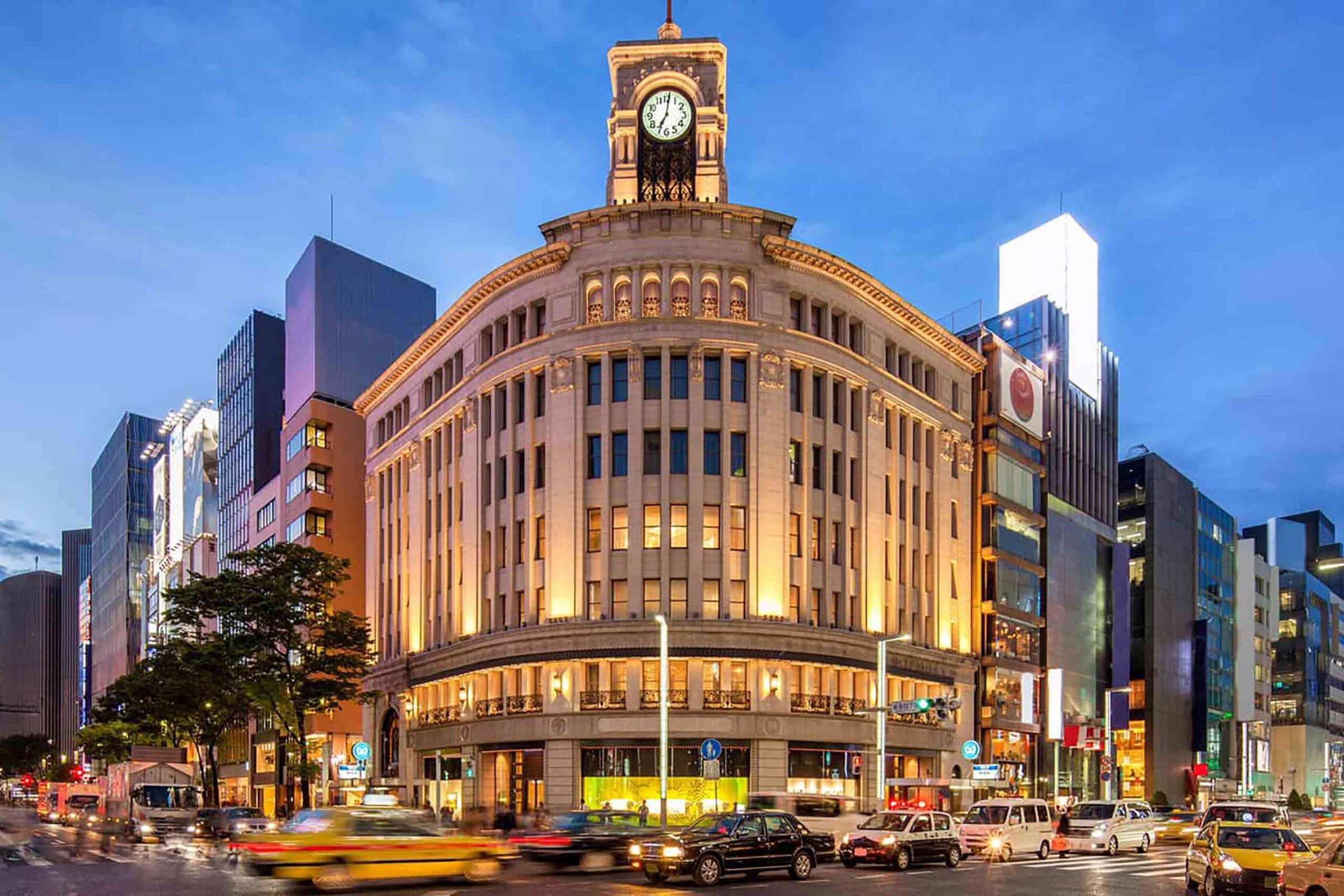
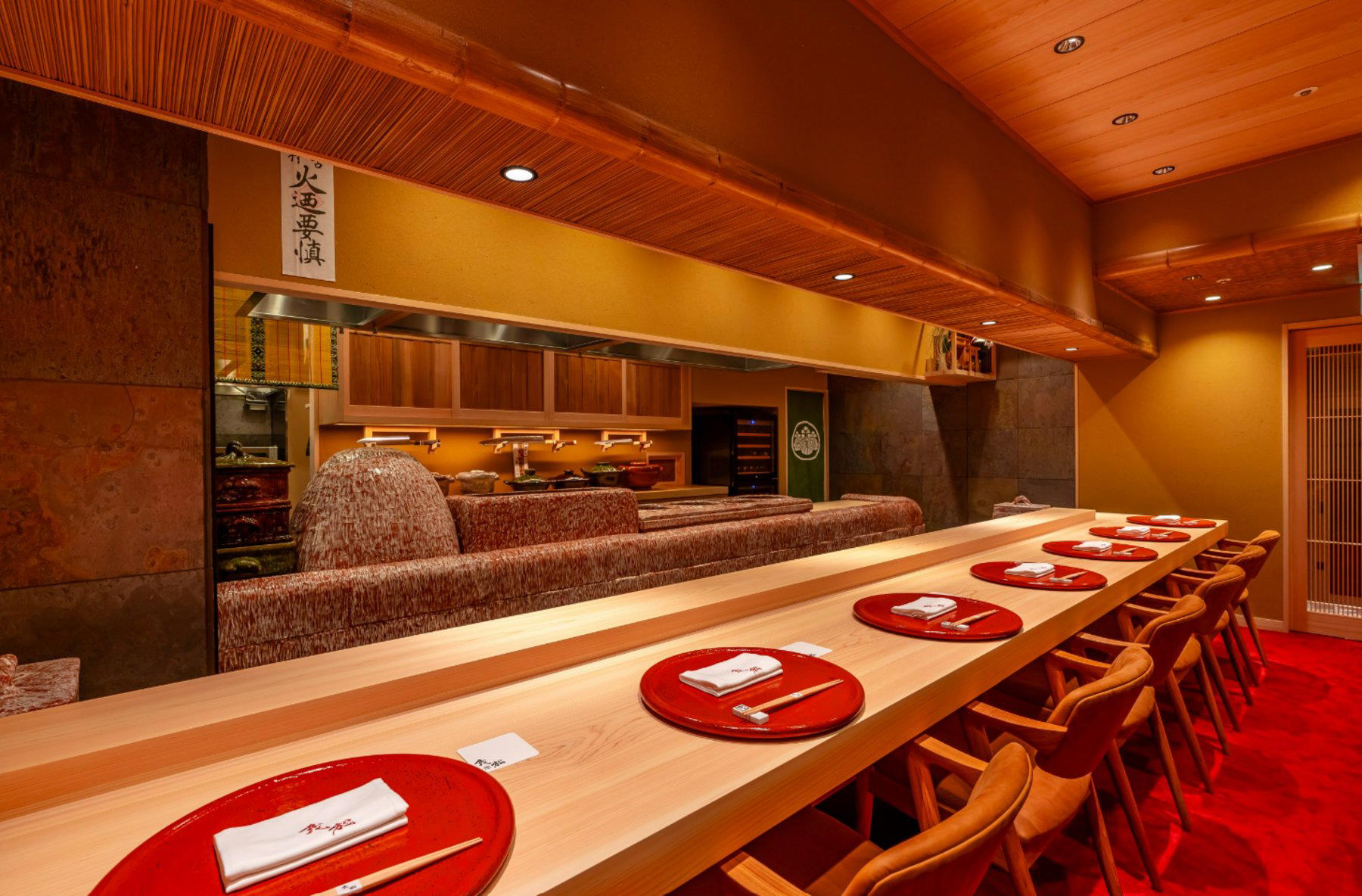
Ginza's restaurant floor above the sixth storey occupies a peculiar category in Tokyo dining: expensive, often counter-based, and pitched at diners who have already cleared the lower rungs of the city's Japanese cuisine hierarchy. The addresses up here are not discovery restaurants. They are confirmation restaurants, and what they confirm varies considerably. At Ginza Kousui, on the eighth floor of a building on 6-chome, the confirmation is regional. The counter, shaped from hinoki cypress sourced from Shimada in Shizuoka Prefecture, tells you before a single dish arrives that the kitchen's frame of reference is narrower and more specific than the generic high-end washoku shorthand that fills Ginza's postcode.
That specificity is increasingly the competitive currency at this price tier. Tokyo's ¥¥¥¥ Japanese counters have multiplied faster than their critical differentiation, and Michelin's 2024 one-star recognition of Ginza Kousui is partly an acknowledgment that the restaurant has found a coherent answer to the question every counter at this level must answer: what is the argument for being here rather than somewhere else? The answer here is Shizuoka, its bay, its brewers, its seaweed beds, interpreted through a chef who also carries Kyoto experience, which gives the seasonal framework an architectural precision that purely regional cooking sometimes lacks.
What Michelin's 2024 Star Signals in This Context
A single Michelin star in Ginza in 2024 places Ginza Kousui in a dense but still meaningful tier. The neighbourhood contains three-star counters including Harutaka (sushi) and RyuGin (kaiseki), where pricing and booking lead times operate at a different magnitude. The two-star bracket includes Crony, which operates in a French-Japanese innovative register. Ginza Kousui's one-star status positions it as a restaurant that inspectors have found consistent, technically accomplished, and conceptually coherent, without yet placing it in the conversation dominated by those multi-starred addresses. For a diner calibrating where to spend a single serious evening in Ginza, that distinction matters: this is a restaurant where the ceiling of ambition is clearly defined and the execution within that ceiling is being held to account by the guide.
The inspector note that accompanies the listing is instructive. It references the chef's Shizuoka origins, the Kyoto-derived attention to annual events and seasonal ceremony, and the specific provenance of materials: seafood from Suruga Bay, sake from the same region, soy sauce finished with nori from Lake Hamana. These are not decorative provenance claims. They are the substance of the rating. Michelin's Tokyo operation has become progressively more attentive to chefs who can articulate a legible point of origin, and Ginza Kousui's recognition reflects that shift in how inspectors are weighing coherence against mere technical polish.
Among other starred Japanese restaurants worth considering in this editorial context: Myojaku and Kagurazaka Ishikawa both operate within Tokyo's starred washoku tier and offer useful comparison points for diners mapping this level of the market. Azabu Kadowaki and Ginza Fukuju extend that conversation further, as does Jingumae Higuchi for diners interested in how Tokyo's starred Japanese kitchens are differentiating at comparable price points.
The Menu's Logic: Region as Structure, Kyoto as Discipline
The cooking at Ginza Kousui operates at the intersection of two influences that are not always easy to reconcile. Shizuoka Prefecture's culinary identity is built on abundance: Suruga Bay produces some of Japan's most prized seafood, including shirasu, sakura shrimp, and deep-water fish that rarely reach Tokyo in the condition available to a chef with direct sourcing relationships. The sake culture of the region adds a further dimension, with breweries working from locally grown rice varieties that express the mineral character of the Oi River basin.
Kyoto kaiseki, by contrast, is a cuisine of constraint and ceremony. Its seasonal markers, the specific vegetables, garnishes, and presentations associated with each month's ritual calendar, impose a discipline that can either suffocate regional character or give it a more precise articulation. At Ginza Kousui, the Kyoto influence appears to function as the latter: the inspector note's emphasis on annual events and the visual arrangement of sashimi (dressed with that Lake Hamana nori-enhanced soy) suggests a kitchen that uses seasonal ceremony as a structuring principle rather than as decoration.
The hinoki cypress counter is worth pausing on as a design decision. Hinoki from Shimada is a specific material choice, not a generic luxury signal. Shimada, located along the Oi River in central Shizuoka, produces timber used in shrine construction and high-grade joinery. Bringing that material to an eighth-floor Ginza counter is an act of localism that predates the first course. It sets a contract with the diner before service begins.
Positioning Within Tokyo's Broader Restaurant Scene
Tokyo's restaurant infrastructure at the ¥¥¥¥ level is large enough that navigation requires a framework. The comparison set for Ginza Kousui is not the city's three-star addresses but rather the group of one-star and unstarred serious Japanese counters that have proliferated in Ginza and its neighbouring districts over the past decade. Within that group, the differentiating variables tend to be provenance specificity, counter material and format, the chef's training lineage, and the depth of the sake or wine program.
Ginza Kousui scores clearly on provenance specificity and counter material. That figure suggests a high degree of execution consistency, which aligns with what Michelin recognition implies about kitchen reliability.
For diners building a Japan itinerary around serious Japanese restaurants, the regional framing at Ginza Kousui connects usefully to other addresses outside Tokyo. Gion Sasaki in Kyoto operates within the kaiseki tradition that informs Ginza Kousui's seasonal structure. HAJIME in Osaka and Kashiwaya Osaka Senriyama represent different registers of Osaka's serious dining tier. Isshisoden Nakamura in Kyoto extends the kaiseki reference further. For regional contrast, akordu in Nara, Goh in Fukuoka, 1000 in Yokohama, and 6 in Okinawa offer data points on how Japan's non-Tokyo cities are producing serious counter dining at comparable commitment levels.
Planning a Visit: Logistics in Context
At this tier across Ginza, booking lead times of four to eight weeks are standard for desirable seatings, with month-end and weekend slots typically clearing first. The address, 6 Chome-12-14, eighth floor, Ginza, Chuo City, is a short walk from Ginza Station.
| Venue | Cuisine | Price Tier | Michelin | Booking Lead (est.) |
|---|---|---|---|---|
| Ginza Kousui | Japanese (Shizuoka-focused) | ¥¥¥¥ | 1 Star (2024) | 4–8 weeks (est.) |
| Harutaka | Sushi | ¥¥¥¥ | 3 Stars | 3–6 months (est.) |
| RyuGin | Kaiseki | ¥¥¥¥ | 3 Stars | 2–4 months (est.) |
| Crony | Innovative / French | ¥¥¥¥ | 2 Stars | 6–10 weeks (est.) |
| Den | Innovative / Japanese | ¥¥¥ | 2 Stars | 6–10 weeks (est.) |
For the wider Tokyo picture, see our full Tokyo restaurants guide, along with our Tokyo hotels guide, bars guide, wineries guide, and experiences guide.
Frequently asked questions
Is Ginza Kousui expensive?
Pricing at Ginza Kousui is listed as ¥¥¥¥.
Where do I go for Ginza Kousui?
Ginza Kousui is located at Japan, 〒104-0061 Tokyo, Chuo City, Ginza, 6 Chome−12−14 8F, Tokyo.
What's Ginza Kousui known for in terms of accolades?
Ginza Kousui has received recognition including: Delights of hometown cooking and the traditional culture of Japan as told by the Shizuoka-born chef. The counter, fashioned of hinoki cypress from Shimada, is laden with seafood and sake from Suruga Bay. Soy sauce used to dress decoratively….
What's the must-try dish at Ginza Kousui?
What Michelin's 2024 inspection record does confirm is that sashimi dressed with nori-enhanced soy sauce from Lake Hamana is a signature preparation, and that seafood from Suruga Bay anchors the menu. Those two elements define where the kitchen places its emphasis.
What type of food is Ginza Kousui known for?
How far ahead should I plan for Ginza Kousui?
At the ¥¥¥¥ price level with a 2024 Michelin star in Ginza, the practical benchmark from comparable counters in the neighbourhood is four to eight weeks minimum. Reservations made closer to the date carry meaningful risk of unavailability.
Recognition, Side-by-Side
| Venue | Cuisine | Price | Awards | Notes |
|---|---|---|---|---|
| Ginza KousuiThis venue (the venue you are viewing) | Shizuoka Kaiseki Omakase | $150–200 | 1 Michelin Star | Not listed |
| Harutaka | Edo-Style Omakase Sushi | $200–300 | 3 Michelin Stars · World's 50 Best #76 | Sushi |
| RyuGin | Modern Kaiseki | $500+ | 3 Michelin Stars · World's 50 Best #41 | Kaiseki, Japanese |
| L'Effervescence | Modern French with Japanese Influences | $200–300 | 3 Michelin Stars · World's 50 Best #69 | French |
| HOMMAGE | Modern French with Japanese Influences | $150–200 | 2 Michelin Stars · World's 50 Best #78 | Innovtive French, French |
| MAZ | Innovative Peruvian-Japanese Fusion | $150–200 | 2 Michelin Stars · World's 50 Best #28 | Innovative |
Recognition history
Dated appearances from independent guides and award organizations, with the underlying list record or original source where available.
Michelin 1 Star
Michelin
Full recognition history (2 entries)
Michelin 1 Star
Michelin