Located in Uehara, Shibuya, ル・ボークープ occupies a quiet residential pocket of Tokyo where French dining culture has taken root with particular seriousness. The address places it within a neighbourhood known for deliberate, low-key dining rather than high-visibility gastronomy, making it a reference point for those who track Tokyo's French scene beyond the obvious Michelin circuit.
Pearl is the En Primeur Club membership app — saves, bookings, and concierge access live there. Same editors, same standards.
- Address
- Japan, 〒151-0064 Tokyo, Shibuya, Uehara, 3 Chome−10−3 蒼天ビル 1F
- Phone
- +81357387952
- Website
- tabelog.com
- Directions
- Get directions
 Saves & bookings on Pearl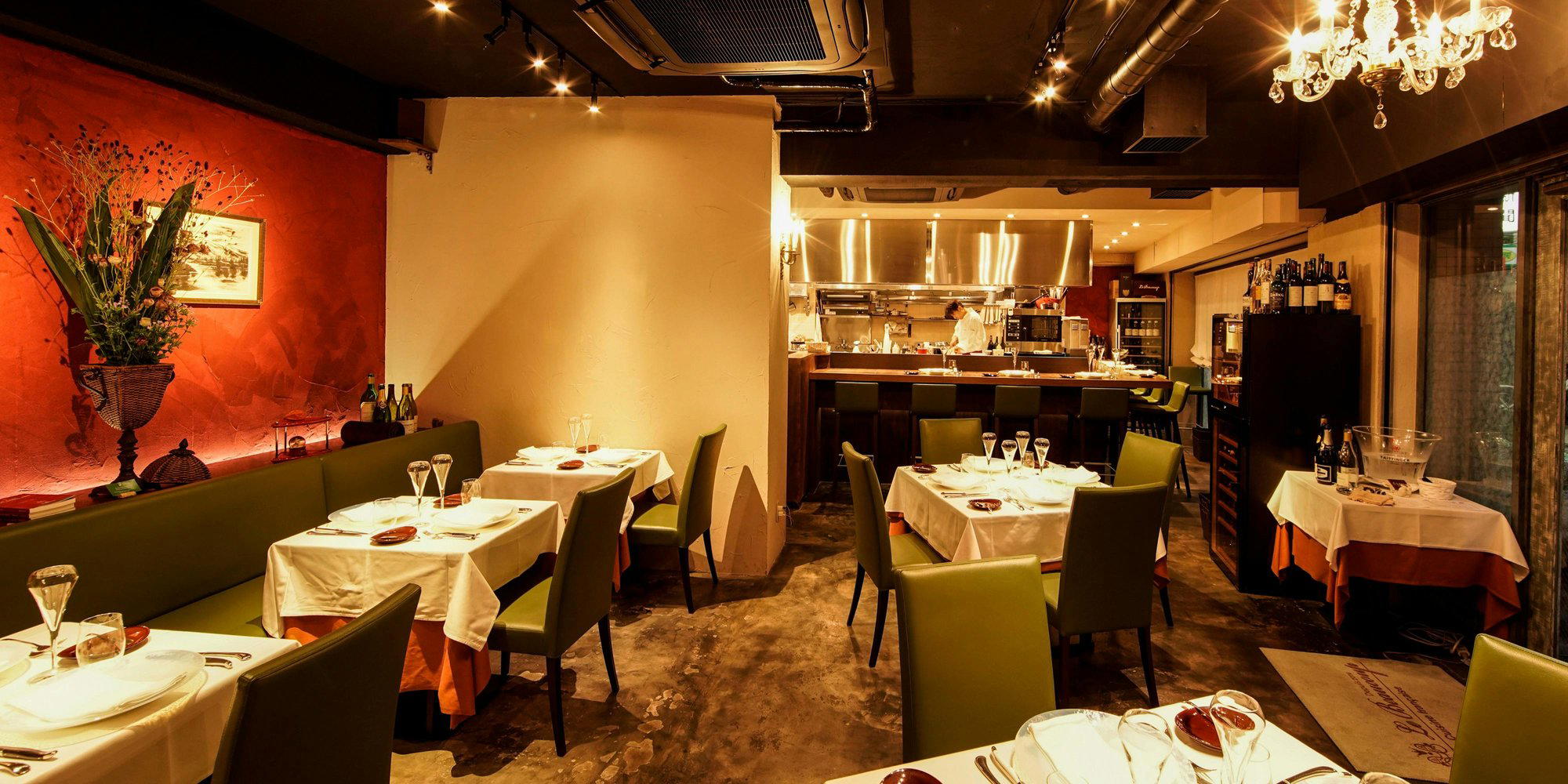
French Dining in Uehara: A Neighbourhood That Rewards Attention
ル・ボークープ is a Seasonal French Bistro in Uehara, Tokyo, with. Tokyo's French restaurant scene has always divided along a clear axis: the grand-boulevard style of hotel dining rooms and Michelin-decorated destination tables on one side, and the quieter neighbourhood bistro tradition on the other. Uehara, a residential corner of Shibuya ward, belongs to the second category. The streets around Yoyogi-Uehara station carry a density of considered, chef-driven addresses that operate largely outside the international spotlight, drawing a local clientele that returns regularly rather than diners ticking venues off a list. ル・ボークープ, at 3 Chome-10-3 蒼天ビル 1F, fits this pattern precisely.
The building address itself is instructive. First-floor spaces in low-rise Shibuya residential buildings occupy a different register from the tower-floor dining rooms that dominate Tokyo's trophy-restaurant conversation. The setting implies a certain scale and a certain relationship with the neighbourhood: proximate, unpretentious in format, and designed around the meal itself rather than the view or the room. Across Japan, French cooking has found its most interesting expressions in exactly these kinds of spaces, from the counter-format bistros of Osaka's Higashishinsaibashi to the intimate rooms documented at L'Effervescence in Tokyo's Nishi-Azabu.
The Arc of a Meal: How the Tasting Progression Works in Tokyo's French Canon
Any serious French kitchen in Tokyo is implicitly in conversation with the multi-course tasting format that has become the dominant grammar of the city's high-end dining. The progression, typically moving from delicate amuse-bouche through fish courses, a protein centre, cheese, and then pastry, carries different weight in Tokyo than in Paris. Japanese kitchens tend to bring a calibration instinct to classic French sequences: portion discipline is tighter, ingredient sourcing leans toward Japanese domestic produce, and the transition between courses is often managed with a precision that reflects the broader culture of hospitality here.
This matters because the narrative arc of a French meal in Tokyo is rarely about abundance. It is about coherence, about each stage arriving at exactly the right moment in terms of temperature, weight, and flavour register. The leading versions of this format, whether at Sézanne at the higher end of the price bracket or at neighbourhood-scale addresses like ル・ボークープ, deliver a meal where the sequencing does the argumentative work that a single signature dish might do elsewhere.
Venues in this tier are also worth reading against Tokyo's broader French-Japanese synthesis. Crony in Yoyogi Park, another Shibuya-adjacent address, occupies the innovative-French category with a similar neighbourhood sensibility. The comparison is useful: Tokyo's French scene is no longer a single monolithic category but a spectrum from technically classical to genre-blurring, and understanding where any given address sits on that spectrum shapes how you read the menu.
Uehara in Context: Shibuya's Quieter Dining Register
Shibuya ward contains multitudes. The station hub itself is among the more trafficked in Japan, but the residential sub-districts around Yoyogi-Uehara and Tomigaya operate at a different frequency entirely. Rent structures, a local clientele with high culinary literacy, and proximity to the Yoyogi Park green corridor have collectively produced a pocket where small, serious restaurants tend to survive on repeat custom rather than tourist volume. This is a meaningful distinction in a city where some dining rooms live and die on their position in international rankings.
For context on how Shibuya's dining character compares to Tokyo's other serious restaurant neighbourhoods, our full Tokyo restaurants guide maps the city's dining geography across ward and cuisine type. The Uehara-Tomigaya corridor is increasingly treated as its own category rather than simply a western extension of the Minami-Aoyama fine-dining belt.
Across Japan more broadly, the same pattern of quiet-address, high-intention French cooking appears in different forms. HAJIME in Osaka operates at the three-Michelin-star tier with a similar commitment to structured multi-course work. akordu in Nara applies European fine-dining architecture to a city that is not a typical destination for that format. Goh in Fukuoka runs a comparably disciplined progression in a city with its own strong culinary identity. The French tasting format, it turns out, travels well across Japan's regional dining cultures precisely because it gives kitchens a structure within which local ingredient logic can operate.
Placing ル・ボークープ in Its comparable set
The restaurant sits in the category of addresses that circulate through word of mouth and local-knowledge networks rather than international award lists. In Tokyo, this is not a marginal position. Some of the city's most discussed French tables have operated for years in exactly this mode, building regulars before attracting formal recognition, or simply choosing to remain below the radar of competitive ranking entirely. Harutaka, now a firmly credentialed address, followed a similar trajectory in the sushi category before its wider recognition solidified.
The comparable set for an address like this is better defined by neighbourhood and format than by tier. Tokyo's Shibuya-ward French addresses at the neighbourhood-bistro scale tend to price and operate differently from the ¥¥¥¥ bracket occupied by L'Effervescence or RyuGin. That distinction matters when planning: the format, the advance booking requirement, and the expectations around dress and duration are calibrated accordingly. For international comparison, the tasting-progression model at this neighbourhood scale is not unlike what Atomix in New York City has done in building serious culinary credibility from a non-obvious address, or what Le Bernardin in New York City represents in terms of French-technique rigour applied in a non-French city context.
Japan's regional French dining also offers relevant reference points for understanding the range: Bistro Ange in Toyohashi and Birdland in Sakai both illustrate how French-influenced cooking adapts to non-metropolitan Japanese settings, while Gion Sasaki in Kyoto shows how kaiseki and French-influenced multi-course structures can inform each other across disciplines.
Planning Your Visit
Address: 3 Chome-10-3 蒼天ビル 1F, Uehara, Shibuya, Tokyo 151-0064. Access: Yoyogi-Uehara station (Odakyu and Tokyo Metro Chiyoda lines) is the natural approach, placing the venue within walking distance of the station's south exit. Reservations: Reservations are recommended. Budget: Expect pricing around $100 per person. Dress: Dress code is smart casual. Hours: Closed Monday; Tuesday through Sunday, 11:30 AM to 3 PM and 6 PM to 8 PM.
Cuisine Context
Comparable venues nearby, for context on price, style, and recognition.
| Venue | Cuisine | Price | Notes |
|---|---|---|---|
| ル・ボークープThis venue — the venue you are viewing | Seasonal French Bistro | $$$ | Not listed |
| Cheval | Seasonal French with Japanese influences | $$$ | Nihonbashi |
| Echire Maison du Beurre | French Pâtisserie | $$$ | Chiyoda |
| Iizaka | French with Seasonal Japanese Ingredients | $$$ | Shinjuku |
| ヤオユ | Contemporary French Bistro | $$$ | Chiyoda |
| BLUE BRICK LOUNGE | French-style cafe & dessert lounge with Japanese sweets | $$$ | Minato |













At a Glance
- Elegant
- Cozy
- Intimate
- Classic
- Sophisticated
- Date Night
- Special Occasion
- Sake Program
- Local Sourcing
Current opening hours
- Monday
- Closed
- Tuesday
- 11:30 AM–3 PM, 6–8 PM
- Wednesday
- 11:30 AM–3 PM, 6–8 PM
- Thursday
- 11:30 AM–3 PM, 6–8 PM
- Friday
- 11:30 AM–3 PM, 6–8 PM
- Saturday
- 11:30 AM–3 PM, 6–8 PM
- Sunday
- 11:30 AM–3 PM, 6–8 PM
Hours can change for holidays and private events. Last verified .
Crisp white tablecloths, green chairs, clean lines with a cheery palette; relaxed and comfortable atmosphere ideal for wine and leisurely meals away from urban bustle.