Located in Kanda Nishikicho's basement-floor dining circuit, ヤオユ sits within a neighbourhood where Tokyo's appetite for cross-cultural technique has grown steadily over the past decade. The address places it among Chiyoda's more quietly serious dining rooms, where the emphasis tends toward craft over ceremony. For visitors mapping Tokyo's range of ingredient-led cooking, this is a useful reference point.
Pearl is the En Primeur Club membership app — saves, bookings, and concierge access live there. Same editors, same standards.
- Address
- Japan, 〒101-0054 Tokyo, Chiyoda City, Kanda Nishikicho, 1 Chome−17−5 Daiwa Kandabashi, B1F
- Phone
- +81355776783
- Website
- ggbv500.gorp.jp
- Directions
- Get directions
 Saves & bookings on Pearl
Kanda's Basement-Floor Dining and the Logic of Local Ingredients
Tokyo's Chiyoda ward rarely leads conversations about the city's dining scene the way Ginza or Minami-Aoyama do, but that gap between reputation and reality has narrowed considerably over the past decade. The Kanda Nishikicho corridor, home to a cluster of below-street-level rooms, has drawn a cohort of kitchens more interested in the question of what Japanese ingredients can become under non-Japanese technique than in rehearsing familiar formats. ヤオユ, operating from a basement floor at 1 Chome-17-5 Daiwa Kandabashi, sits inside that broader pattern.
The Kanda address is itself a contextual signal. Reservations are recommended, and the price tier is about $95 per person. Unlike Roppongi or Shinjuku, where dining rooms often compete on spectacle, Kanda's restaurant geography skews toward the deliberate and the regular. Salary workers, legal and publishing professionals, and a growing number of food-aware visitors constitute the weekday footfall. On weekends, the same streets pull a different crowd: people who have done the research and are specifically here for what the kitchens produce. That demographic pressure shapes what the area's leading rooms choose to cook, and how seriously they cook it.
The Intersection of Imported Method and Japanese Supply
Across Japan's more ambitious mid-tier dining rooms, a structural argument has been playing out for years: does technical borrowing from European or East Asian traditions add to Japanese ingredient culture, or does it dilute it? The answer, where it works well, is neither. Venues that resolve the tension tend to treat technique as infrastructure rather than identity, using classical training as a tool for getting more out of a specific seasonal product rather than as a cuisine in its own right.
This framing matters for ヤオユ's address category. Chiyoda's basement kitchens have historically leaned toward this model: the physical modesty of a B1F room in a commercial building creates its own discipline. There is no view to sell, no elaborate design concept to carry the room. What arrives at the table has to justify the address on its own terms. For venues working at the intersection of local produce and imported method, that constraint often produces tighter, more honest cooking than comparable rooms in more prominent settings.
At the upper end of the market, venues like L'Effervescence and Sézanne have made the case for French technique applied rigorously to Japanese seasonal produce, both operating at the ¥¥¥¥ tier. RyuGin approaches the same question from the kaiseki tradition outward, while Crony operates in a more informal register, applying French training to a menu that resists easy categorisation. Harutaka makes the counter-format argument for sushi at the same price level.
What these rooms share is a willingness to let the sourcing drive the menu rather than the reverse. ヤオユ's Kanda address places it in a different price and scale register from those names, but the underlying question being asked in the kitchen, namely what imported discipline can unlock in Japanese produce, belongs to the same conversation.
That conversation extends well beyond Tokyo. HAJIME in Osaka has pursued a version of it through French modernist structure, while Gion Sasaki in Kyoto holds the question open from the other direction, letting kaiseki orthodoxy absorb external influence slowly and selectively. Further afield, akordu in Nara and Goh in Fukuoka both represent regional takes on the same local-ingredients, global-technique premise. Outside Japan, Atomix in New York City applies Korean ingredient logic through a fine-dining framework that draws direct comparisons to what Tokyo's cross-cultural rooms attempt, and Le Bernardin in New York City remains the clearest long-standing example of a kitchen where technique exists purely in service of primary ingredient quality.
Across Japan's broader regional circuit, a parallel set of rooms demonstrates how the local-ingredients argument plays out at different latitudes and in different seasons: 一本杉 川嶋 in Nanao, 古井戸山乃 in Sapporo, 湖畔荘 in Takashima, and 広羽屋 in Nishikawa Machi each work with hyper-local supply chains that a Tokyo kitchen by definition cannot replicate. The contrast is instructive: what a Kanda kitchen trades in seasonal reach and provenance depth, it gains in access to a concentrated urban supply network and the kind of competitive density that sharpens a kitchen quickly. Birdland in Sakai and Bistro Ange in Toyohashi offer additional regional perspectives on how European training adapts to Japanese provincial produce.
The B1F location is standard for the area's more serious dining rooms and should be expected rather than treated as a drawback.
Reservations are recommended. Dress code is smart casual. The restaurant is open Monday through Saturday from 6:00 PM to 11:30 PM and closed on Sunday.
Comparable Options
Comparable venues nearby, for context on price, style, and recognition.
| Venue | Cuisine | Price | Notes |
|---|---|---|---|
| ヤオユThis venue — the venue you are viewing | Contemporary French Bistro | $$$ | Not listed |
| à nu Shohei Shimano | French Fine Dining | $$$ | Hiroo |
| Floraison | Modern French with wine pairing | $$$ | Shinjuku |
| 茶禅華 | Classical French Cuisine | $$$ | Minato |
| 松㐂 | Provençal French Bistro | $$$ | Nakano |
| レストラン タニ | Classical French Bistro with Seasonal Japanese Ingredients | $$$ | Minato |









At a Glance
- Elegant
- Sophisticated
- Intimate
- Date Night
- Business Dinner
- Special Occasion
- Open Kitchen
- Natural Wine
- Sommelier Led
- Farm To Table
- Natural Wine
- Local Sourcing
Current opening hours
- Monday
- 6–11:30 PM
- Tuesday
- 6–11:30 PM
- Wednesday
- 6–11:30 PM
- Thursday
- 6–11:30 PM
- Friday
- 6–11:30 PM
- Saturday
- 6–11:30 PM
- Sunday
- Closed
Hours can change for holidays and private events. Last verified .
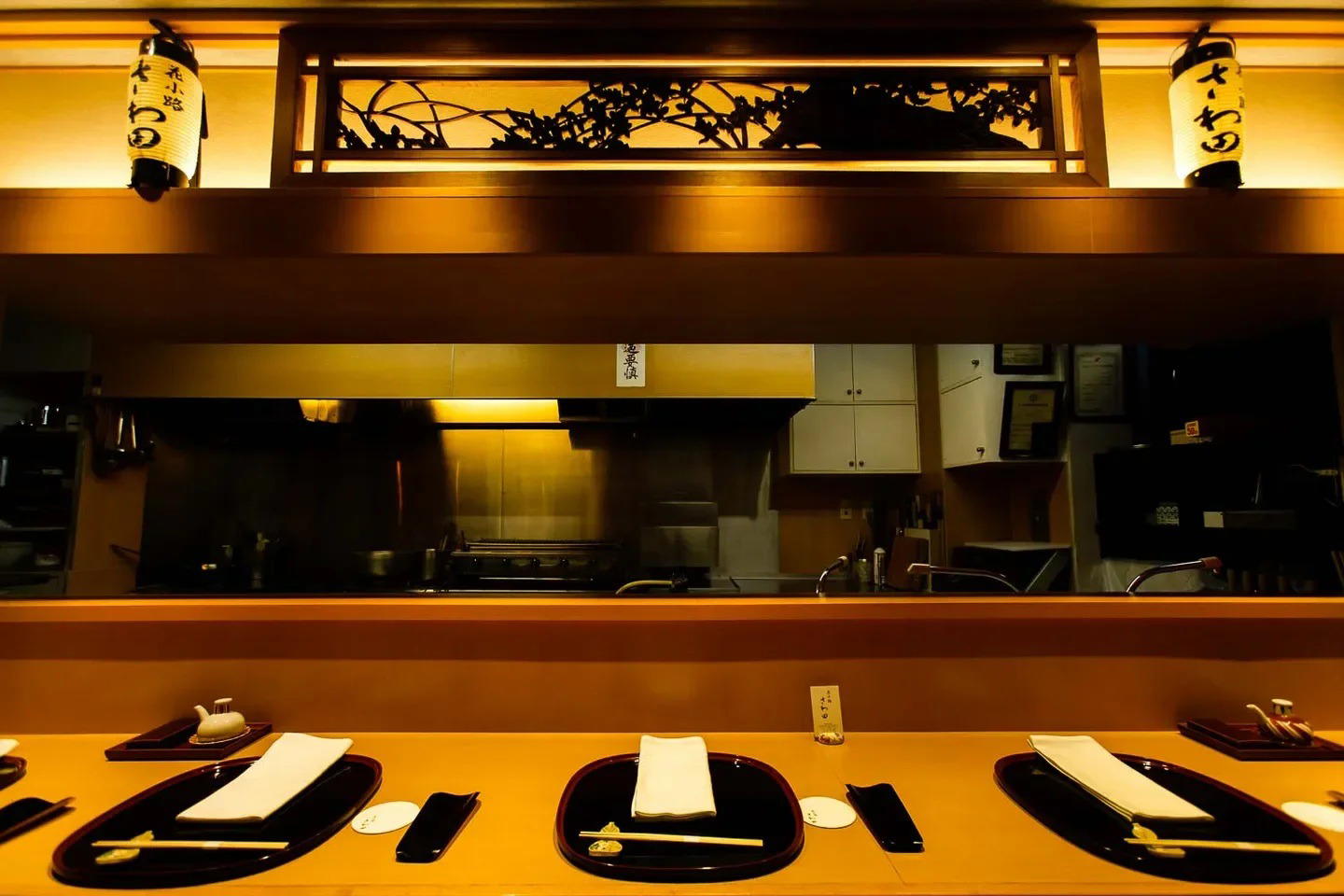
Intimate underground setting with a focus on the culinary experience; minimalist presentation allows the food and wine to take center stage.