ハジメ occupies a ground-floor address in Osaka's Nishi Ward, placing it within a district where French-influenced kaiseki and counter-format dining have developed a distinct local register. The restaurant draws from a tradition in which pacing, ritual, and seasonal precision carry as much weight as the plate itself. For visitors mapping Osaka's upper tier of destination dining, it belongs in the same planning conversation as the city's most deliberate kitchens.
Pearl is the En Primeur Club membership app — saves, bookings, and concierge access live there. Same editors, same standards.
- Address
- Japan, 〒550-0002 Osaka, Nishi Ward, Edobori, 1 Chome−9−11 アイ・プラス江戸堀 1F
- Phone
- +81664476688
- Website
- hajime-artistes.com
- Directions
- Get directions
 Saves & bookings on Pearl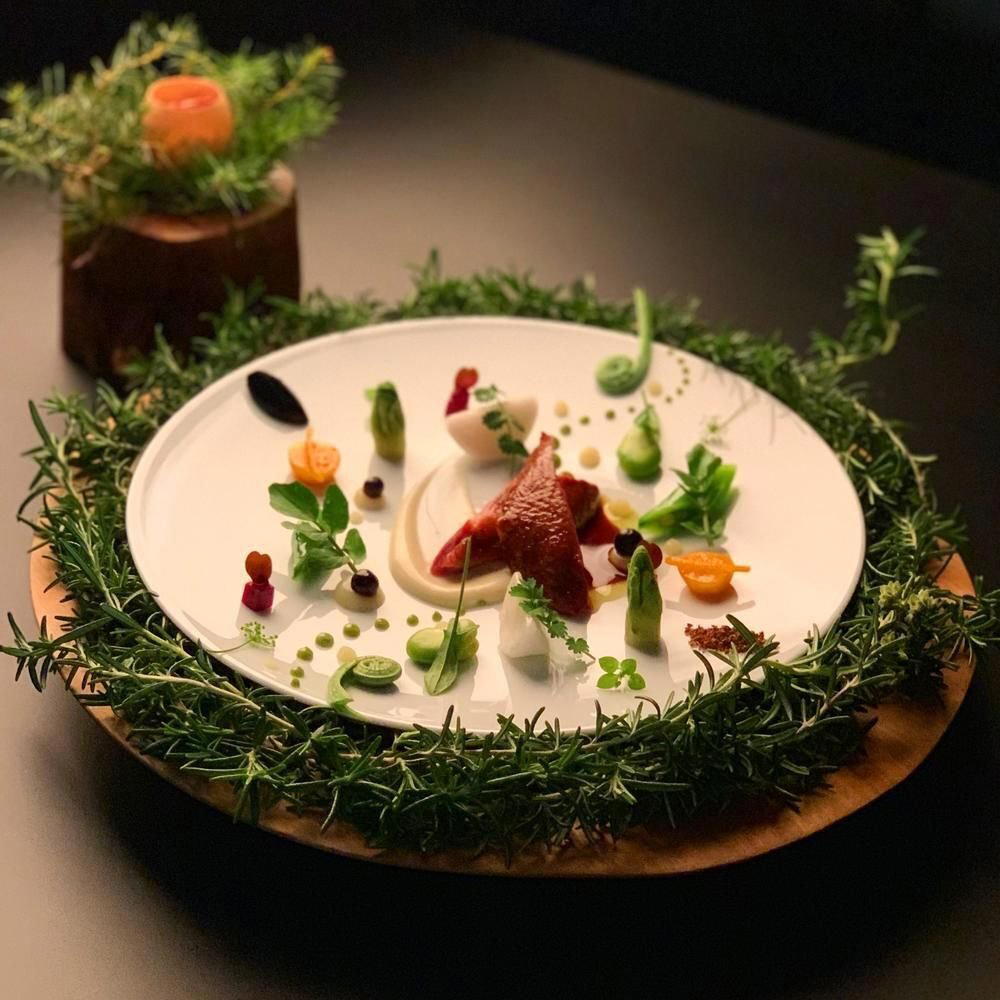
The Room Before the Meal
ハジメ is a restaurant in Osaka's Edobori district, serving modern French-Japanese fine dining at about $350 per person. Ground-floor restaurant addresses in this neighbourhood tend to announce themselves quietly: a small sign, a composed entryway, a deliberate absence of the visual clutter that dominates busier Osaka dining corridors. ハジメ fits that pattern.
This kind of environmental framing is not incidental in Japanese fine dining. In Osaka specifically, where the city's identity as a food capital is often associated with its more gregarious, high-volume traditions, restaurants that operate at this register represent a counter-current: serious, paced, and oriented around a guest experience that unfolds rather than arrives.
The Ritual Logic of the Meal
Japanese counter-format dining, and the broader kaiseki tradition it draws from, operates according to a logic that differs fundamentally from Western tasting-menu conventions. The sequence is not simply a progression of flavours or textures, it is a choreography of time. Each course carries a positional meaning: what arrives early frames expectation, what arrives mid-sequence builds or subverts it, and the close of a meal is as deliberately constructed as its opening. Restaurants working in this idiom are, in effect, managing attention as much as appetite.
At the upper end of Osaka's dining tier, this temporal discipline is the primary variable separating the serious rooms from the merely accomplished ones. The pacing of a meal, how long a course sits in front of a guest, how much space exists between moments, whether the kitchen's rhythm is legible or opaque, communicates kitchen confidence more directly than any single dish could. Ajikitcho Bunbuan and Calendrier both operate within this register in Osaka, each with a distinct approach to how the meal's tempo is managed. ハジメ occupies a position in that conversation, though its specific format details are best confirmed directly with the restaurant at the time of booking.
What the Edobori address suggests, given the neighbourhood's established character, is a room designed for focus. Nishi Ward has developed quietly as a zone for this kind of dining precisely because its geography discourages casual foot traffic. Guests here have made a decision to be present, which changes the dynamics of service considerably.
Where ハジメ Sits in Osaka's Fine Dining Structure
Osaka's upper dining tier has a more complex internal structure than the city's reputation for kuidaore, eating until you drop, might suggest. Alongside the takoyaki counters and kushikatsu bars that define the city's popular register, there is a cohort of restaurants operating at a level of ambition that positions them against Kyoto and Tokyo peers rather than against local competition. Ajihei Sonezaki, Aka to Shiro, and Az each represent different points within that stratum. ハジメ, with its Nishi Ward address and counter-format positioning, maps onto this cohort of destination-oriented rooms where the meal is the primary event of an evening rather than one stop among several.
Across Japan's fine dining geography more broadly, the relevant comparisons extend outward. Gion Sasaki in Kyoto represents the kaiseki tradition in its most institutionalised form, while Harutaka in Tokyo operates in the premium sushi-counter format that Tokyo has developed as its own parallel language of ritual dining. Goh in Fukuoka and akordu in Nara show how Japan's secondary cities have developed destination-dining identities distinct from the Tokyo axis. ハジメ participates in this national conversation from an Osaka base, which gives it a particular character: the city's pragmatic directness inflects even its most formal dining rooms.
Internationally, the closest structural analogues are restaurants where a French technical framework has been absorbed into a local ritual logic, a pattern visible at Le Bernardin in New York City in its handling of sequence and restraint, and at Atomix in New York City in its explicit engagement with Korean dining ceremony as a structural principle. ハジメ, from its Edobori address, sits within that broader global pattern of restaurants that treat the meal as a formal ritual with its own grammar.
The Dining Tradition Behind the Address
The name ハジメ, beginning, or origin, points toward a philosophical position that many of Japan's more considered restaurants have staked out: the idea that sophisticated dining is a return to essentials rather than an accumulation of technique. This orientation is visible across the country's most deliberate kitchens, from the intimate counter in Nanao to the more rural registers found in Takashima. The commitment to seasonal precision and the quality of primary ingredients over elaborate treatment is a shared discipline across this cohort, regardless of whether the kitchen draws from French or Japanese tradition.
In Osaka, that tradition intersects with a municipal food culture that has always privileged ingredient quality. The city's proximity to Kyoto's vegetable-growing regions, to the seafood markets of Osaka Bay, and to the broader Kansai agricultural network means that Osaka kitchens at this level are sourcing from the same supply infrastructure that has sustained the region's culinary reputation for centuries. Restaurants in Nishi Ward and its adjacent neighbourhoods are well-positioned to draw on that supply chain.
the Sapporo equivalent shows how Japan's northern food culture inflects the same ritual format, while the Nishikawa Machi example illustrates how rural Tohoku kitchens have developed their own version of the paced, seasonally precise meal. Birdland in Sakai and HAJIME in Osaka provide additional Kansai-region reference points for positioning ハジメ within its immediate competitive geography.
Know Before You Go
| Address | Japan, 〒550-0002 Osaka, Nishi Ward, Edobori, 1 Chome−9−11 アイ・プラス江戸堀 1F |
| Neighbourhood | Edobori, Nishi Ward, west of Shinsaibashi, accessible by Osaka Metro Yotsubashi or Chuo lines (Higobashi Station is the nearest stop) |
| Format | Counter-format fine dining; exact seat count and tasting menu structure should be confirmed directly with the restaurant |
| Booking | Reservation essential |
| Dress | Smart casual |
| Context | Plan the meal as a full evening |
Recognition Snapshot
Comparable venues nearby, for context on price, style, and recognition.
| Venue | Cuisine | Price | Notes |
|---|---|---|---|
| ハジメThis venue — the venue you are viewing | Modern French-Japanese Fine Dining | $$$$ | Not listed |
| Kobe Beef WANOMIYA Kita Shinsaibashi Store | Kobe Beef Teppanyaki | $$$$ | Chūō |
| 寿し芳 | Modern Edomae Sushi Omakase | $$$$ | Kita |
| Kobe Beef Sakura Osaka Shochikuza Store | Kobe Beef Steakhouse | $$$$ | Chūō |
| Kobe Beef WANOMIYA Dotonbori Main Store | Teppanyaki Kobe Beef | $$$$ | Chūō |
| Koryu Keishin | Naniwa Kappo | $$$$ | Kita |
Continue exploring
More in Osaka
Restaurants in Osaka
Browse all →




Bars in Osaka
Browse all →



Hotels in Osaka
Browse all →




Wineries in Osaka
Browse all →
At a Glance
- Sophisticated
- Elegant
- Modern
- Intimate
- Special Occasion
- Date Night
- Chefs Counter
- Sake Program
Current opening hours
- Monday
- 5–11 PM
- Tuesday
- 5–11 PM
- Wednesday
- 5–11 PM
- Thursday
- 5–11 PM
- Friday
- 5–11 PM
- Saturday
- 5–11 PM
- Sunday
- 5–11 PM
Hours can change for holidays and private events. Last verified .
Contemporary and understated with modern decor and a planet artwork dominating the dining room.