Kobe Beef WANOMIYA Dotonbori Main Store sits on Osaka's most theatrical dining strip, specialising in the certified Kobe beef that defines Japan's premium wagyu tier. The address places it squarely in Dotonbori's concentrated restaurant corridor, where the gap between tourist-facing beef counters and serious specialist houses is wider than it first appears. Visitors focused on traceability and breed certification will want to understand where WANOMIYA positions within that distinction.
Pearl is the En Primeur Club membership app — saves, bookings, and concierge access live there. Same editors, same standards.
- Address
- 1 Chome-5-2 Dotonbori, Chuo Ward, Osaka, 542-0071, Japan
- Phone
- +81662122933
- Website
- koubegyuu.com
- Directions
- Get directions
 Saves & bookings on Pearl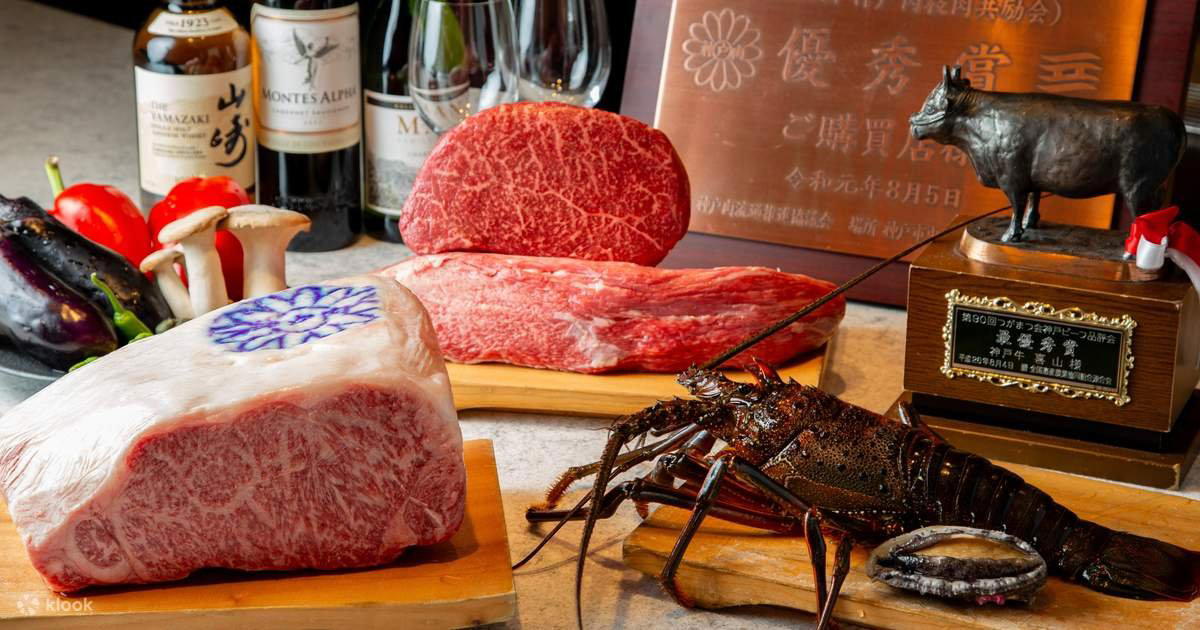
Dotonbori and the Certified Kobe Beef Question
Dotonbori is Osaka's most saturated dining corridor, a stretch of Chuo Ward where the signage competes as loudly as the menus. Amid the takoyaki vendors and ramen queues, a smaller category of restaurants stakes its identity on Japan's most regulated beef designation: certified Kobe beef. The distinction matters more than most visitors initially realise. Wagyu, as a category, covers multiple breeds and prefectures. Kobe beef is a subset governed by the Kobe Beef Marketing and Distribution Promotion Association, with breed (Tajima-goshi), bloodline, birthplace, rearing region, and slaughterhouse all stipulated. Fewer than 3,000 cattle are certified annually. A restaurant that trades specifically on Kobe beef certification is making a verifiable, traceable claim rather than a marketing approximation, and Kobe Beef WANOMIYA Dotonbori Main Store operates within that framework at 1 Chome-5-2 Dotonbori in Osaka's Chuo Ward.
That address, 1 Chome-5-2 Dotonbori, puts the restaurant at the commercial heart of Chuo Ward, within walking distance of Namba Station and the Ebisu Bridge. For visitors already spending time in central Osaka, the location adds no particular detour, which means the selection process becomes purely about format and what the beef certification represents relative to other beef-focused houses in the neighbourhood.
The Gap Between Wagyu Marketing and Kobe Certification
Japan's beef restaurant market in the mid-price and premium tiers has become increasingly difficult to read. "Wagyu" appears on menus from budget yakiniku chains to tasting-counter restaurants charging several hundred dollars per head. In Dotonbori specifically, the density of beef-focused restaurants means that certification documentation, supplier traceability, and breed specification are the only reliable anchors for a dining decision. Certified Kobe beef requires a certificate of authenticity traceable to individual cattle, and the Kobe Beef Association publishes authorised distributor and restaurant lists. Restaurants operating under the Kobe beef name at a named-brand level, as WANOMIYA does, are accountable to that framework in a way that general wagyu houses are not.
The broader Osaka wagyu scene includes a range of formats, from shabu-shabu counters to teppanyaki rooms. For context on how specialist Japanese dining operates at different tiers in the Kansai region, Ajikitcho Bunbuan and HAJIME in Osaka represent the kaiseki and haute cuisine end of that spectrum, while Ajihei Sonezaki offers a different take on precision cooking in the city. WANOMIYA's focus is narrower and more ingredient-driven, sitting in a comparable set defined by the beef itself rather than by a broader culinary statement.
Service Structure and the Front-of-House Role
In Kobe beef specialist restaurants, the front-of-house team carries a disproportionate share of the guest experience compared to formats where a chef's counter work is the primary theatre. The beef is the argument: the kitchen's task is to handle premium certified protein with appropriate technique and restraint, while it falls to the floor team to contextualise the product, explain the certification, and guide guests through cut selection, preparation method, and the logic of the menu's price points.
This is where the team dynamic at a restaurant like WANOMIYA becomes consequential. Guests at Dotonbori's beef specialist houses frequently arrive with some existing knowledge about wagyu grading (the Japanese BMS system, the A4 versus A5 distinction) but less clarity on what Kobe certification adds above that. A well-briefed front-of-house team bridges that gap, turning a meal that might otherwise feel like a premium transaction into a structured product education. What is structurally true is that the beef-forward, certification-led format places the service role at the centre of the experience in a way it might not be at a kaiseki counter or a sushi room.
For comparison, the team dynamic operates quite differently at high-end formats elsewhere in the region: Gion Sasaki in Kyoto runs a kaiseki programme where kitchen craft drives the narrative, and akordu in Nara leans on a wine-forward collaboration between kitchen and floor. At a Kobe beef specialist, the dynamic is different: product knowledge and certification fluency on the floor matter as much as technique behind the pass.
Placing WANOMIYA in the Wider Premium Beef Circuit
Japan's premium beef restaurant geography extends well beyond Osaka. Harutaka in Tokyo illustrates how specialist counters at the summit of their category operate in Japan's most competitive city. In Fukuoka, Goh shows how regional cuisine identity shapes a restaurant's positioning independently of a single ingredient. WANOMIYA's model is more concentrated: the beef certification is both the menu's organising principle and its trust signal, which is a different and more exposed position than a multi-element tasting menu where many components contribute to the overall proposition.
That concentration is not a weakness, but it does shape how a visitor should approach the decision. If certified Kobe beef is the specific goal, the Dotonbori location and named-brand operation make WANOMIYA a logical reference point. If the goal is a broader culinary experience in Osaka's premium tier, the city's kaiseki houses, creative Japanese counters like Aka to Shiro or Az, and French-influenced rooms like Calendrier offer different kinds of depth.
Further afield in Japan, specialist beef and ingredient-driven formats appear in different regional registers: 一本木 名川製 in Nanao, 夕佳亭山之 in Sapporo, 湖辺庵 in Takashima, and 鳥羽屋 in Nishikawa Machi each reflect how regionally specific ingredient sourcing defines restaurant identity in Japan's broader culinary geography. Birdland in Sakai makes a parallel case for poultry as a serious single-protein focus. Internationally, the comparison with programmes like Le Bernardin in New York City or the Korean-inflected precision of Atomix in New York City underlines how different the single-ingredient specialist model is from multi-component fine dining at the summit tier.
Planning a Visit
The restaurant sits at 1 Chome-5-2 Dotonbori in Chuo Ward, Osaka, postcode 542-0071, within easy reach of Namba and Shinsaibashi subway stations. As with most Dotonbori restaurants, foot traffic peaks in the evening and particularly at weekends; visiting on a weekday evening or at an off-peak lunch hour reduces both wait time and ambient noise in the corridor outside. Current hours run Monday through Sunday, 11 AM to 10 PM, and reservations are recommended.
Cost Snapshot
Comparable venues nearby, for context on price, style, and recognition.
| Venue | Cuisine | Price |
|---|---|---|
| Kobe Beef WANOMIYA Dotonbori Main StoreThis venue — the venue you are viewing | Chūō, Teppanyaki Kobe Beef | $$$$ |
| 老松 ひさ乃 | Kita, Seasonal Kaiseki | $$$$ |
| Noguchi | Kita, Modern Japanese Omakase | $$$$ |
| Koryu Keishin | Kita, Naniwa Kappo | $$$$ |
| Sushidokoro Tada | Kita, Traditional Omakase Sushi | $$$$ |
| Kizuna | Chūō, Edomae Sushi Tasting | $$$$ |
Continue exploring
More in Osaka
Restaurants in Osaka
Browse all →




Bars in Osaka
Browse all →


Hotels in Osaka
Browse all →




Wineries in Osaka
Browse all →
At a Glance
- Elegant
- Lively
- Sophisticated
- Special Occasion
- Date Night
- Celebration
- Open Kitchen
- Sake Program
- Street Scene
- Waterfront
Current opening hours
- Monday
- 11 AM–10 PM
- Tuesday
- 11 AM–10 PM
- Wednesday
- 11 AM–10 PM
- Thursday
- 11 AM–10 PM
- Friday
- 11 AM–10 PM
- Saturday
- 11 AM–10 PM
- Sunday
- 11 AM–10 PM
Hours can change for holidays and private events. Last verified .
Calm Japanese atmosphere with elegant high-end teppanyaki counter seating amid the lively Dotonbori energy.